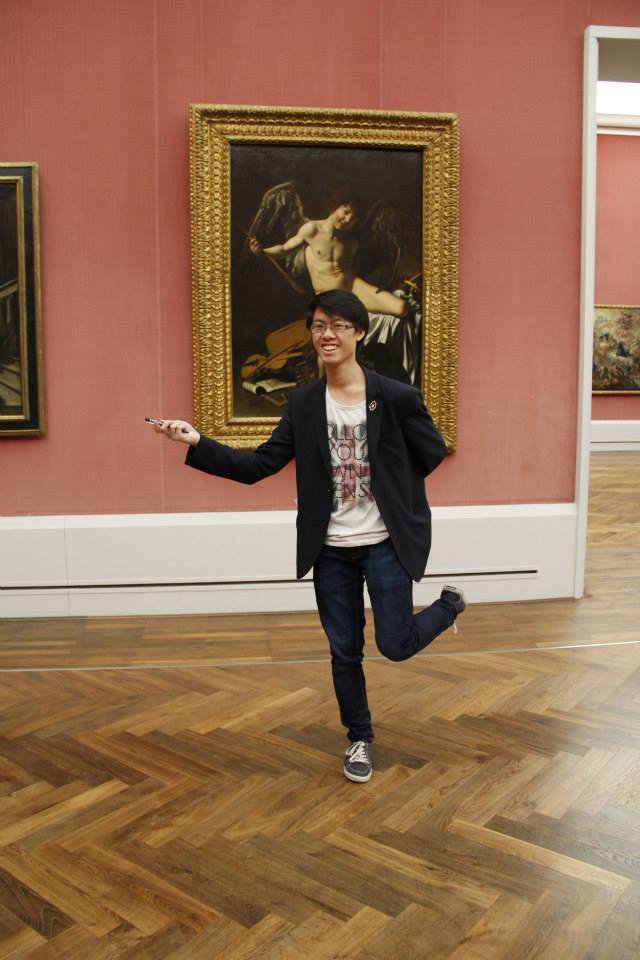
It has been just over a decade since I first saw Caravaggio’s Victorious Cupid (1601-02) at the Gemäldegalerie in Berlin.
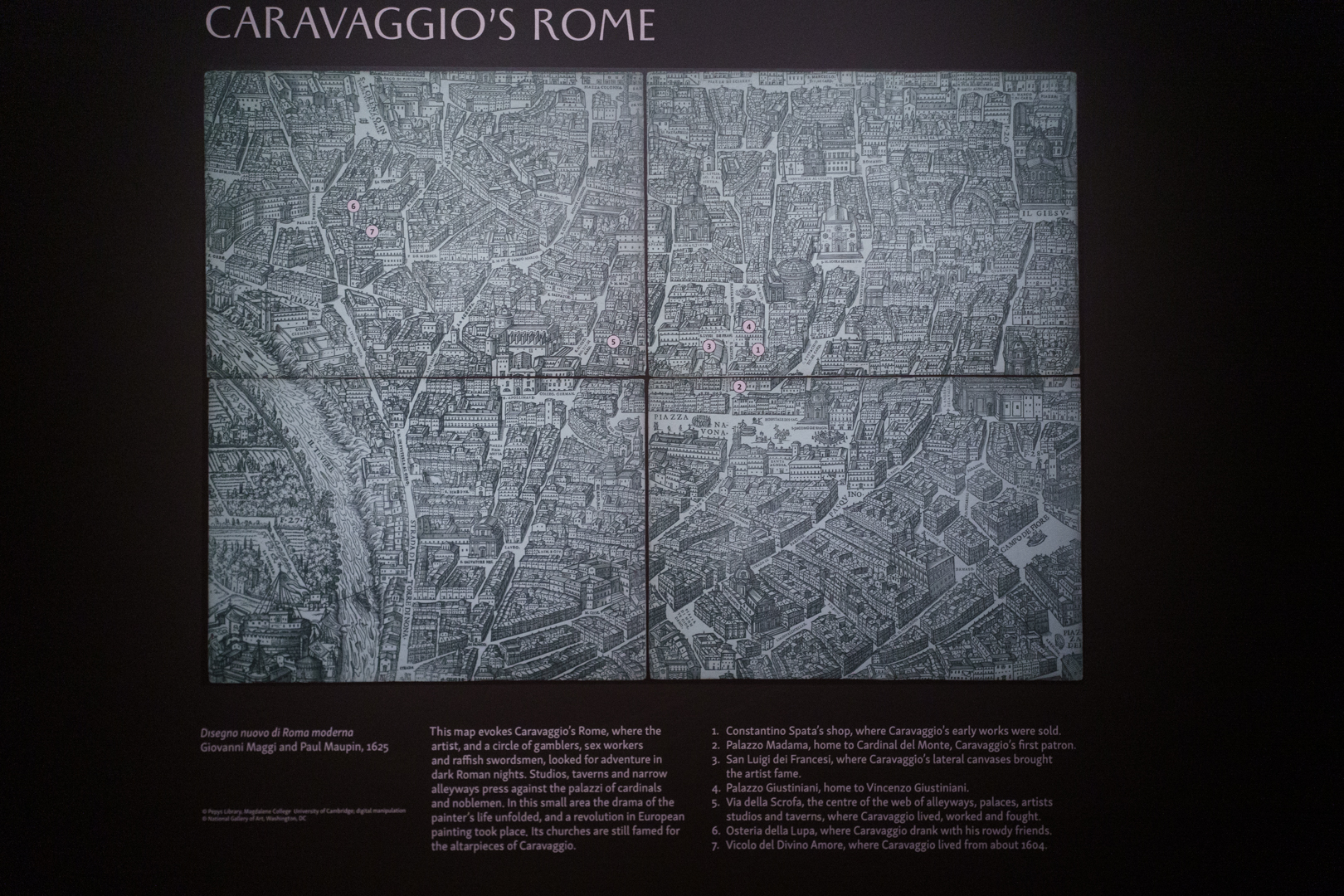
Now it has come to London for the very first time in a free exhibition at the Wallace Collection. It is joined by two antique sculptures that collectively formed part of the collection of Marchese Vincenzo Giustiniani and his elder brother Cardinal Benedetto, which dispersed at the beginning of the 19th century. An introductory corridor reproduces a map of Rome from 1625, annotated with Caravaggio’s social spaces and the residences of various patrons.
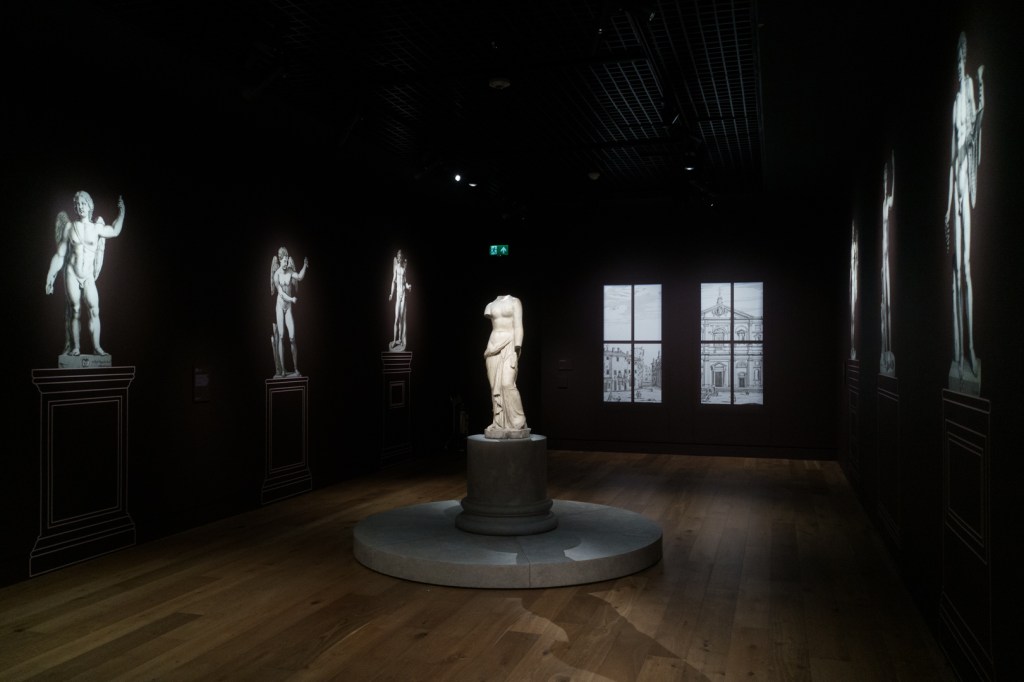
The first room sets the scene, reimagining the splendour of the Palazzo Giustiniani with its nearly 600 paintings and more than 1,800 ancient sculptures; this section focuses on the latter. Two walls feature enlarged prints of antique sculptures – one devoted exclusively to Cupid – presumably sourced from the Galleria Giustiniani print series (published 1631), a monumental two-volume catalogue illustrated with 330 engravings of the collection, commissioned by Vincenzo himself. Another wall mentions the renowned Torlonia Collection, which acquired 269 sculptures in 1816 but, due to various disputes, only came into Alessandro Torlonia’s possession between 1856 and 1859.
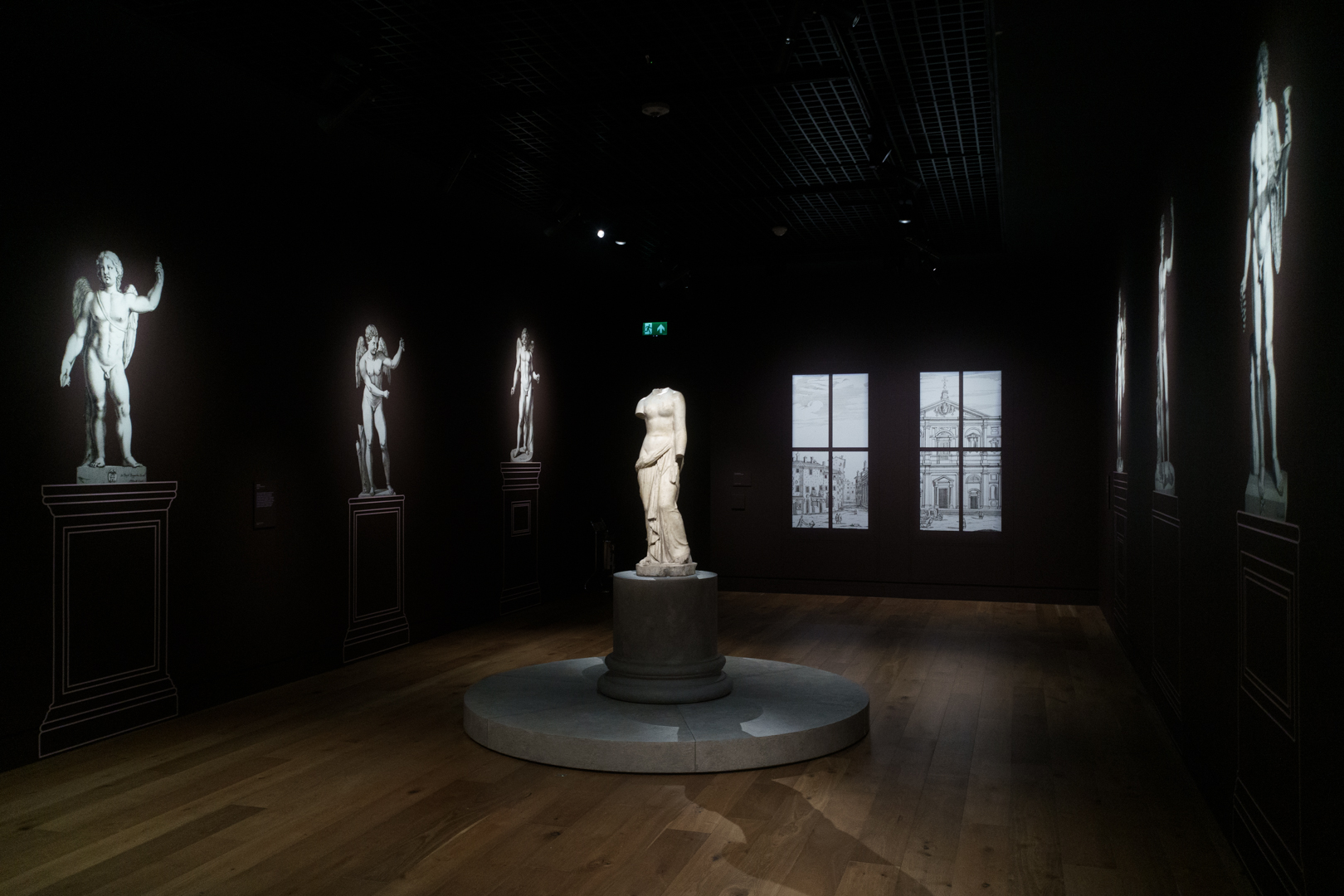
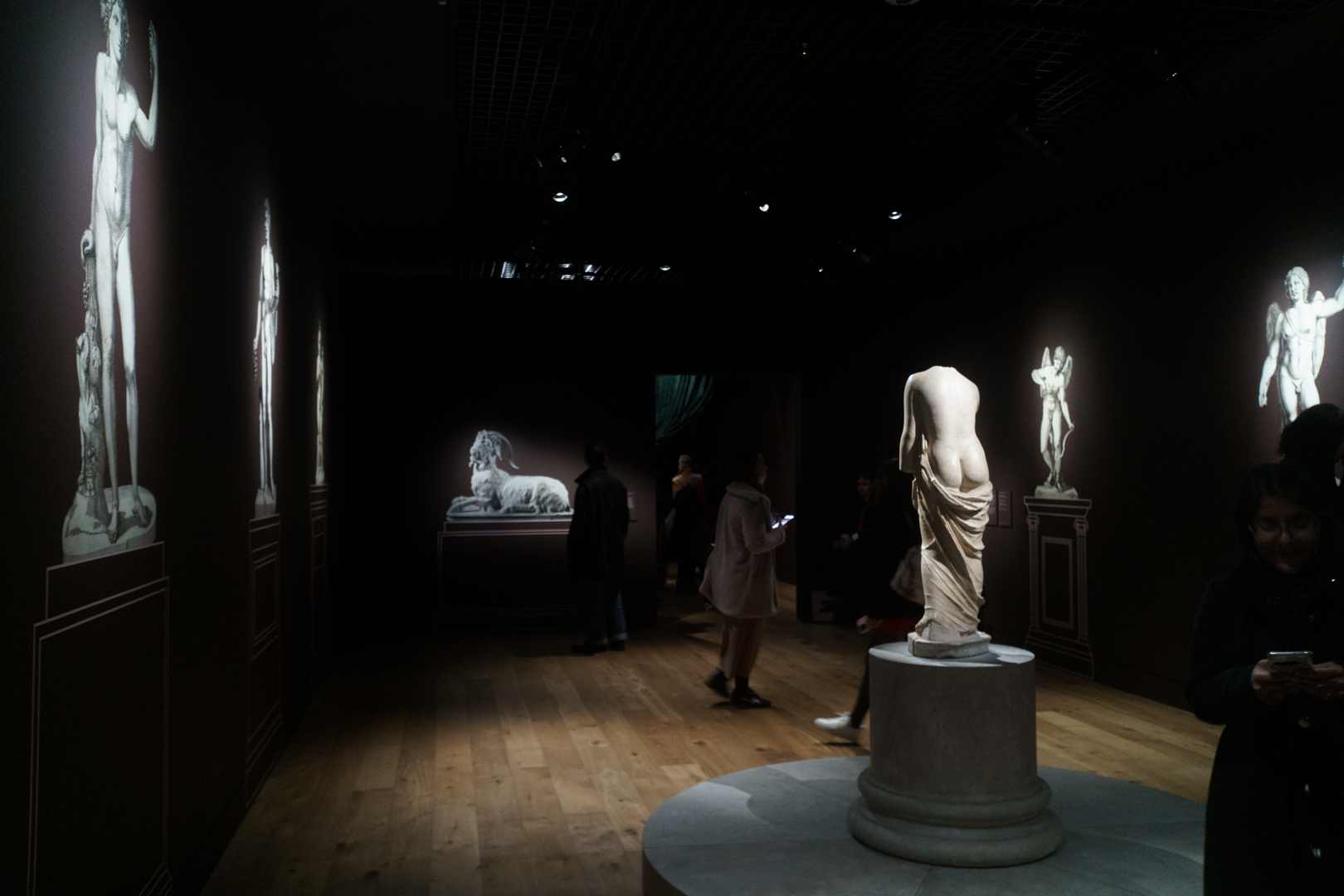
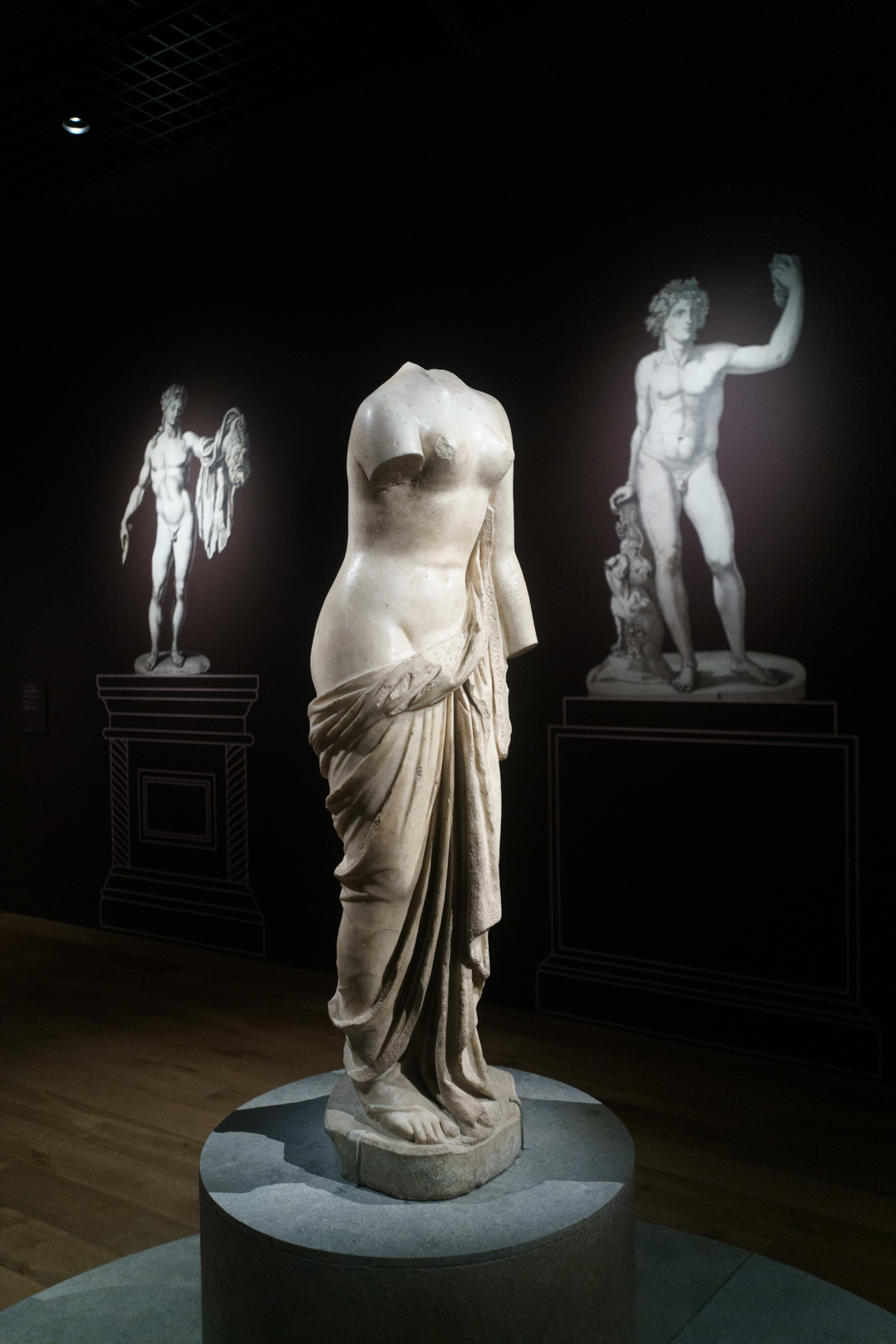
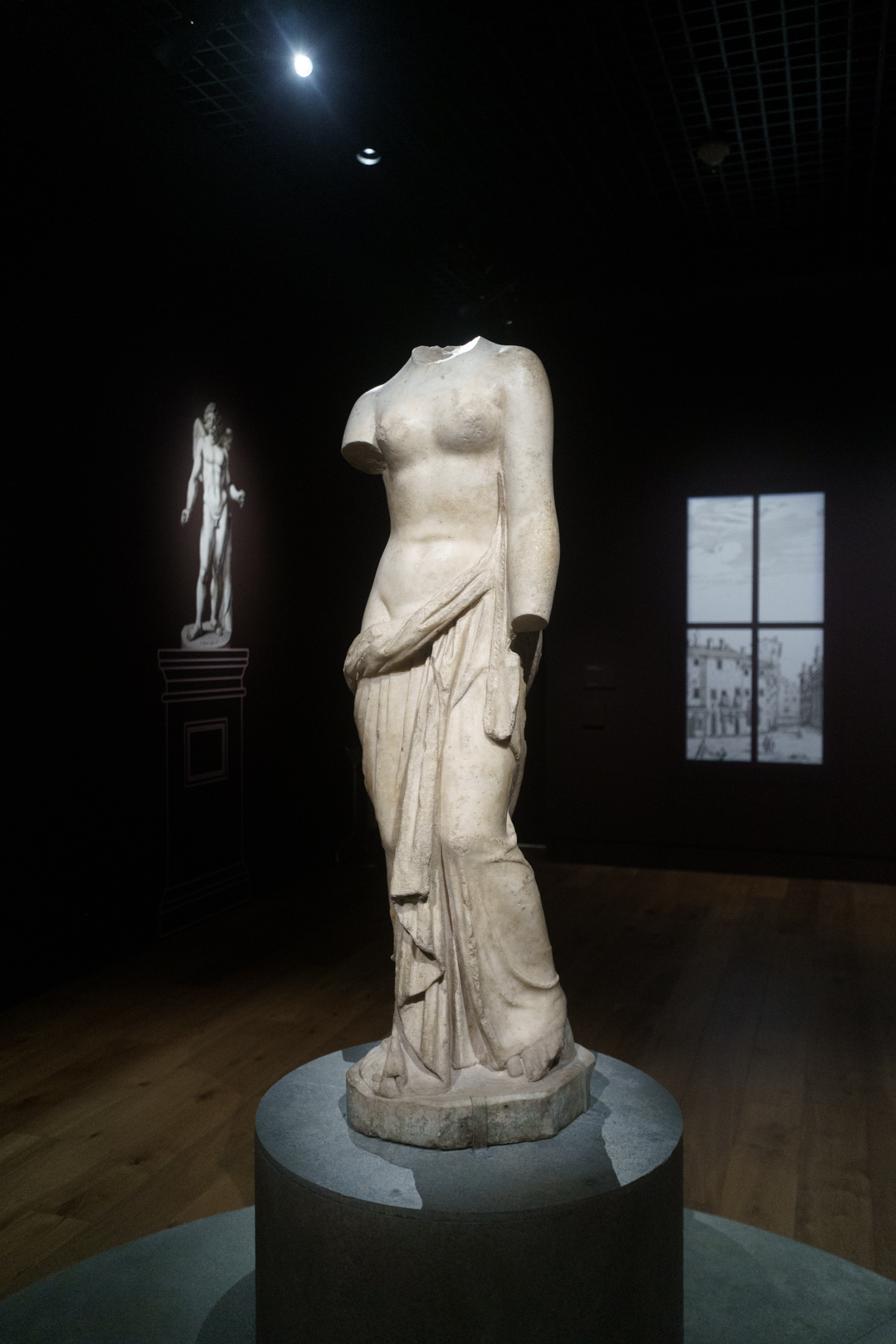
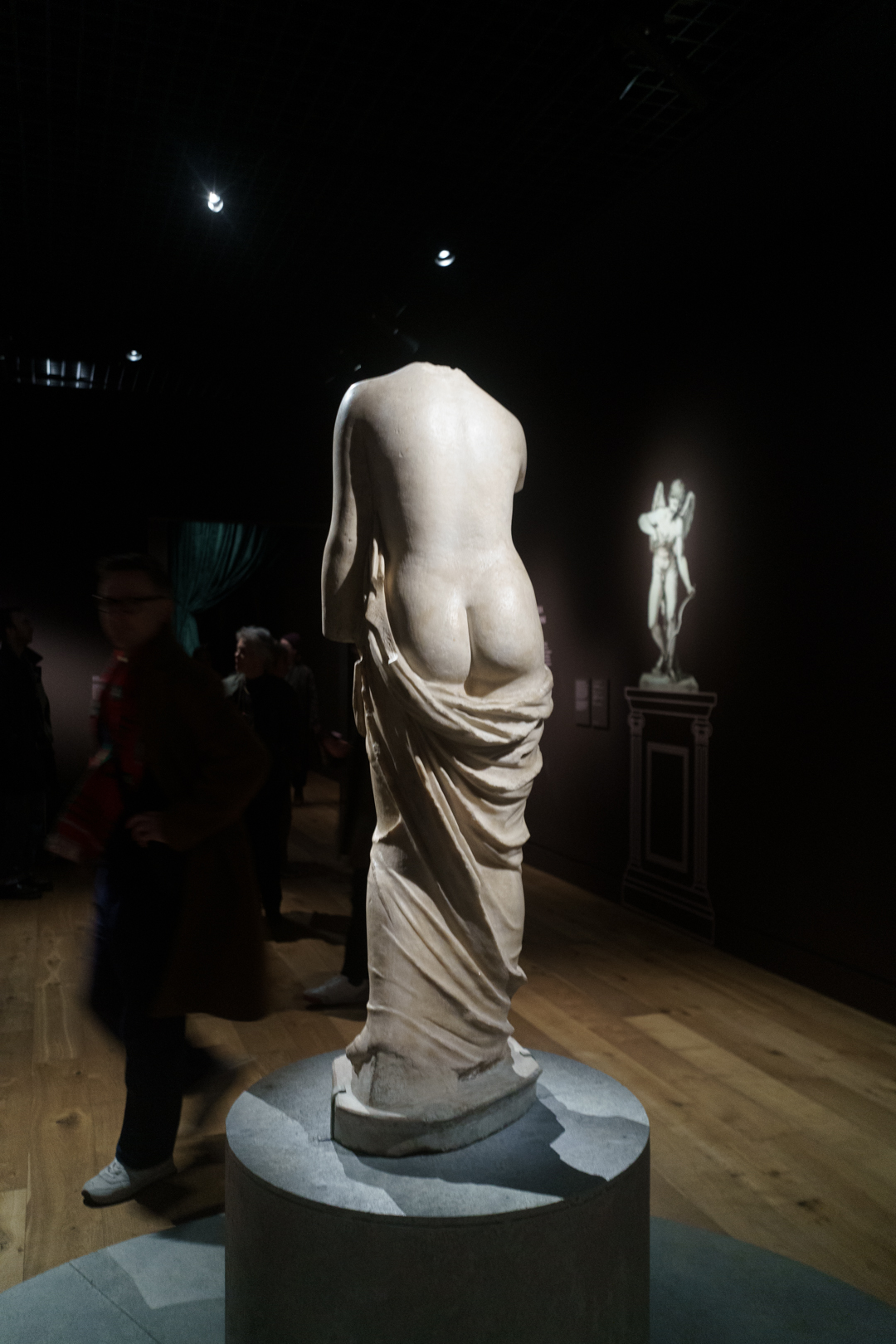
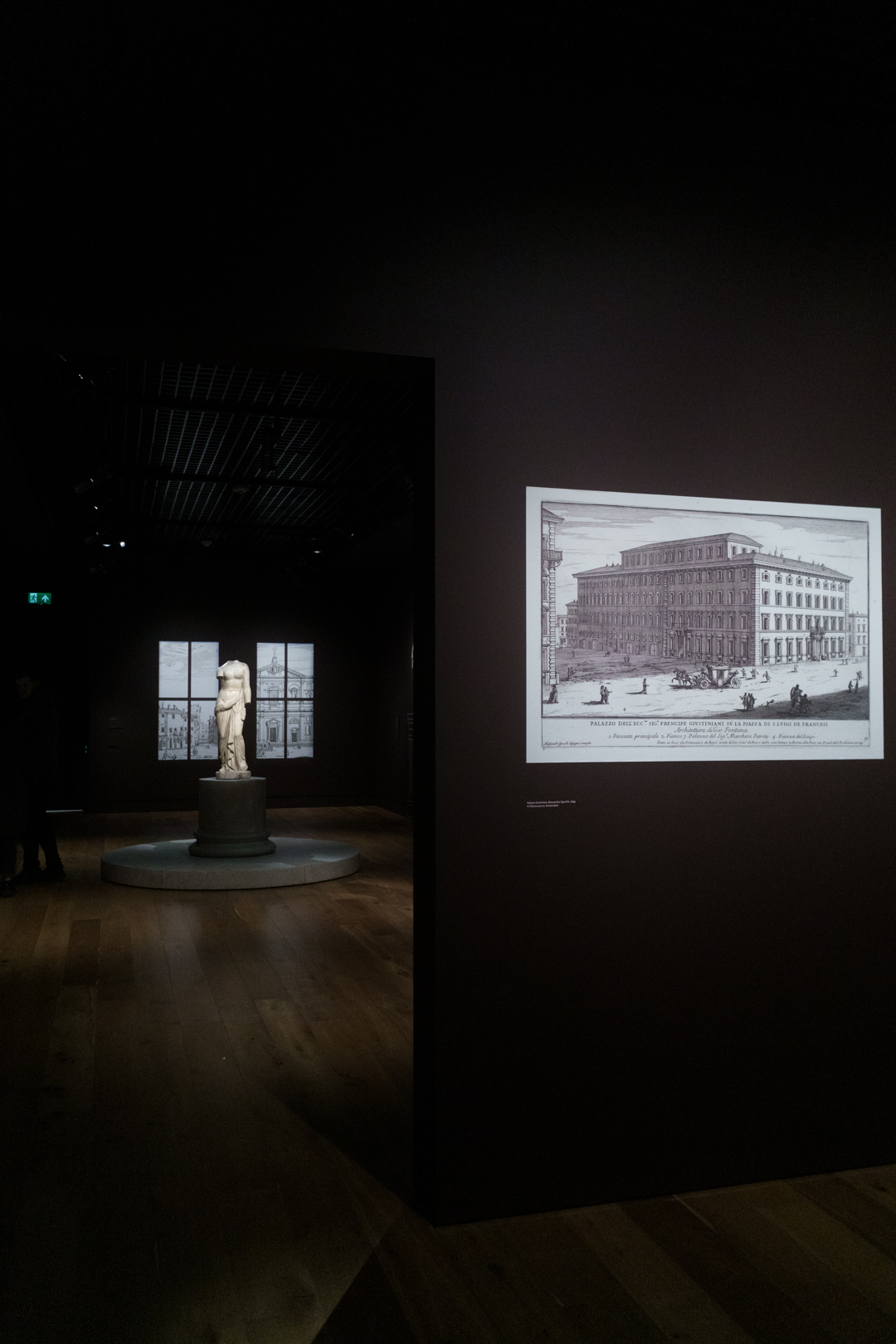
In the middle of the room, a Venus from the Borthwick Collection (unknown to me) births out of a pedestal, while a pair of faux windows behind it look out towards the church of San Luigi dei Francesi; it’s quite accurate to the real-life view. This is the same church that turned down Caravaggio’s Saint Matthew and the Angel (1602; destroyed by fire in 1945) for its lack of decorum (the dirty feet incident), which Vincenzo then offered to buy.
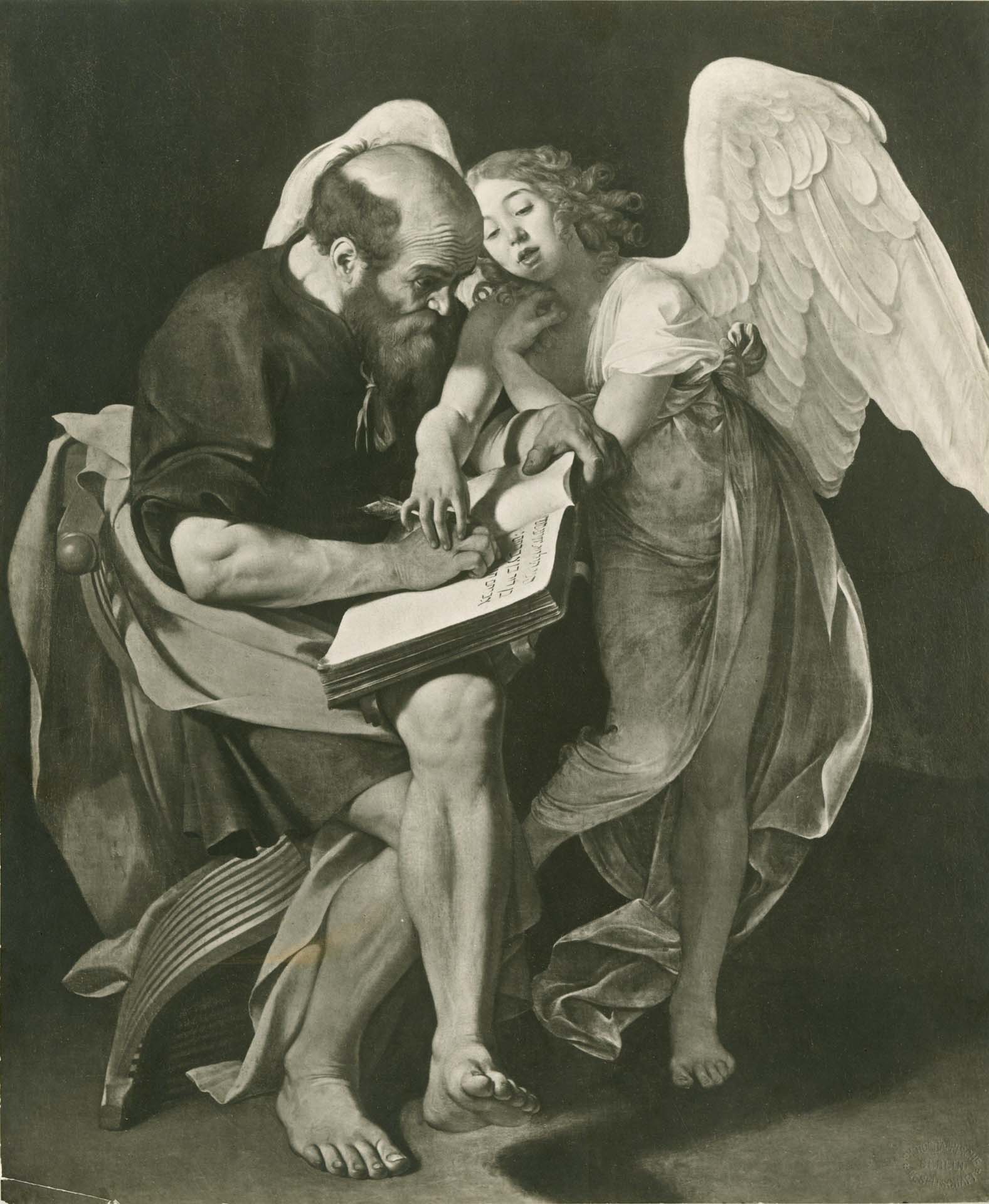
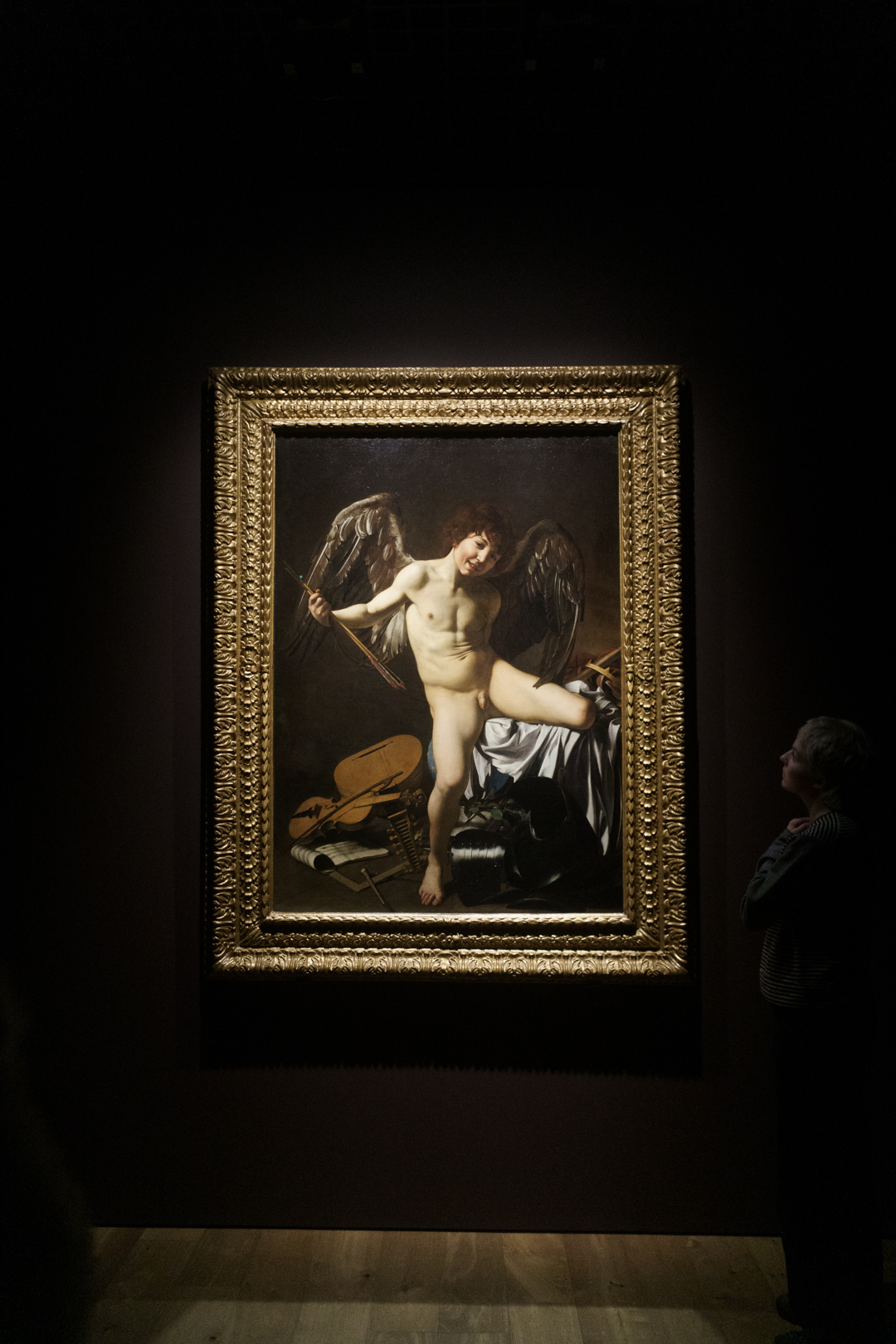
One of ‘only’ 15 Caravaggios in the Giustiniani collection, Victorious Cupid illustrates a line from Virgil ‘Eclogues’: ‘Omnia vincit Amor et nos cedamus amori’ (Love conquers all, and let us yield to love).
In the 1638 inventory, the picture is described as:
‘Love laughing, as he scorns the world, and at whose feet lie various instruments, crowns, sceptres and pieces of armour, known on account of its fame as Caravaggio’s Cupid’
The model is believed to be Francesco Boneri (also known as Cecco da Caravaggio), who entered Caravaggio’s studio around this time at the age of about 12.
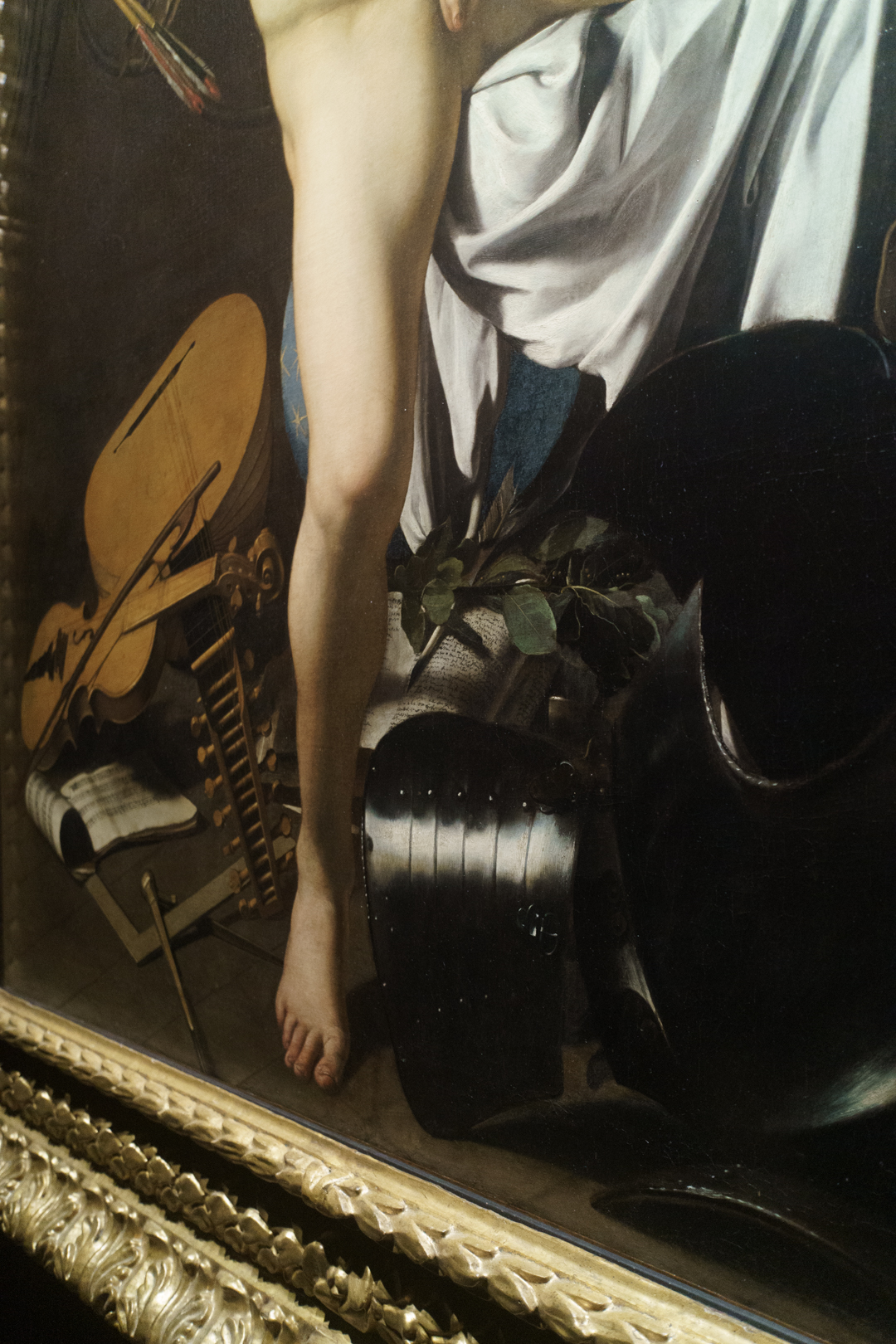
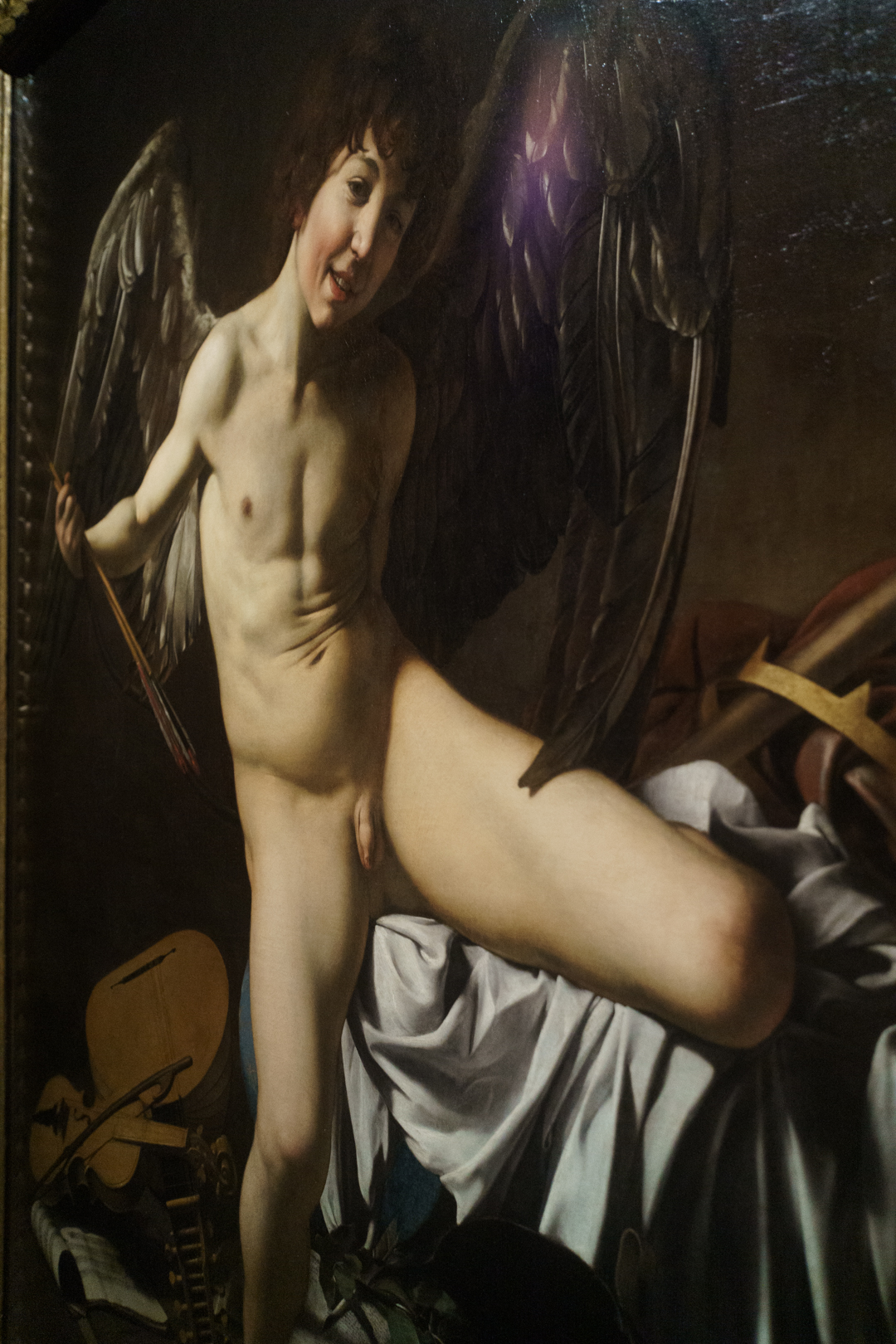
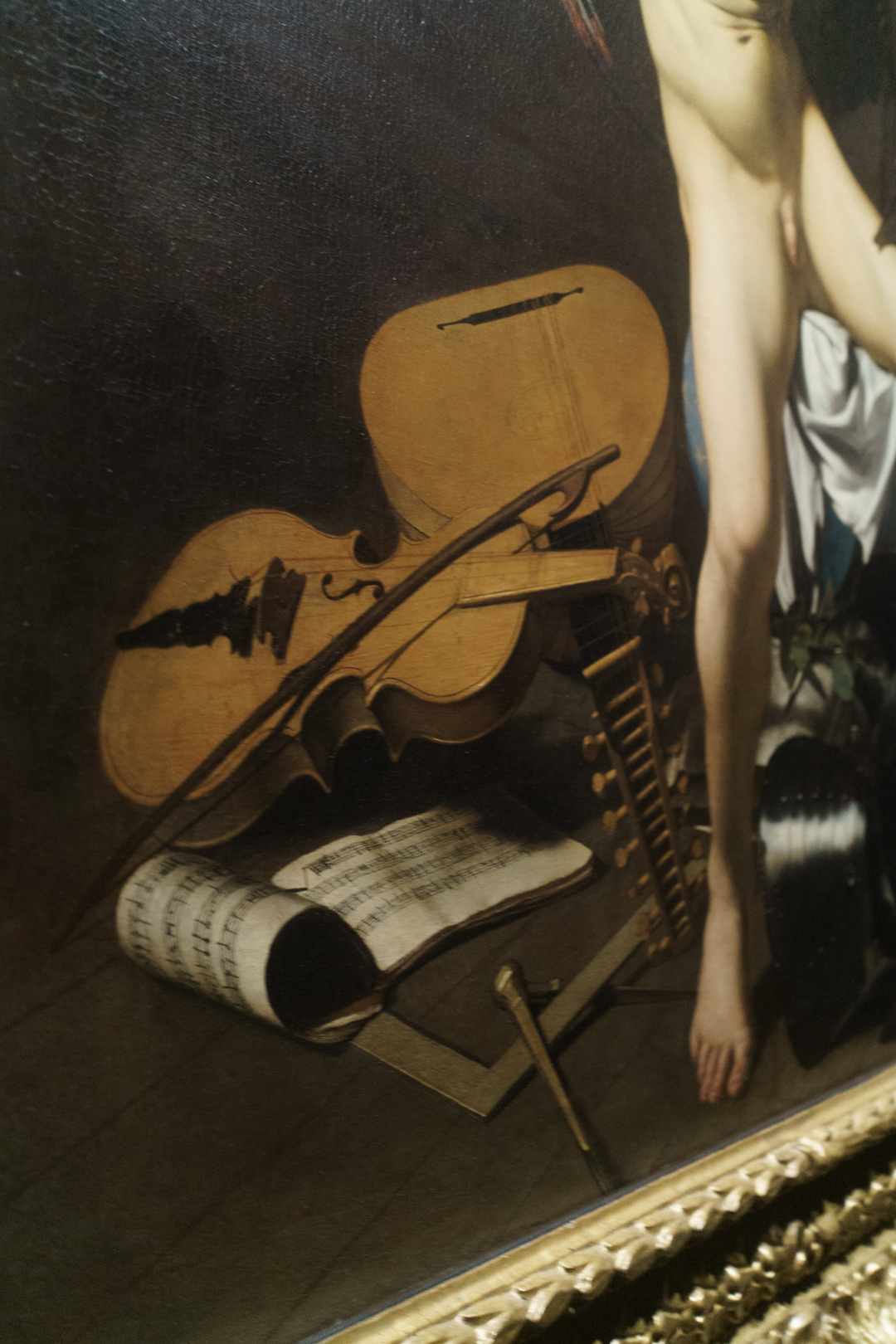
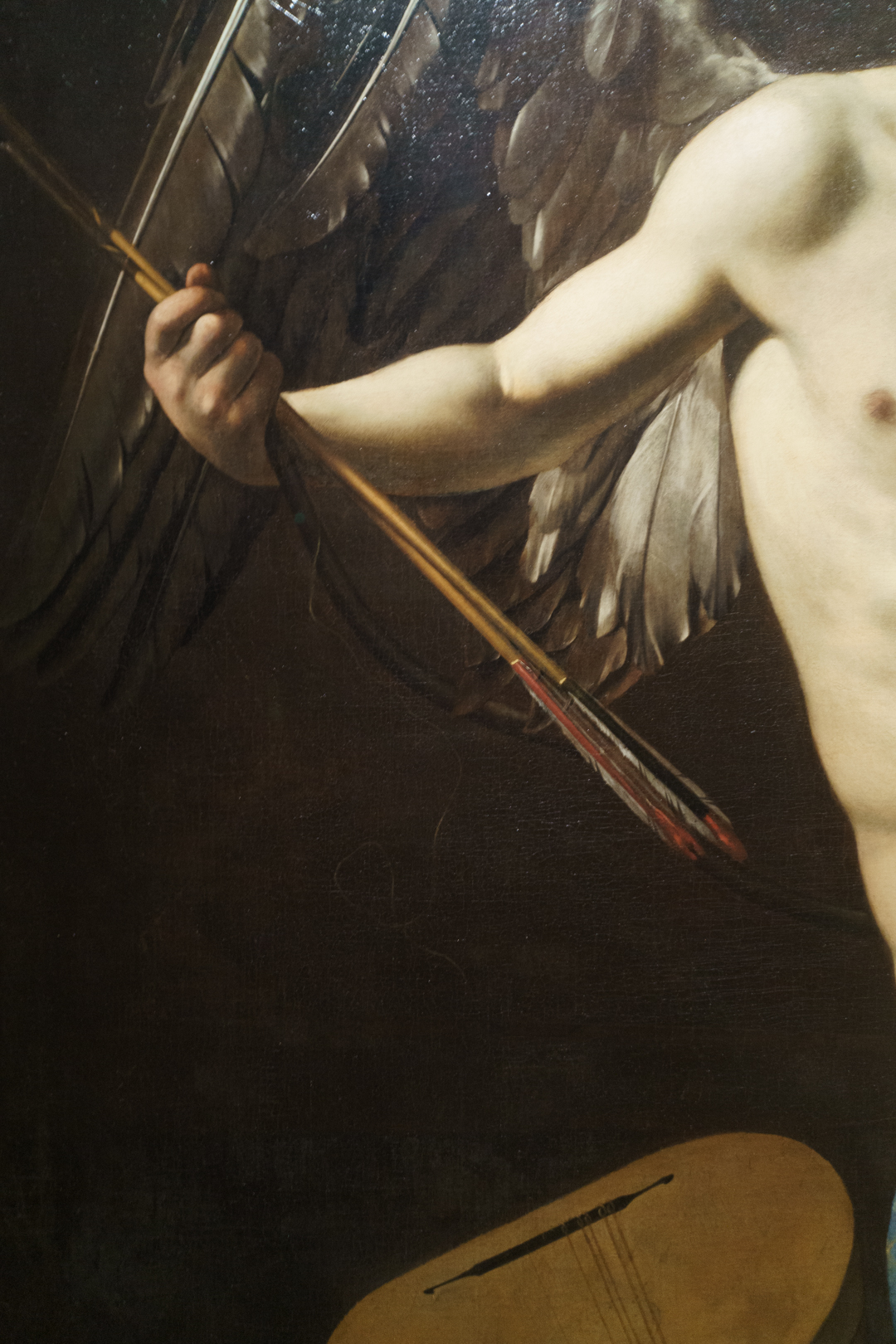
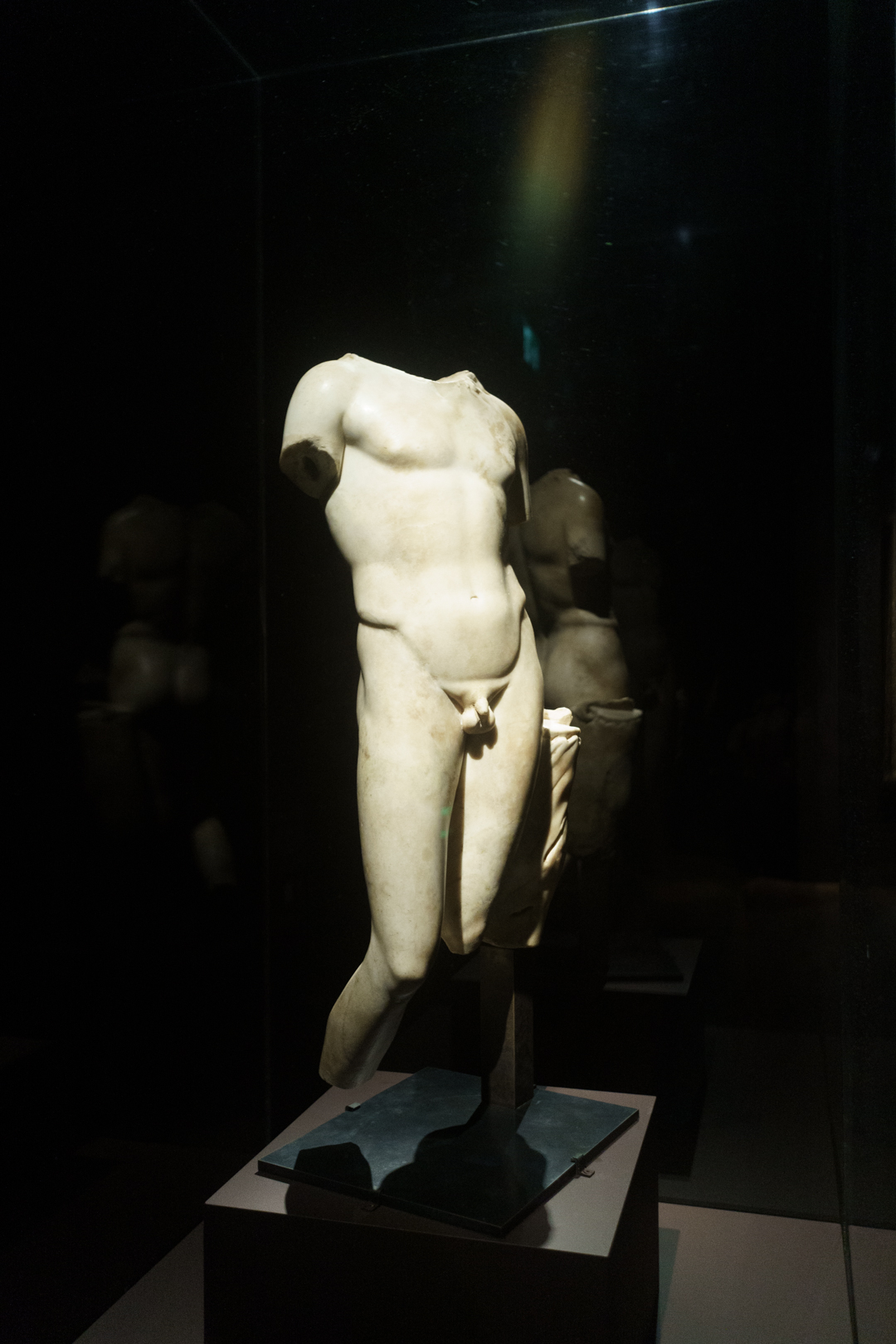
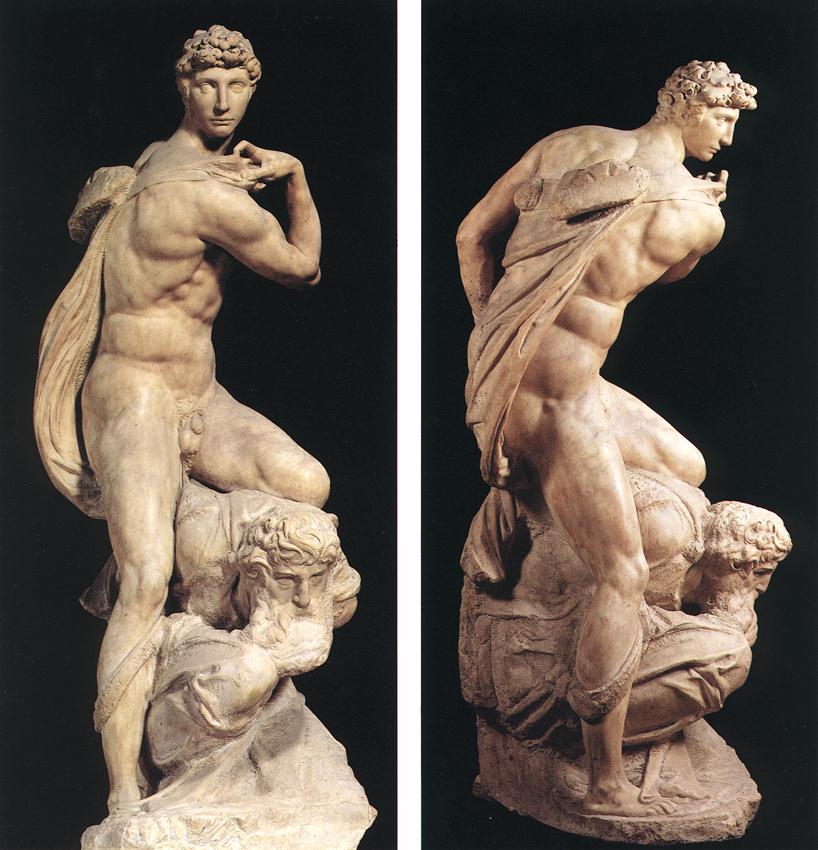
Portrayed in a manner often described as sexually provocative, the pre-pubescent boy god with wings – purportedly lent by Orazio Gentileschi – triumphs over science, art, power, and fame, trampling over the instruments and symbols of the liberal arts. The stance has often been compared to Michelangelo’s sculpture of Victory (1532-34) in the Palazzo Vecchio, Florence. It is a luminous picture that fairs well in the dim lighting of the exhibition galleries, and is joined by a small antique sculpture of a youthful Apollo, also formerly in the Giustiniani collection.
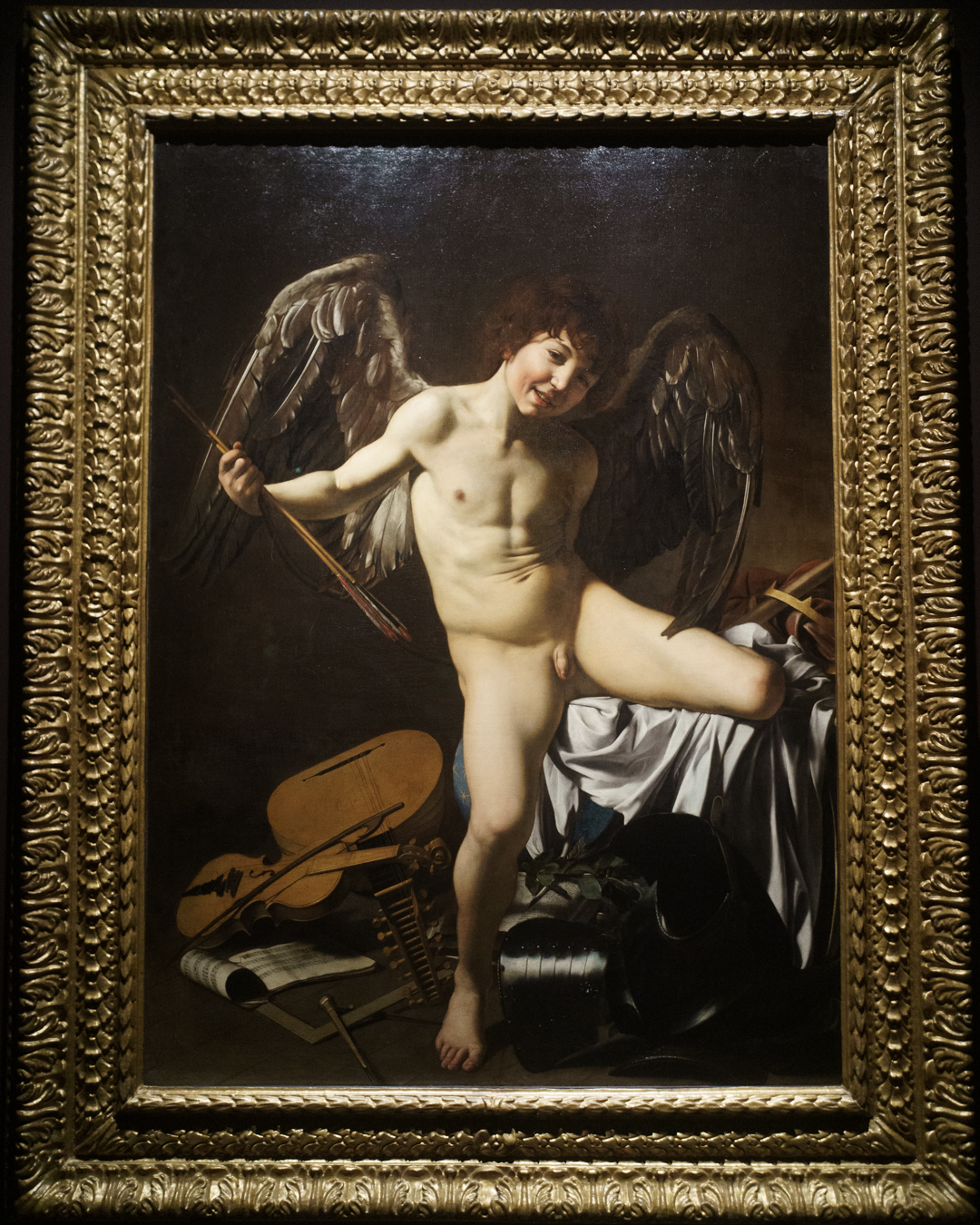
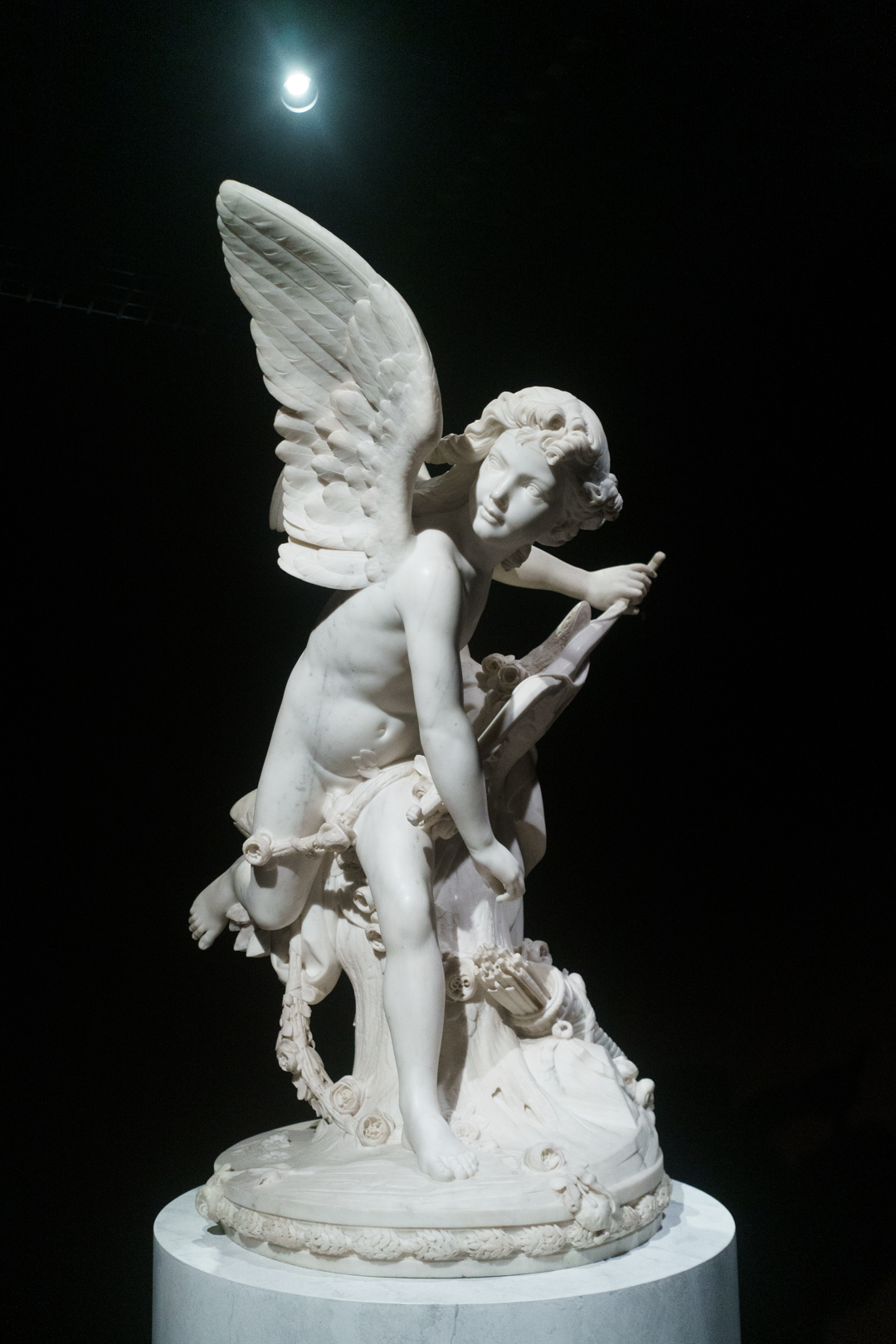
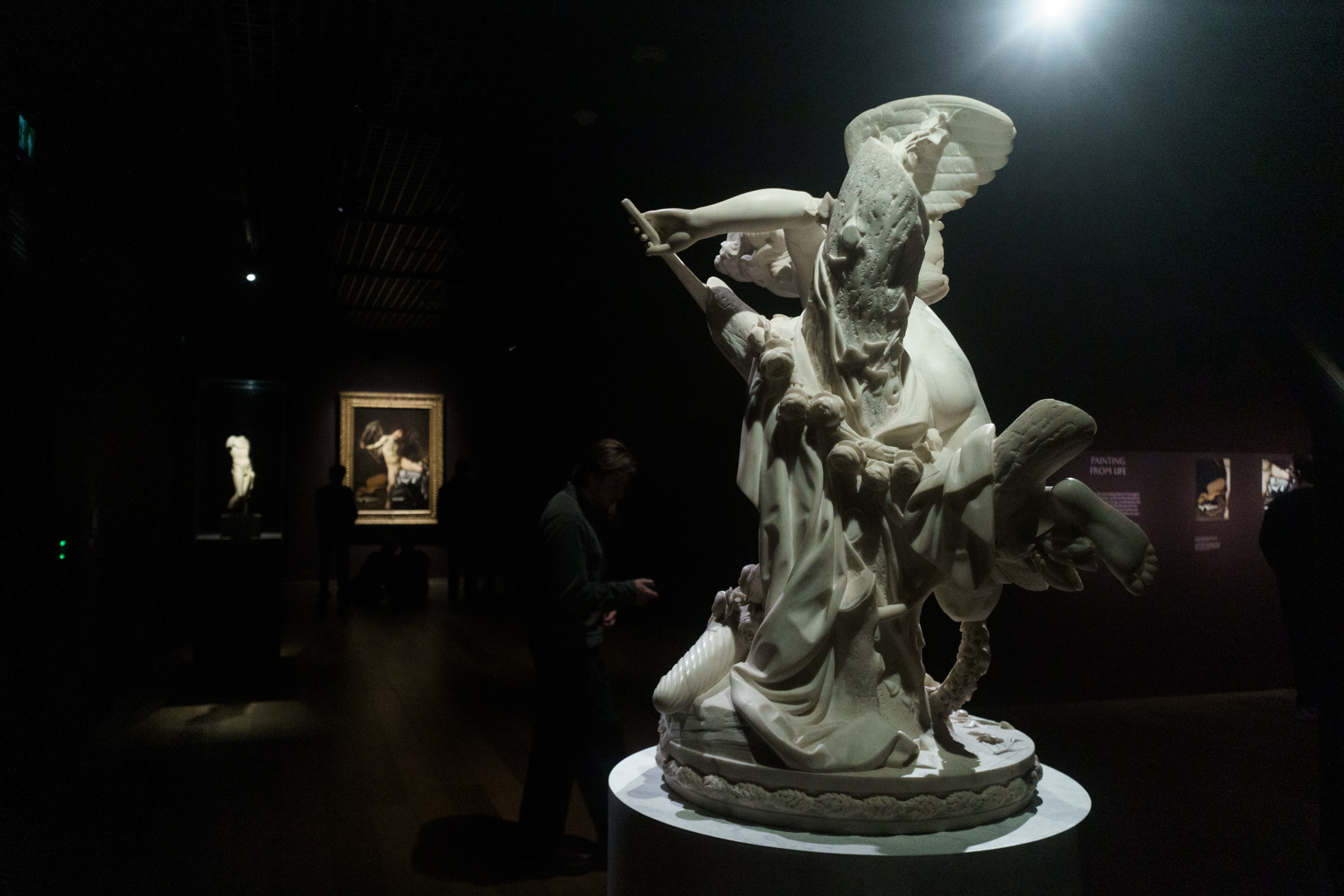
But what I really enjoyed was how Caravaggio’s painting entered into a standoff with the Wallace Collection’s own marble copy of Jean-Pierre-Antoine Tassaert’s 18th-century sculpture of Love triumphant. Bows and arrows at the ready, they mimic each other’s forward stance in passionate battle to command the audience’s attention. The victor is clear; Caravaggio always wins.
Caravaggio’s Cupid (26 November 2025 – 12 April 2026) is at the Wallace Collection, London, https://www.wallacecollection.org/

 Nigel Ip
Leave a comment