
If we think of human existence in both microscopic and cosmic terms, we will quickly realise that everything about us is in a constant state of change and transformation. Born out of microbial stardust, the specific combination of cells in our body represents only a tiny slice of an evolutionary chain that will adapt for as long as physically possible.
In other words, we are always a transition point in the history of the universe, one that is intrinsically always connected to nature. This is the root of Sezin Aksoy’s creative practice, a Turkish artist based in London who uses painting and performance to investigate the prefix of ‘trans-‘ in the sense of continuous change and unbroken connections.

While it may not be immediately obvious, her Transit series (2023 – ongoing) investigates the role of shamanism in relation to modern environmental concerns, particularly humanity’s lack of connection with nature while building increasingly artificial environments and lifestyles. Given how much of modern society has been dominated by patriarchal systems, Aksoy sees nature as a nurturing feminine force in need of reclamation.
Throughout the course of history, many global cultures have adopted some version of Mother Nature into their belief systems, personifying nature as a healer and life-giver. In shamanism, the concept is expanded with the notion of animal medicine, the practice of cultivating relationships with animals and animal spirits that can offer spiritual and intellectual guidance to its practitioners.
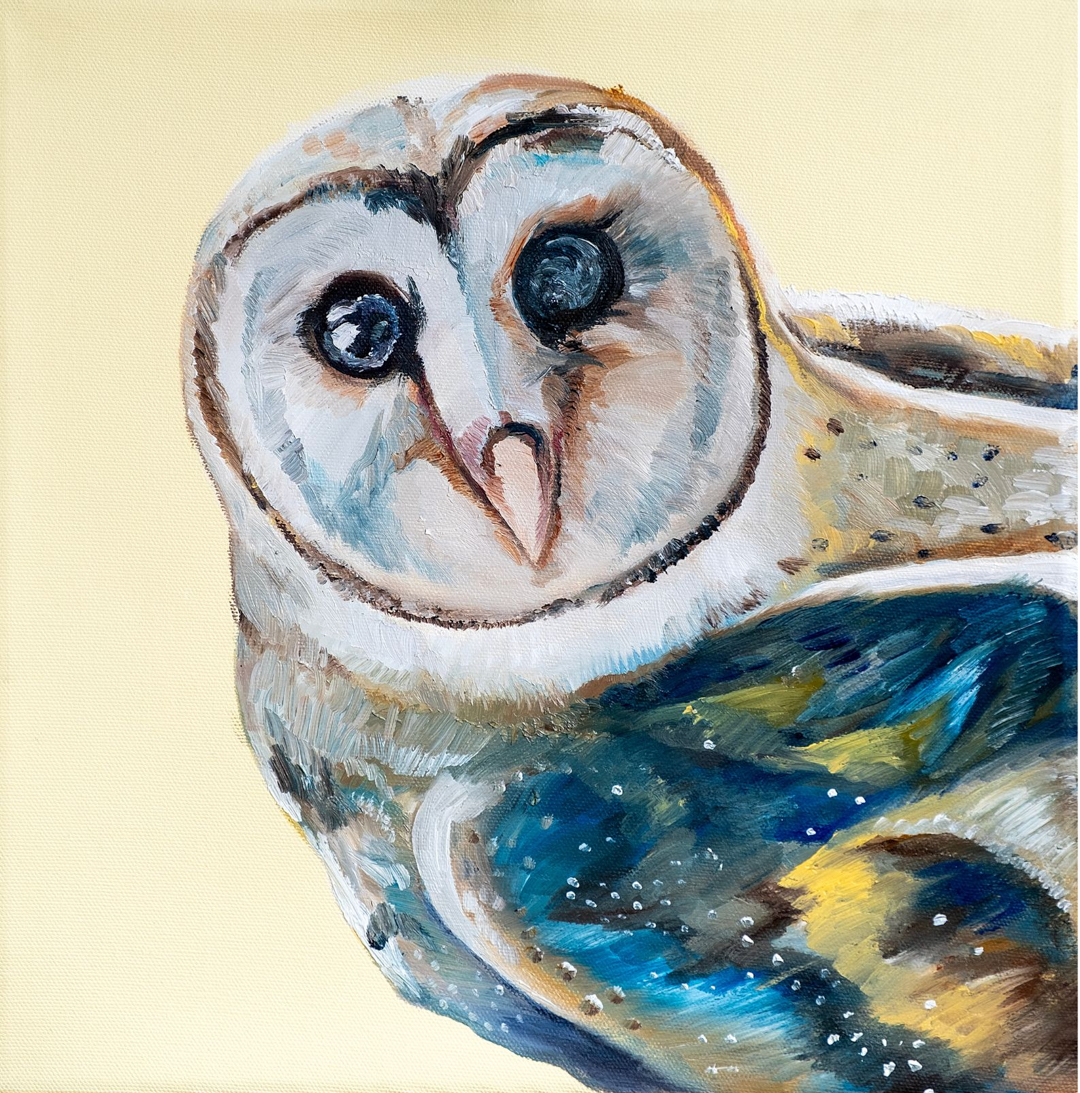
For example, Aksoy has dedicated a portion of the Transit series to depicting owls, a traditional symbol of wisdom due to its association with the ancient Greek goddess Athena. Because Aksoy’s practice is about connectedness, she does not limit herself to the belief systems of just one culture, seeking instead to find universal traits in all of them. In her last solo show at Fitzrovia Gallery last year, she encouraged visitors to attach threads from one of the artworks to nails on the walls, resulting in a site-specific installation of memories, experiences and ultimately connection.
Other works in the series portray endangered or extinct animals, a commentary on the devastating effect modern civilisation-building has had on the environment. Among them is a particular species of monkey, which she uses as a play on the term ‘monkey brain’. Rooted in Buddhist teachings, it refers to a state of restlessness and being easily distracted; Aksoy compares this to humanity losing its focus and connection with nature.

A more literal exploration of animal medicine is found in her paintings of poison dart frogs. She relates these to South American Kambô rituals that use the poisonous secretions of giant leaf frogs for cleansing purposes. The practice is similar in concept to how the venom of poisonous snakes can be engineered as antidotes. This is one of the more explicit references to Aksoy’s way of thinking about transformative potential in nature, where healing can be found in places of harm.

However, the most unexpectedly poignant part of the Transit series happens to be Aksoy’s depictions of fungi which, depending on species, can have either healing or hallucinogenic properties. The cells of mushrooms are also highly regenerative and adaptable, making them close equivalents to stem cells in humans. This duality manifests itself as nature’s restorative agent in Aksoy’s paintings, one that shamans have exploited as ritualistic aids and to induce ascendant visions. Additionally, artists like Yayoi Kusama – whom Aksoy admires – have been known to consume hallucinogenic mushrooms as part of their creative practice.
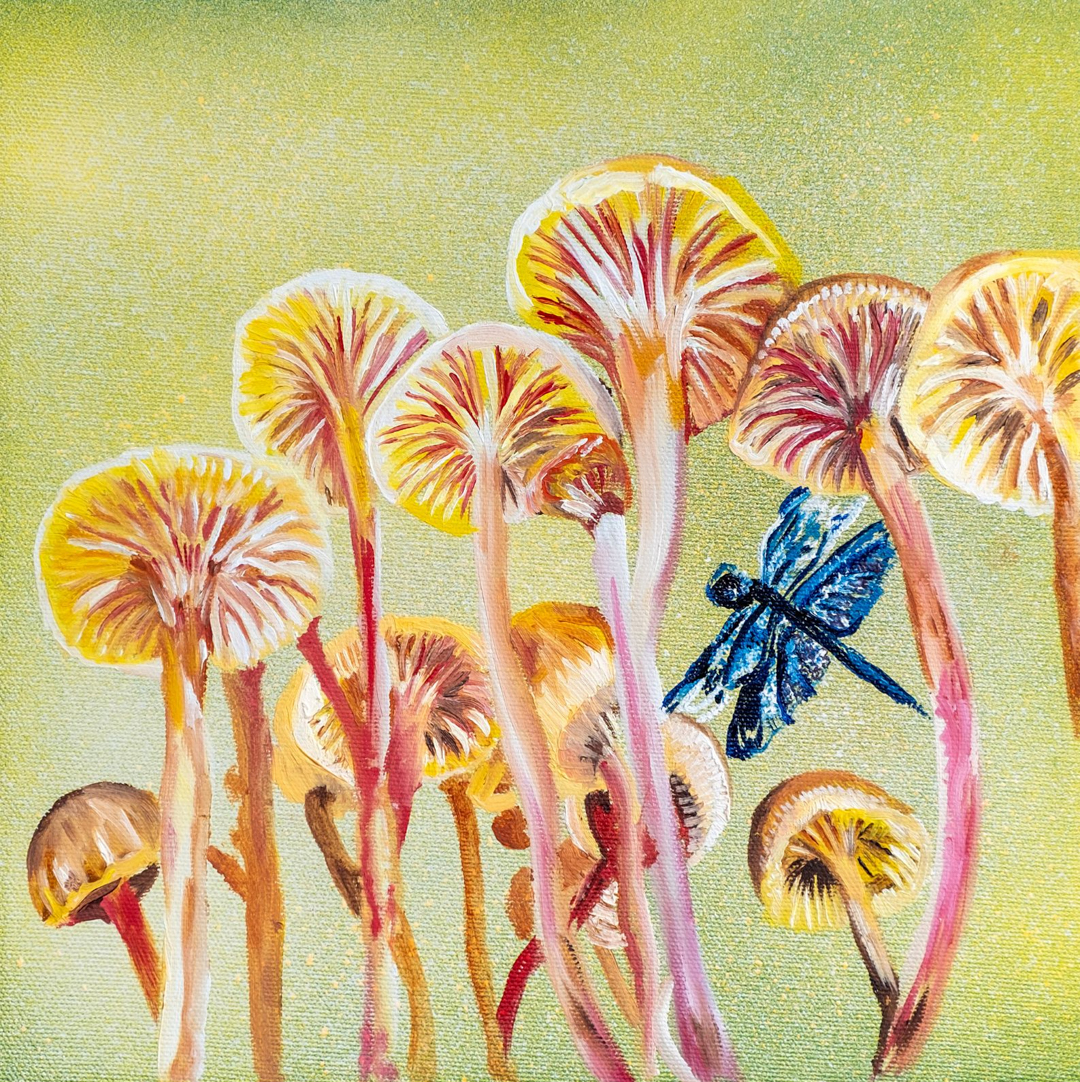
One of the things that connects all these works is Aksoy’s purposeful use of materials. Her process typically involves laying a plain coloured background with acrylic paint, a substance whose artificiality resonates with the man-made environments – such as zoos, parks, and attractions like Kew Gardens – of her subjects, which have been removed from their natural settings. Her choice of colour for this initial layer is tied to the energy it gives off according to Indian chakra principles, which she will meditate on before choosing an appropriate subject to place on it. Once her subject is selected, she will render it in oil paint; Aksoy finds it to be a more organic medium compared to acrylics, hence her application of it for natural and living things.
Overall, Aksoy’s work reflects a growing sentiment among eco-conscious artists that respect for nature is a crucial first step towards rolling back the damage humanity has done in the name of progress. Her research into shamanic traditions and rituals gives her paintings a uniquely reflective quality that also speaks towards a universal audience. In doing so, the retrospective approach of her practice feels relevant, timely, and quietly hopeful for the future.
Find out more about Sezin Aksoy’s work on her website and Instagram.
She will be featured in the group exhibition Alternative Perspectives (18 – 30 November 2025) at 54 The Gallery, London, https://www.54thegallery.com/

 Nigel Ip
Leave a comment