
What does it mean to ‘draw’? London-based artist Brooke Leigh considers drawing to be a timeline of performative mark-making across all mediums, where each mark represents an isolated moment in space, time, and the creator’s state of mind. No longer confined to two-dimensional picture planes, this expansive definition allows for a deeper understanding of the sensory and psychological relationship between mark-making and human experience.

Born and raised in Sydney, Australia, Leigh’s early practice consisted of large drawings in charcoal exploring the rhythm and calligraphy of performative gestures. They soon evolved into a series of live drawing performances – sometimes up to an hour long – where she would physically exert her body with repetitive actions, marking the picture plane with rough chalk. With her body as the artistic medium, drawing became a mentally charged representation of movement itself, consequently giving form to her subconscious.
Since arriving in London in 2023, Leigh became enamoured by the vibrancy of the local forests and began empathising with its plant life. For example, she sees the decrepit appearance of a twig as an analogous map of human experiences and decisions, its weathered appearance shaped by its environment in the same way humans respond and adapt to societal demands. Attracted to their strength and resilience, Leigh looked to nature as a conduit for exploring her childhood and relational trauma.
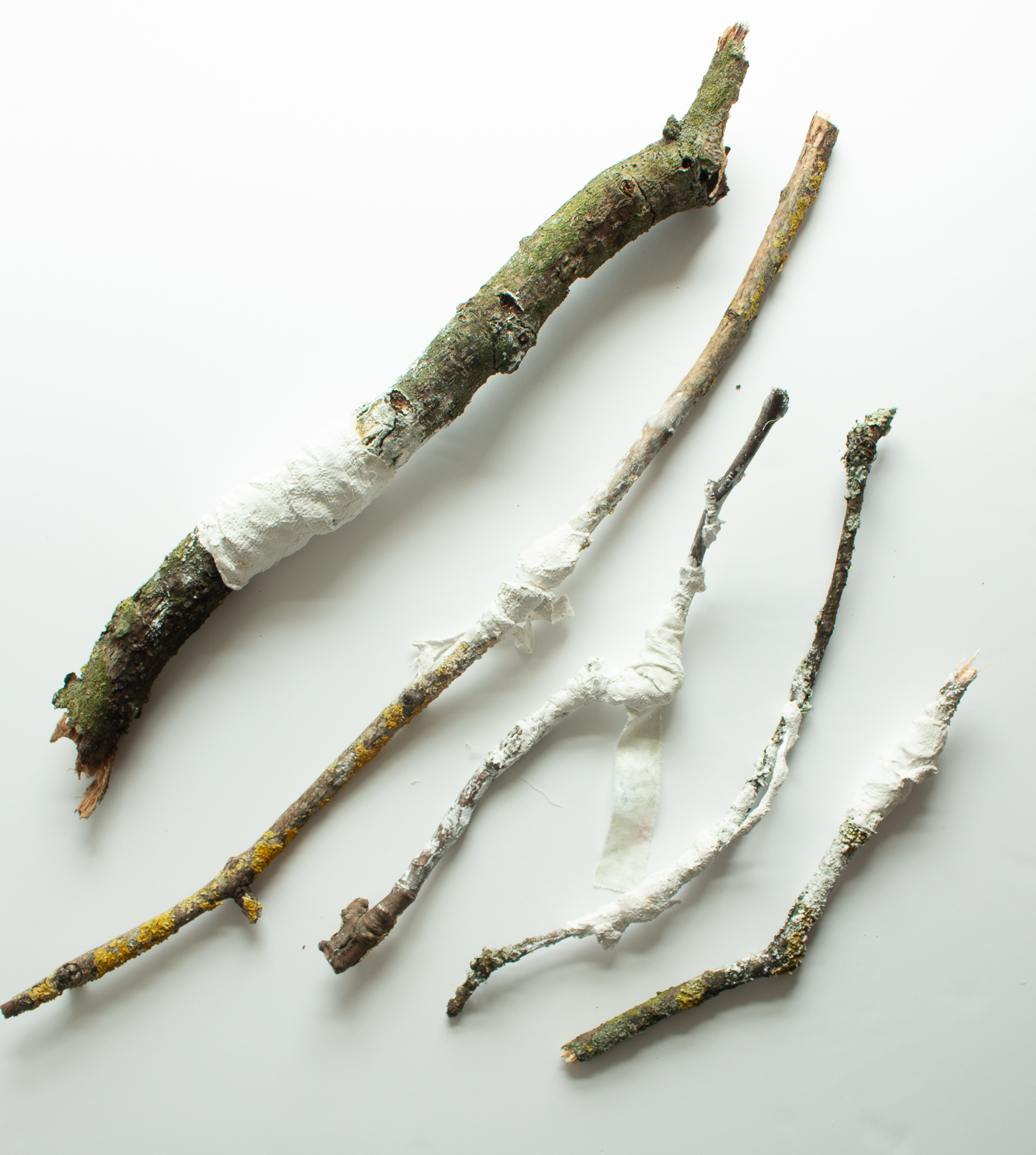
Looking around her studio, one can find a variety of natural specimens that Leigh has collected over the years. On the floor, she showed me some twigs that she snapped apart and attempted to fix again; she finds the process of breaking and mending particularly cathartic, like a healing ritual for the soul. Because she willingly does these actions herself, it satisfies a hidden desire to reclaim control of her environment and turning it into a safe space. The act of drawing also satisfies this desire by being deliberate with its mark-making, while embracing memory as a collection of bodily and sensory experiences.
One of her artistic inspirations, Louise Bourgeois, is often quoted as saying: ‘The act of sewing is a process of emotional repair.’ With this in mind, Leigh turned to sewing as a form of draughtsmanship, resulting in her ‘textile drawings’ called Things Felt, But Never Heard series (2025), which were recently exhibited in a group show at Lewisham Arthouse.

Blowing in the wind like dream catchers, crimson-threaded phrases like ‘the mother she never had / the daughter she never knew’ puncture the delicate white fabric like a wound. ‘They feel alive,’ she says, as the breeze continues to alter the textile drawing’s appearance. She captured some of these natural movements in a video work called Nature / Nurture (2025), which took 20 iterations before the work felt alive. This combination of movement and transformation reflects Leigh’s idea of drawing as a living medium, a kind of sibling to the performative body of her early practice, and of the bushes and trees growing around her.
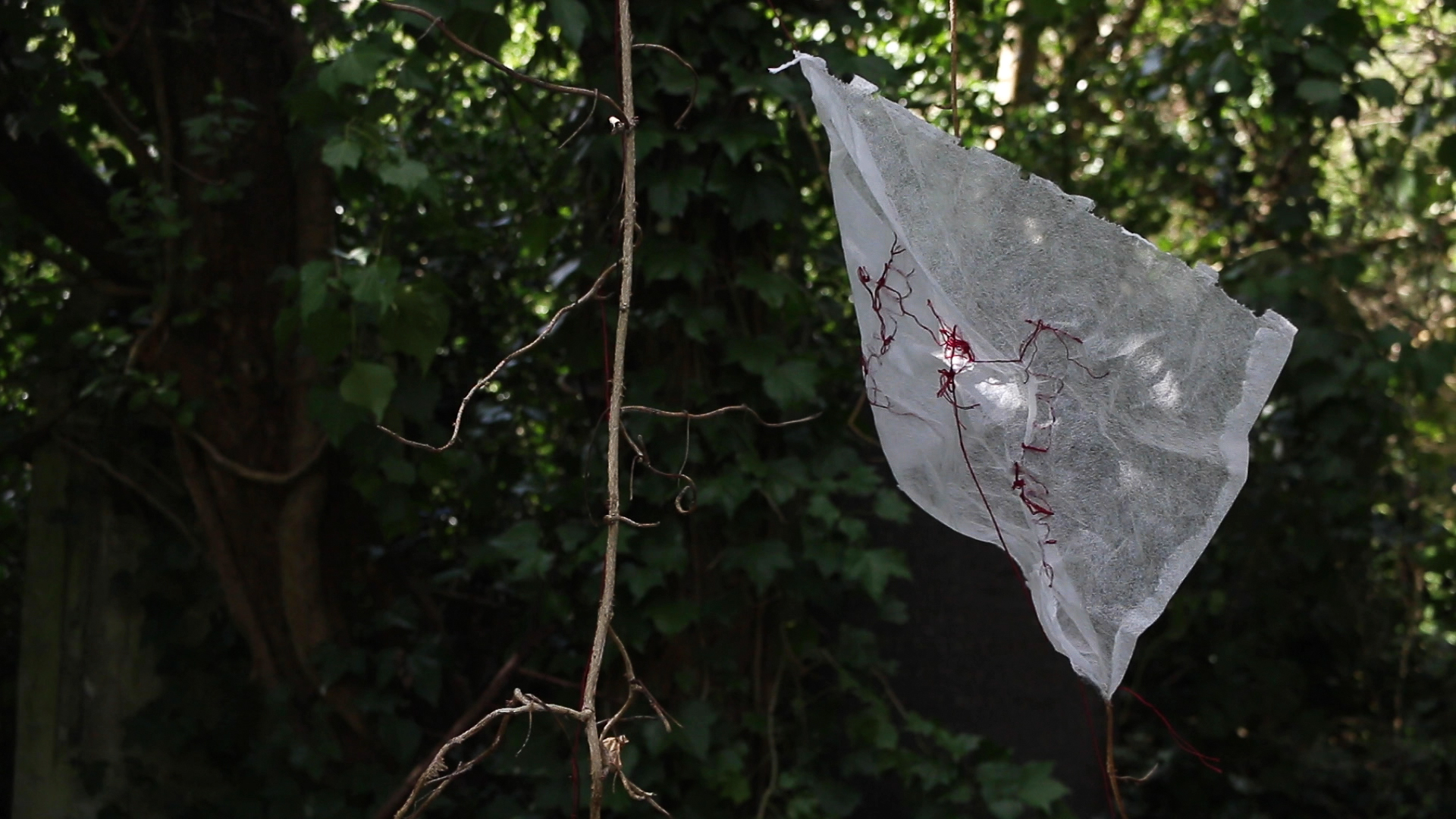
Always concerned with outward manifestations of the subconscious, Leigh is particularly drawn to transparent and translucent materials. In the textile drawings, she enjoys being able to see the ‘messiness underneath’ the carefully crafted exterior; she sees their ghostliness as a comforting reminder for accepting things as they are. Furthermore, she hopes her work can offer a safe space for others to reflect on shared experiences, and to create conversations and bring awareness to things like emotional invalidation and abandonment.

Ambitious yet reassuringly humble, Leigh’s creative vision is grounded in the performative embodiment of lived experiences, where the unique course of events in her own timeline can be viewed as a kind of spatiotemporal drawing. This is not unlike the Ancient Greek personifications of destiny, often known as the Fates, who spin the threads of destiny for every living being, divine or mortal. The crimson threads of Leigh’s textile drawings can be seen as a personal microcosm of that idea. In doing so, Leigh doesn’t just draw with life in the literal sense; she uses the transparency of time as her canvas.
You can find more of Brooke Leigh’s work on her website and Instagram: @bybrookeleigh

 Nigel Ip
Leave a comment