
Following hotly in the footsteps of the Museum of Arts and Design’s Taylor Swift: Storyteller exhibit last year in New York, the highly-anticipated Taylor Swift | Songbook Trail at the Victoria & Albert Museum is the first dedicated display of the singer-songwriter’s outfits and accessories in London. Free for everyone, it is the perfect chance to dive into the Swiftieverse head first, fearless.
Spread across 13 installations (her lucky number) throughout the museum, the 16 outfits representing each Era are intended to form unexpected dialogues with objects in the permanent collection. While this may seem far-fetched for the uninitiated, Swifties like me know all too well the range of musical, literary, and historical influences that inform Taylor’s songwriting over the last 18 years of her dazzling career. A visual nod to these invisible strings – and the song from the folklore album – is evoked by light strips incorporated into every installation, elegantly designed by Tom Piper, the mastermind behind the museum’s previous Alice exhibition.
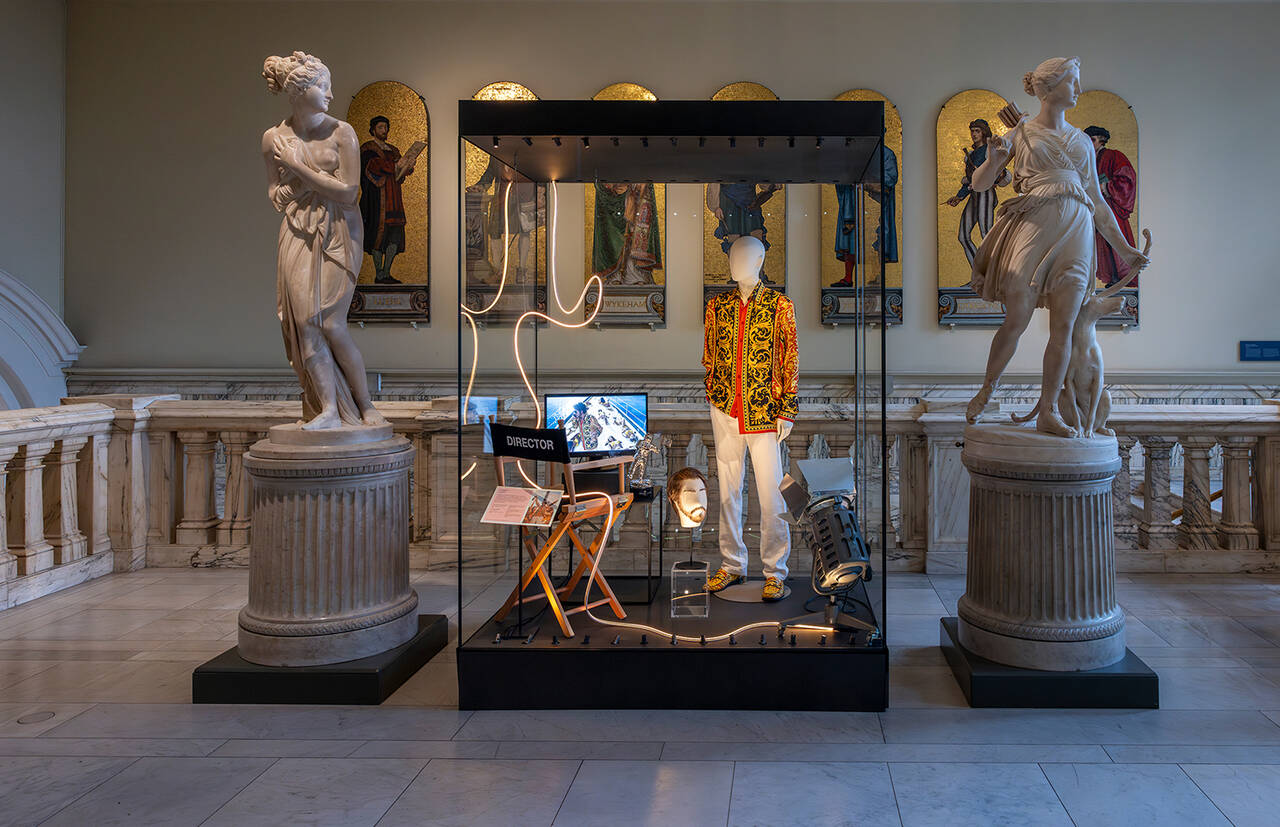
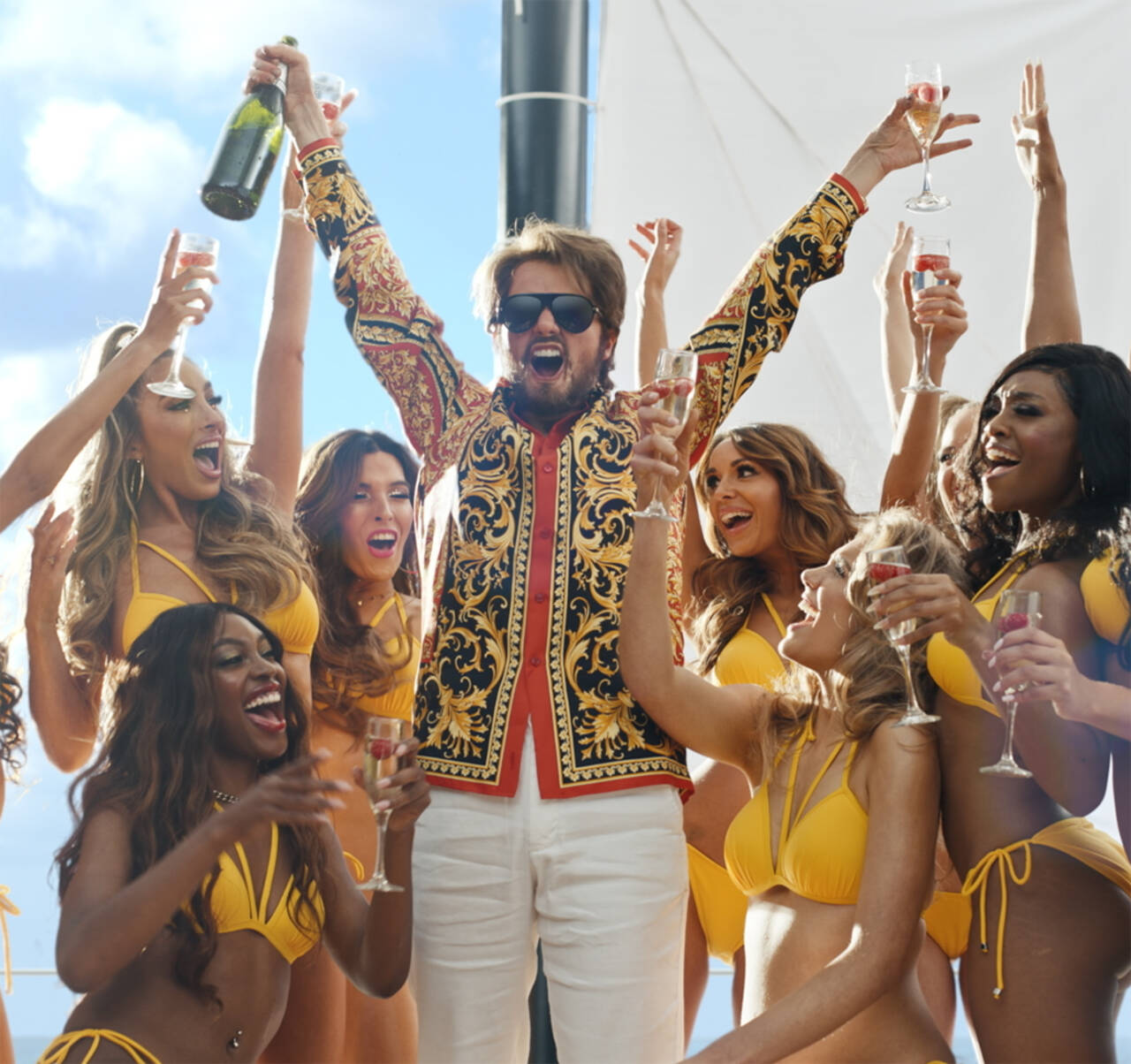
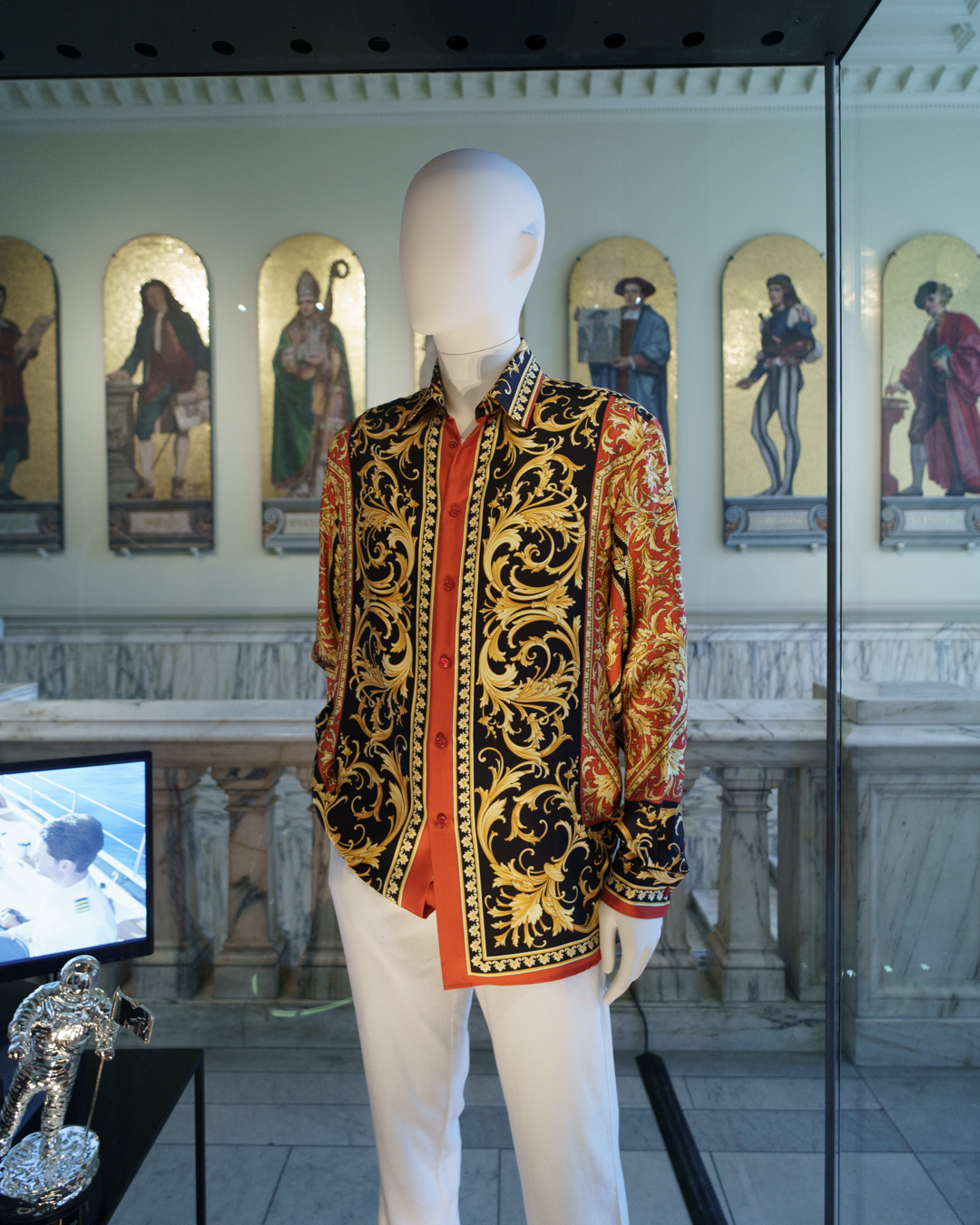
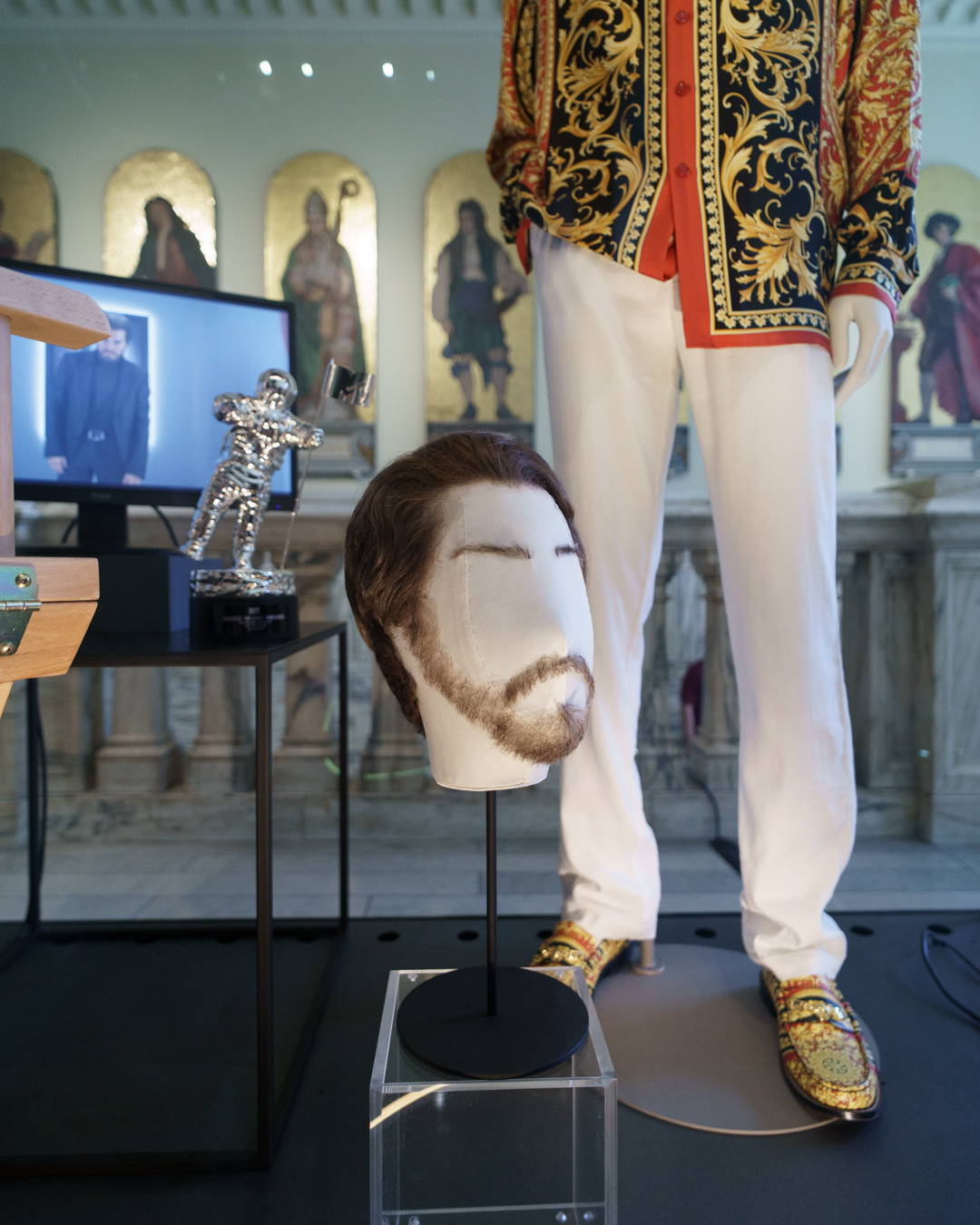
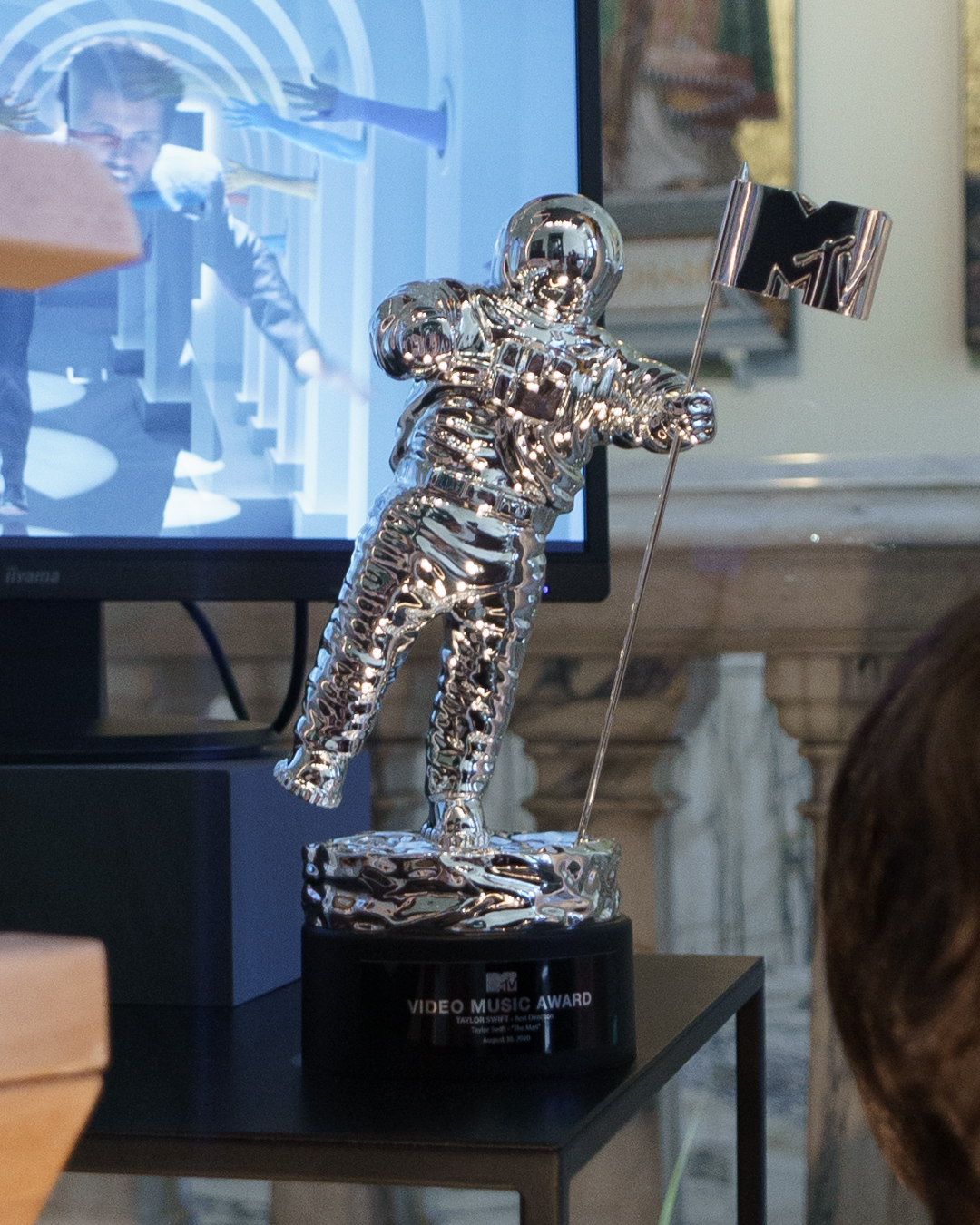
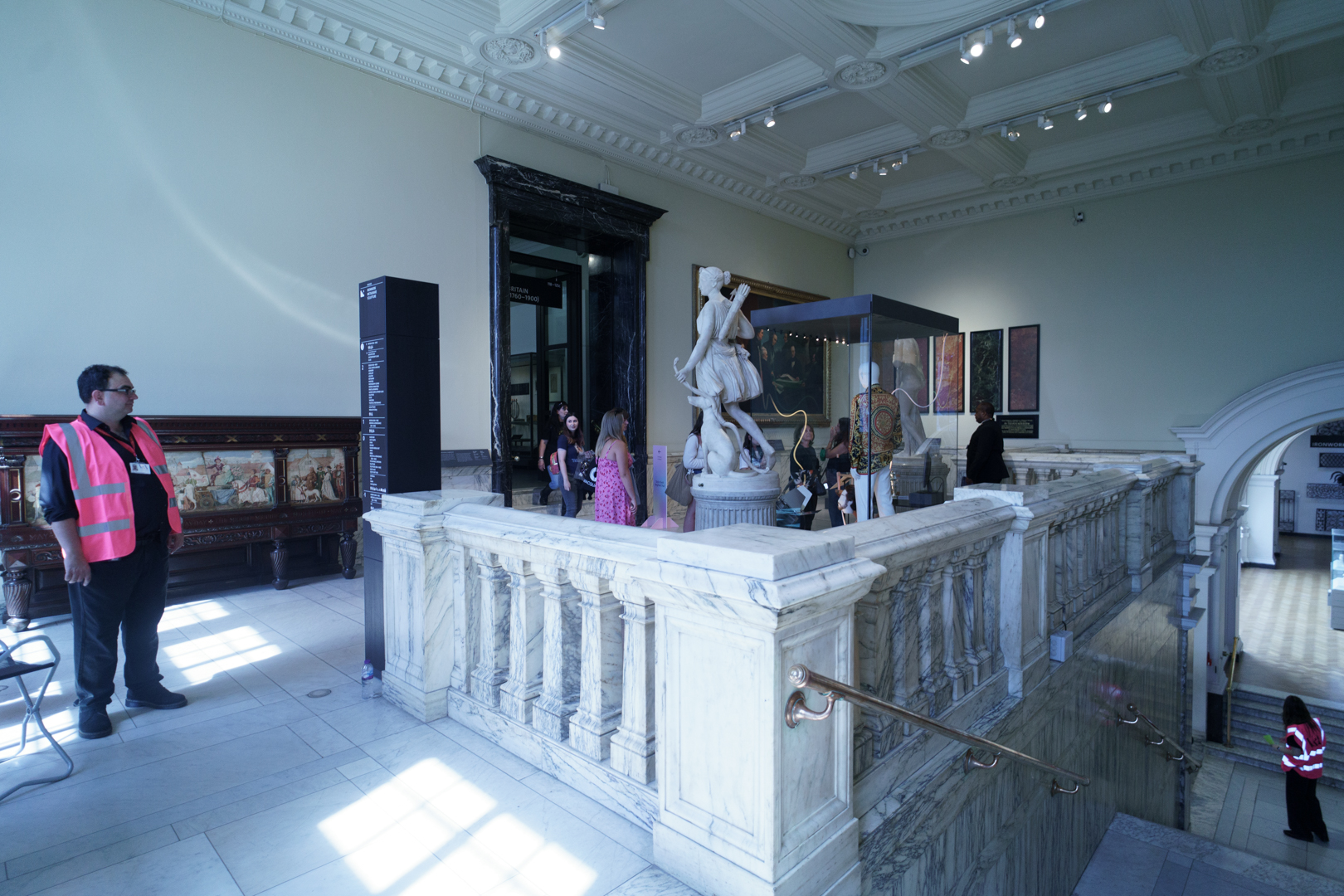
The trail officially begins with the Lover era (2019), where the Versace ensemble with wig and facial hair that turned Taylor into a drag ‘playboy millionaire’ in her self-directed music video of The Man stands nonchalantly defiant against a backdrop of celebrated male artists portrayed in the Kensington Valhalla mosaics. Flanking the display, which includes a director’s chair and the MTV VMA ‘Best Direction’ Award she won, are two sculptures of Venus and Diana, both powerful goddesses who struck fear in the hearts of the men who defied them.
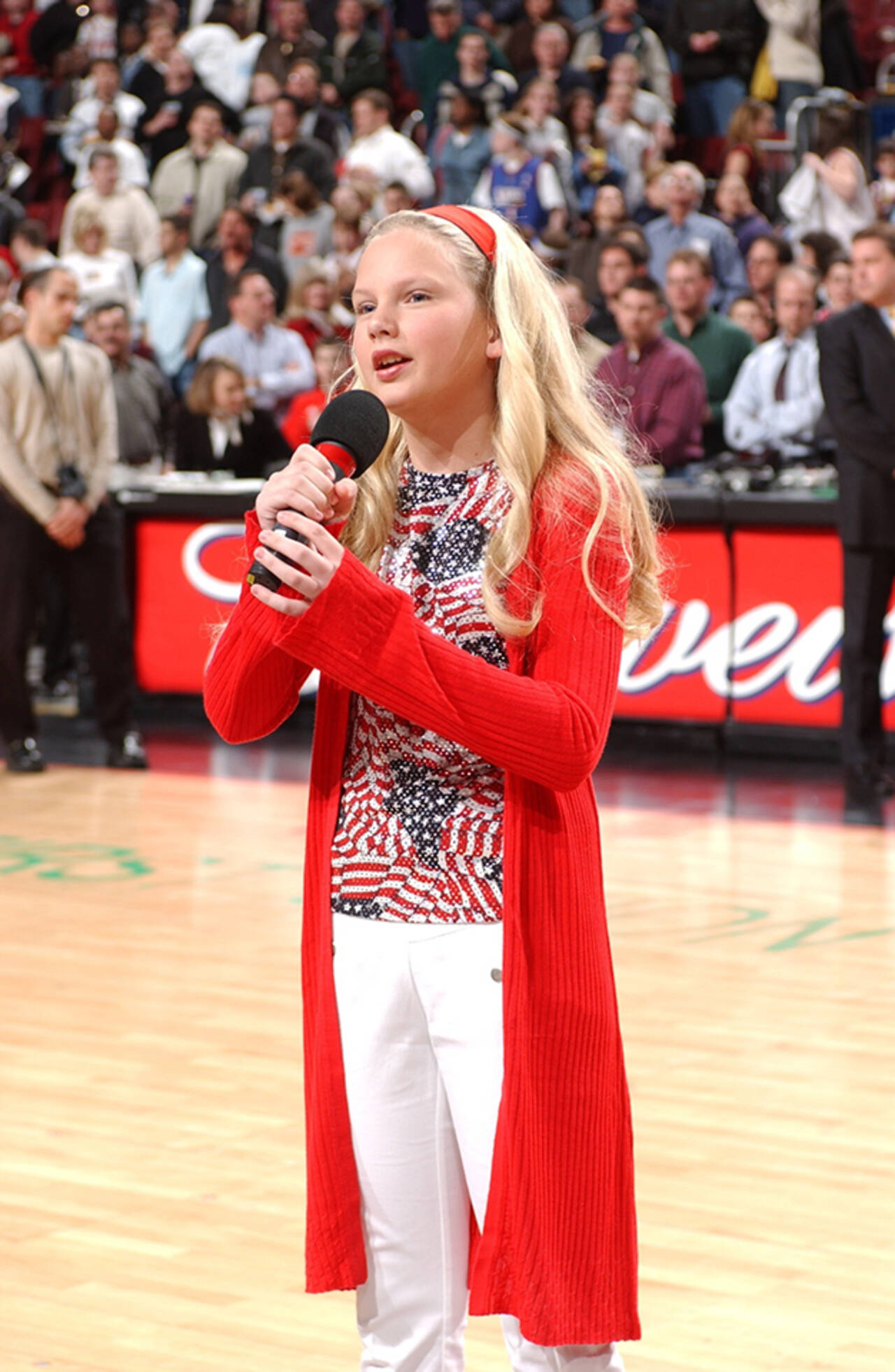
However, my version of the trail begins with the 16-year-old Taylor, who joined beloved country-couple Tim McGraw and Faith Hill on the Soul2Soul II Tour in 2007 as one of four opening acts. Taylor knew exactly what she wanted and she got it. During her adorable first phone call with Tim on the radio, she bravely asked him:
‘Tim, when are you gonna start, like, bringing out opening acts again? […] I have someone who I think will be really perfect for it […] I think Taylor something.’
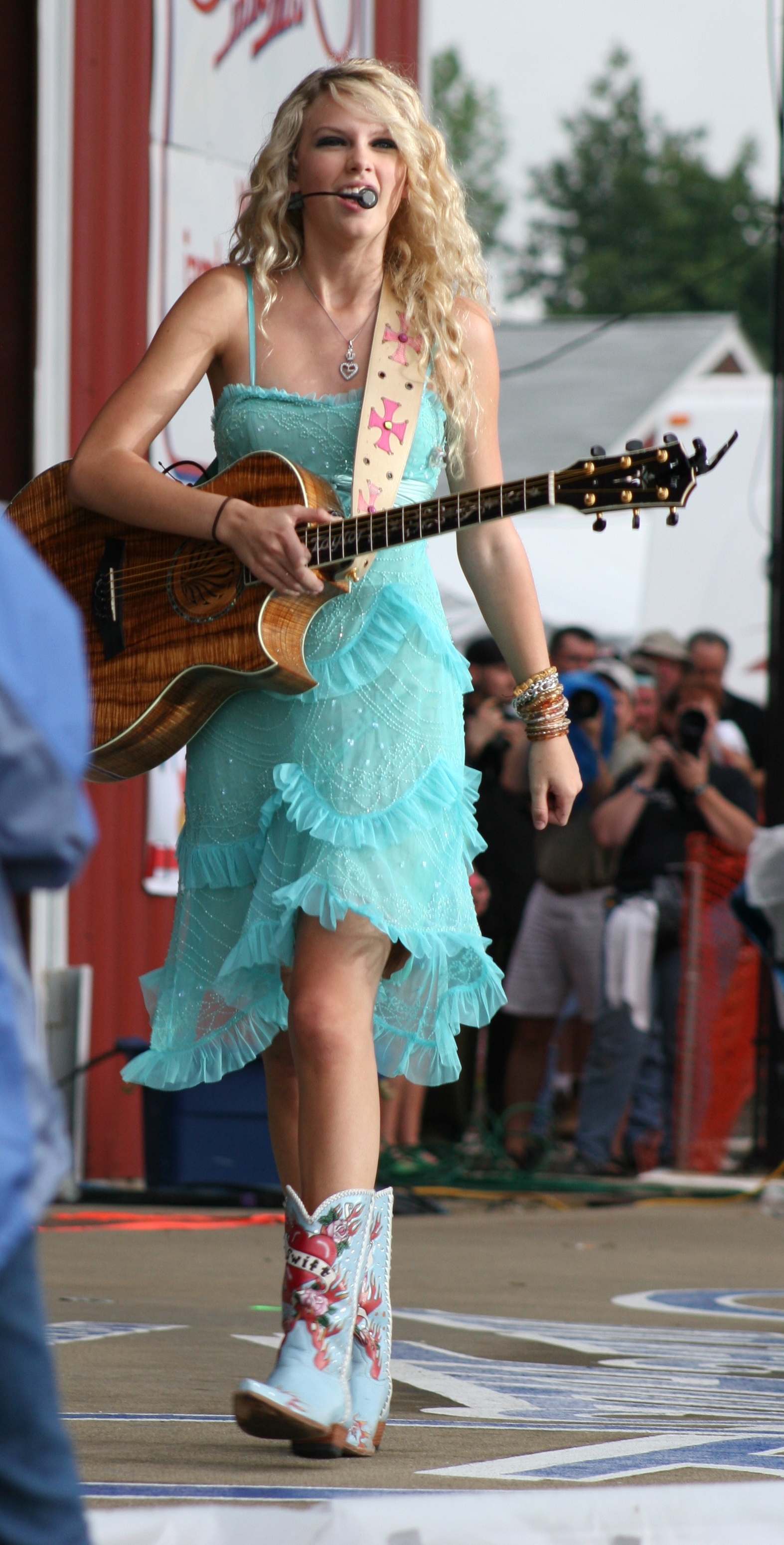
She had just released her first, self-titled album Taylor Swift (2006) not too long ago, which became a commercial success that revolutionised women’s country music with a radical new sound characterised by teenage confessions of life and love, with infusions of light pop and acoustic guitar. Although the latest revival of country-pop in the 1990s and early 2000s remained strong, Taylor’s version had a refreshing, younger vibe that was inviting, raw, honest, personal, and very relatable for her teenage listeners. Teardrops were shed on more guitars than one that year.

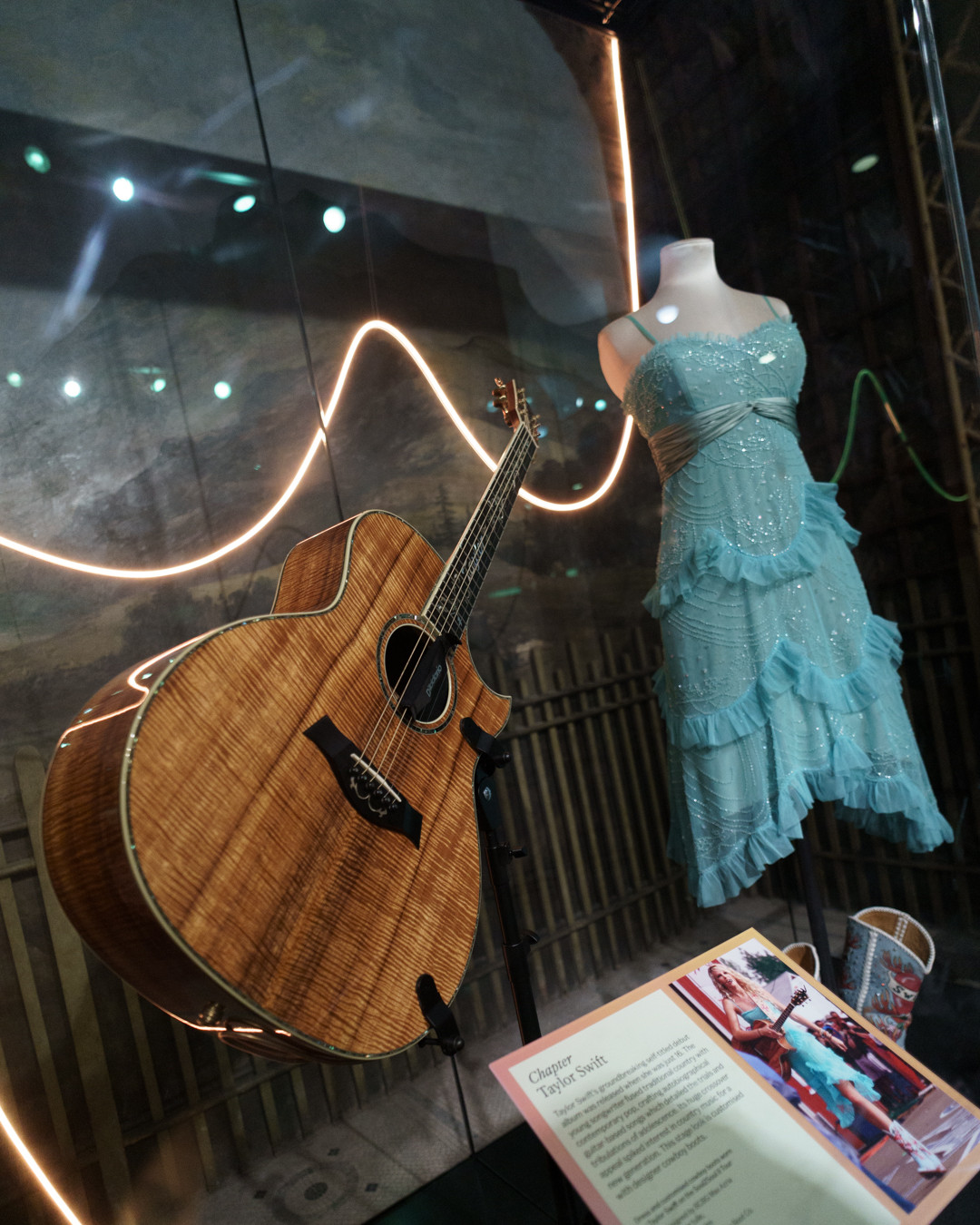
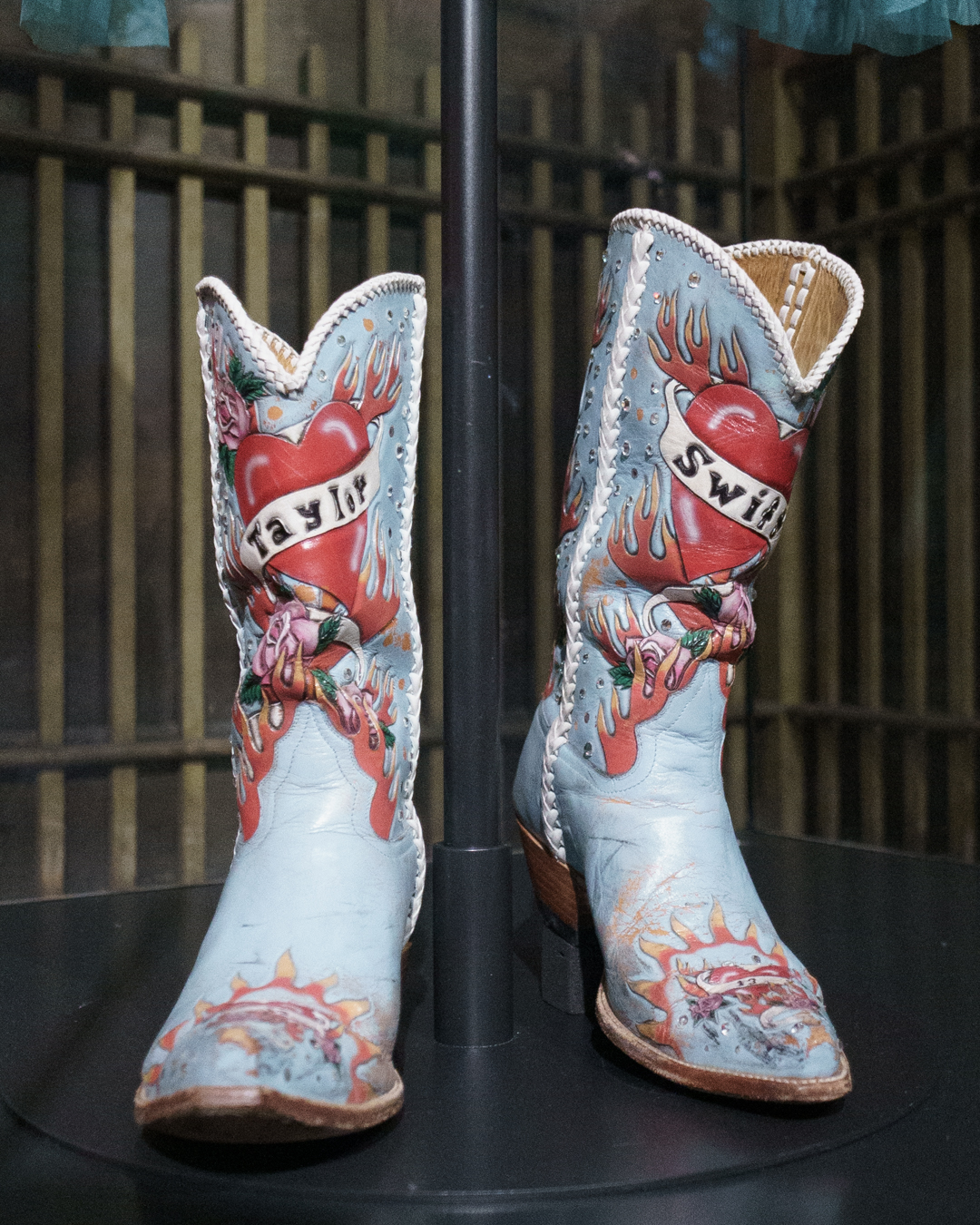
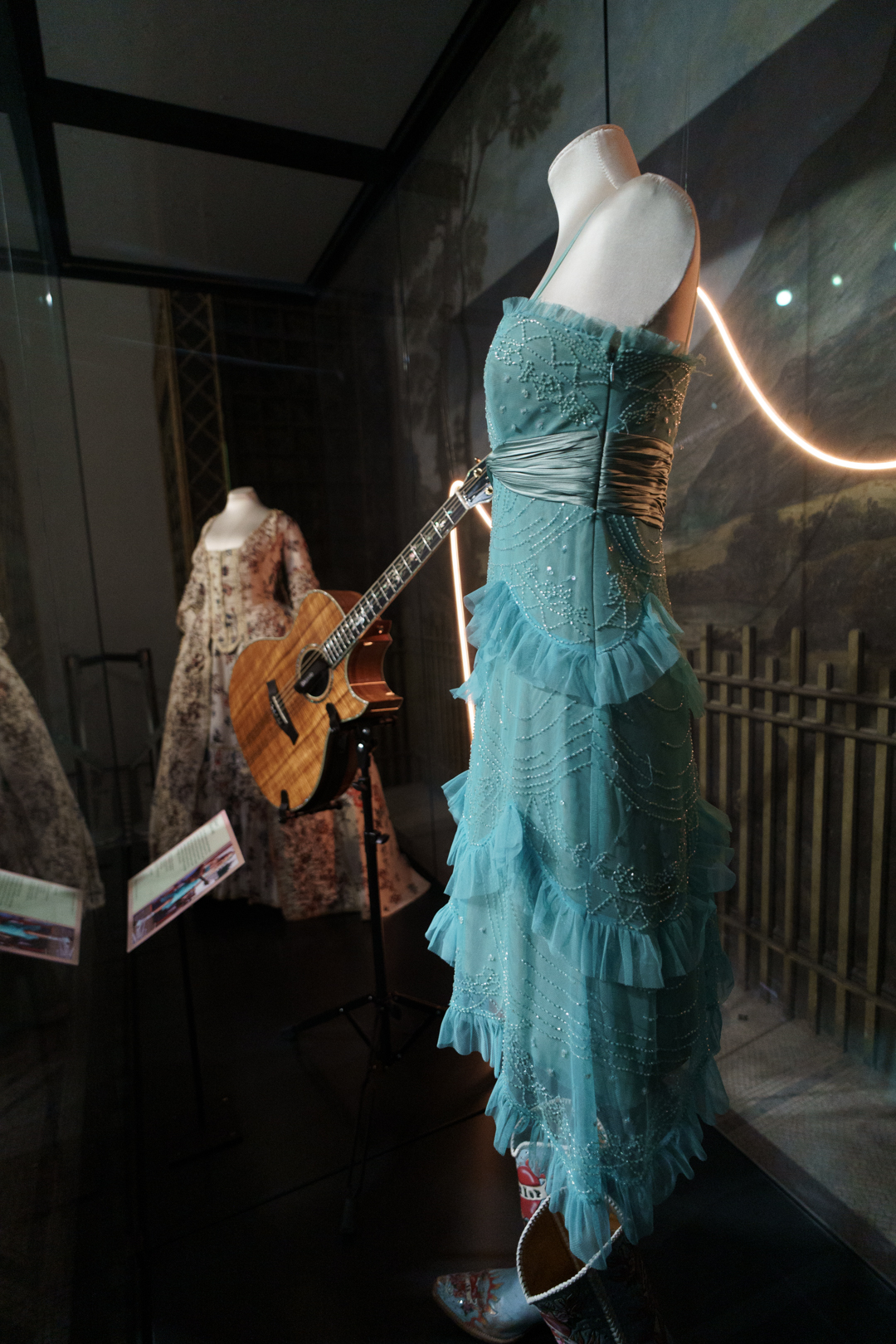
Donning a colourful turquoise dress by BCBG Max Azria, now-iconic custom Liberty cowboy boots, and a Taylor Presentation Series PS-24ce Grand Auditorium koa guitar with her name personalised on the fretboard’s inlay, she was ready to hit the big leagues with the namesake of her first single Tim McGraw. The outfit also made an appearance at The ACM New Artists Party for a Cause in Las Vegas on 15th May that year. At the V&A, it shares a display with an 18th-century robe à la française, highlighting the intricate embroidery and colours of her Liberty boots. Especially prominent is the number 13, now a shared symbol between her and the fans:
‘I was born on the 13th, I turned 13 on Friday the 13th, my first album went gold in 13 weeks. Also, my first song that ever went number 1, it had a 13 second intro, I didn’t even do that on purpose!’
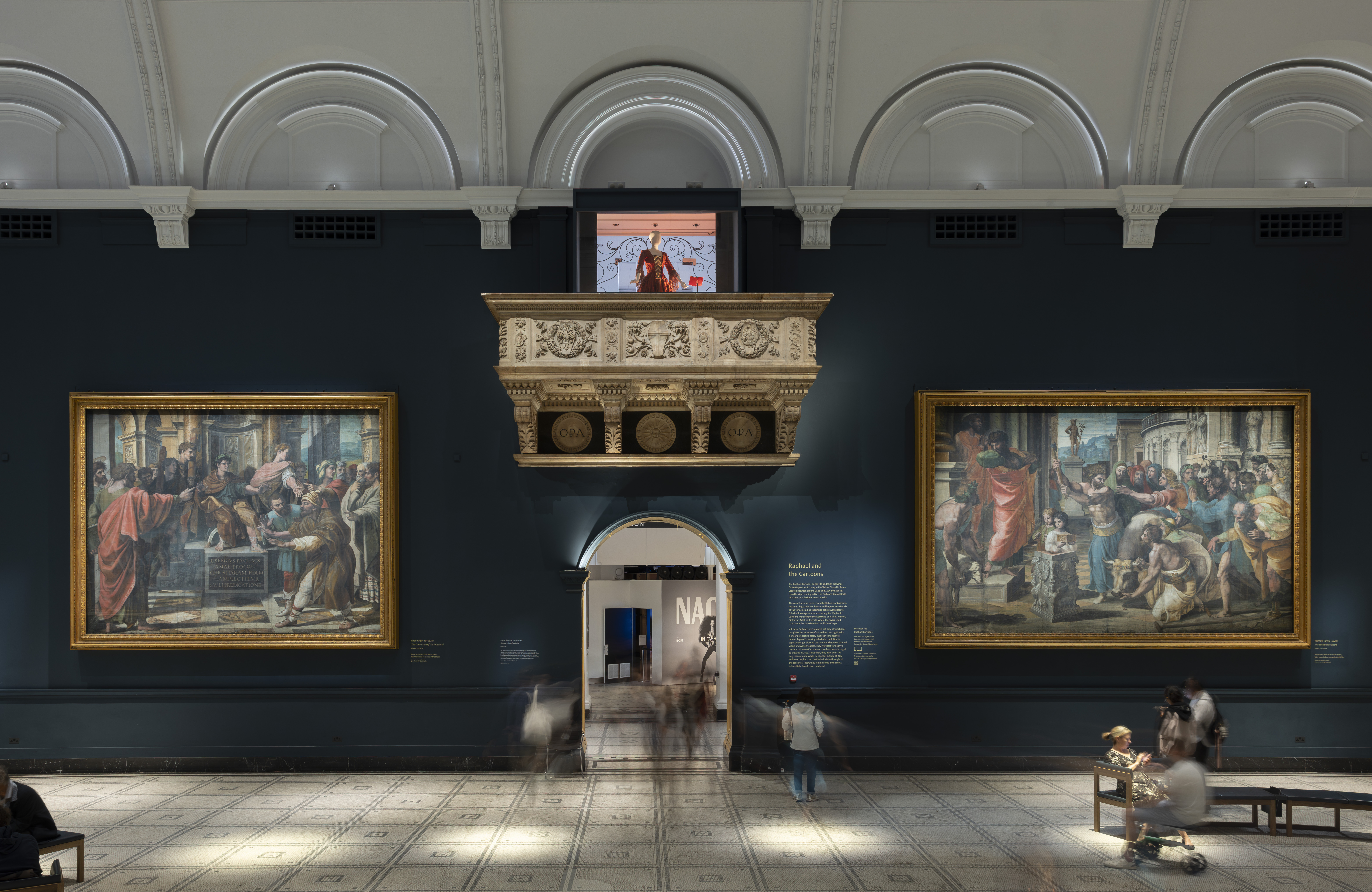
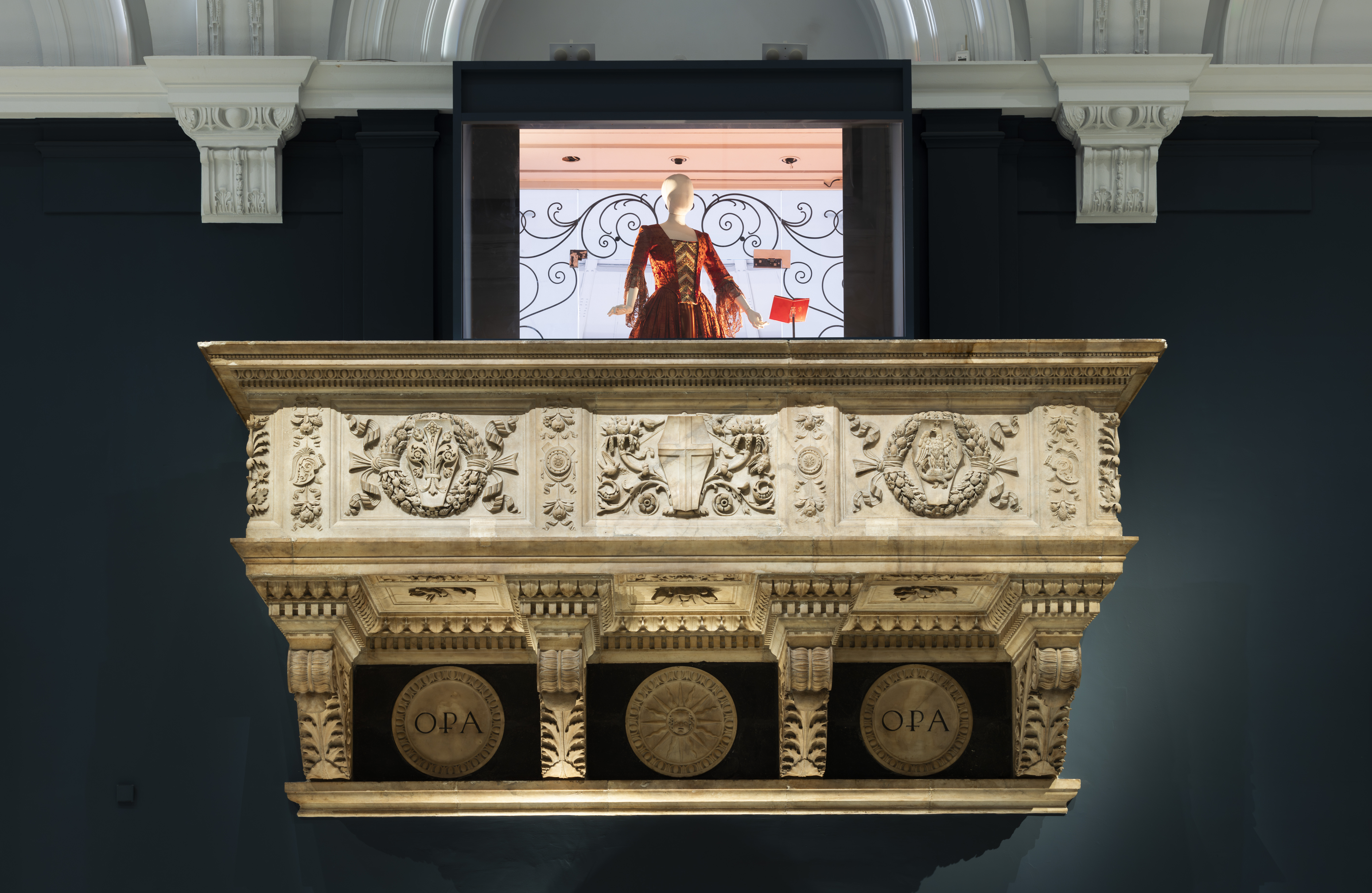
Only several steps away is the Raphael Gallery, where an illicit affair takes place in this grand room devoted to Raphael’s tapestry cartoons for a Vatican commission from Pope Leo X in around 1515. Overseeing this space is Taylor’s period-inspired frock worn in the Love Story component of her first headline Fearless Tour, still her biggest hit to this day from the Fearless album (2008), as demonstrated by the audience’s electrifying sing-alongs and countless proposals during its performance on the Eras Tour. A clear reference to the song’s Shakespearean narrative (with a reimagined happy ending), our Juliet gazes down at us from a 16th-century cantoria (singing gallery) by Baccio d’Agnolo – ‘a balcony in summer air’ – awaiting Romeo to save her. We’ll do that later on the other side of the door when we take a closer look at her in the Ironwork gallery.
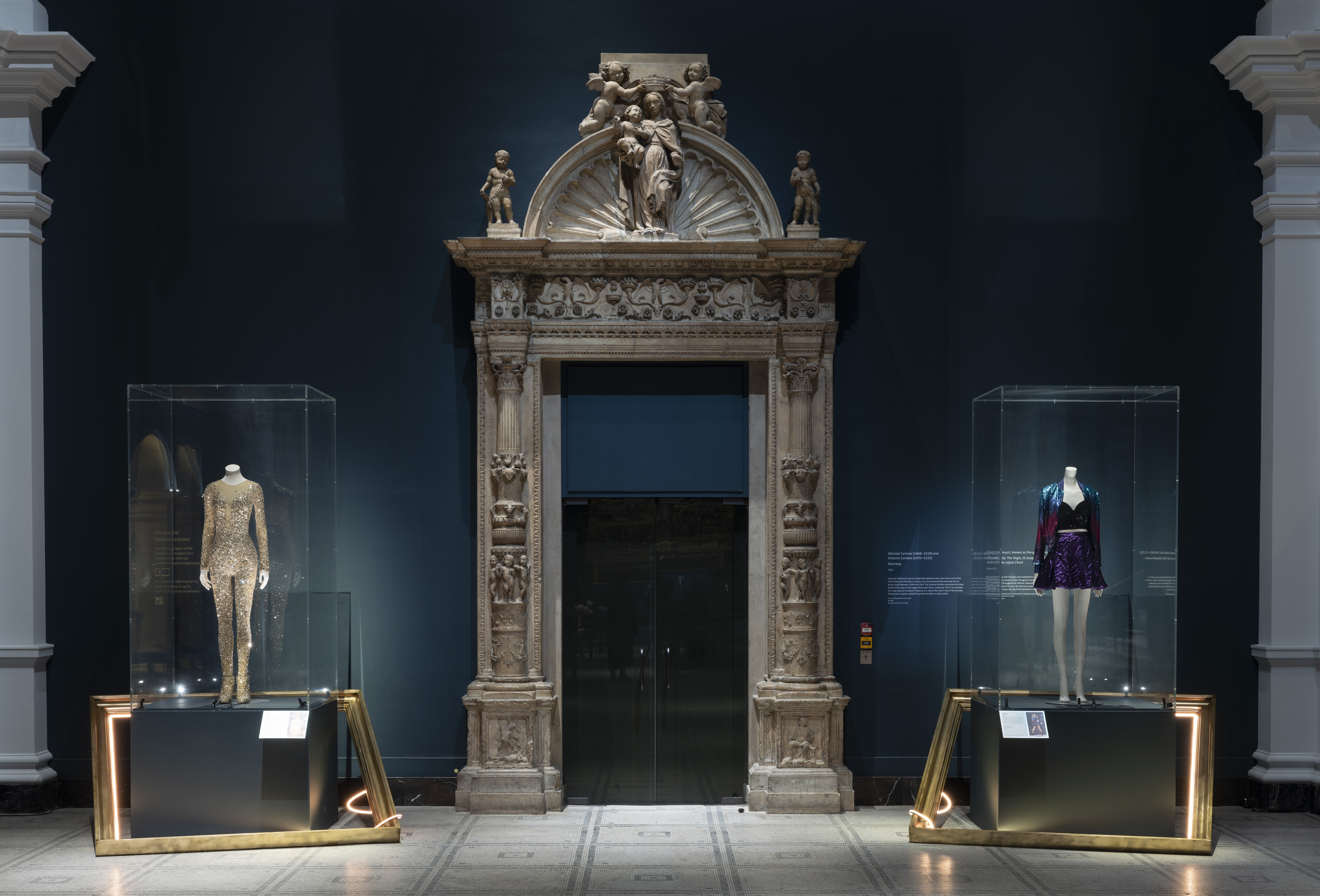
In the meantime, two outfits from The 1989 World Tour preside under Perugino’s Nativity fresco and a sculpted doorway originally from the Palazzo Pallavicino in Piazza di Fossatello, Genoa. Released in 2014, 1989 (her birth year) was the album where Taylor controversially transitioned from country music into the world of pop. The backlash from the country community was intense, with many purist fans ultimately abandoning her, and she became the butt of many public jokes at the awards ceremonies. However, in much the same way that Raphael challenged himself to employ new visual strategies that never go out of style when designing the tapestry cartoons, Taylor was also redefining her horizons by experimenting with different blends of music – in this case, synth-pop – waking up each day ‘not wanting but needing to make a new style of music’, while diversifying her fanbase along the way.
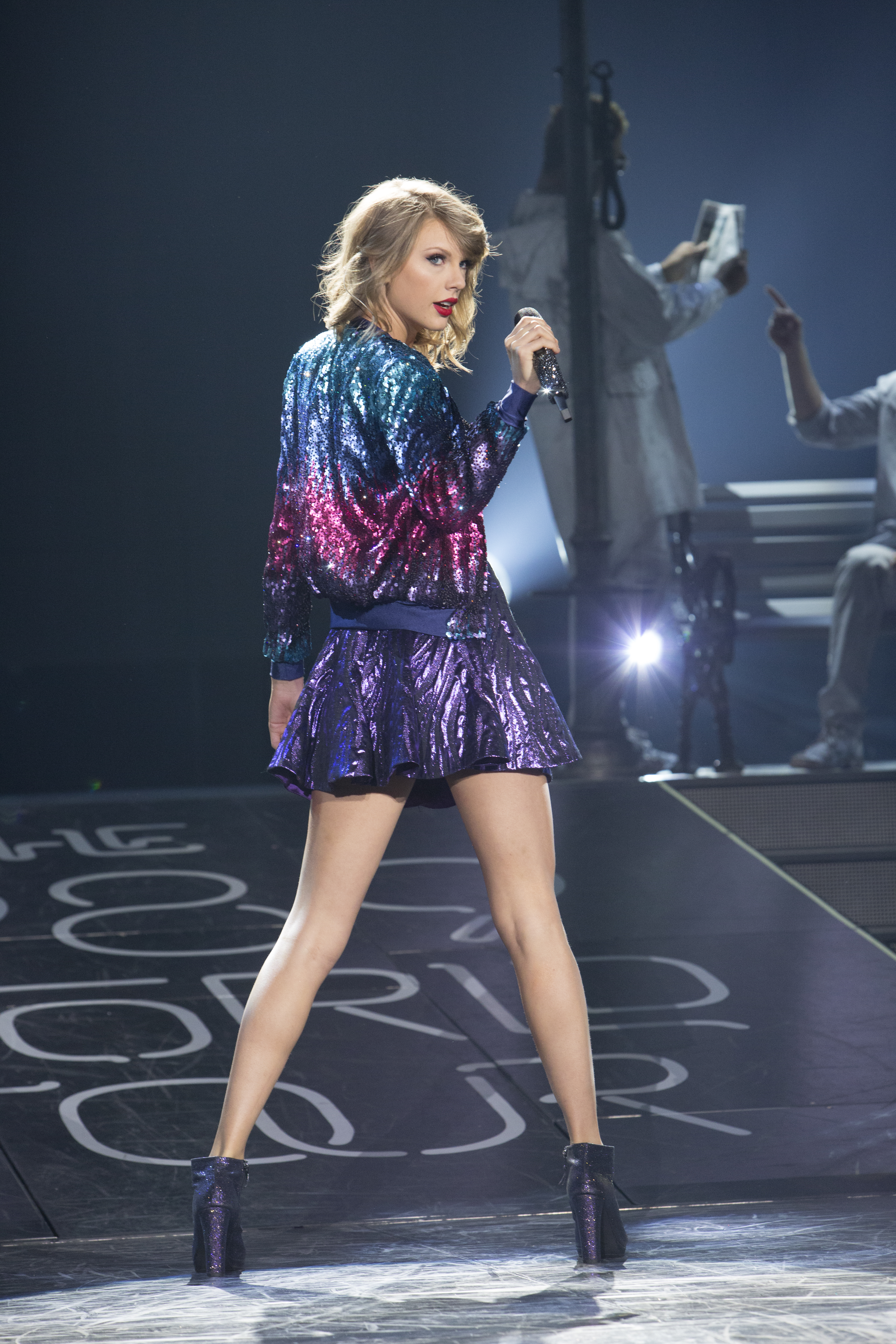
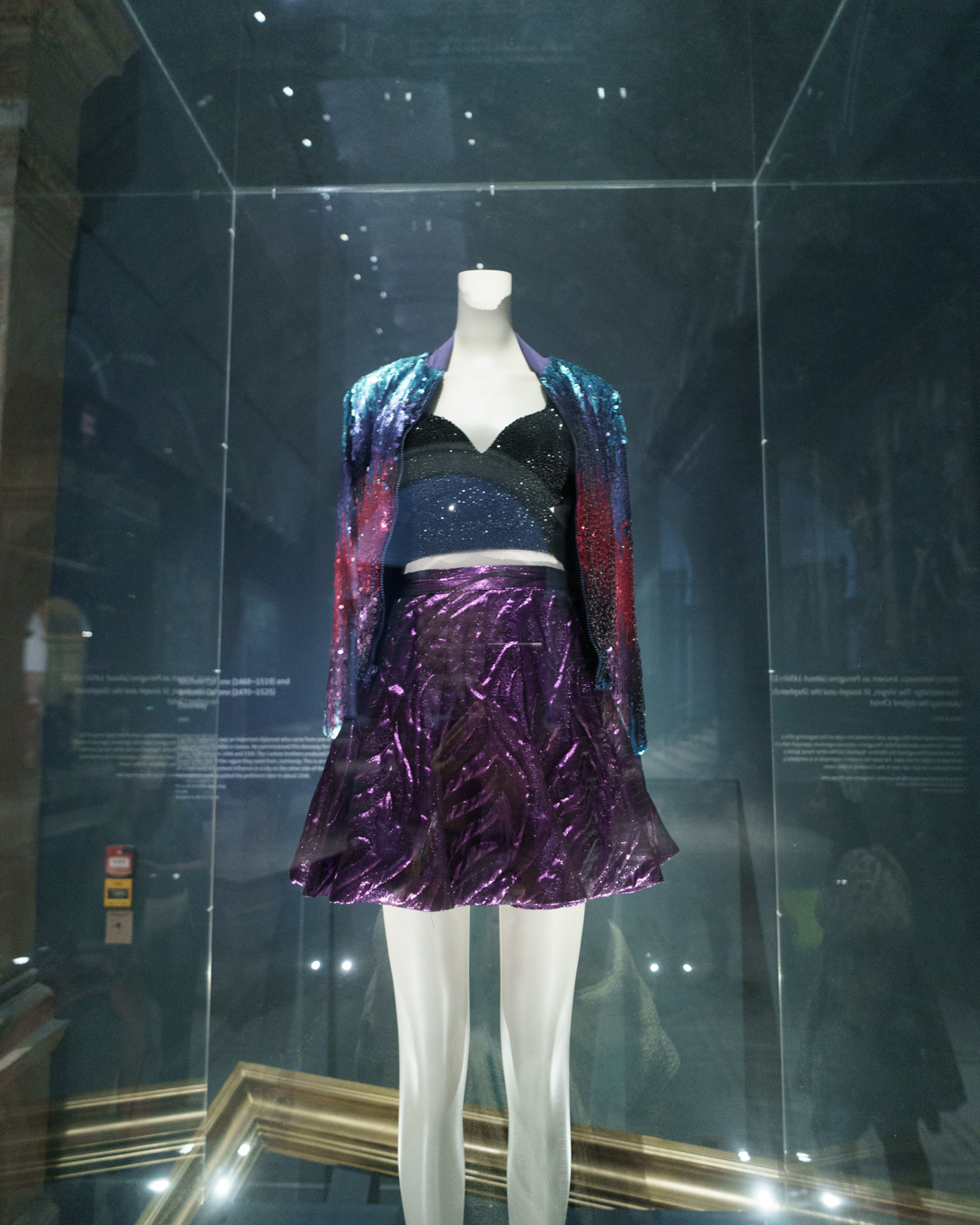
The defining concert outfits of the 1989 era – in both the original tour and the Eras Tour – are shimmering crop tops and miniskirts in various colour combinations inspired by the 1980s. On display is the ensemble designed by Jessica Jones, consisting of a black top, styled purple skirt, and a jacket with gradations of blue, pink, and purple. Much more striking, however, is the nude, sequined catsuit designed by Zuhair Murad with matching Stuart Weitzman boots, an ensemble worn during her performance of Out of the Woods. The two displays emerge from large gilt frames, mirroring those around the Raphael cartoons.

From here, one can take the middle stairs straight up to Level 1 of the Britain Galleries, where my two favourite Eras reside, bridging the large gap between Fearless and 1989.
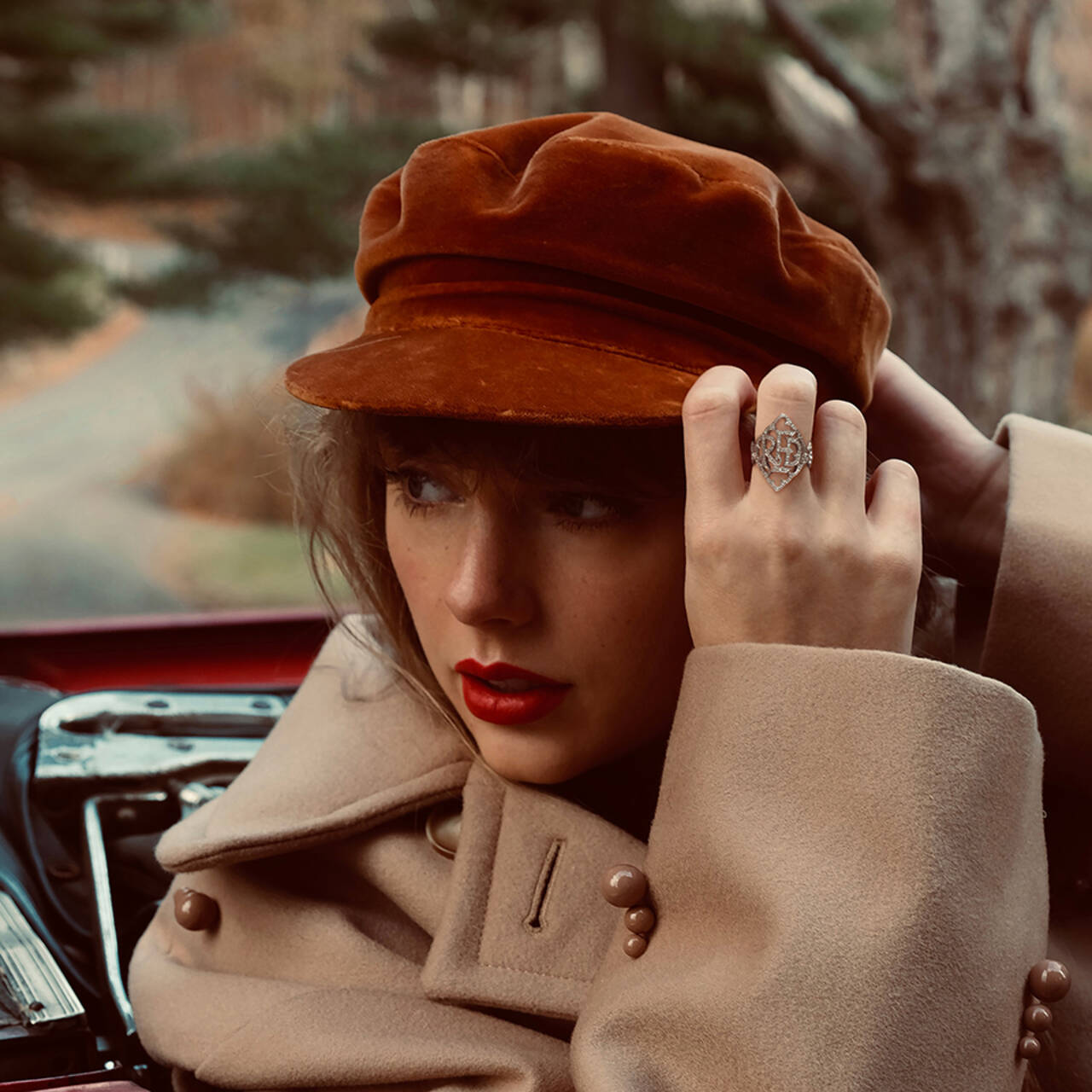
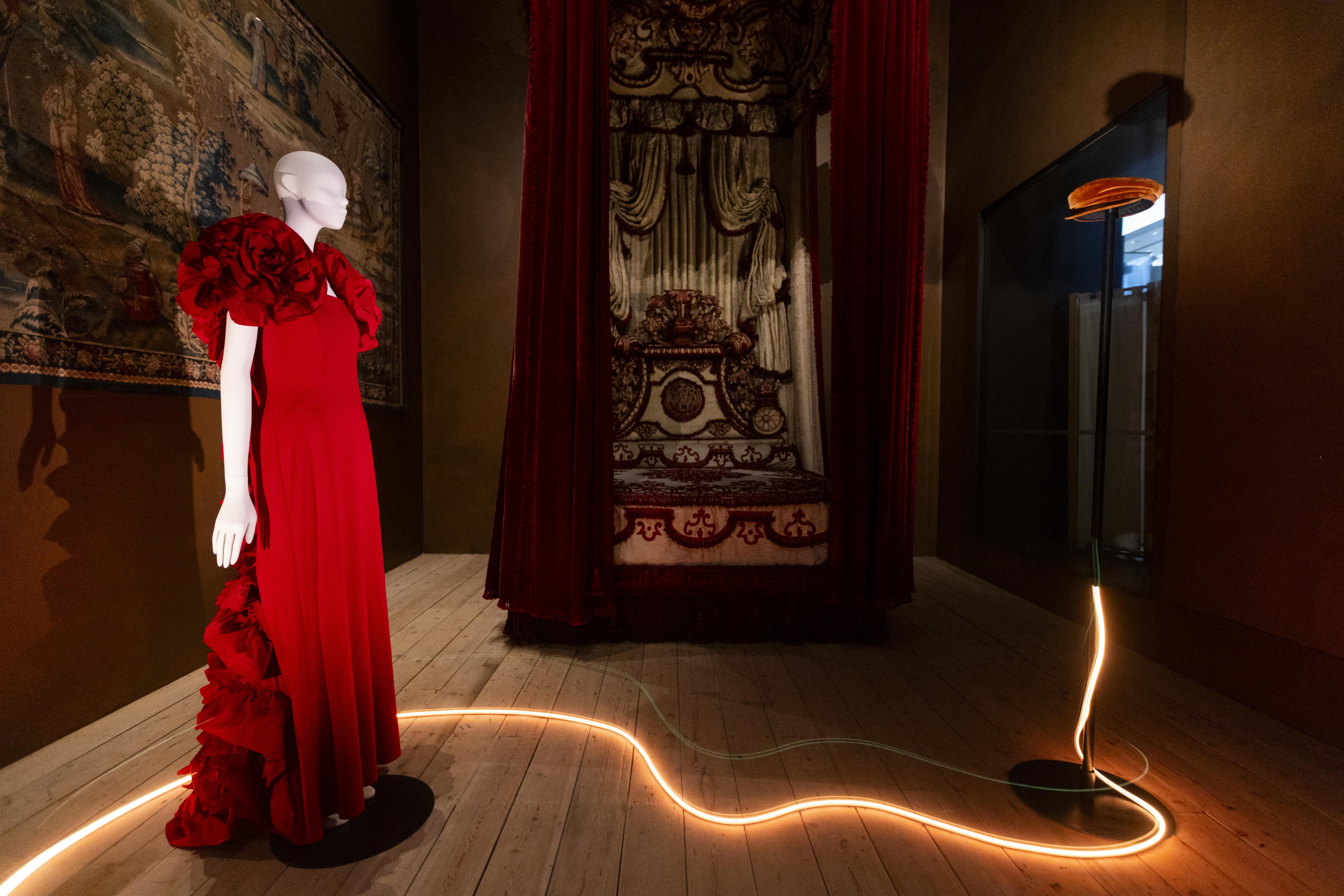
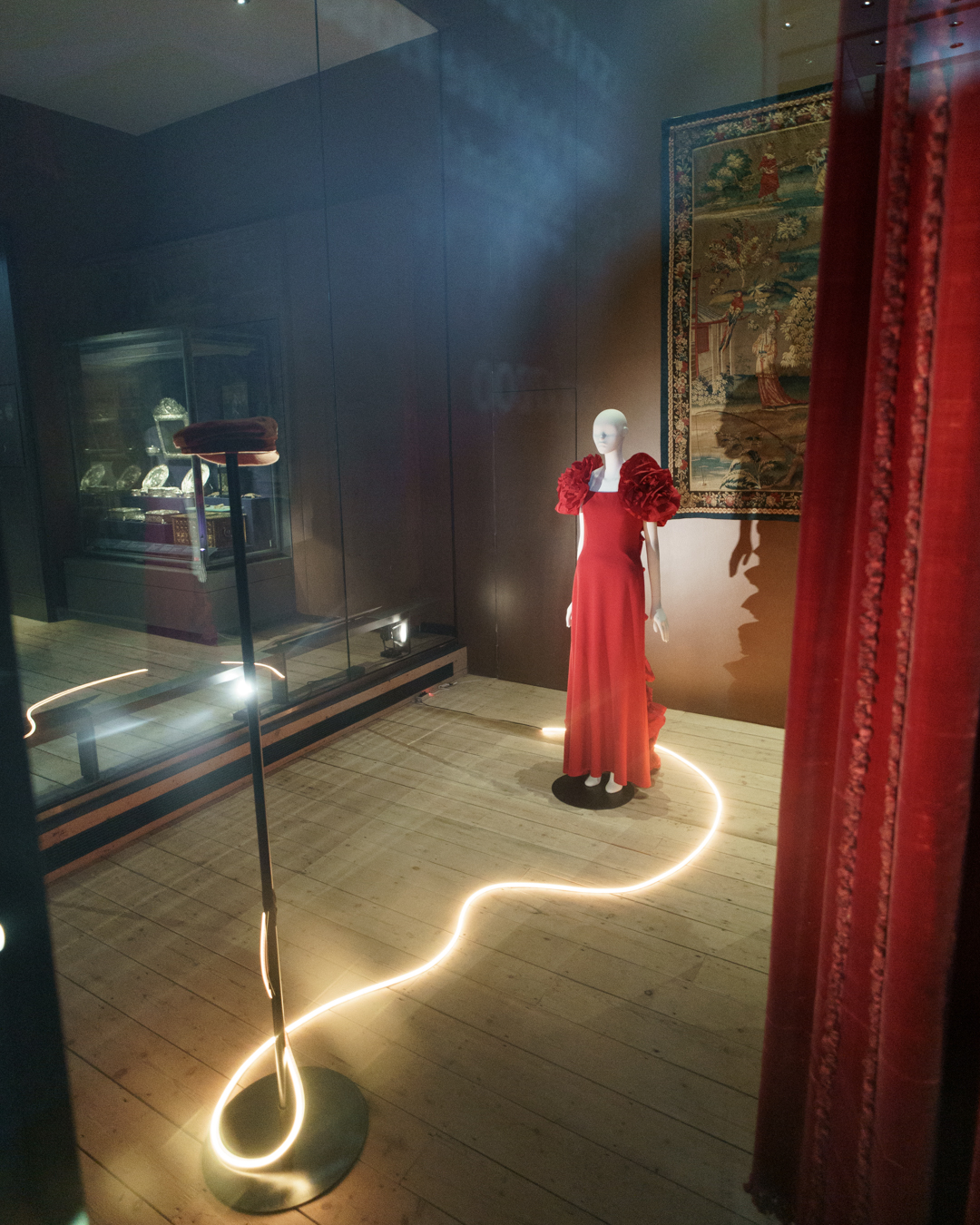
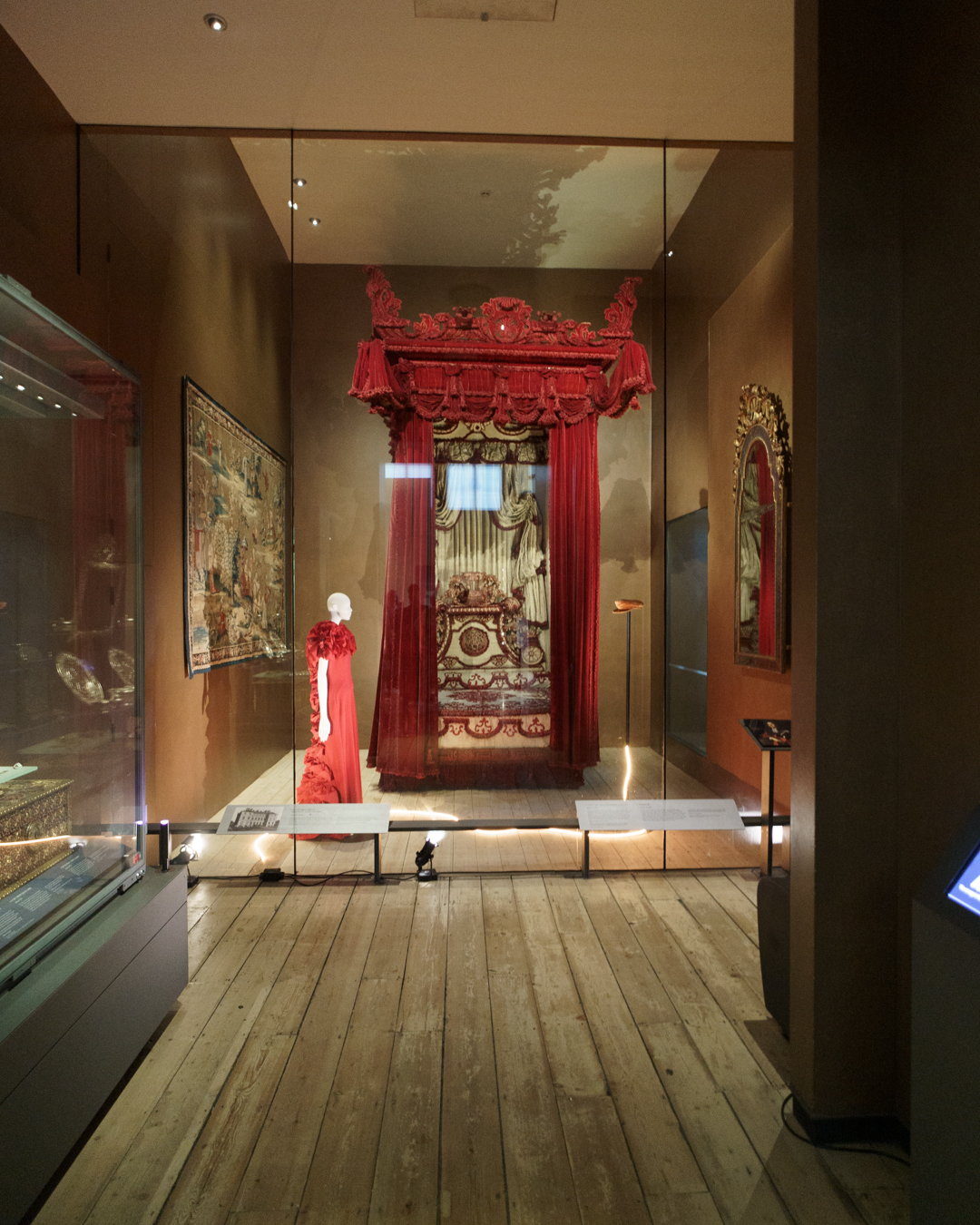
Accompanying the stately Melville Bed, reserved explicitly for use by visiting monarchs, are two pieces representing the RED era (2012), a treacherous hint of things to come with its eclectic mix of songs in the genres of country, pop, rock, and electronica, while remaining an impressively balanced album overall. Instantly recognisable is the fisherman’s cap that Taylor swiftly adjusts on the cover of RED (Taylor’s Version) (2021), the re-recording of the original album (more on this later). On the left is the Tadashi Shoji dress she wore in the music video for I Bet You Think About Me, one of the ‘From the Vault’ bonus tracks featured on the re-record. The crimson theme across all three objects is fairly self-explanatory. On opening weekend, visitors can’t actually enter the display room due to a barrier in front of the entrance, so one could only see them from a distance.
In the Norfolk House Music Room at the other end of the gallery lies the album that is closest to my heart: Speak Now (2010). As Taylor’s first album to be ‘completely self-written, between the ages of 18 and 20’, the songs spoke strongly to my adolescent emotions with their ‘brutal honesty, unfiltered diaristic confessions and wild wistfulness’; as a teen, I was a deeply hopeless romantic, enchanted by a girl for the longest time who ultimately turned down my advances while sparks kept flying in my head.
In her announcement of the re-recording, Taylor wrote:
‘I love this album because it tells a tale of growing up, flailing, flying and crashing…and living to speak about it.’
My deluxe copy of the album was on repeat daily for the best part of two years, carrying me through the innocent friendships, mean adversaries, crushes, heartbreaks, exams, daydreams, and haunting sleepless nights.
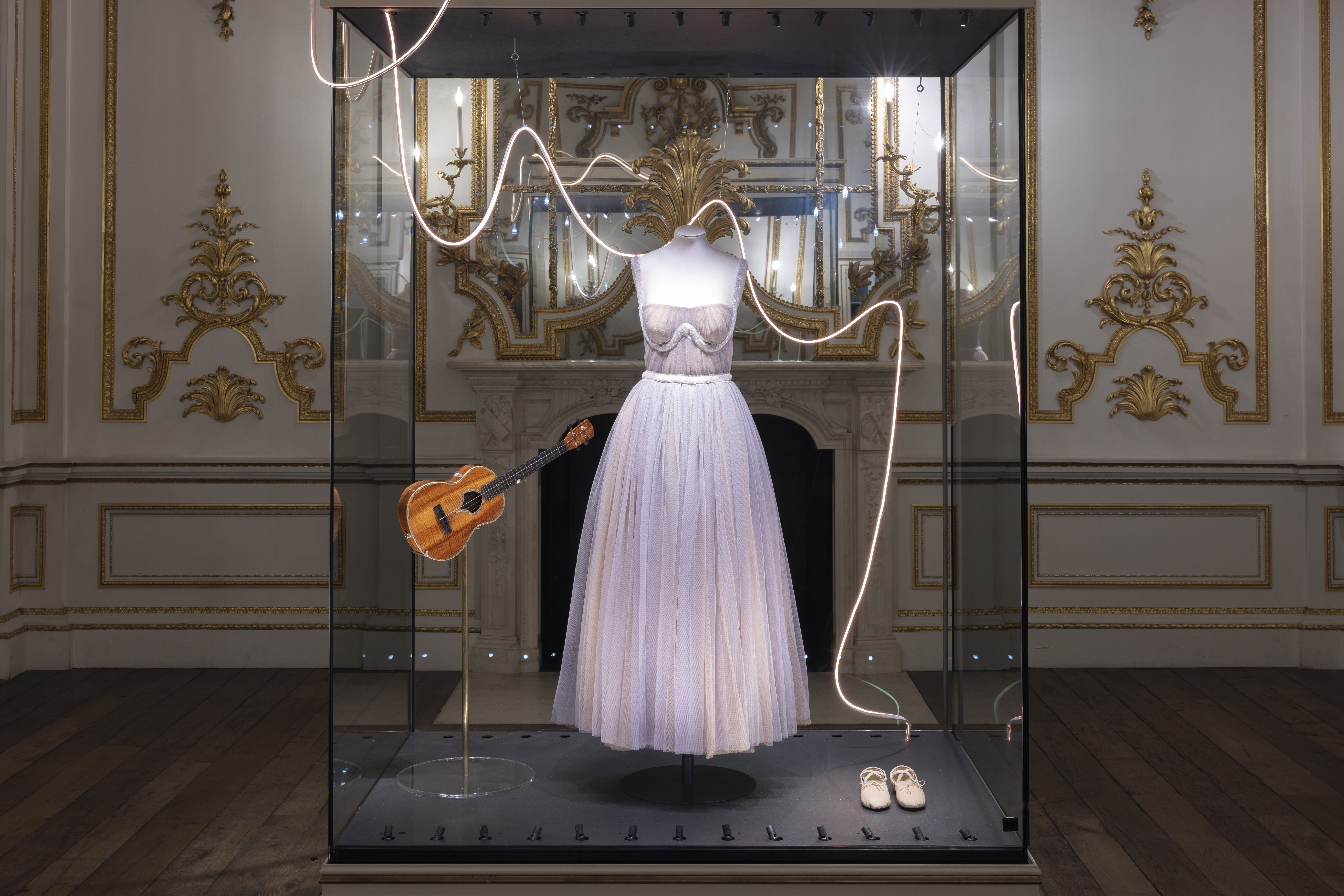
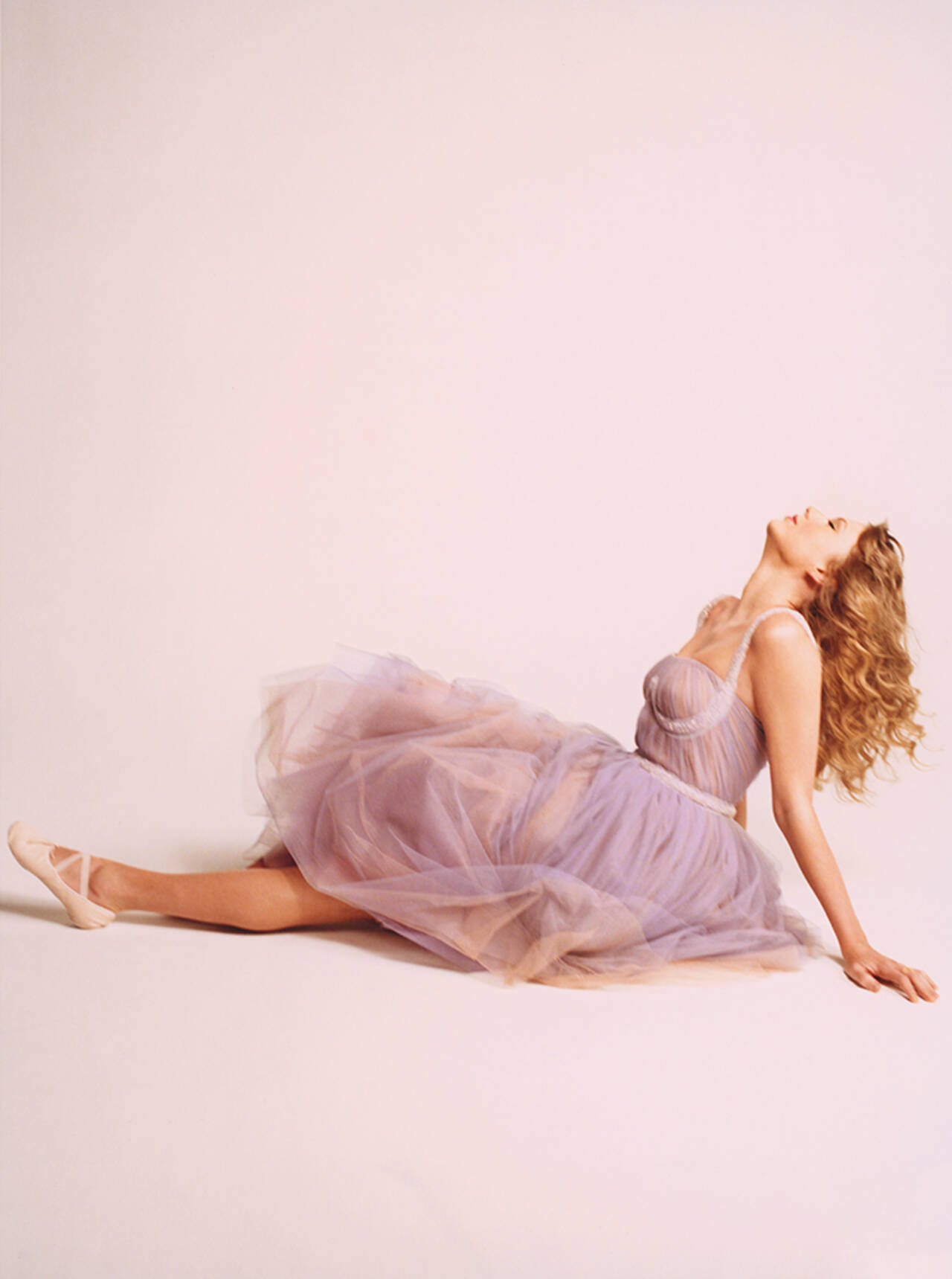
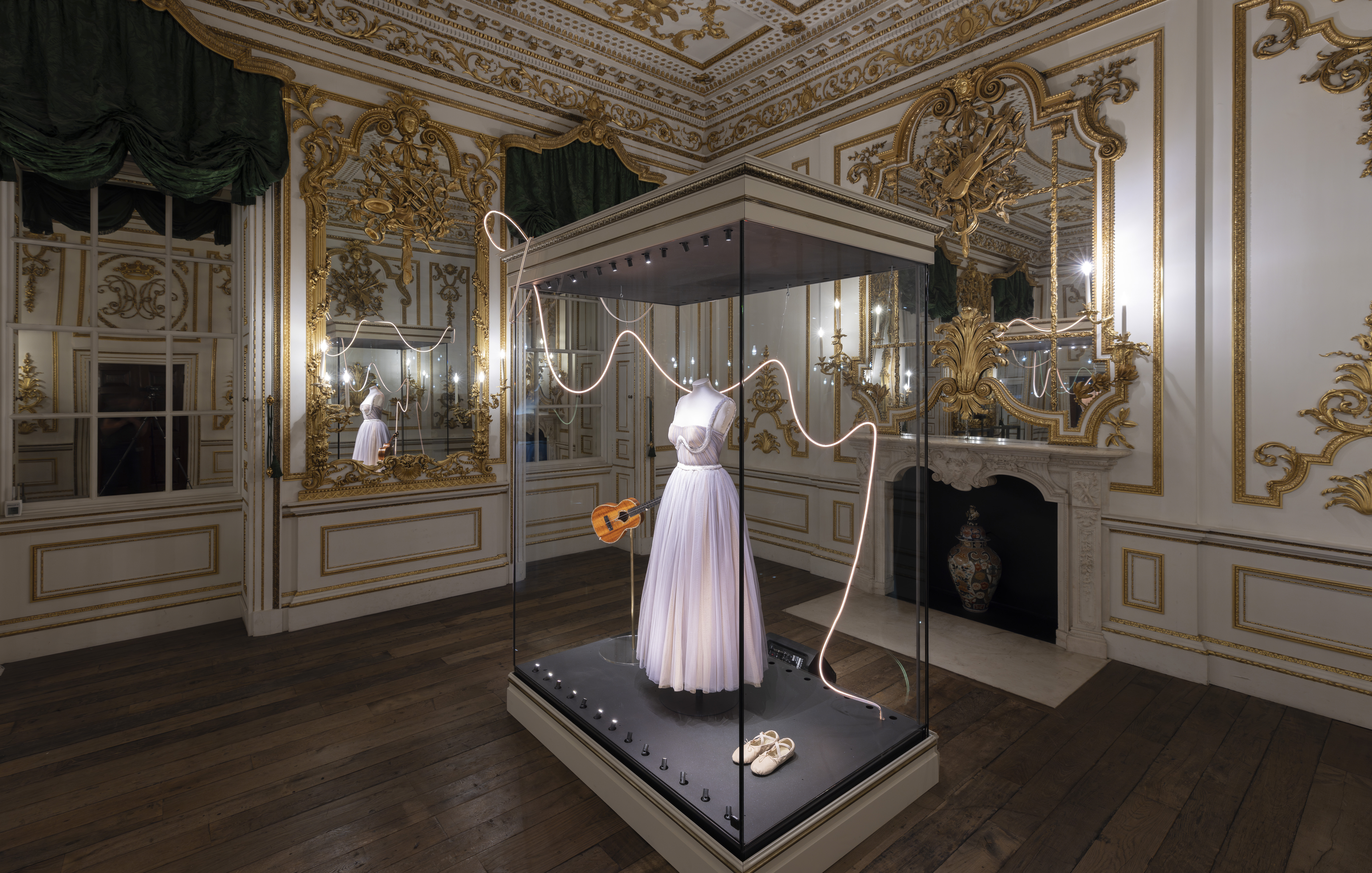
Speak Now was always characterised by simple elegance, so the refined Georgian aesthetic of the Music Room is a great setting for this display, while being thematically relevant by name. Featured here is the lavender tulle dress (by Reem Acra) and Capezio ballet shoes worn by Taylor on the back cover of Speak Now (Taylor’s Version) (2023), accompanied by the ukulele she played on the Speak Now World Tour.
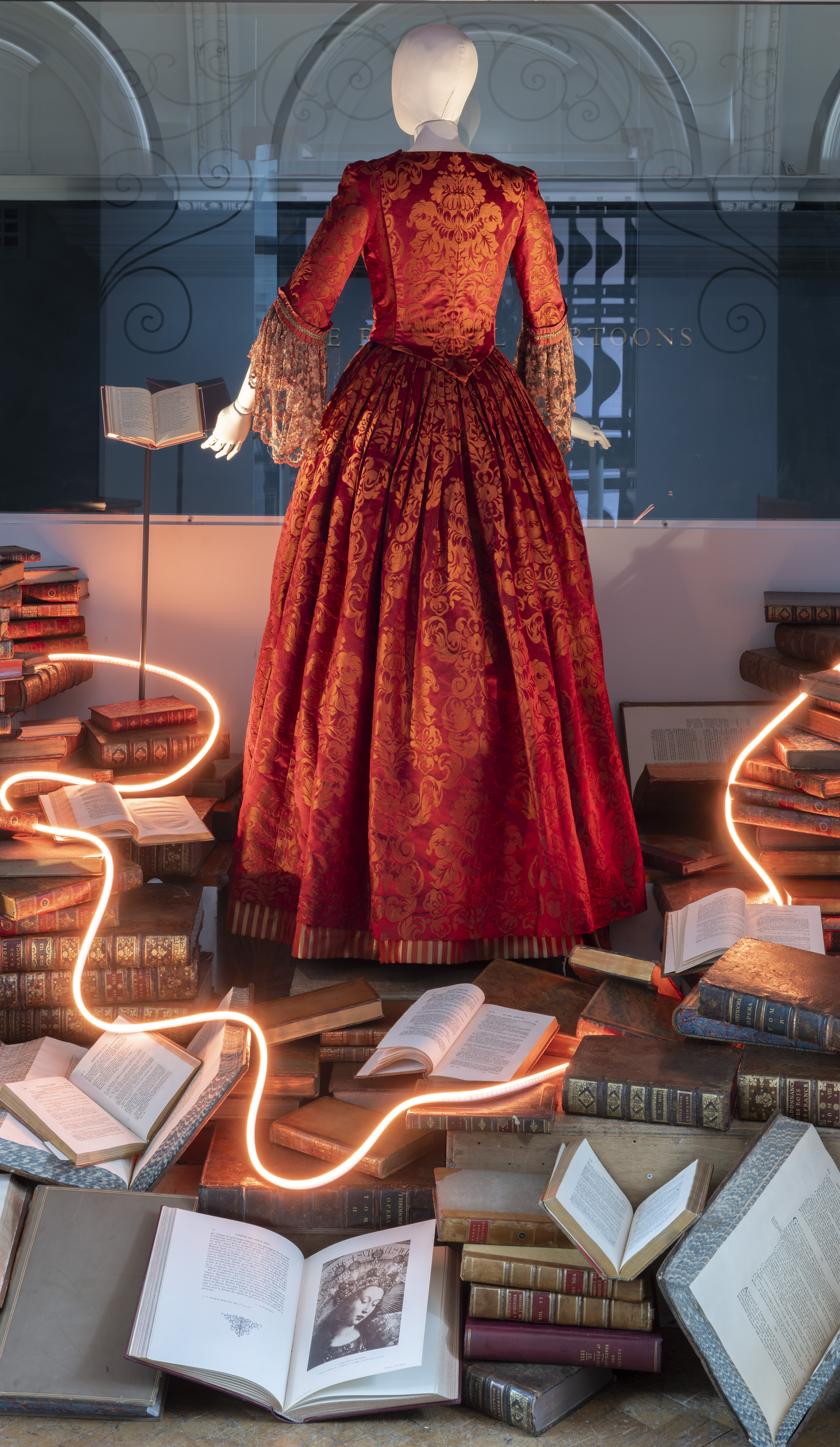
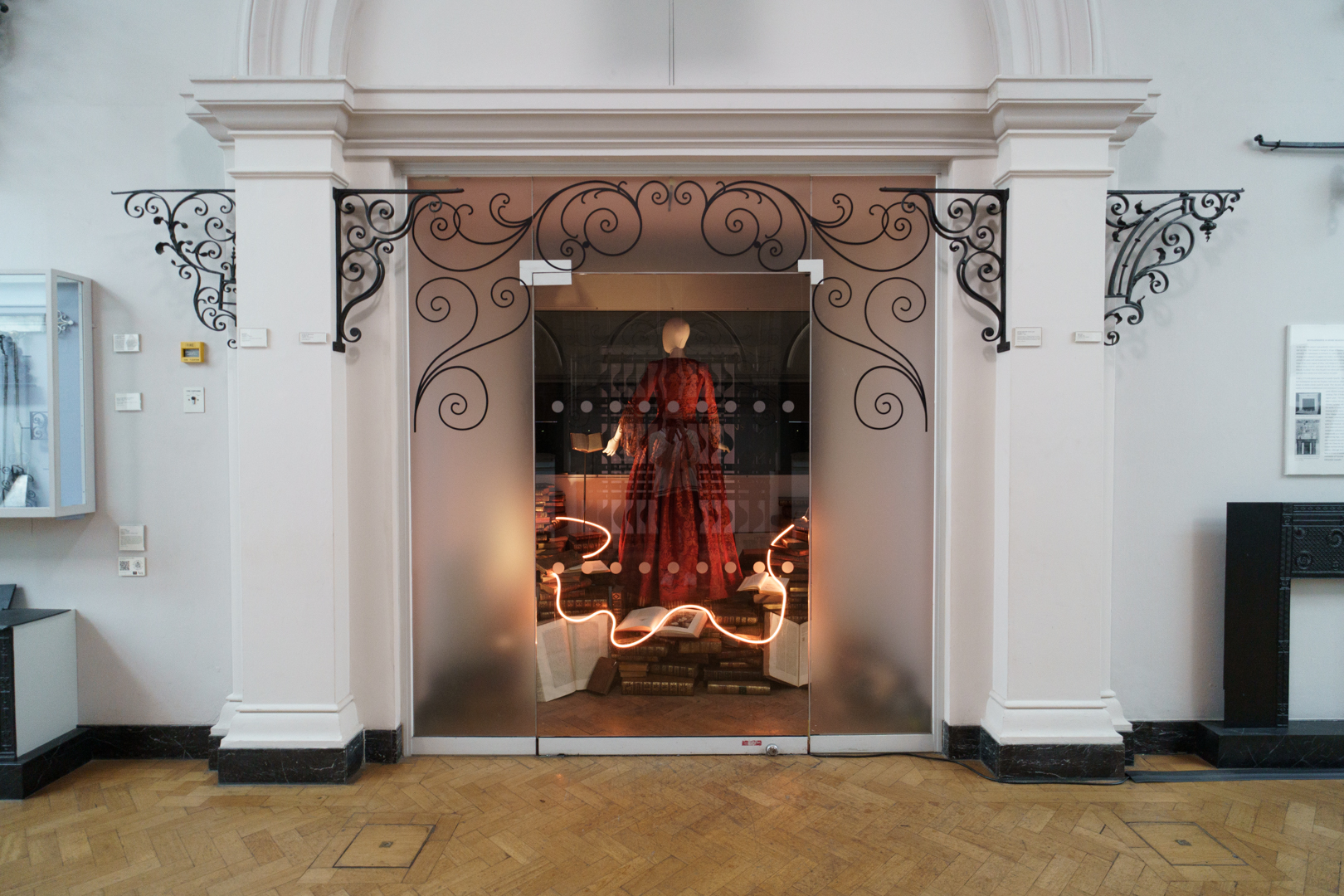
In the spirit of fairytale romances, one can then go upstairs from the middle of this gallery to save our damsel in distress in the Ironwork section. Framed by a glass doorway, one has a better view of the Love Story dress designed by Aubrey Hyde with its richly textured patterns. The installation is completed with stacks of books (some half-open), with the ‘invisible string’ acting as the primary light source. This part has not been signposted by the museum, so can be very easily missed.

Moving further up the same flight of stairs brings us face to face with Taylor’s delicate reputation. Caving under intense media scrutiny concerning her new musical direction following 1989, and of her personal life – the breakup with DJ Calvin Harris, and then the feud with Kim Kardashian and Kanye West over his song Famous – Taylor hid from public view for a whole year in 2016. All of a sudden, on 18th August 2017, she blanked out all her social media accounts, before announcing the reputation (2017) album several days later. She described it as ‘a goth-punk moment of female rage at being gaslit by an entire social structure’; this is the true origin of Female Rage: The Musical.
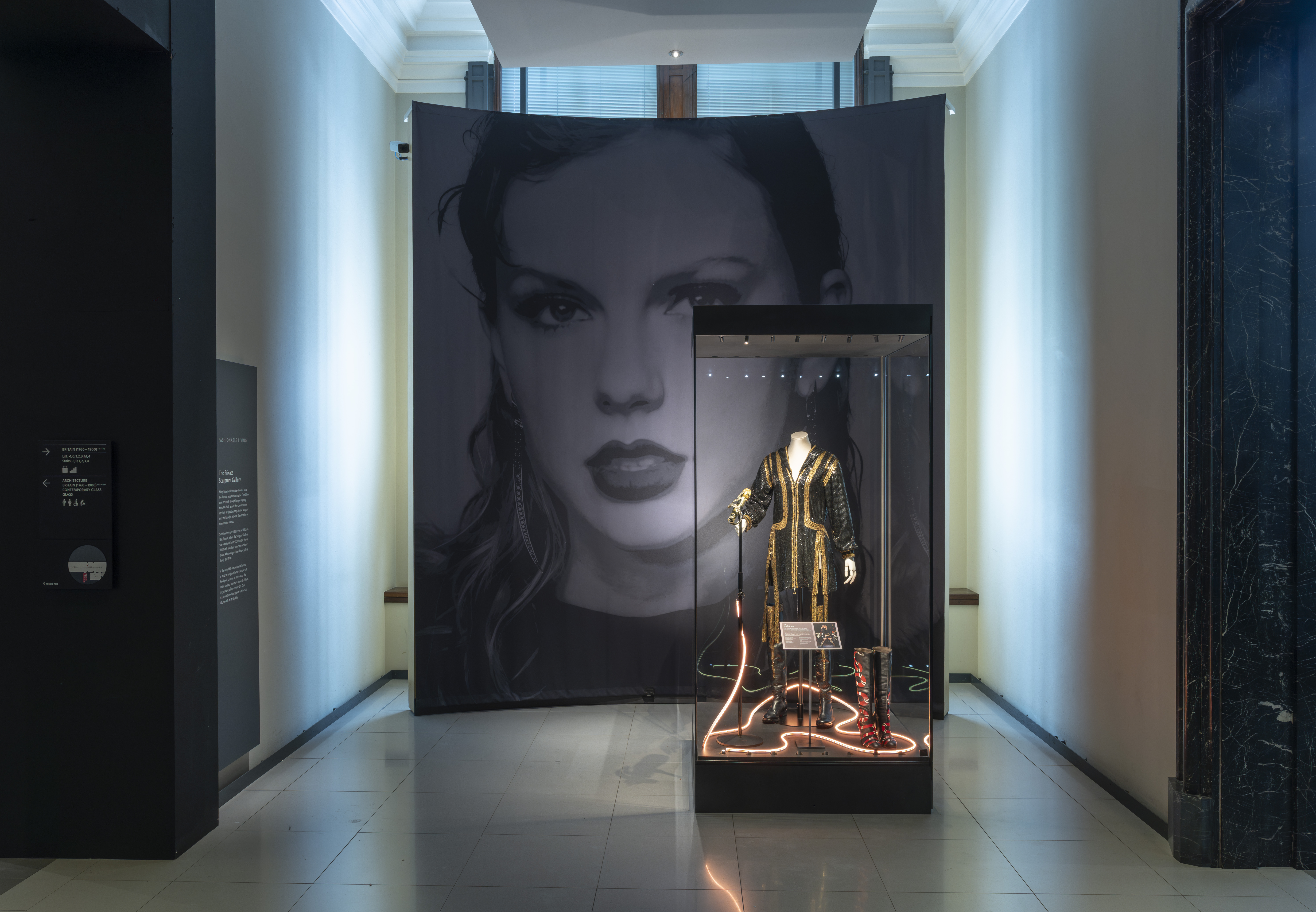
Throughout her career, Taylor has demonstrated a unique power in reclaiming seemingly random motifs under her own brand and making them lasting symbols among the fandom. Her embracement of the traditionally unlucky number 13 is a case in point. For reputation, she rebranded a weapon that was being used against her. On the first stop of the 2018 reputation Stadium Tour in Arizona, she sat at a piano in the University of Phoenix Stadium and explained the snake imagery to the crowd:
‘A couple of years ago, someone [Kim Kardashian] called me a snake on social media and it caught on […] And then a lot of people called me a lot of names on social media. I went through some really low times for a while because of it. I went through some times when I didn’t know if I was going to get to do this anymore.’
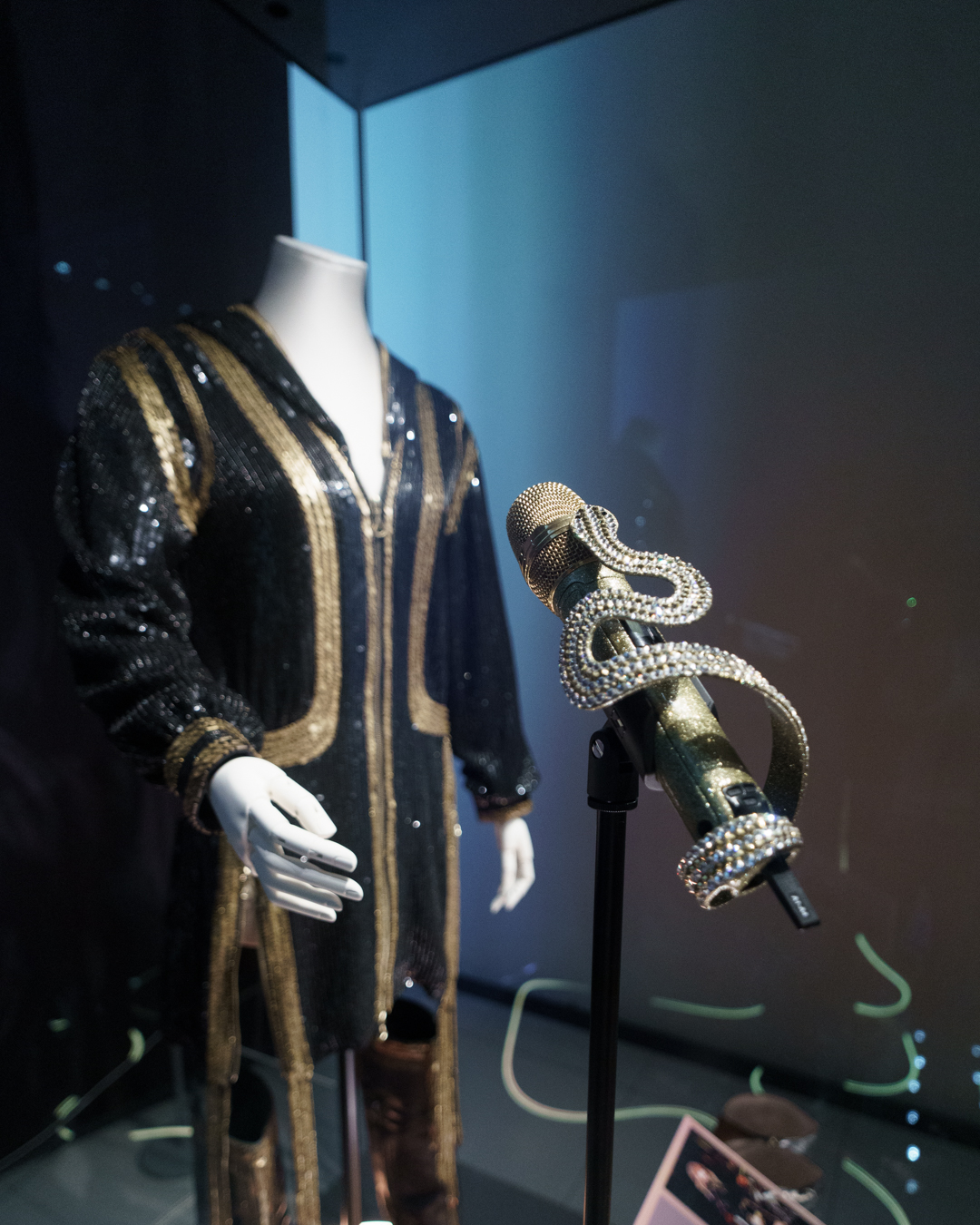
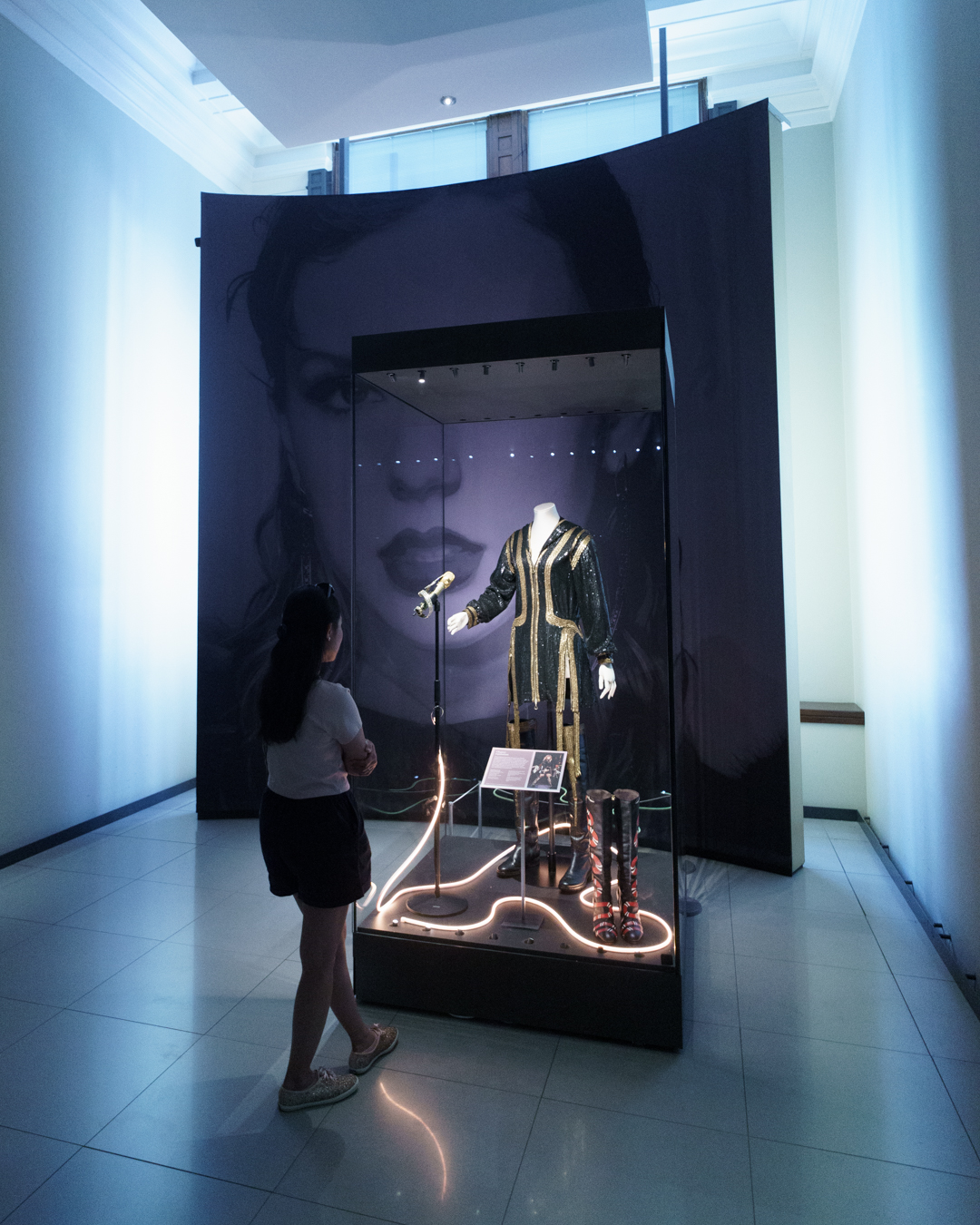
Occupying the revered space where Antonio Canova’s Three Graces has stood for decades (currently on loan to the National Galleries of Scotland), the original ensemble worn by Taylor on the reputation Stadium Tour boldly stands in front of a large portrait of the singer’s edgier, performance-ready face, a far cry from the presumptive innocence of her earlier Eras. The black robe-like dress designed by Jessica Jones with gold sequins plus matching Christian Louboutin boots is almost a throwback to her Fearless colours. Joined by the Sennheiser microphone adorned with a golden snake, it is a striking look to publicly denounce the old Taylor (‘because she’s dead!’).
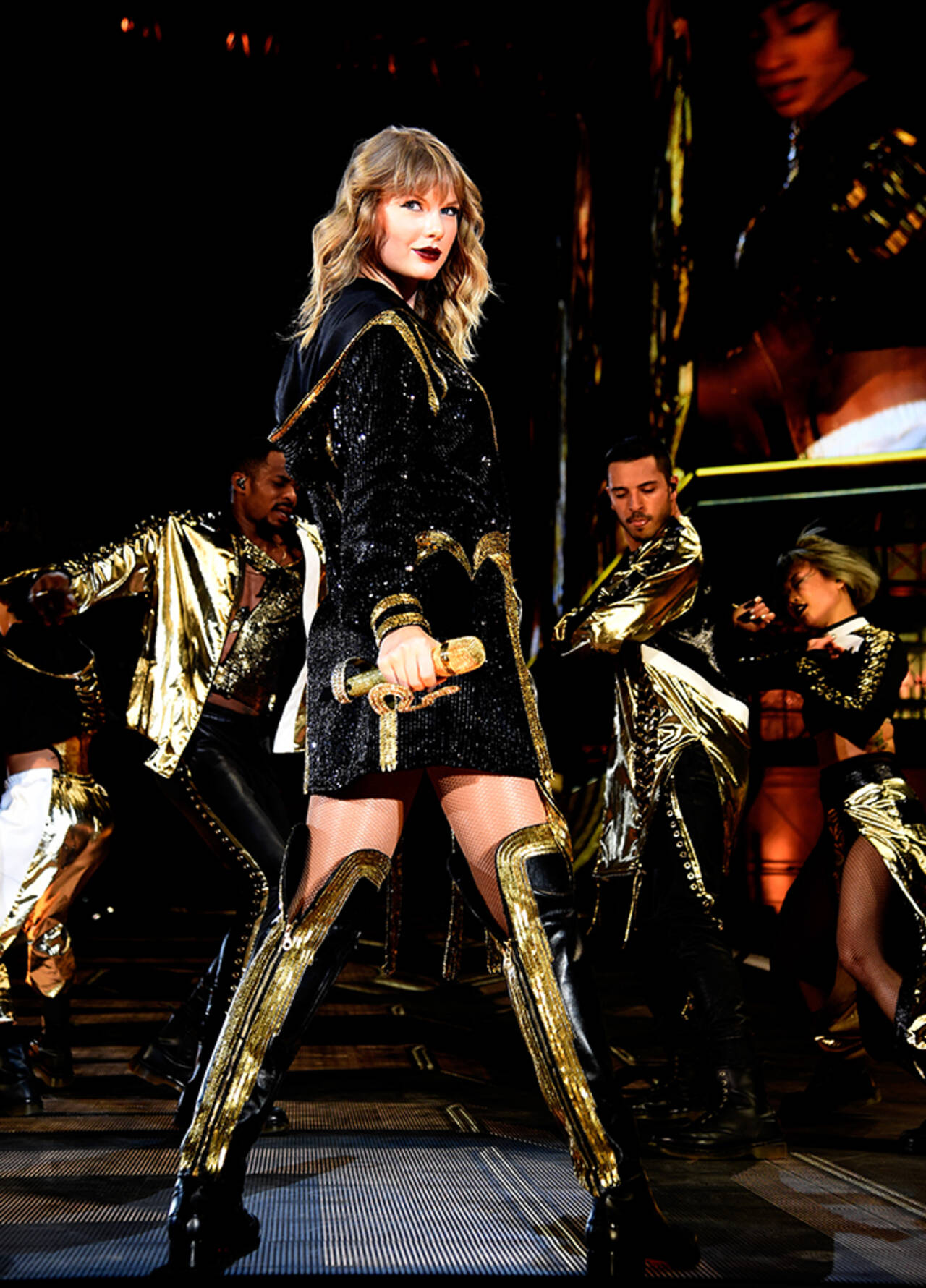
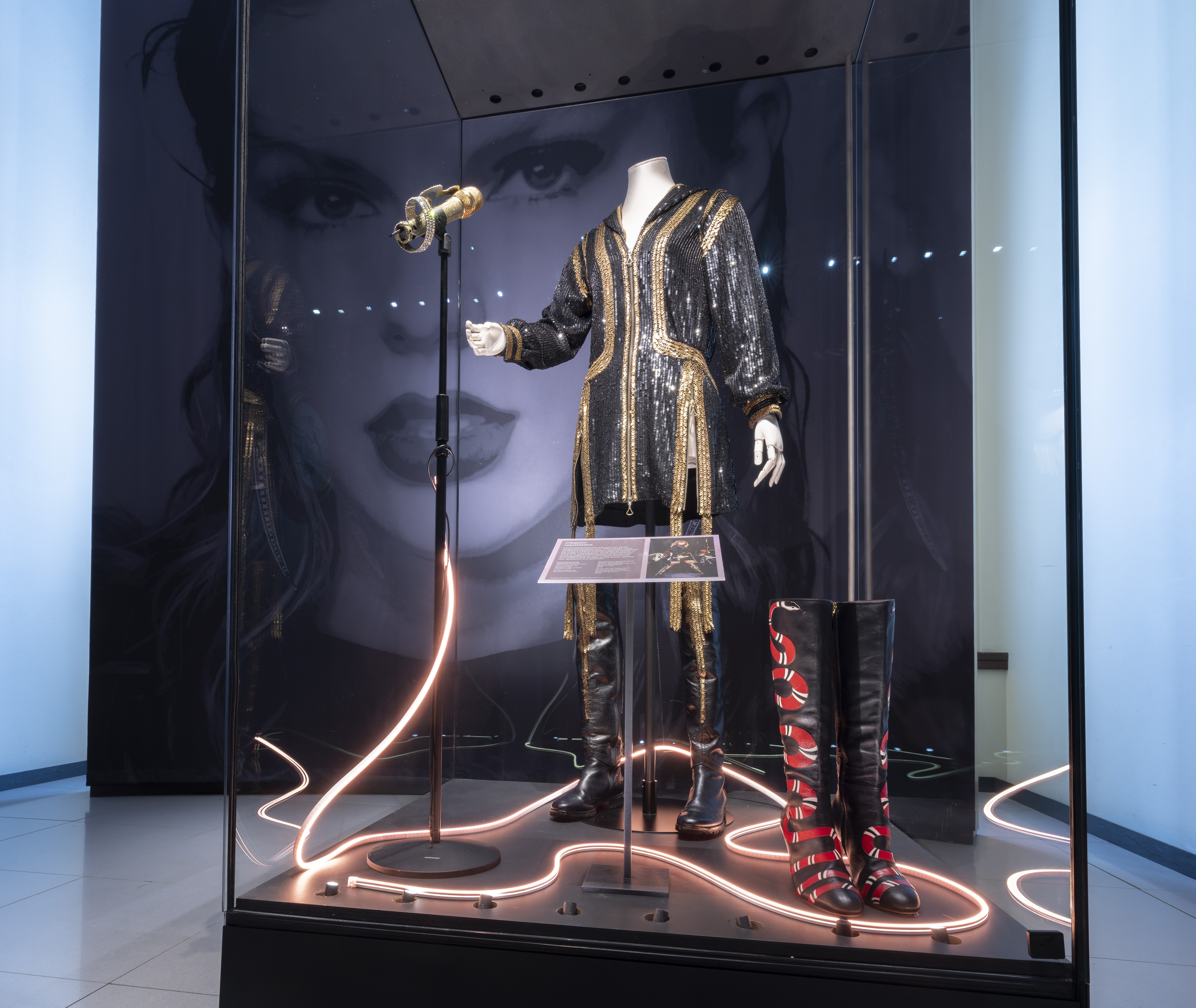
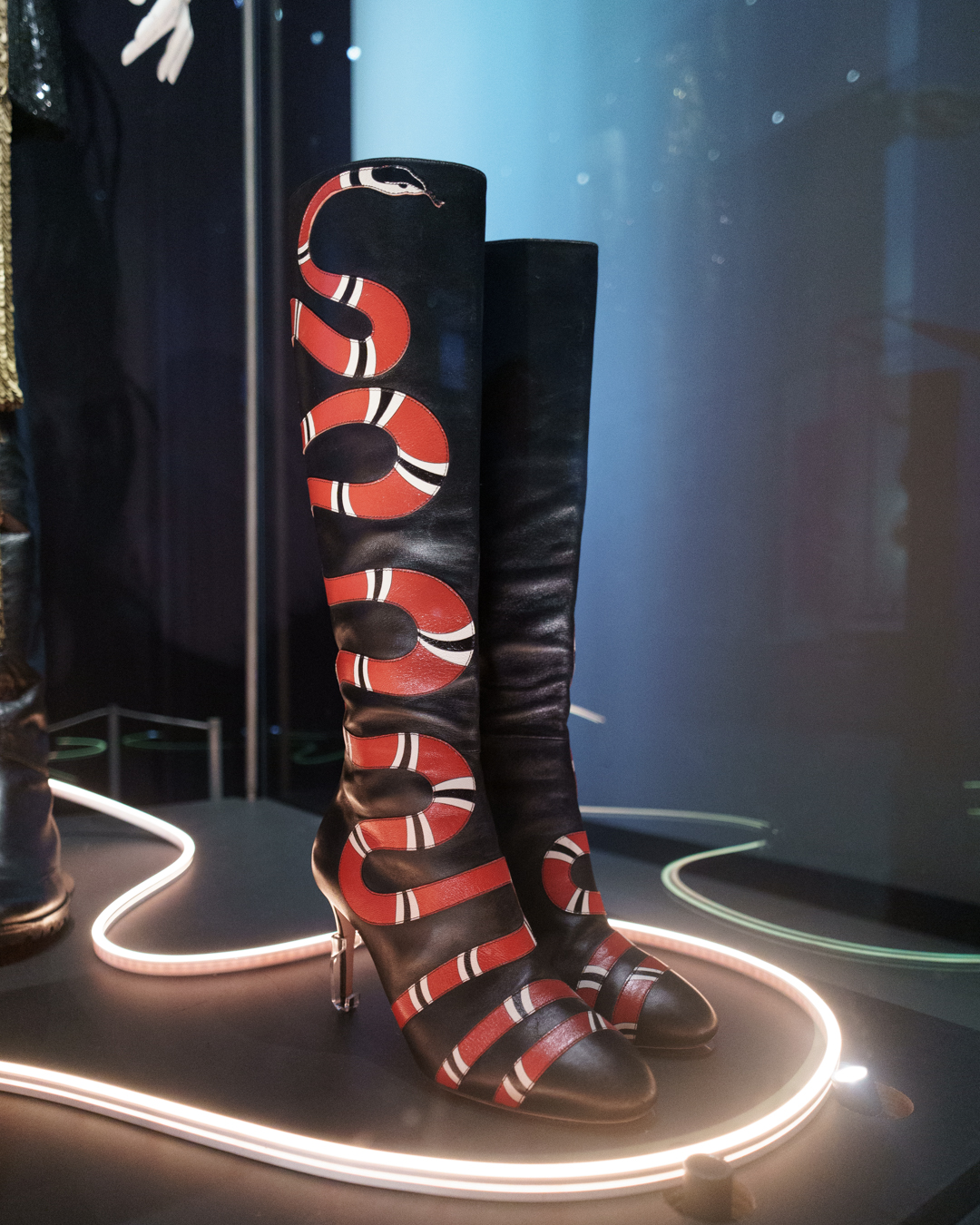
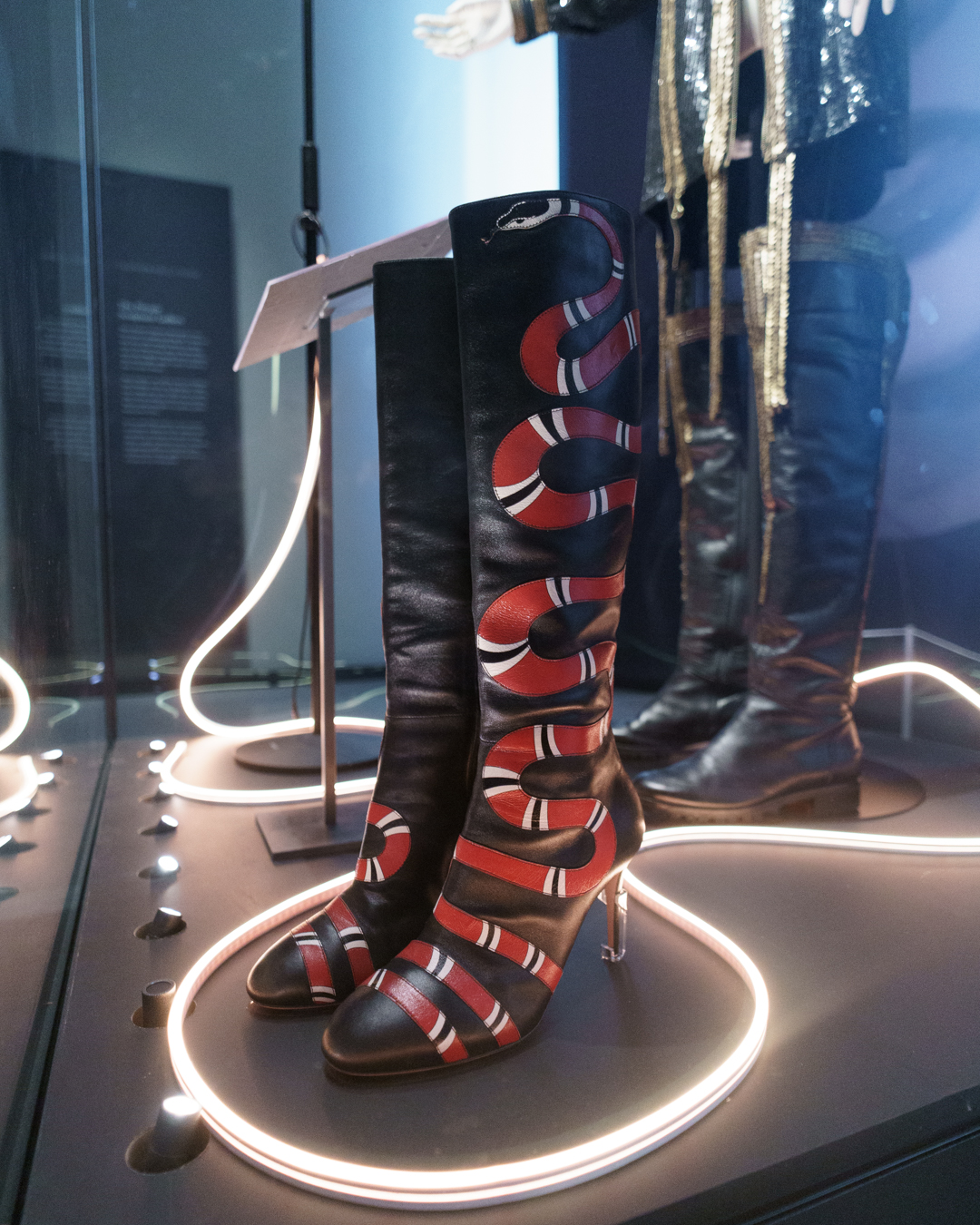
However, it’s the red-and-black colour scheme which really identifies the reputation era, as seen in the Gucci boots she wore in London at her elusive Secret Sessions. These were extremely coveted opportunities that speak volumes about Taylor’s commitment to her fans throughout the ages, in which she personally invited a select group of fans to her houses or local hotels to listen to the album a month ahead of its official release. So far, only 1989, reputation, and Lover have received the Secret Sessions treatment.
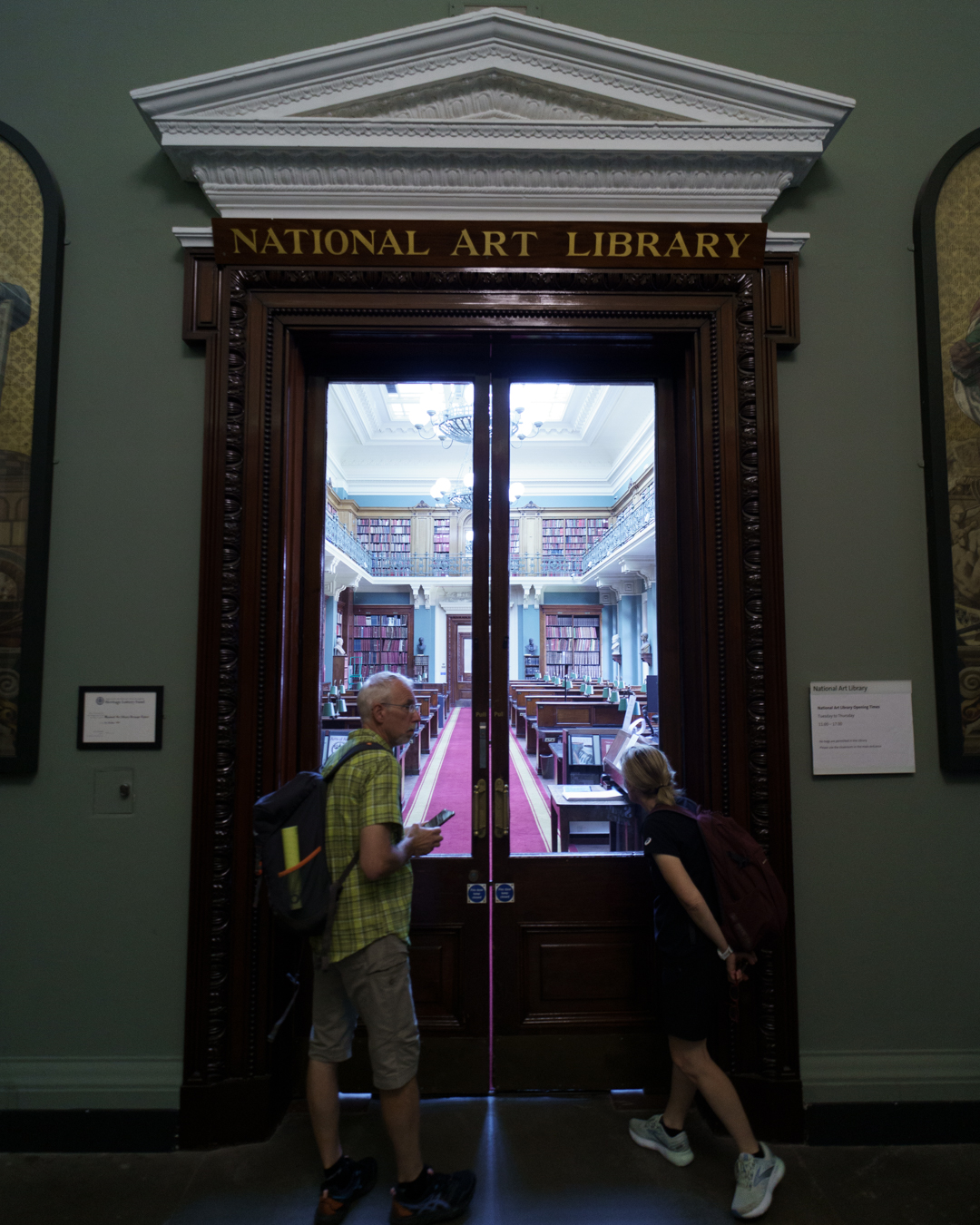
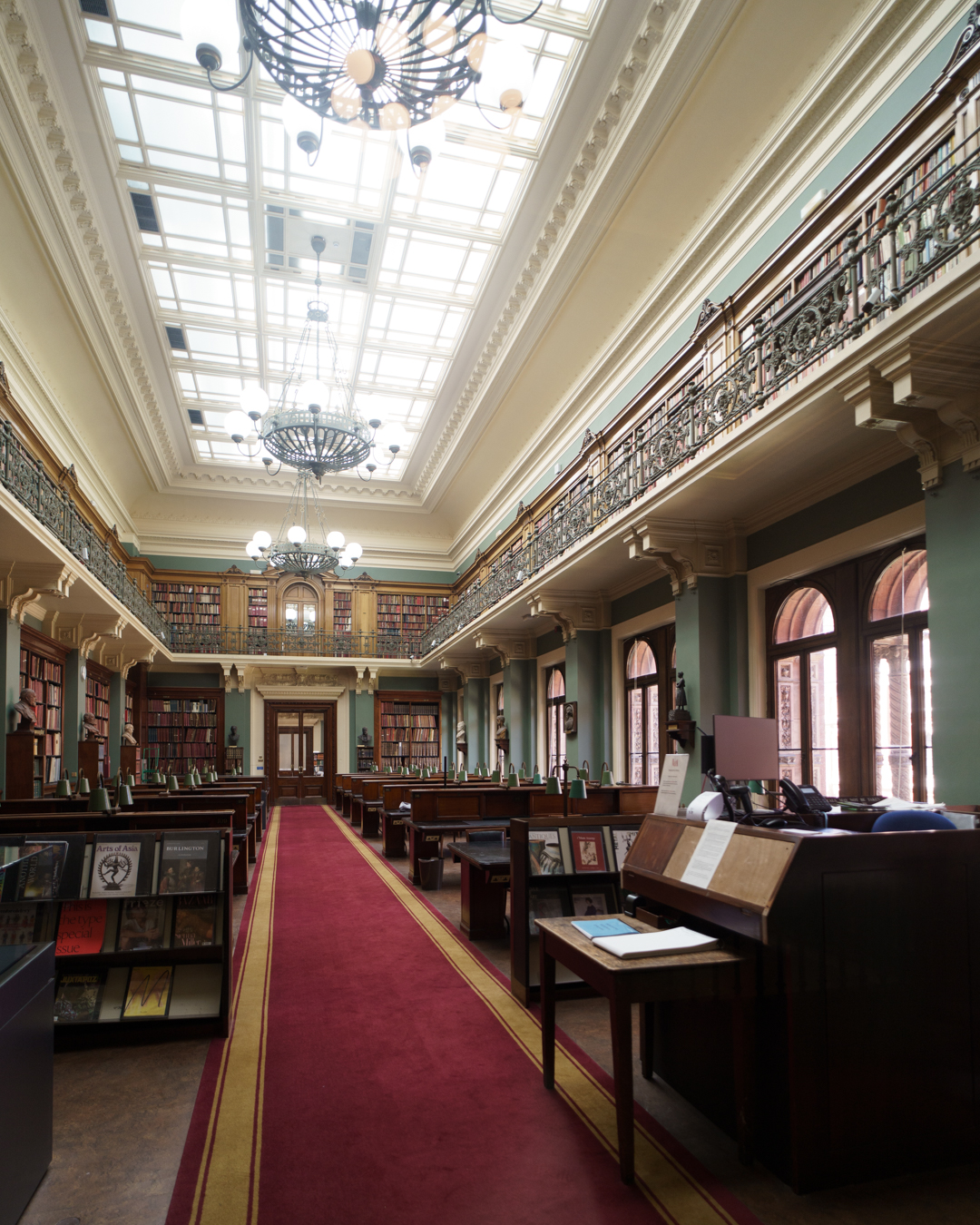
Moving south and turning the corner, one eventually finds The Man ensemble from Lover at the top of the stairs, which I have discussed at the beginning of this review. Following those stairs down takes one to the middle of the Ironwork gallery, where a right turn, and then a left turn into the Sculpture gallery takes one directly to the Prince Consort Gallery’s exit. Take a left turn until you reach the National Art Library at the end of the corridor, and then turn right, walking all the way to the rooms devoted to paintings.
Represented in the Paintings galleries are the sister albums folklore and evermore (both 2020), written back-to-back during the COVID-19 pandemic while she was holed up in London:
‘In isolation my imagination has run wild […] Picking up my pen was my way of escaping into fantasy, history, and memory.’
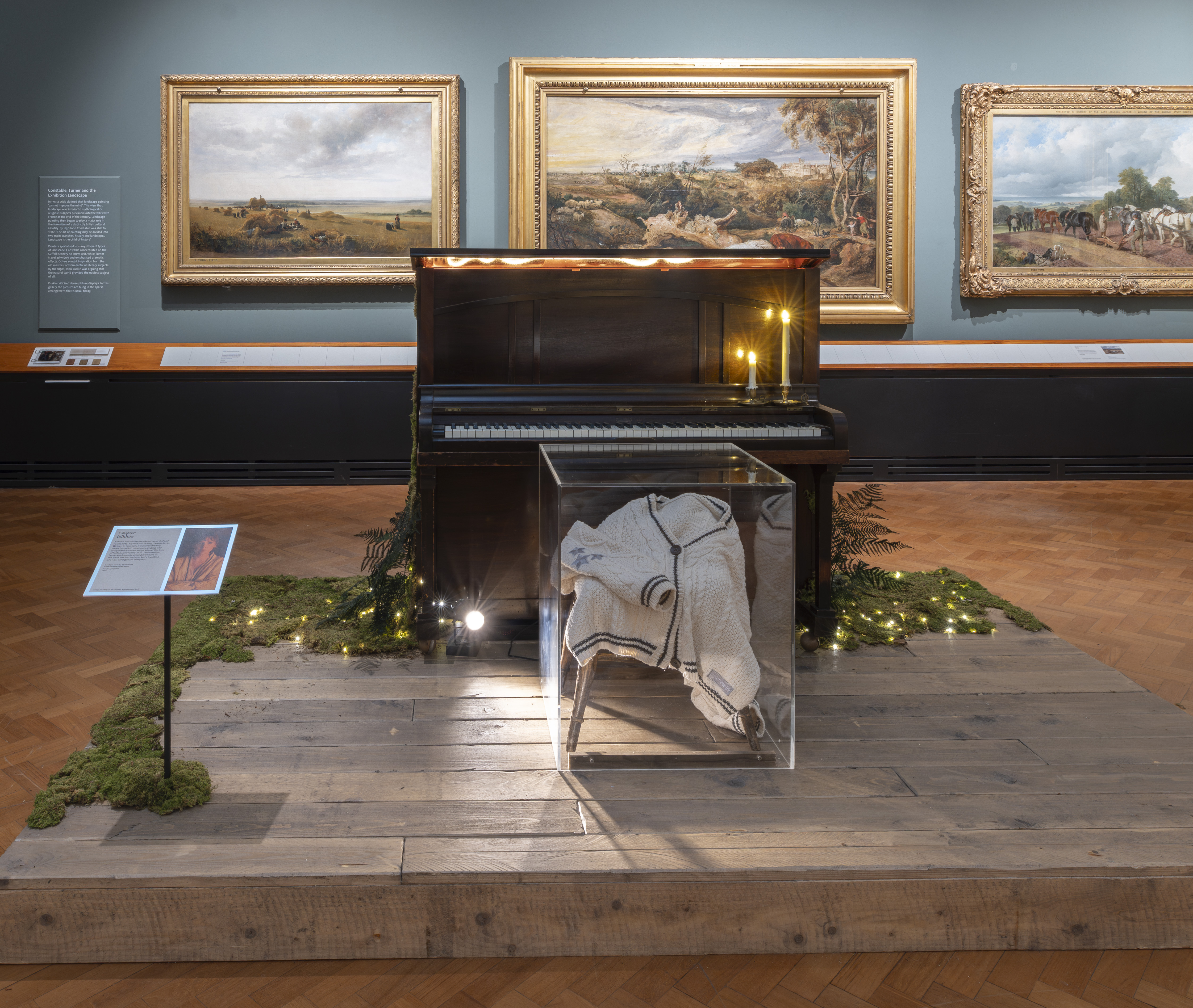
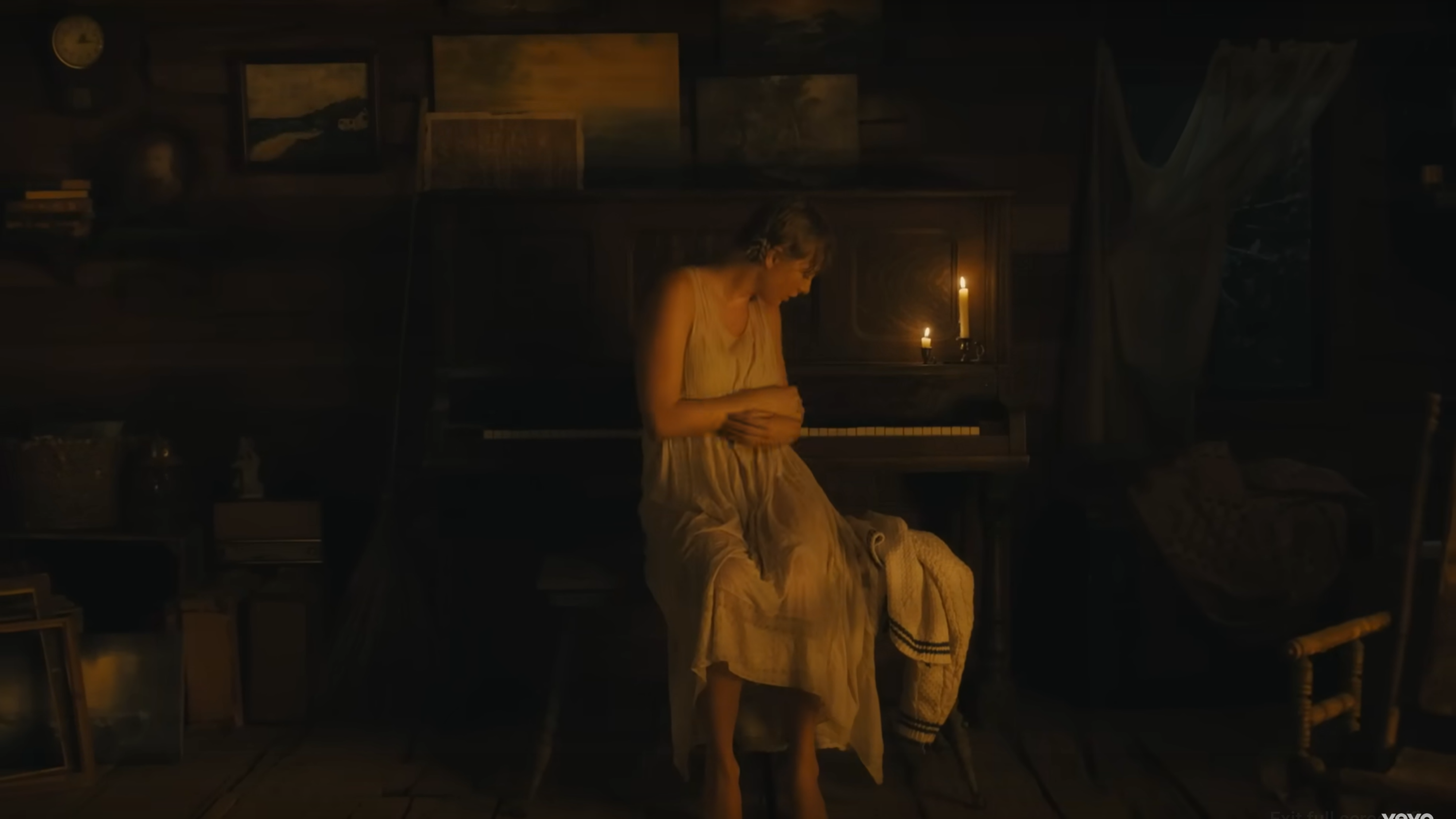
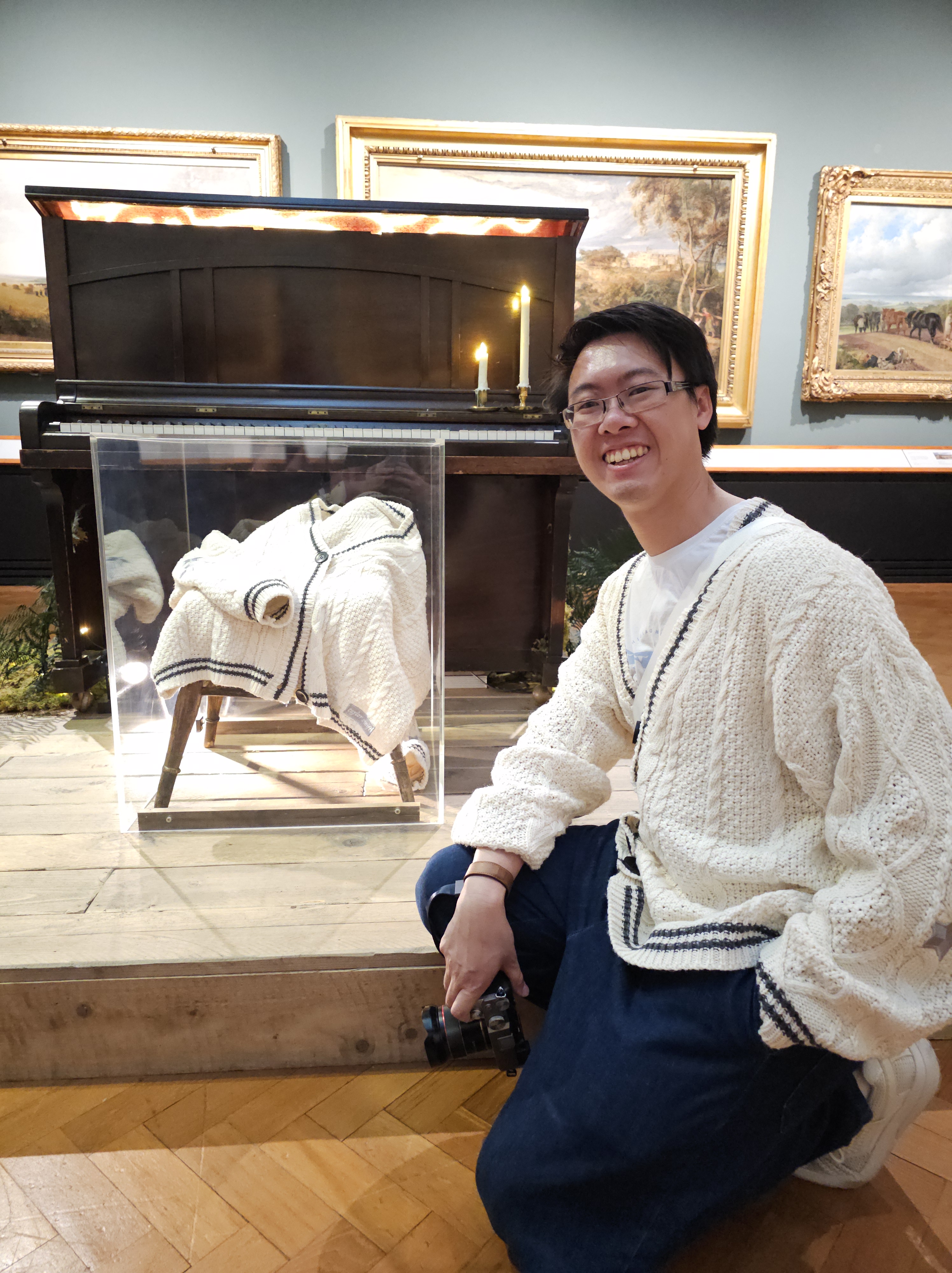
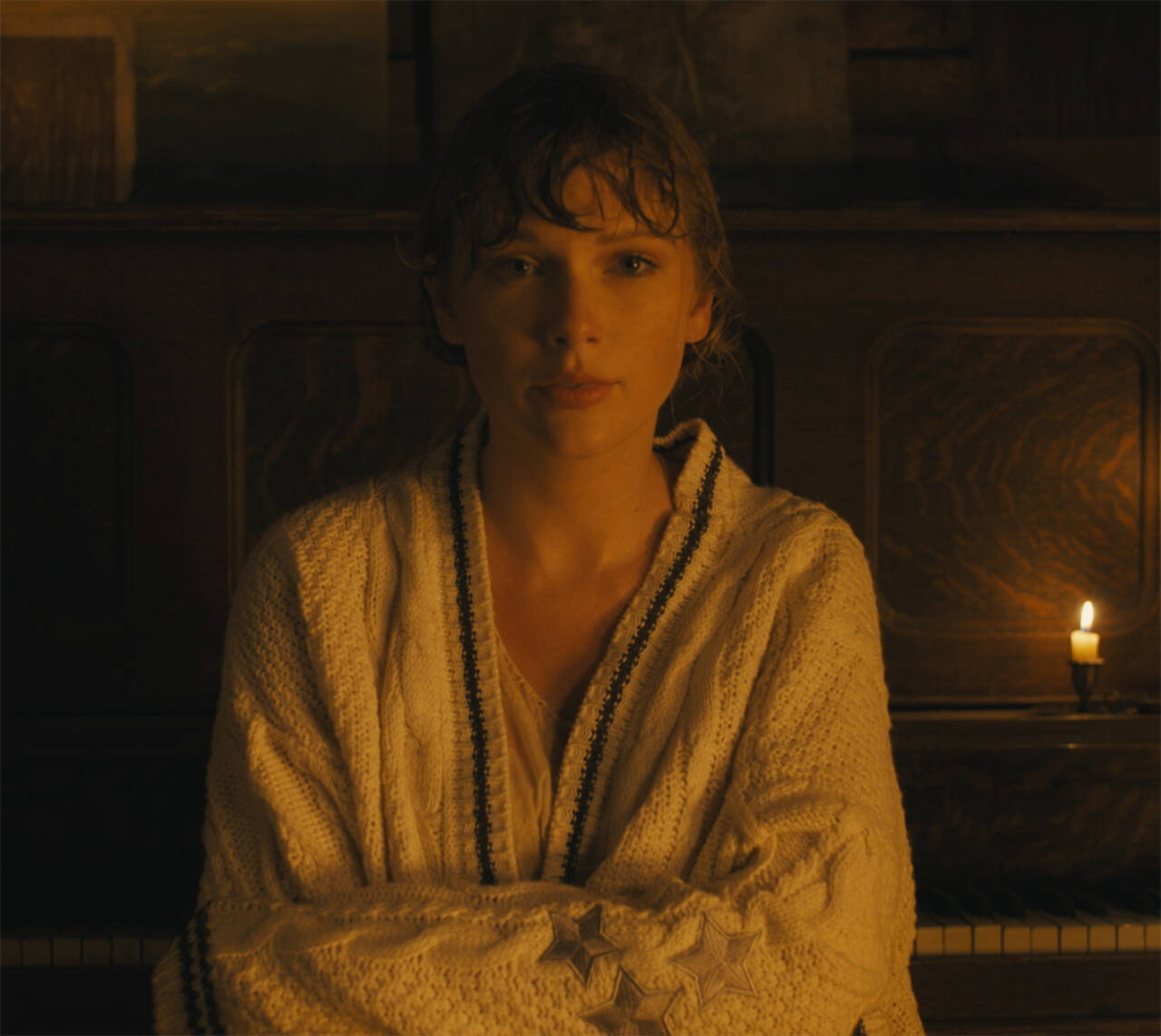
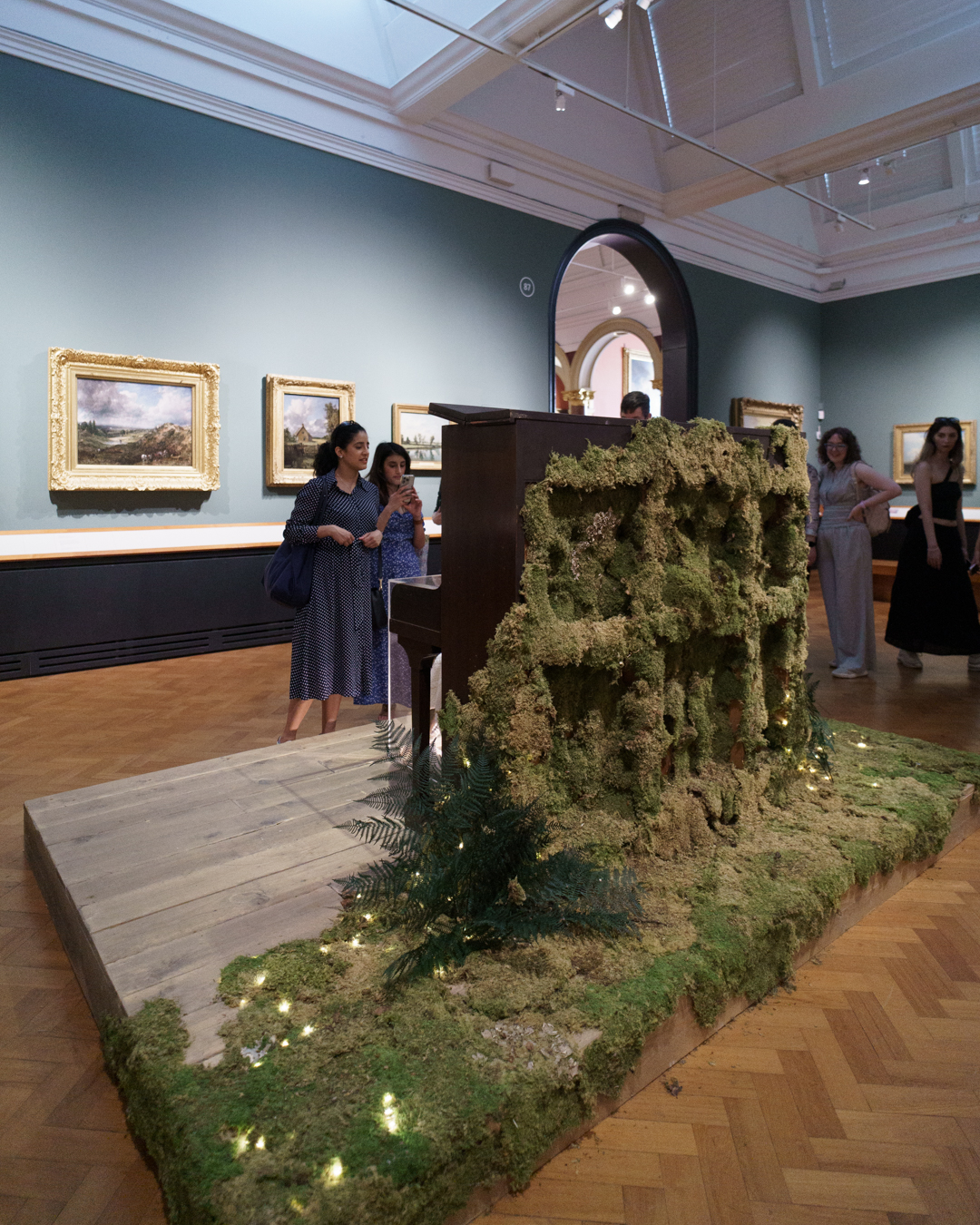
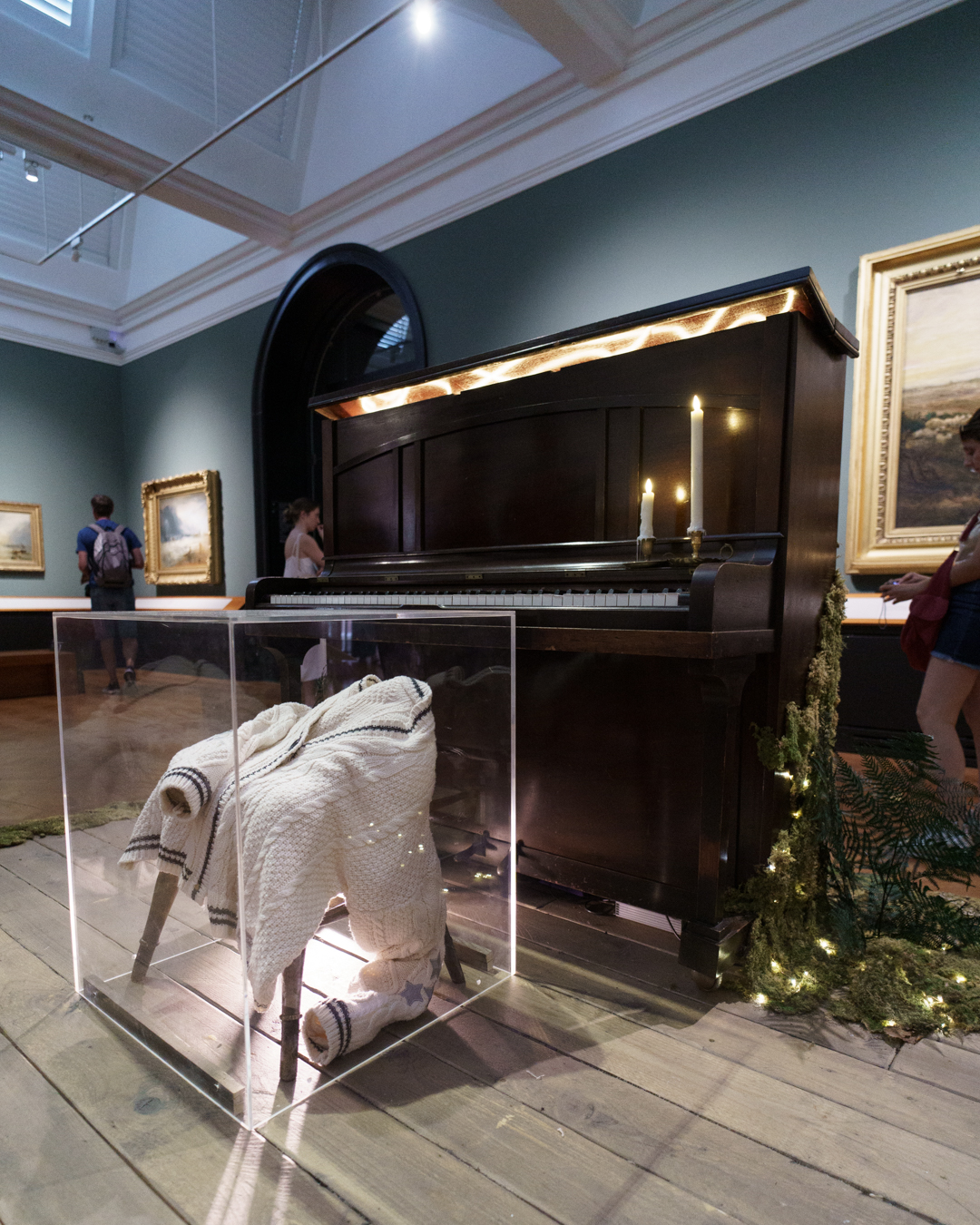
In these rooms, one finds a moss-covered piano with the ‘mother’ of all Taylor Swift cardigans draped over a stool. The installation specifically recreates the last scene of the cardigan music video, in which the cold, drenched Taylor (after a series of portal-travelling adventures) emerges from the lid of her piano and discovers the folklore cardigan resting on the stool, which she proceeds to put on. It is a highly sought after piece of merchandise among Swifties, representing the feeling of being safe at home. This consequently became the first in a series of cardigan products promoting every new album since folklore. Wearing mine on opening weekend, I was thrilled to see so many joyous reactions from people who recognised it immediately, tied together with a smile, as if it had some innate power to inspire and comfort those in its presence.
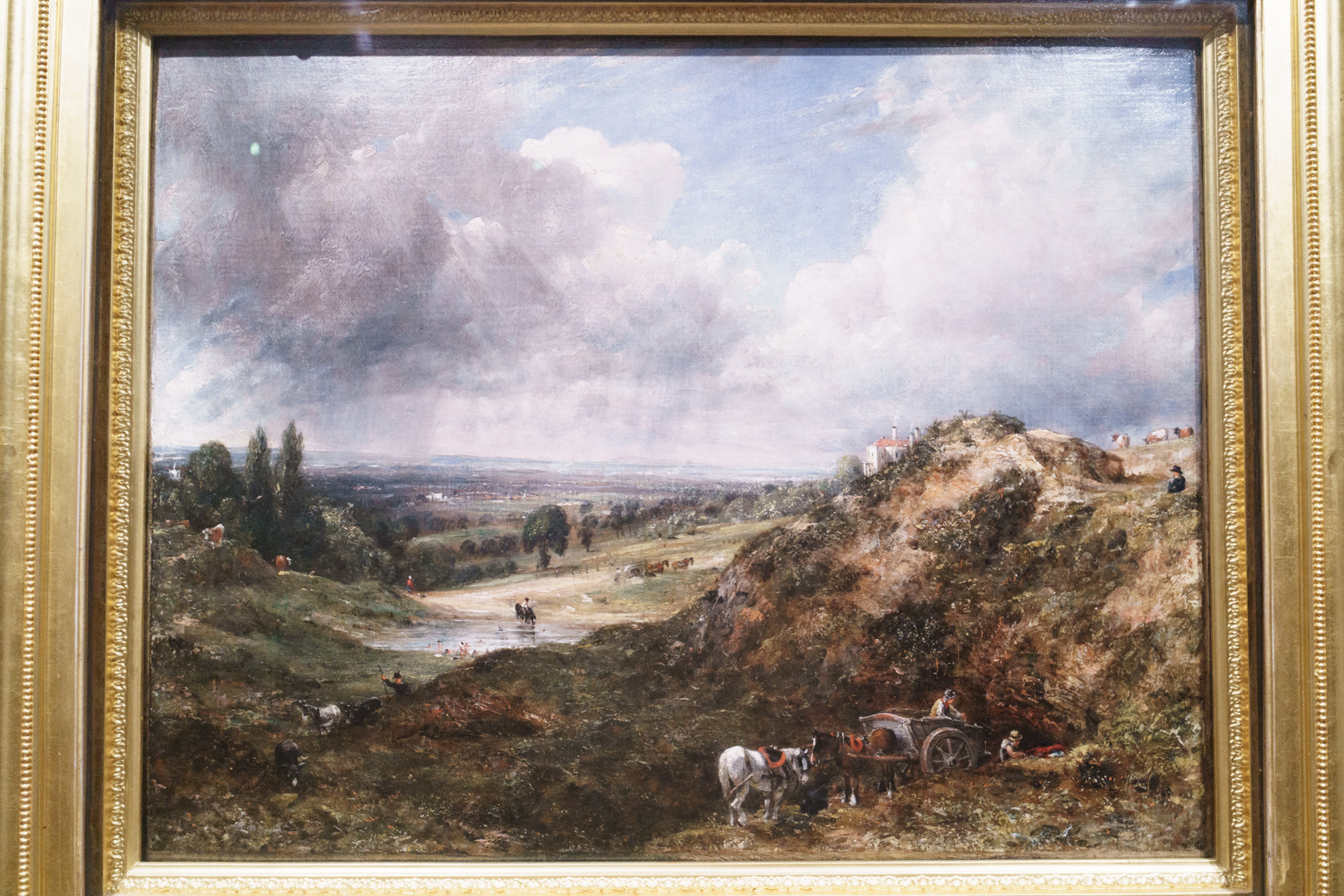
Surrounding the installation – or shrine, as I like to call it – are British landscapes by J.M.W. Turner and John Constable, whose view of Hampstead Heath is aligned directly with the cardigan. This part of London has strong personal connections to Taylor, having been mentioned in the lyrics of London Boy and recently So Long, London. She was also frequently spotted walking in the area during the pandemic.
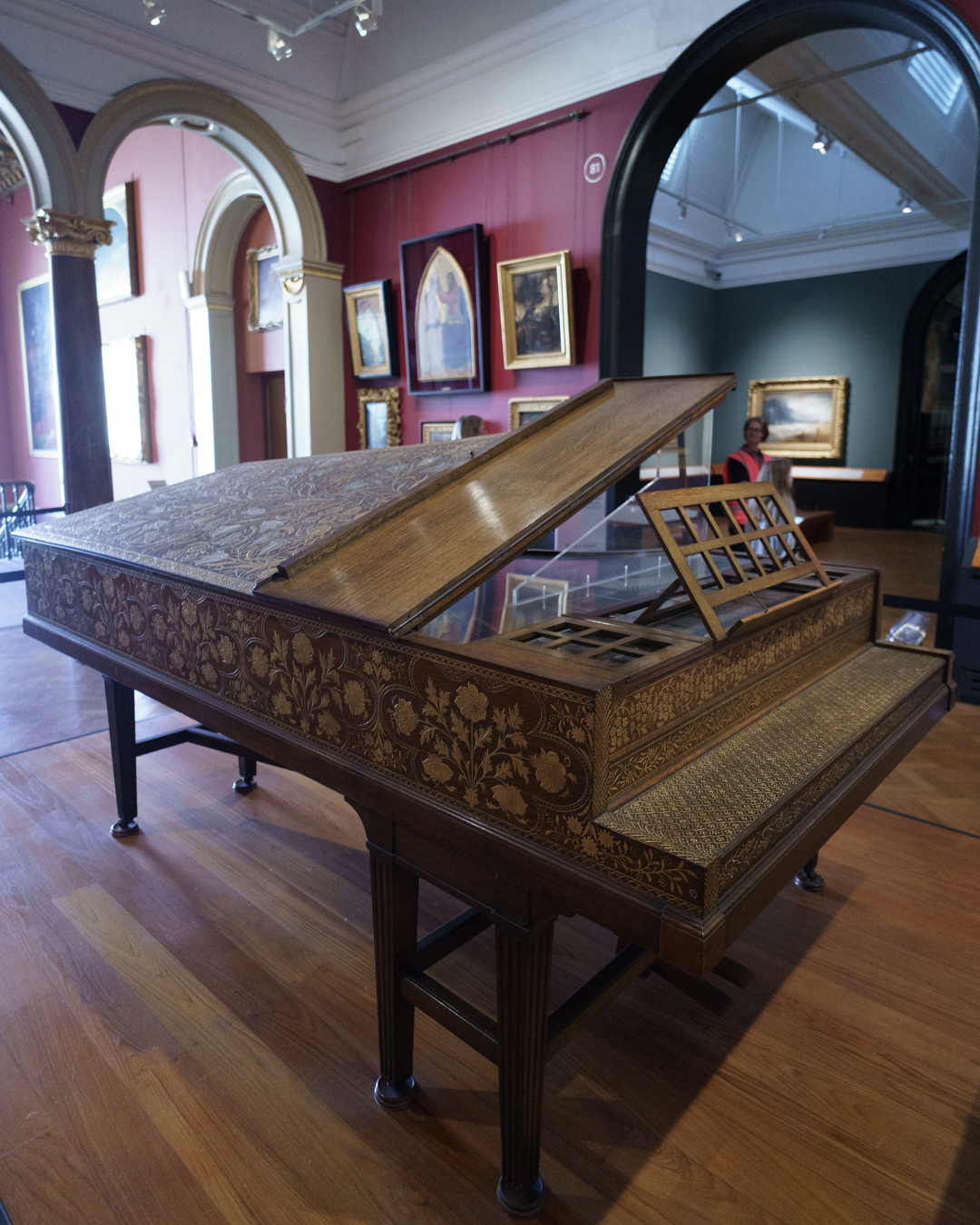
Further connections are evoked in an adjacent room, where the Arts & Crafts piano decorated by Kate Faulkner (from Edward Burne-Jones’ designs and other Pre-Raphaelite artists) echoes the woodland themes of Taylor’s magic piano and album as a whole.

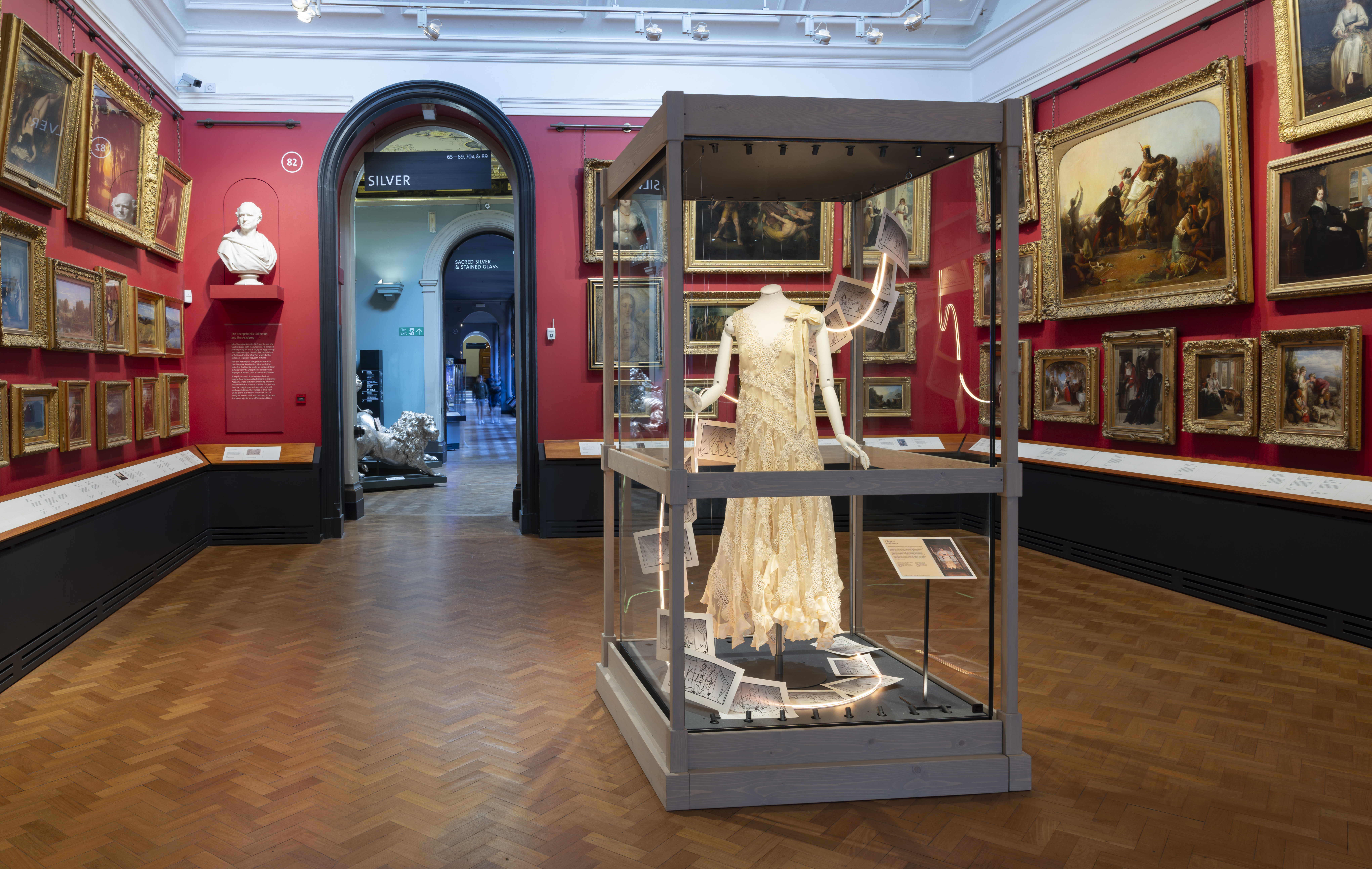
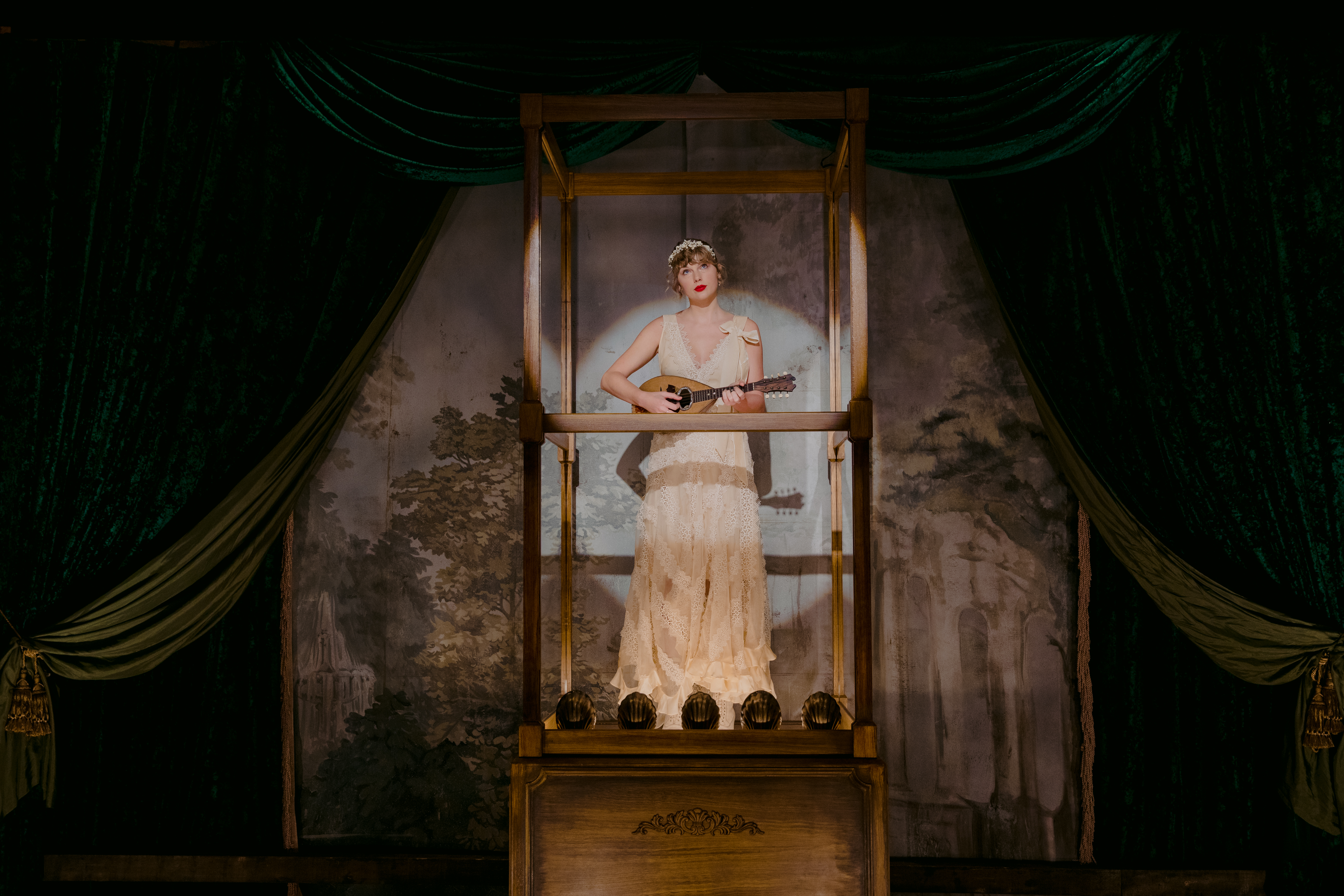
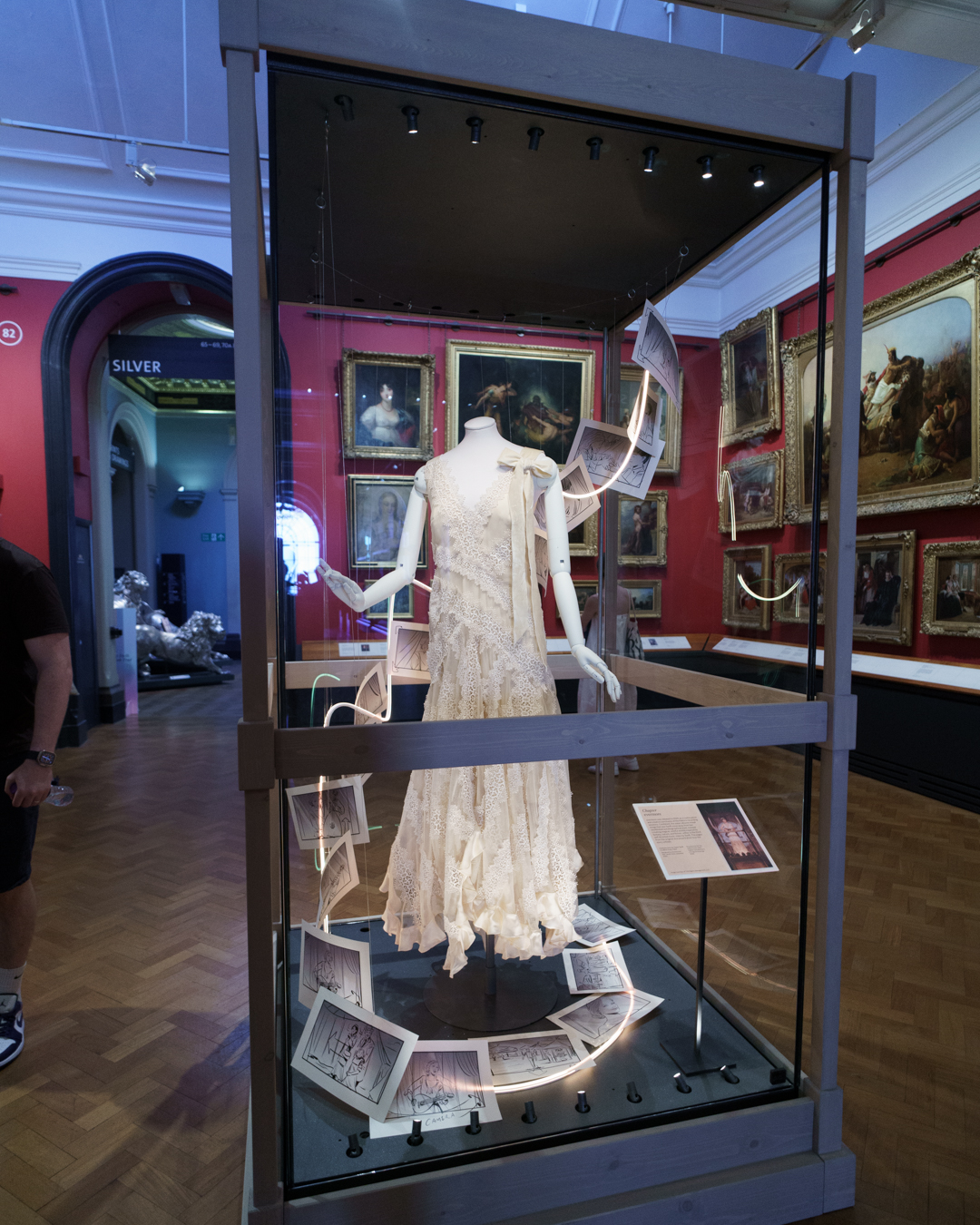
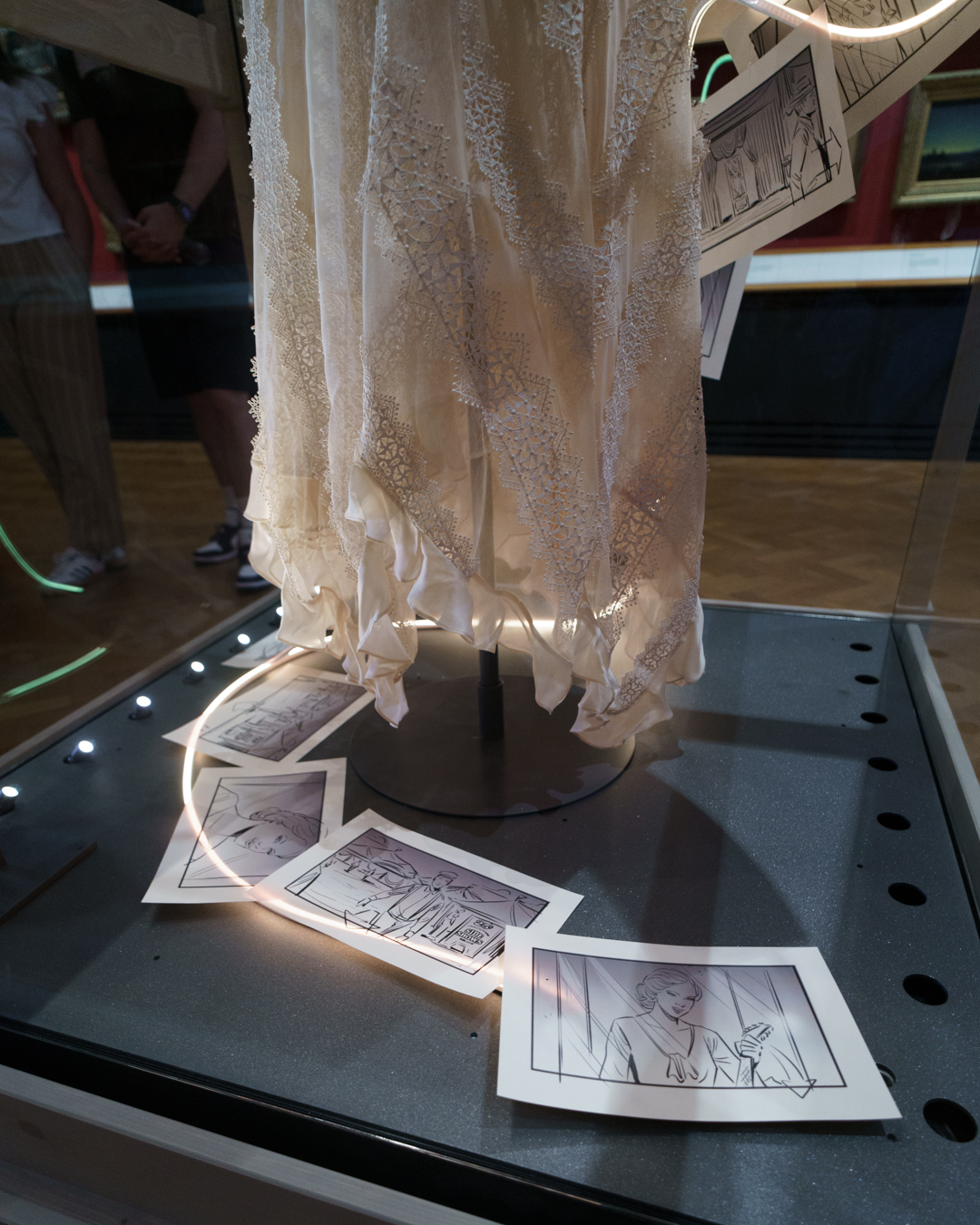
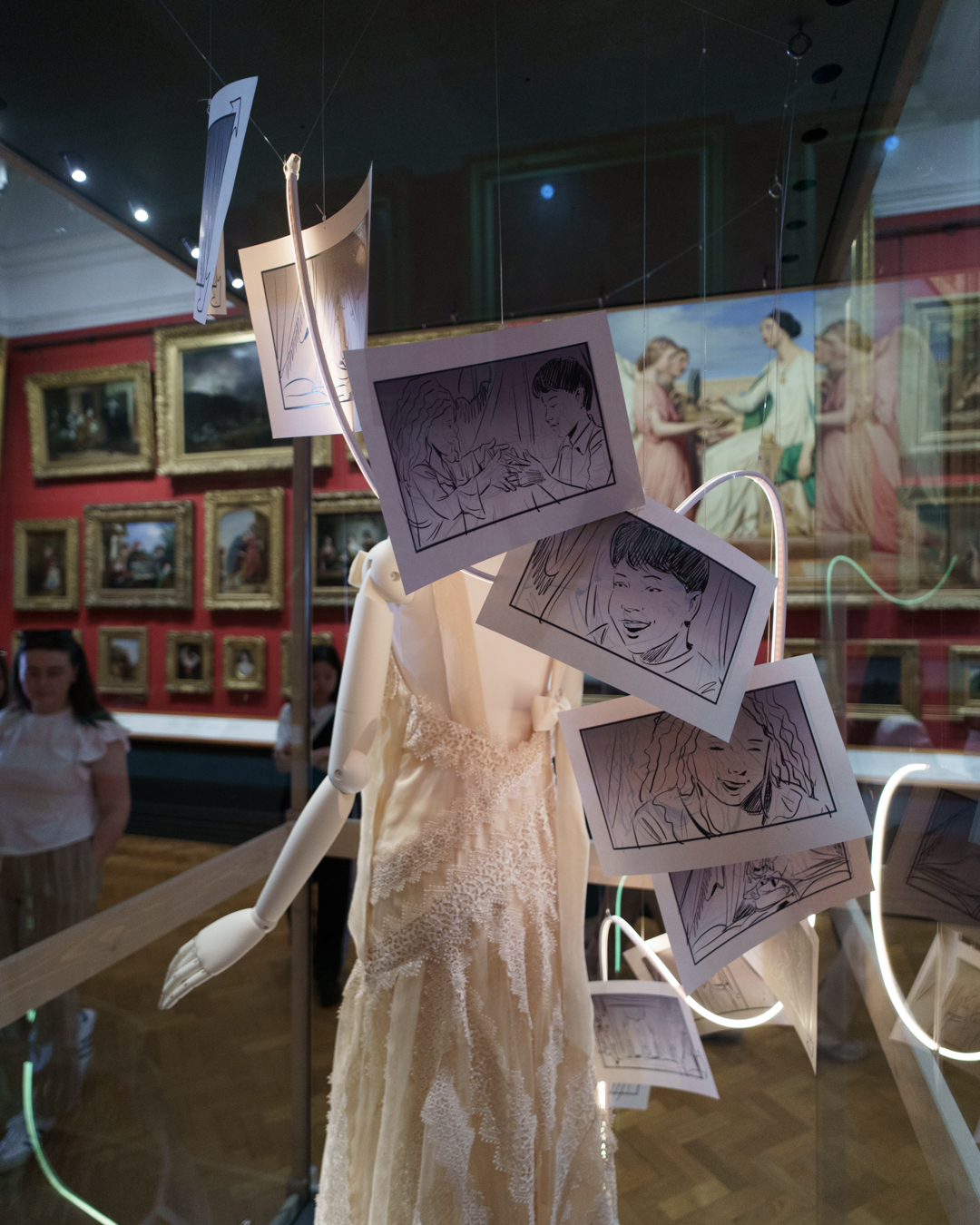
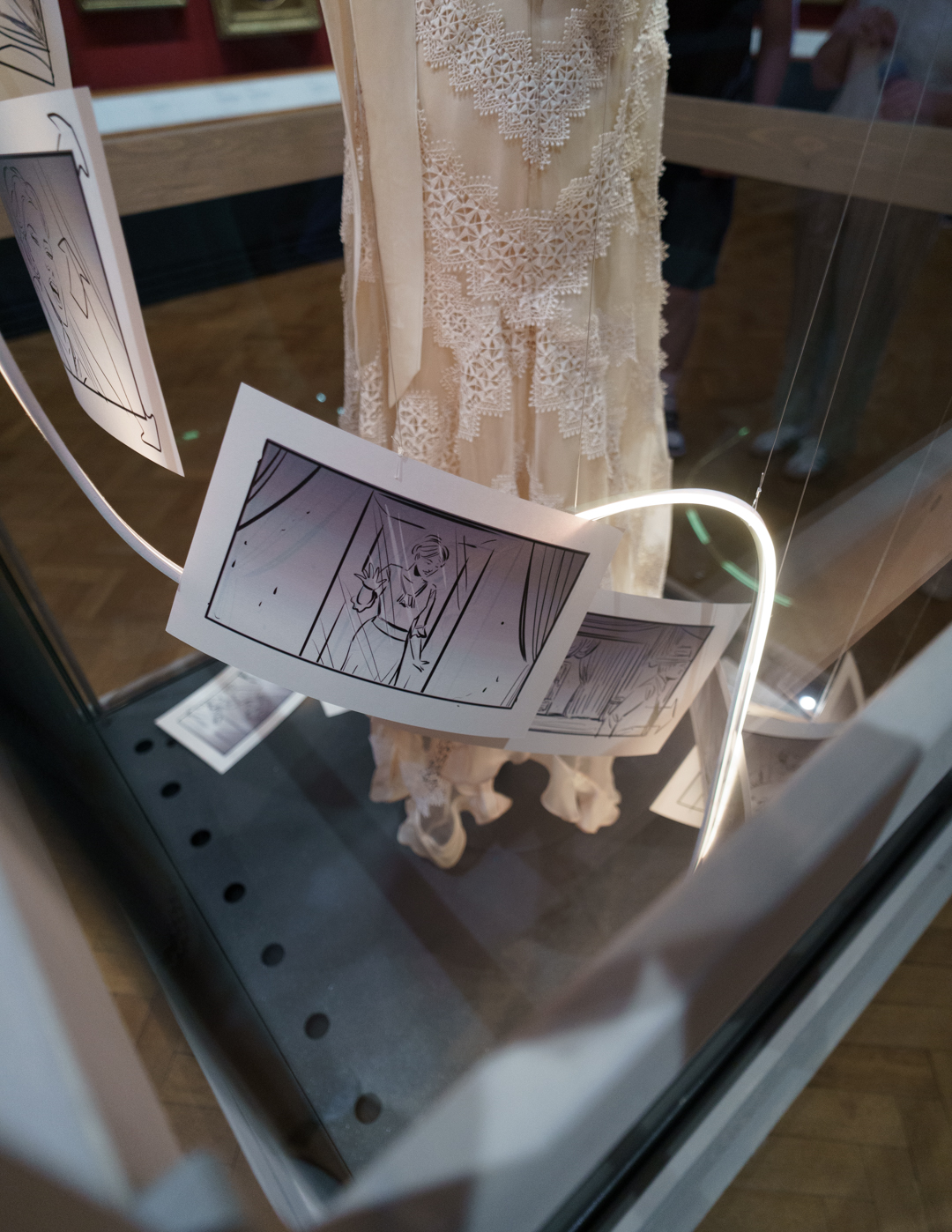
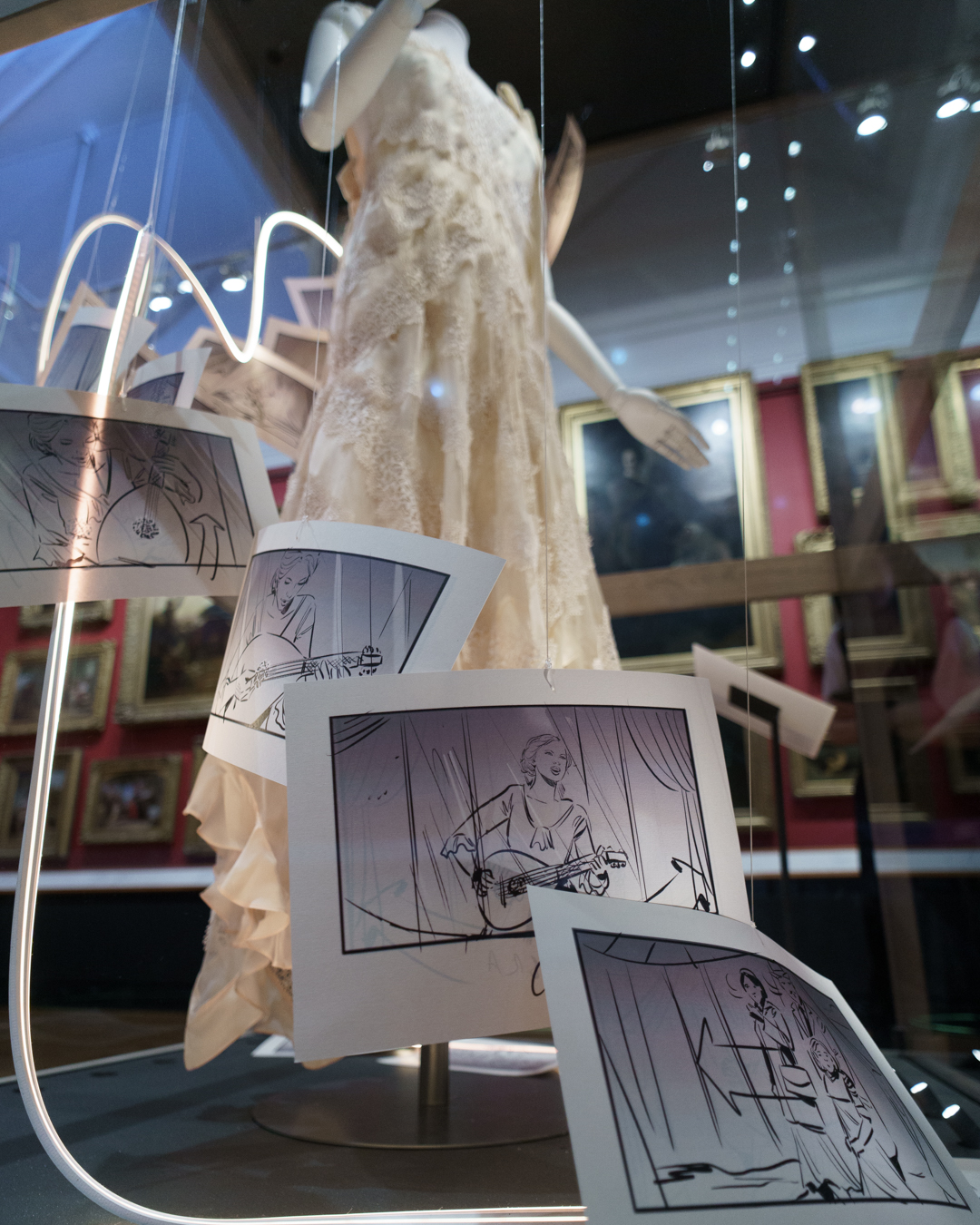
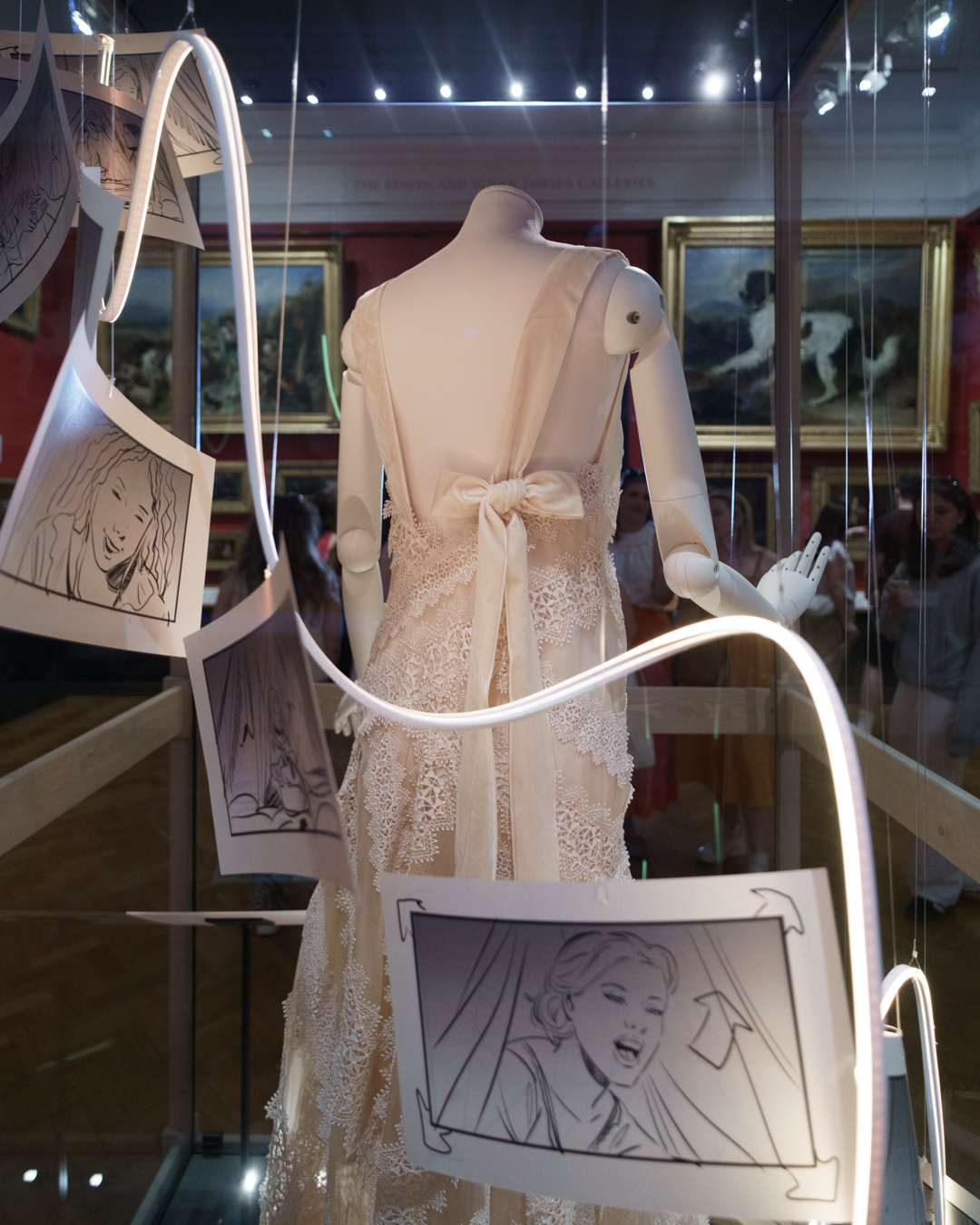
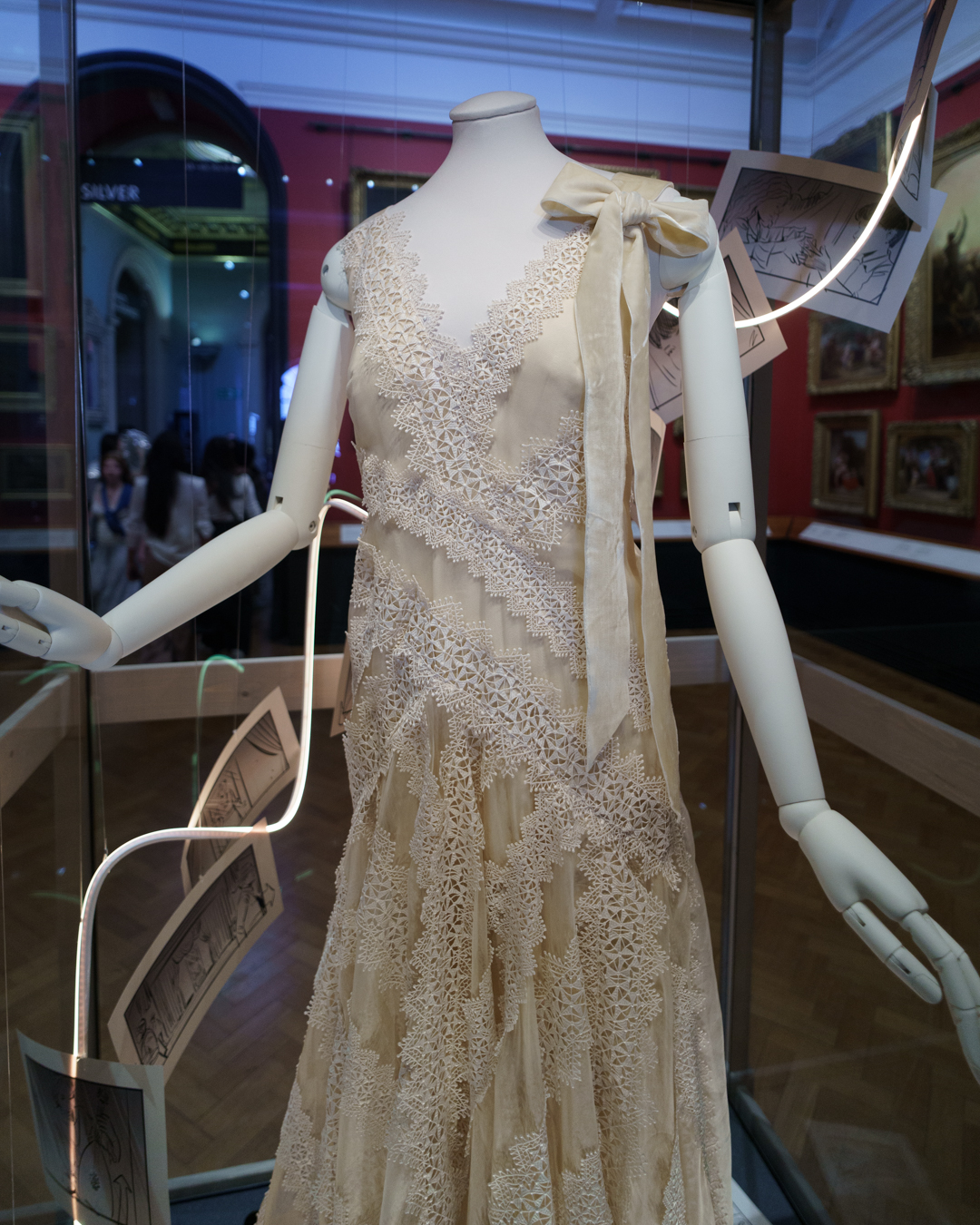
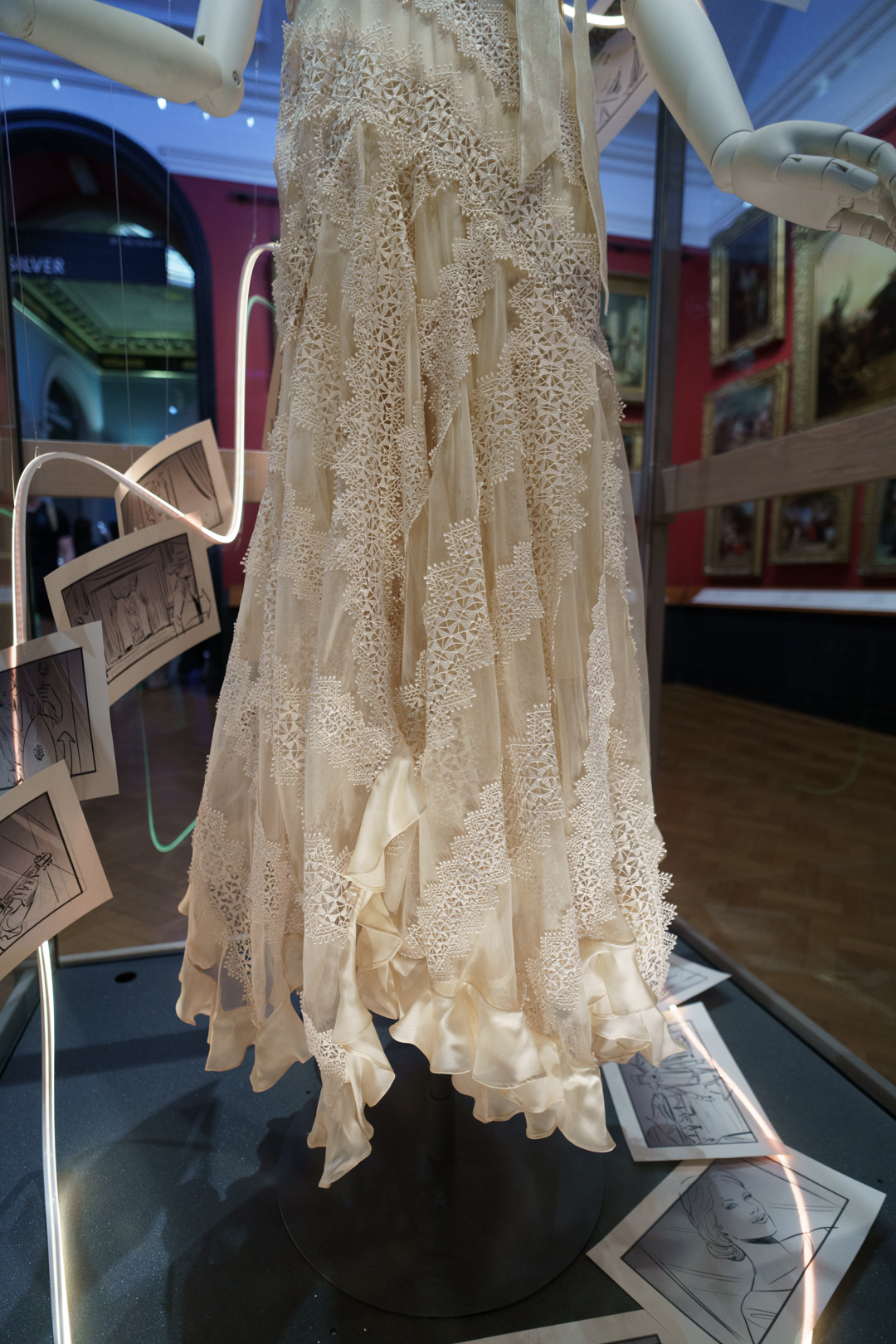
As for evermore, the willow dress by Zimmerman is encased in a vitrine styled like the wooden cage seen in the music video (a continuation from that of cardigan), accompanied by related storyboards that speak to the surrounding Victorian paintings, which depict episodes from semi-fictional historic accounts. Collectively, both installations highlight Taylor’s departure from autobiographical narratives, introducing instead perspectives from fictional characters – like folklore’s ‘teenage love triangle’ (Betty, James, and an unnamed woman) – thus ushering in a new mindset for the lyrical storyteller.
At the time of writing, the Prince Consort Gallery operated on a one-way system, with the queue for entry located in the Meta Media Gallery of the new Photography Centre. The gallery is devoted to the Midnights era (2023) and ‘Records and Re-records’, with displays complemented by a looping soundtrack of songs like Long Live, Fearless, and willow, as well as excerpts of music videos projected on drapery dangling from the ceiling.
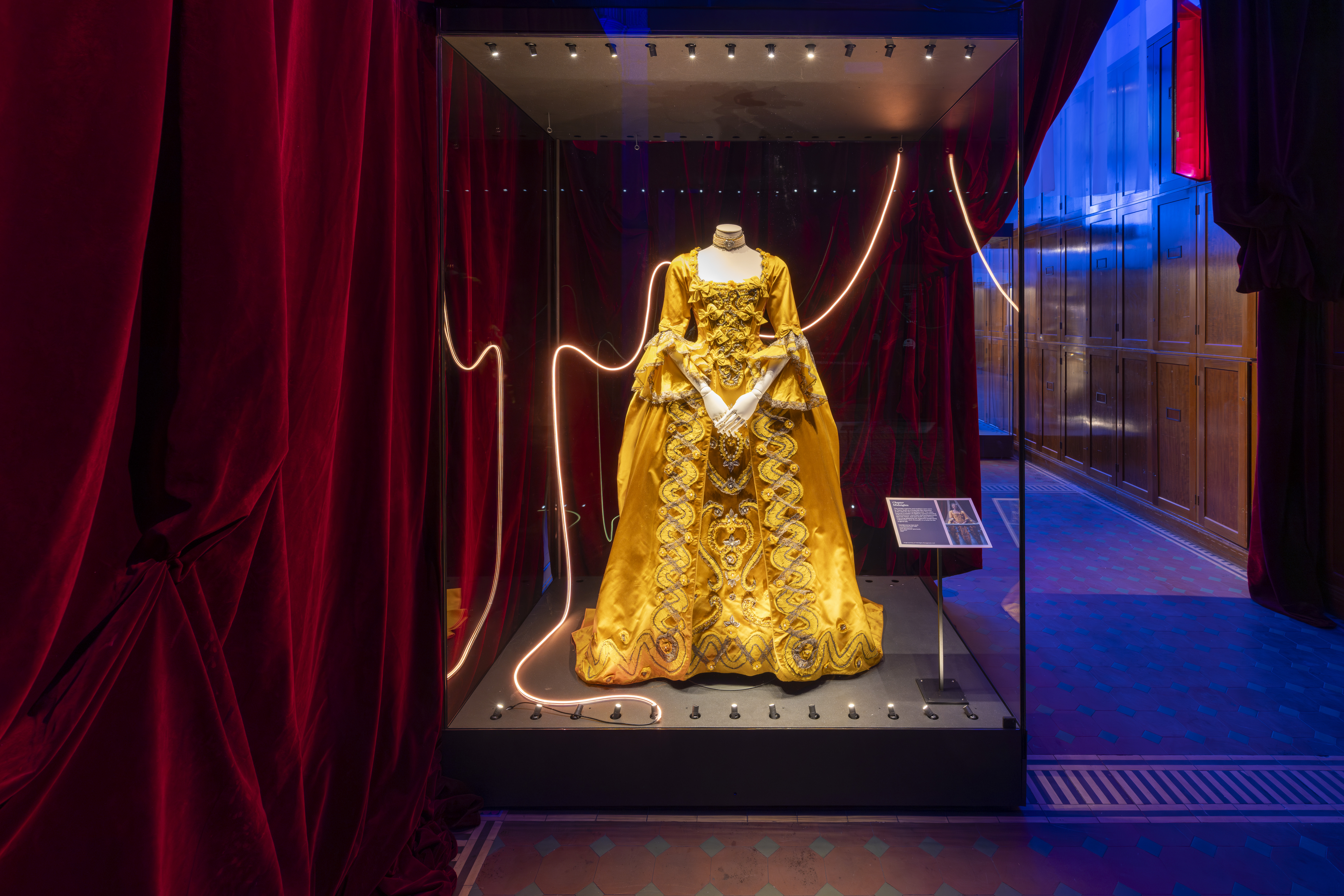
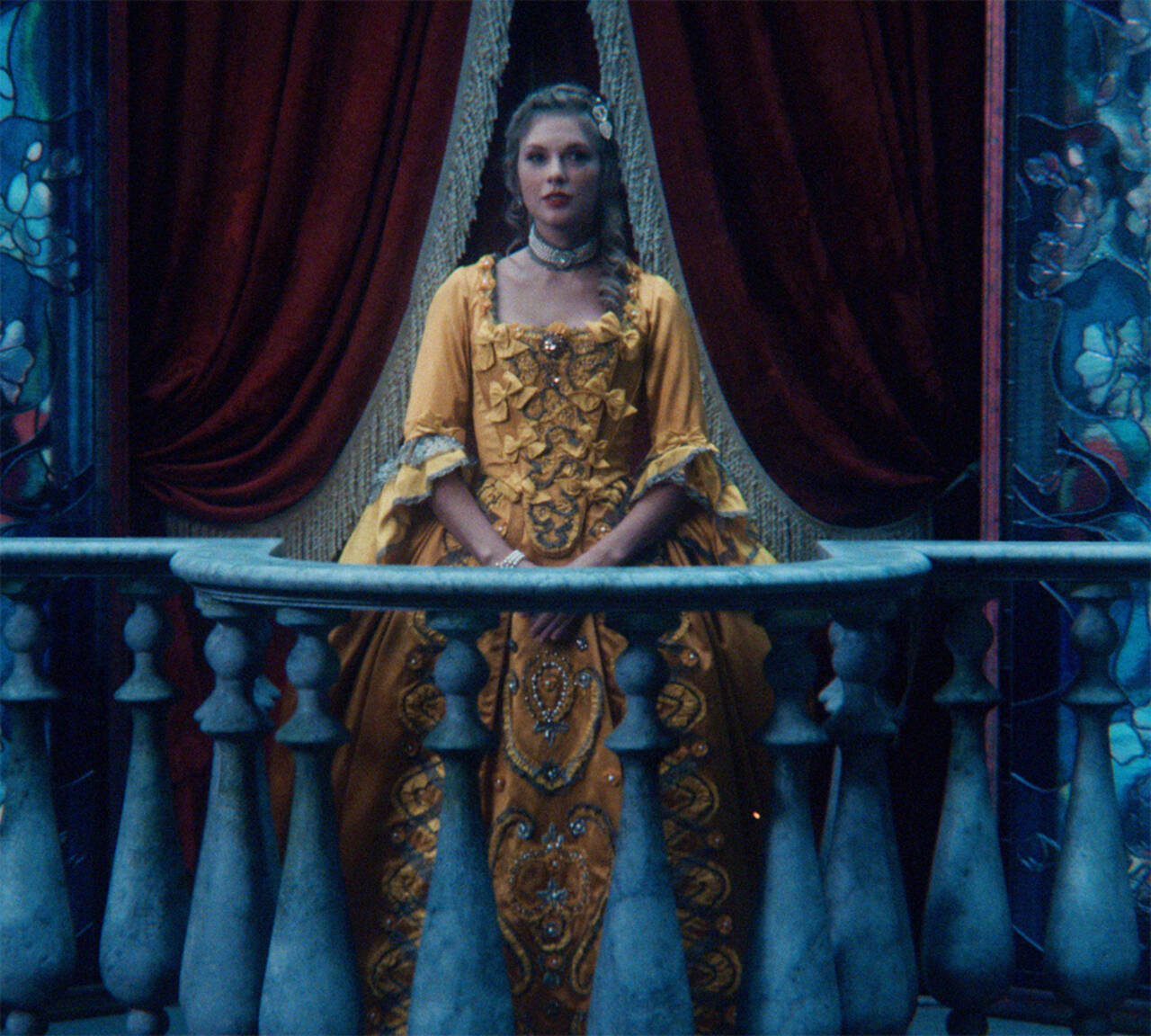
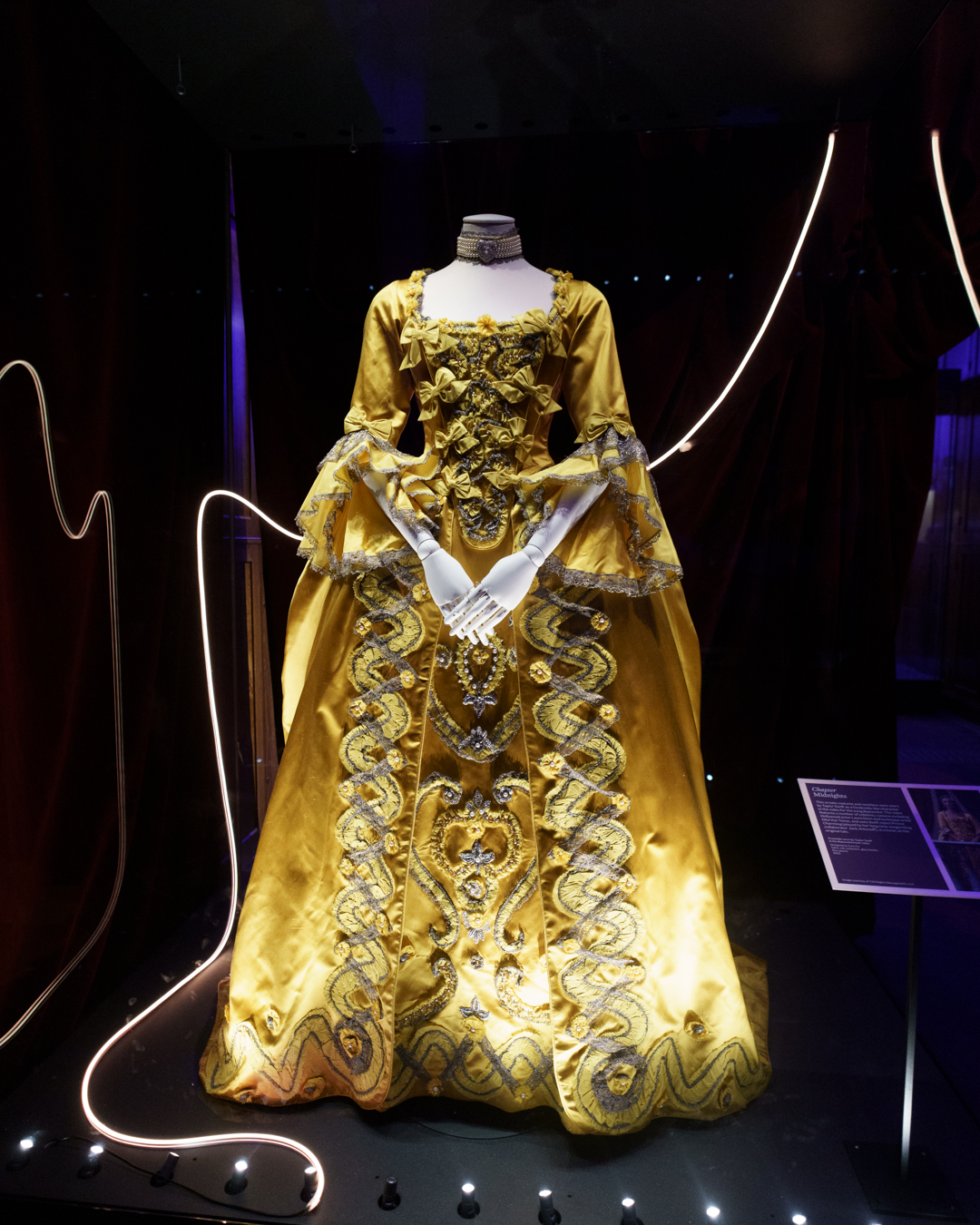
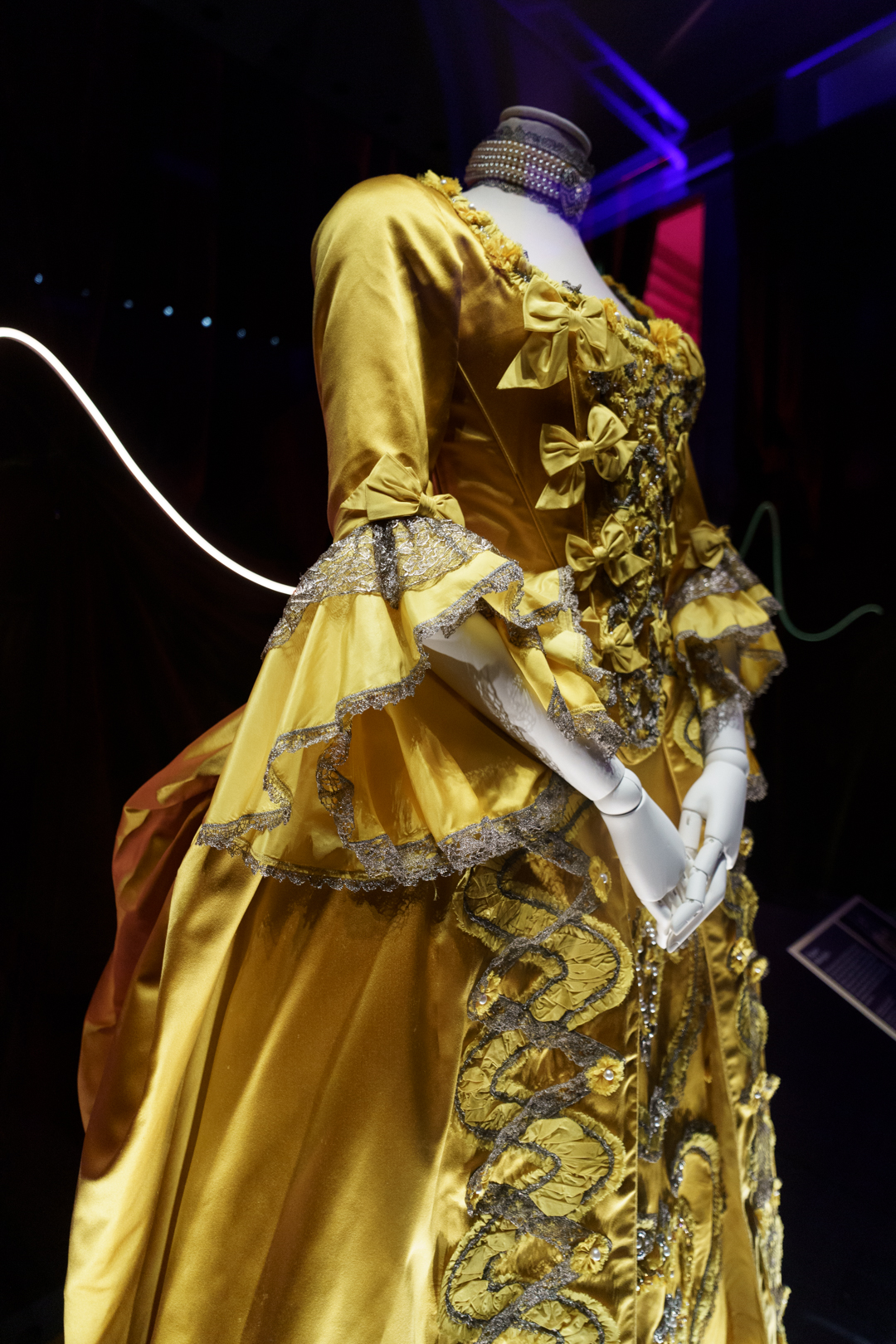
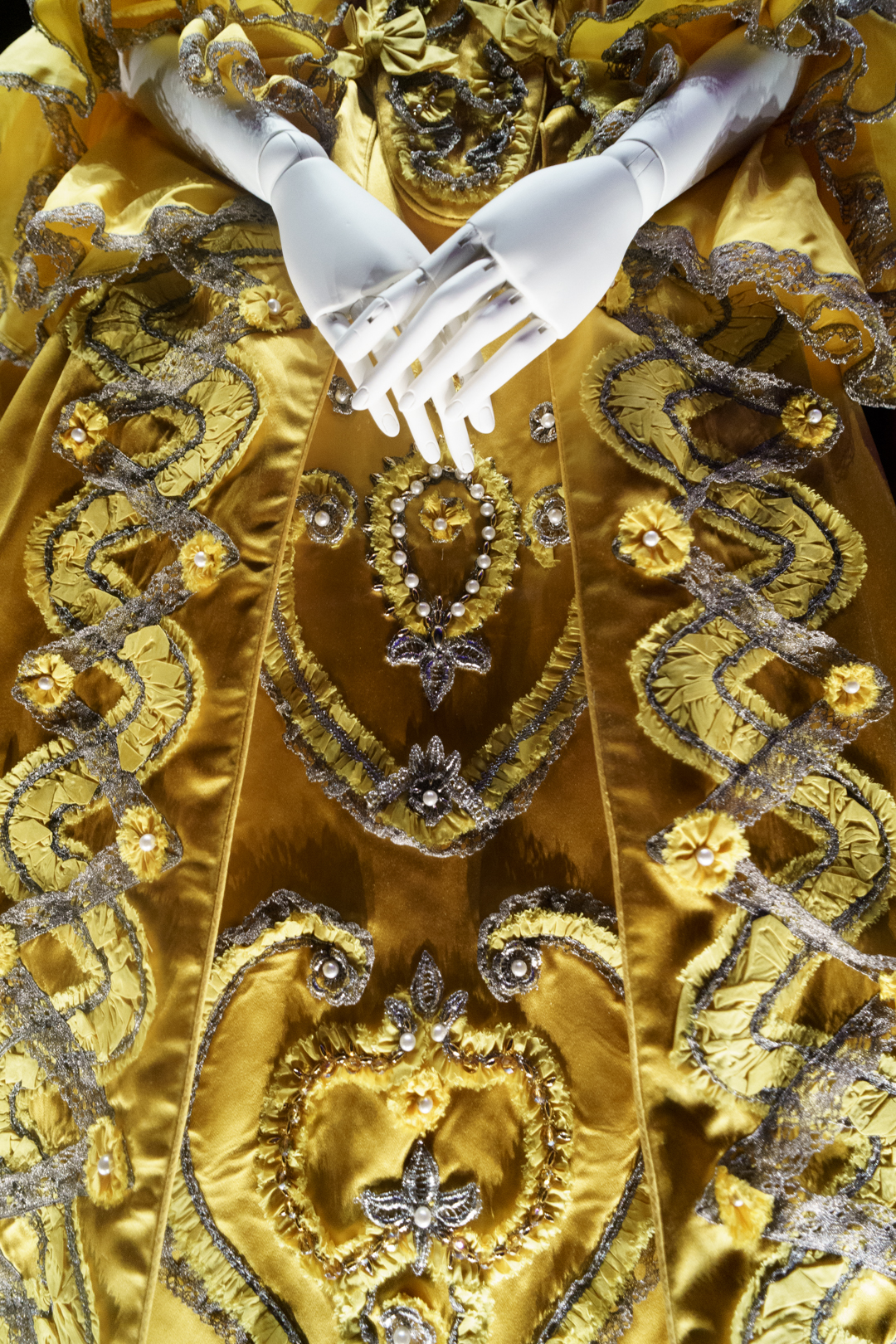
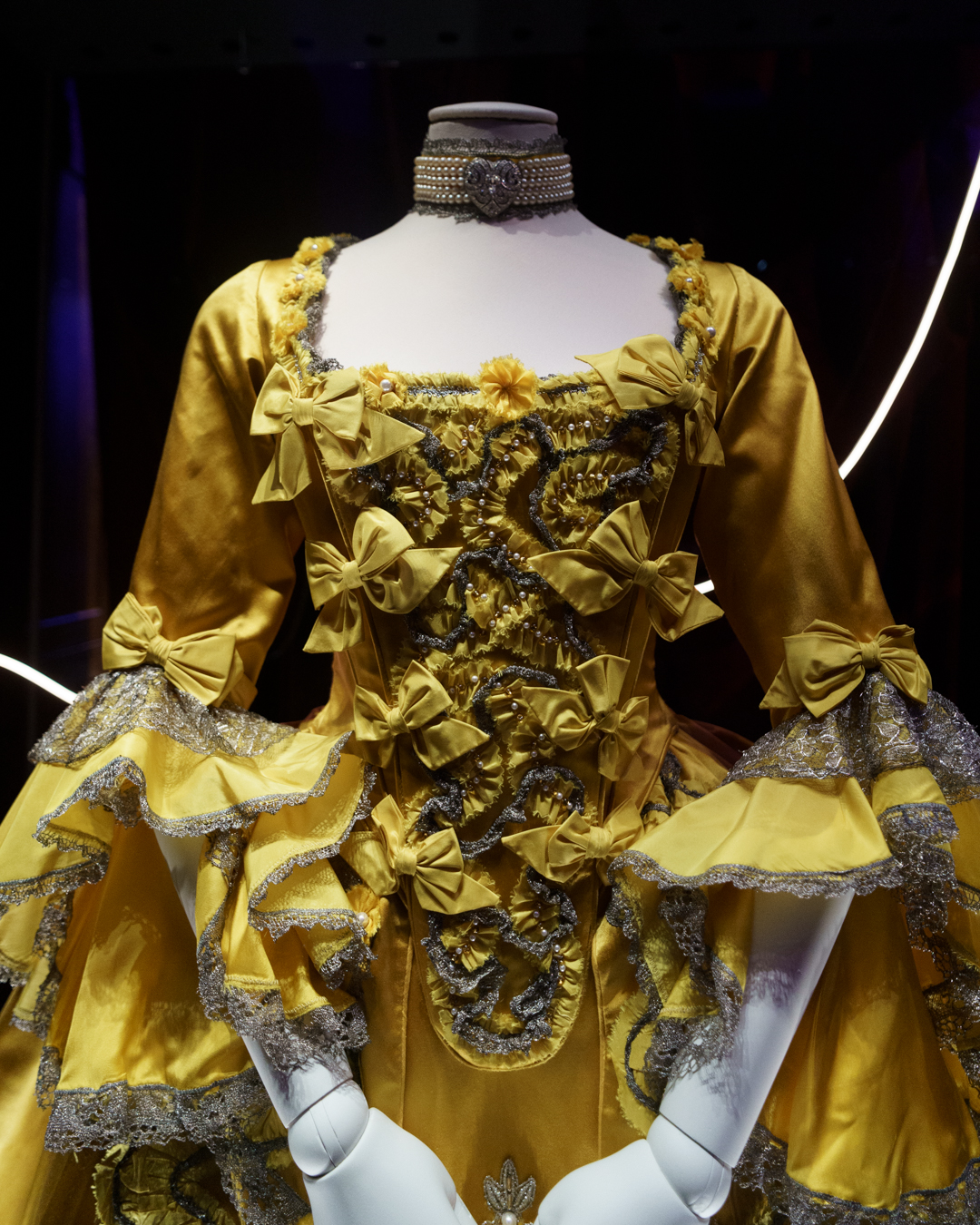
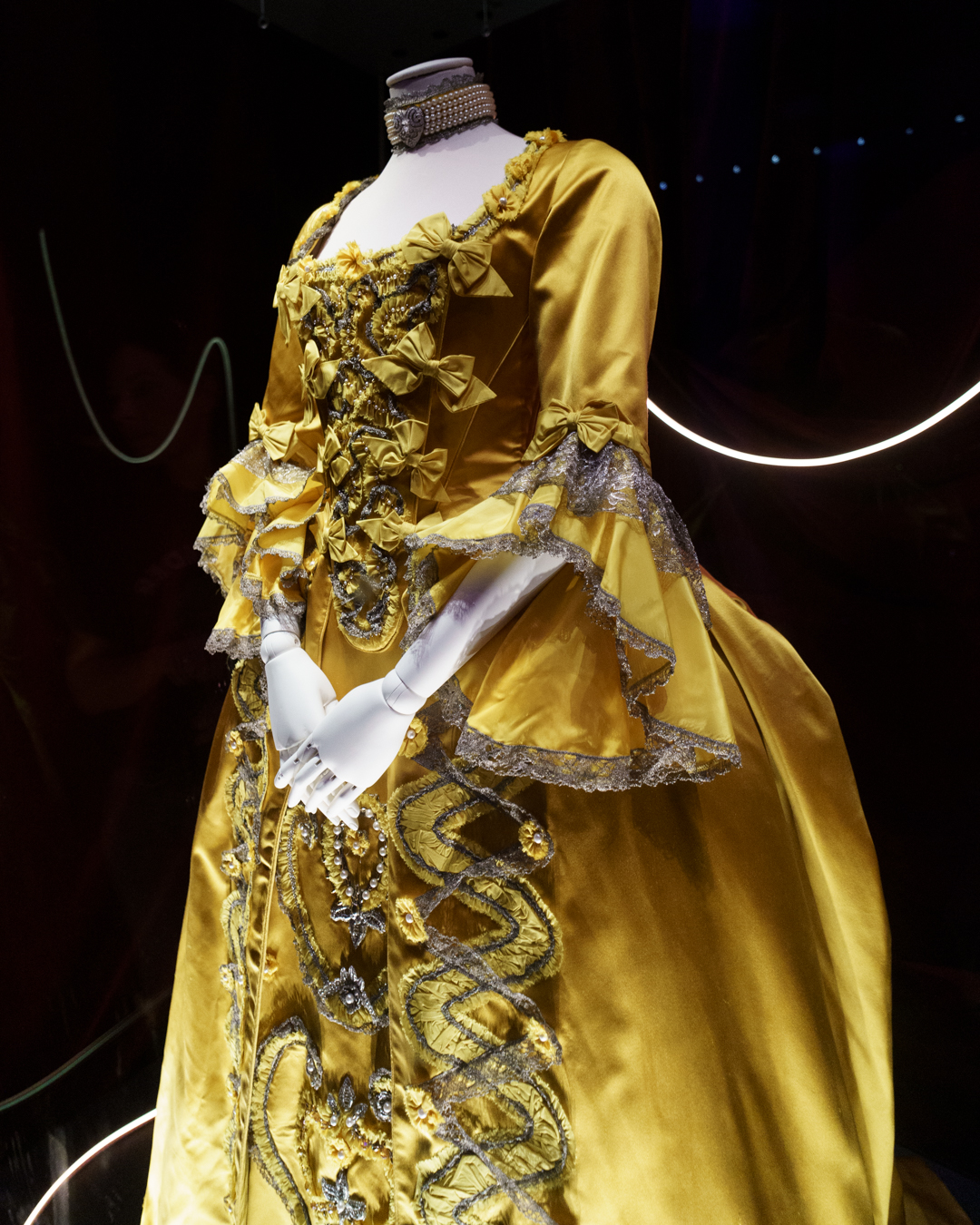
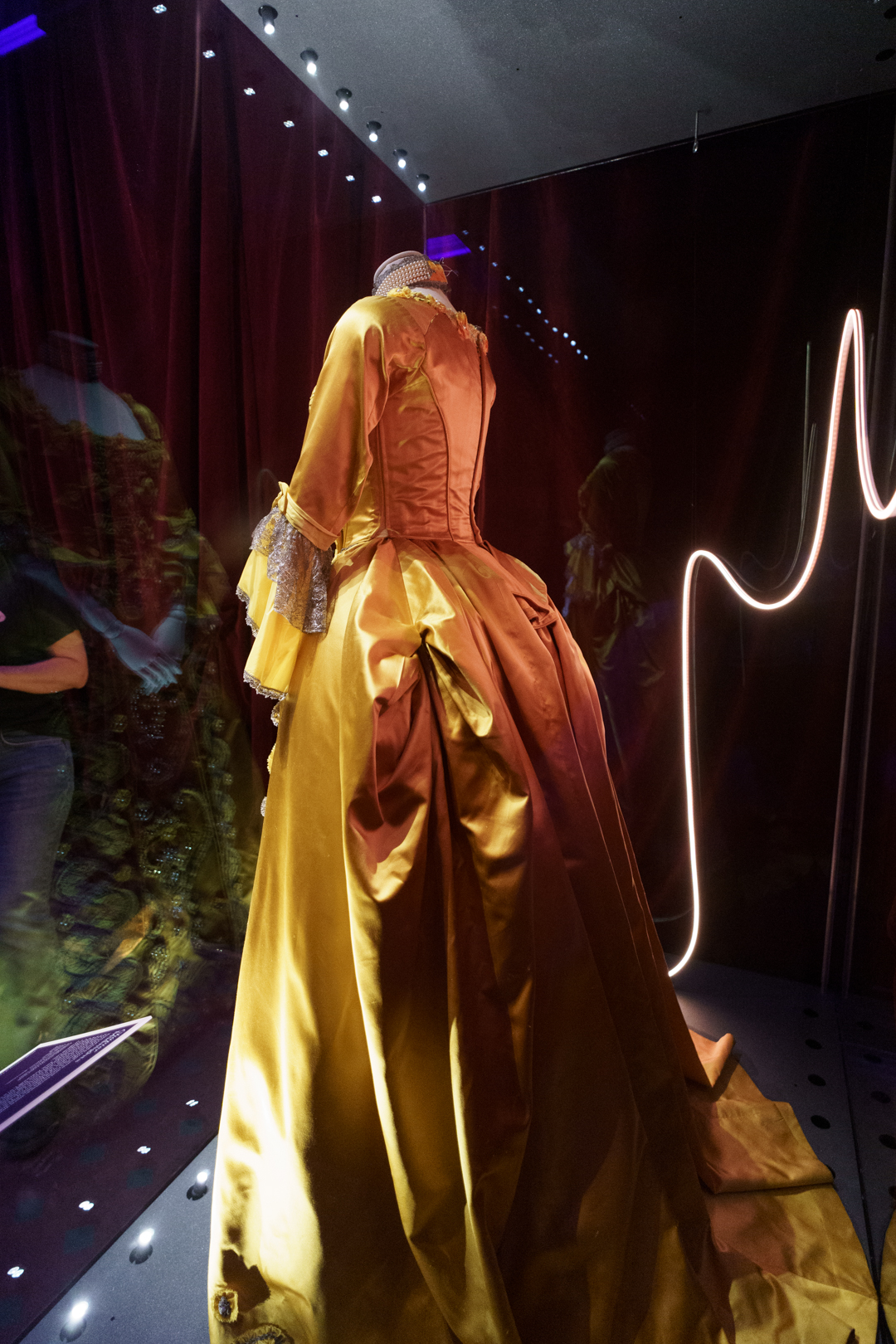

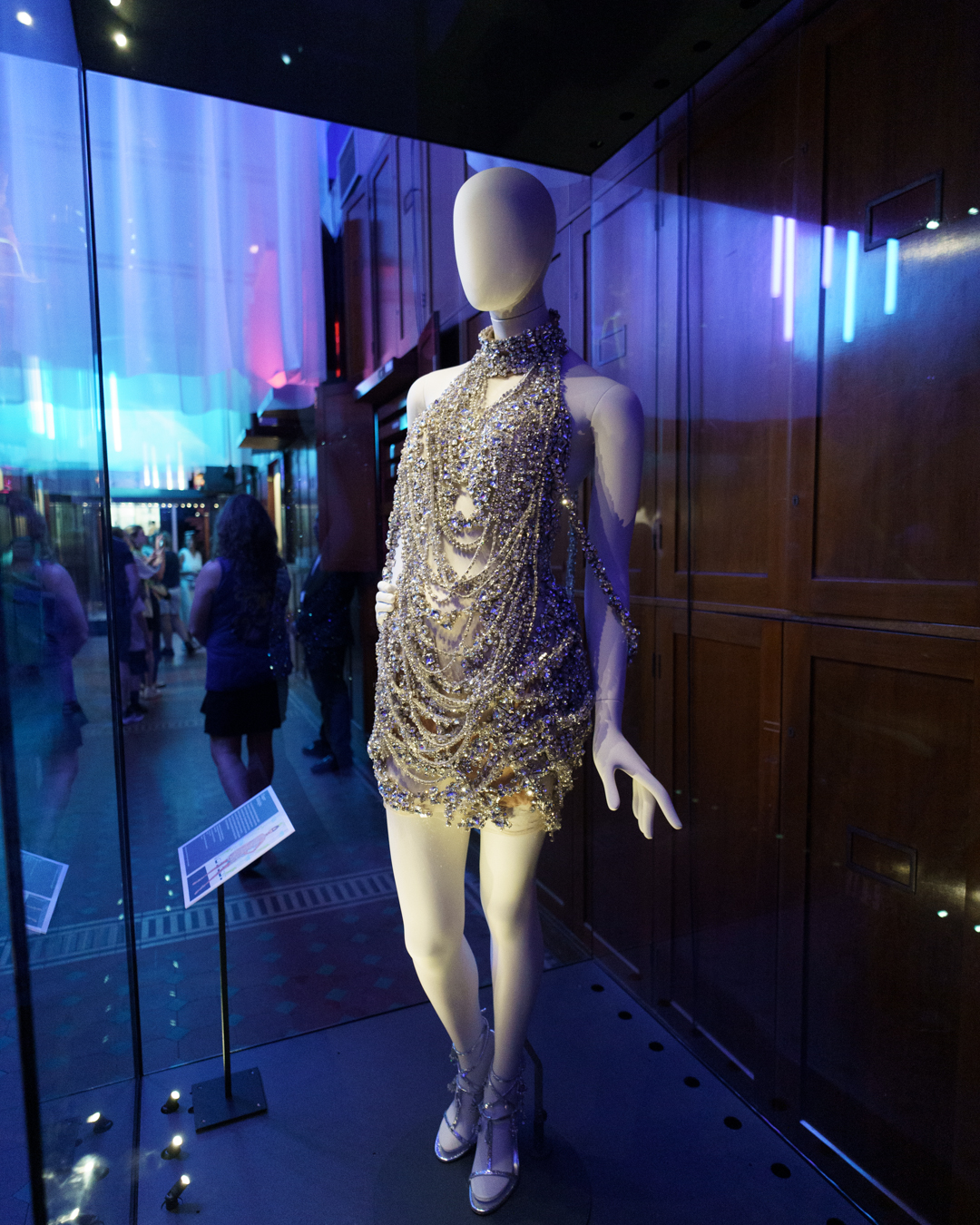
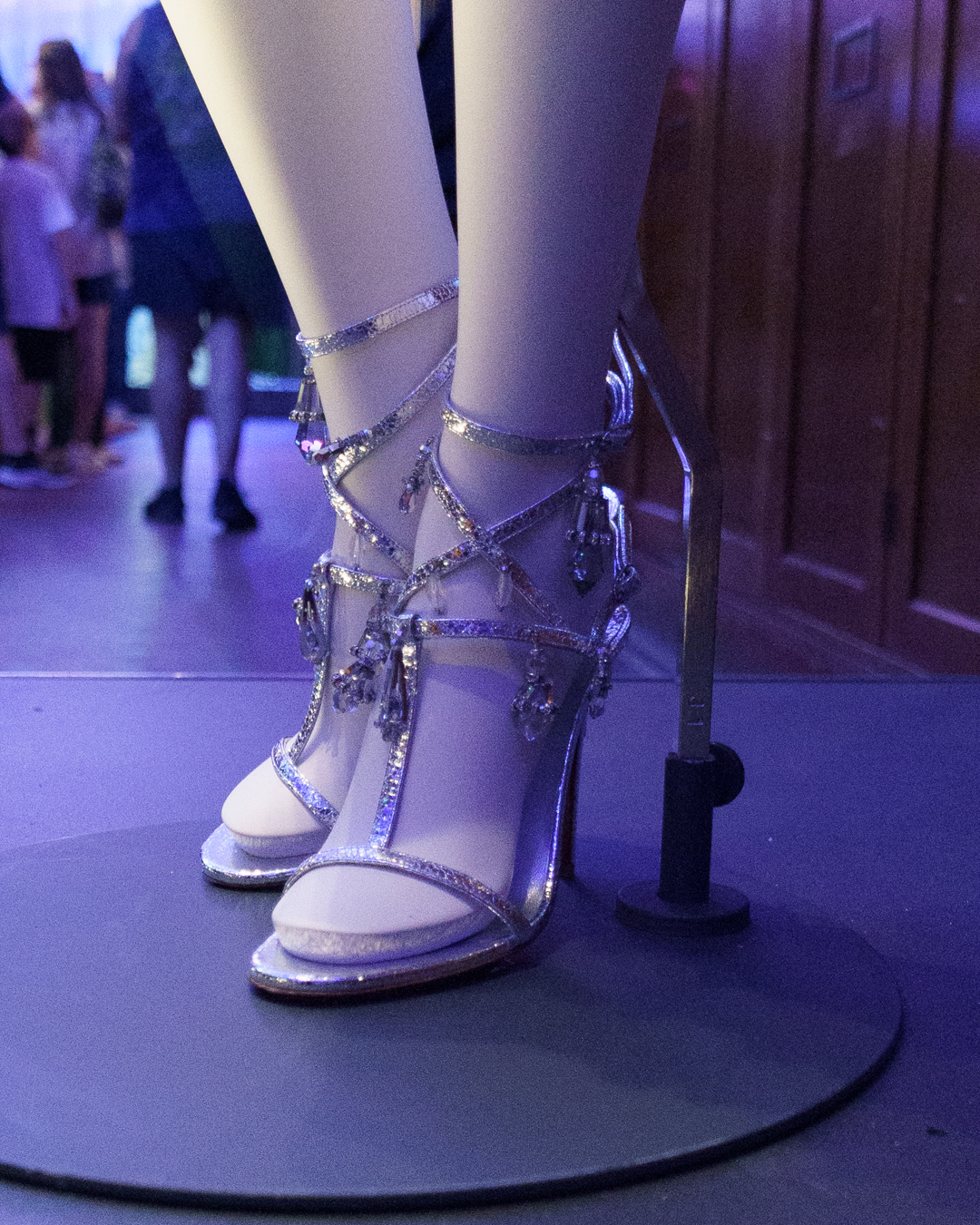
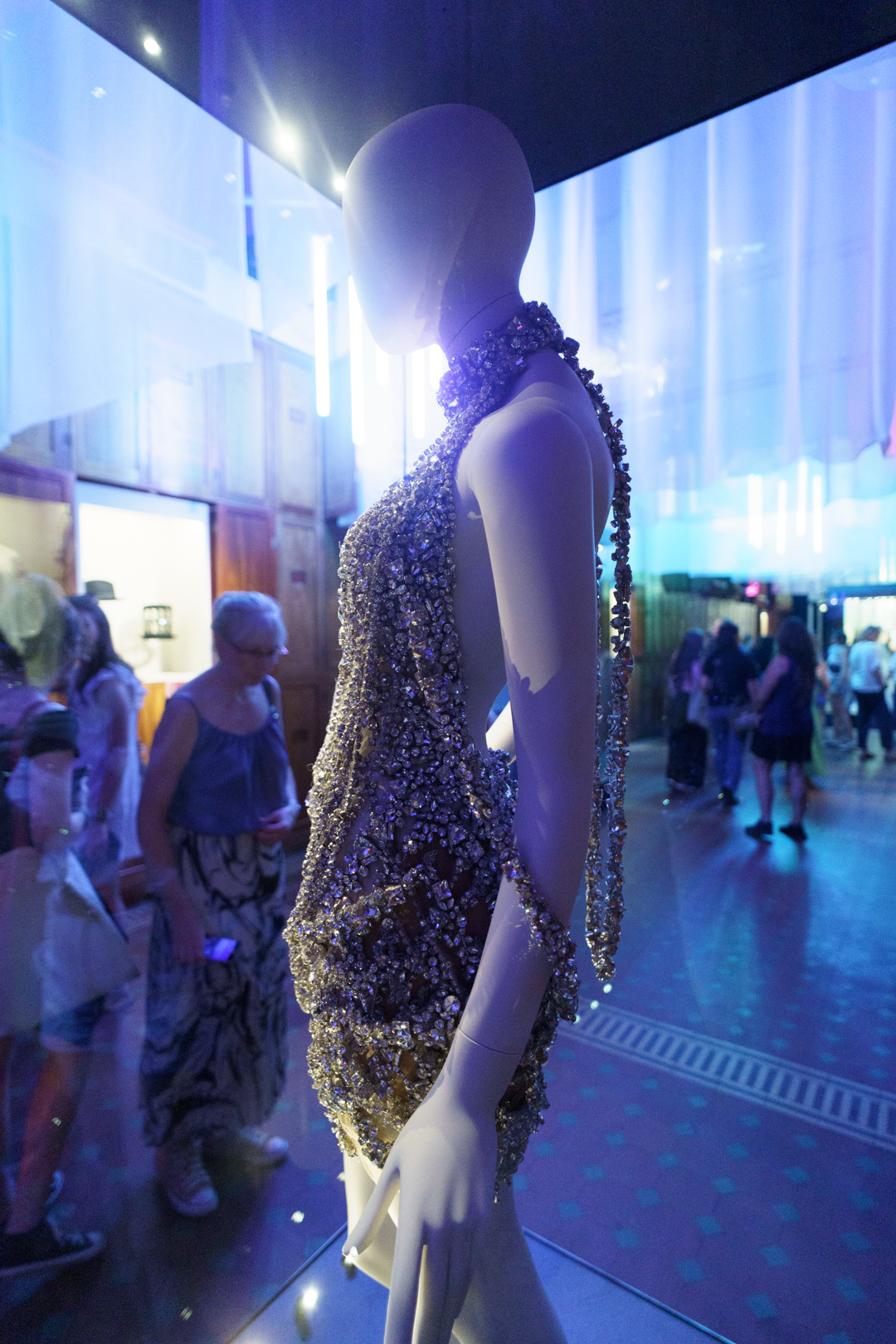
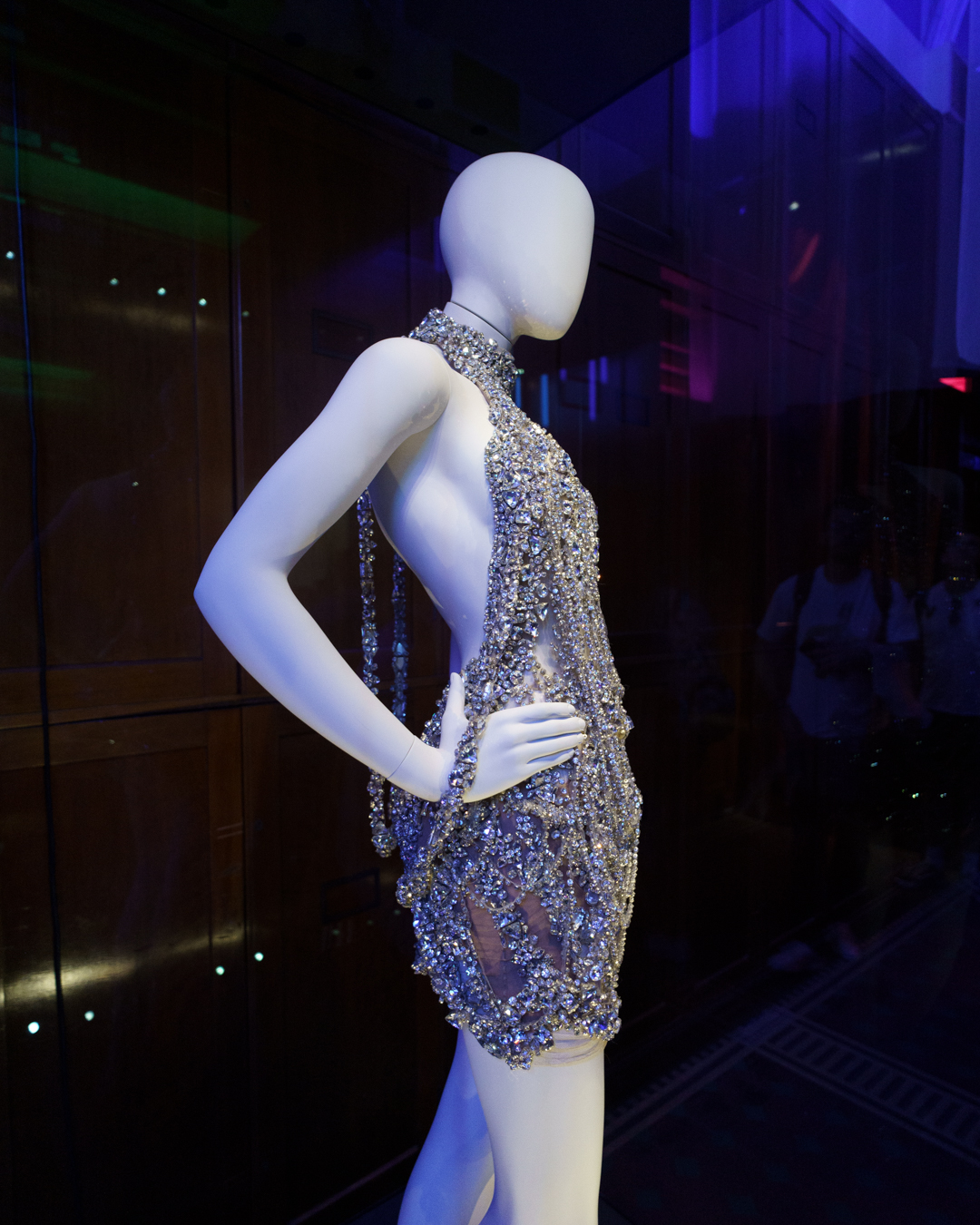
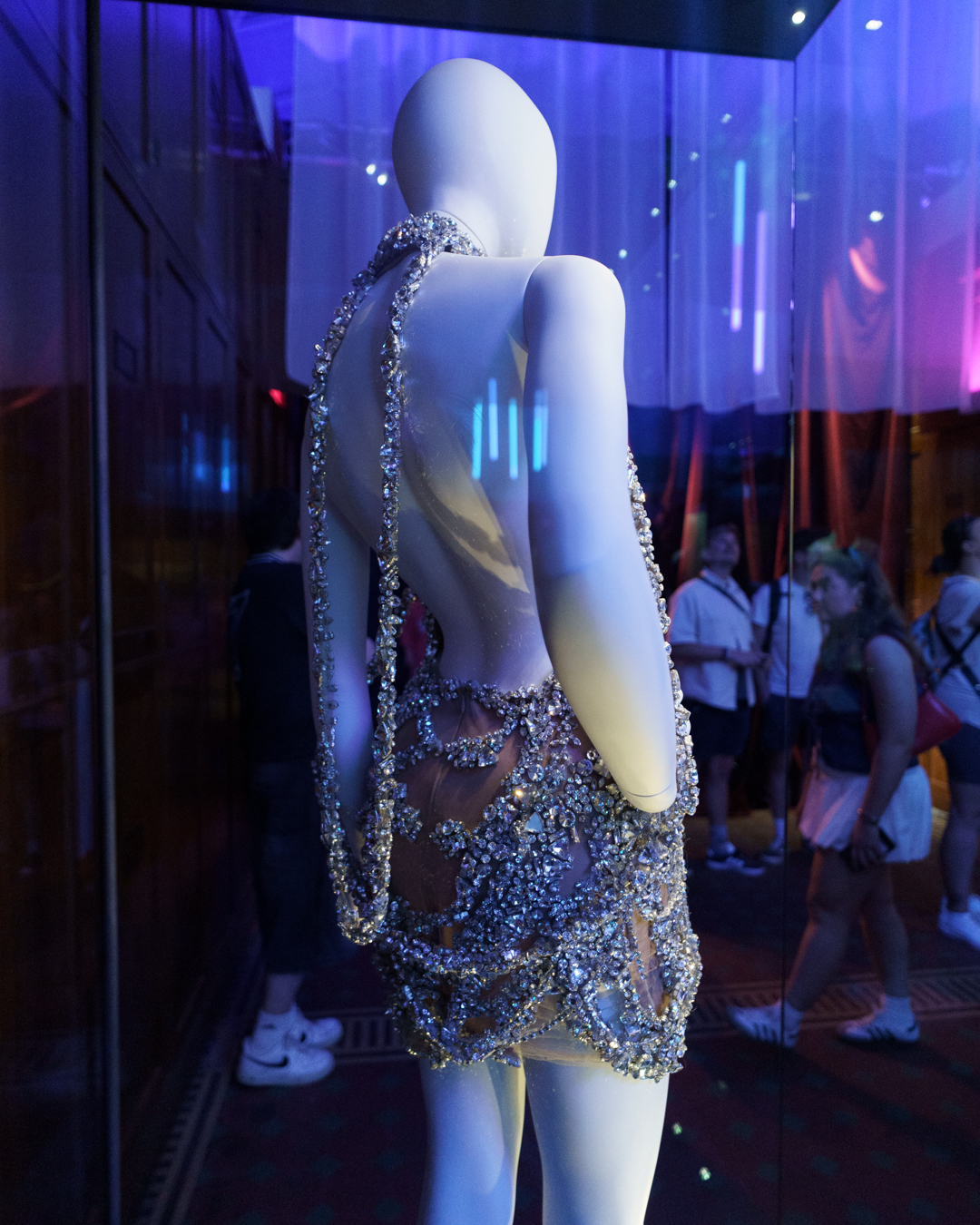
The first outfit to greet visitors is a resplendent yellow gown, designed by Euro Co, that features in the Bejeweled music video. Following a similar approach to Love Story, the video is a twist on the Cinderella story in which Taylor ultimately rejects Prince Charming (played by her long-time songwriting collaborator Jack Antonoff). On the other side of a half-drawn curtain is the sparkling dress by Oscar de la Renta that Taylor wore to the 2022 MTV Music Video Awards, where she announced Midnights, paired with crystal Louboutin shoes. The album subsequently won Taylor two Grammy Awards for ‘Best Pop Vocal Album’ and ‘Album of the Year’ on 4th February 2024, where she also pushed forward her release announcement of The Tortured Poets Department (2024); she had originally planned to announce it at the Eras Tour on Tokyo night one.

Throughout the trail, we have encountered terms like ‘Taylor’s Version’ and ‘From the Vault’ tracks, but what do these actually mean?
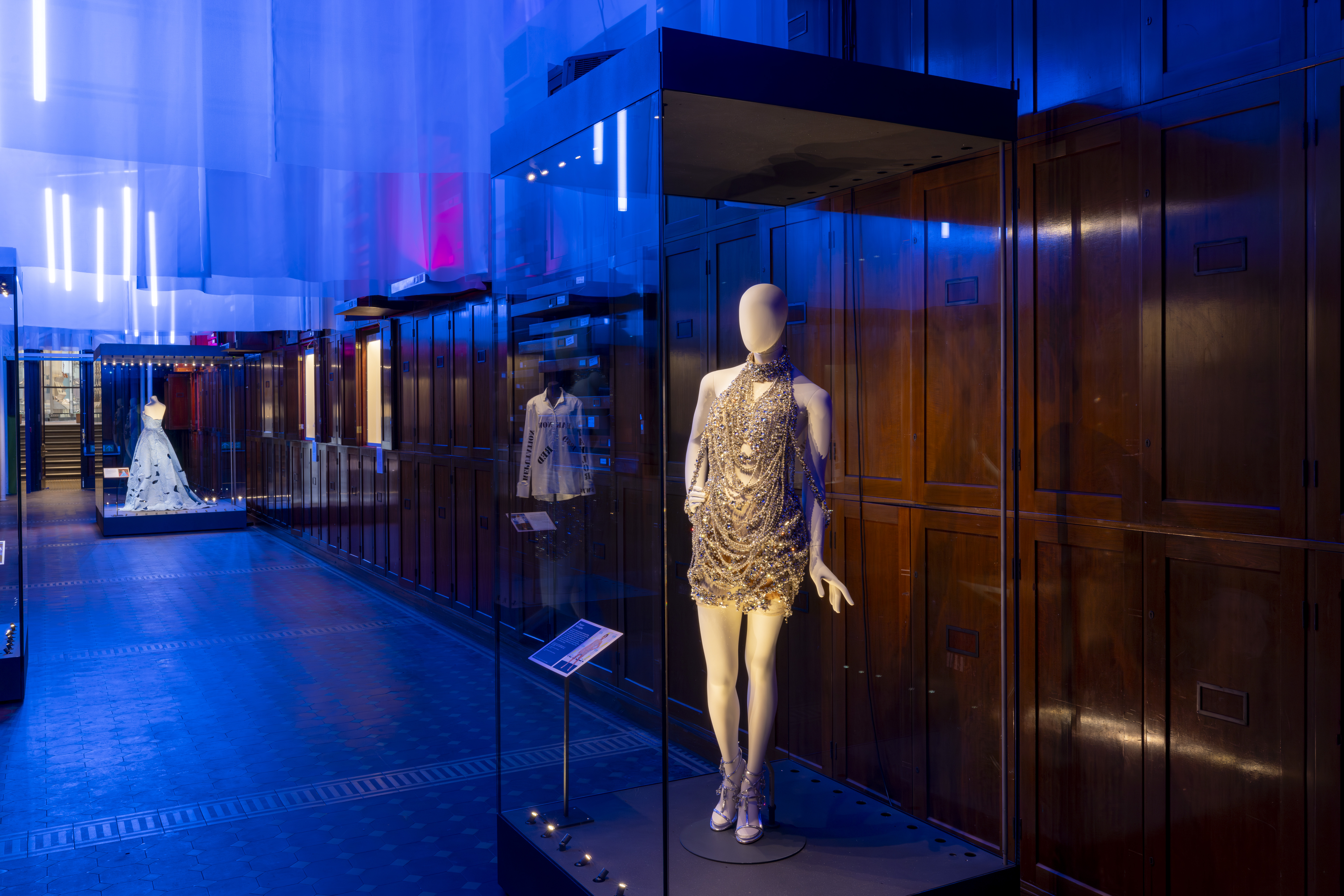
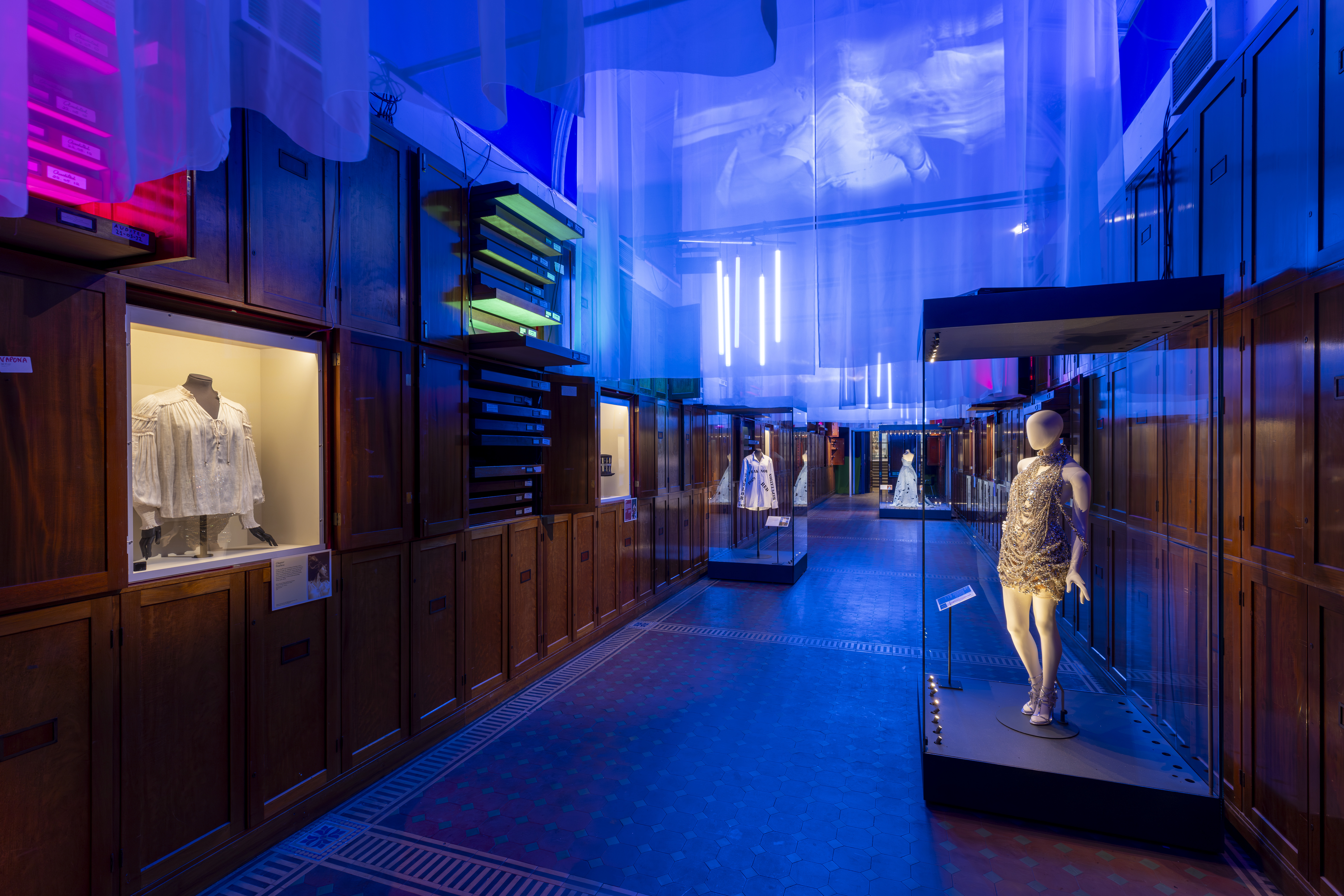
In 2019, the talent manager Scooter Braun and his company Ithaca Holdings acquired Big Machine Record, Taylor’s former label. As a result, the masters of her six Big Machine-released albums – from Taylor Swift to reputation – were effectively transferred to Scooter without Taylor’s knowledge. Nor was she given an opportunity to buy them back. On the suggestion of Kelly Clarkson, Taylor embarked on a quest to re-record her first six albums as Taylor’s Versions to regain control and ownership of her past work, adding previously unreleased ‘From the Vault’ tracks as extra incentives. This is where the placement of the ‘Records and Re-records’ section becomes quite relevant, as the Prince Consort Gallery is actually the museum’s textile vault, and is normally inaccessible to the general public. Along the sides of the gallery can be seen hand-labelled storage drawers with the names of various garments held within the collection.
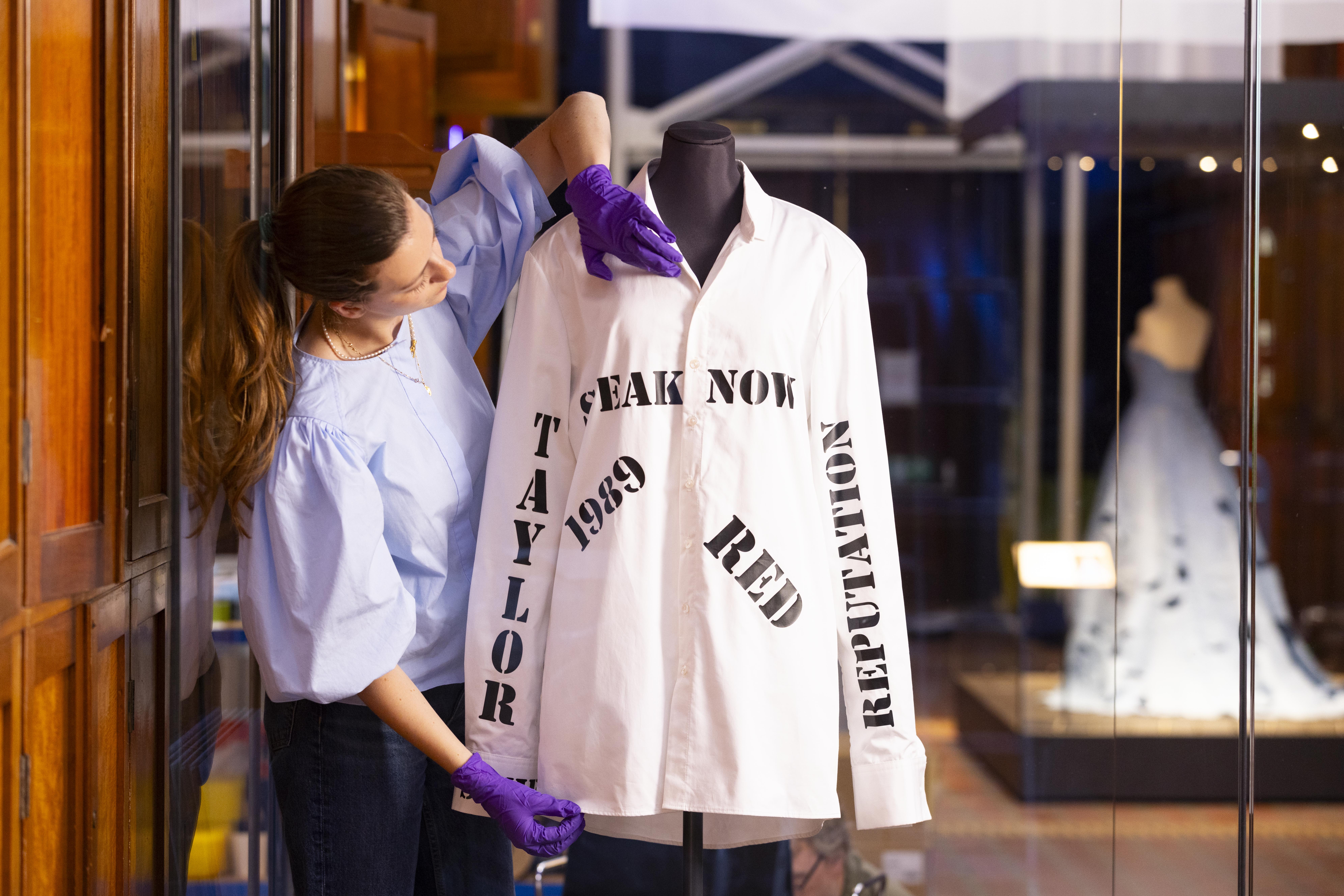
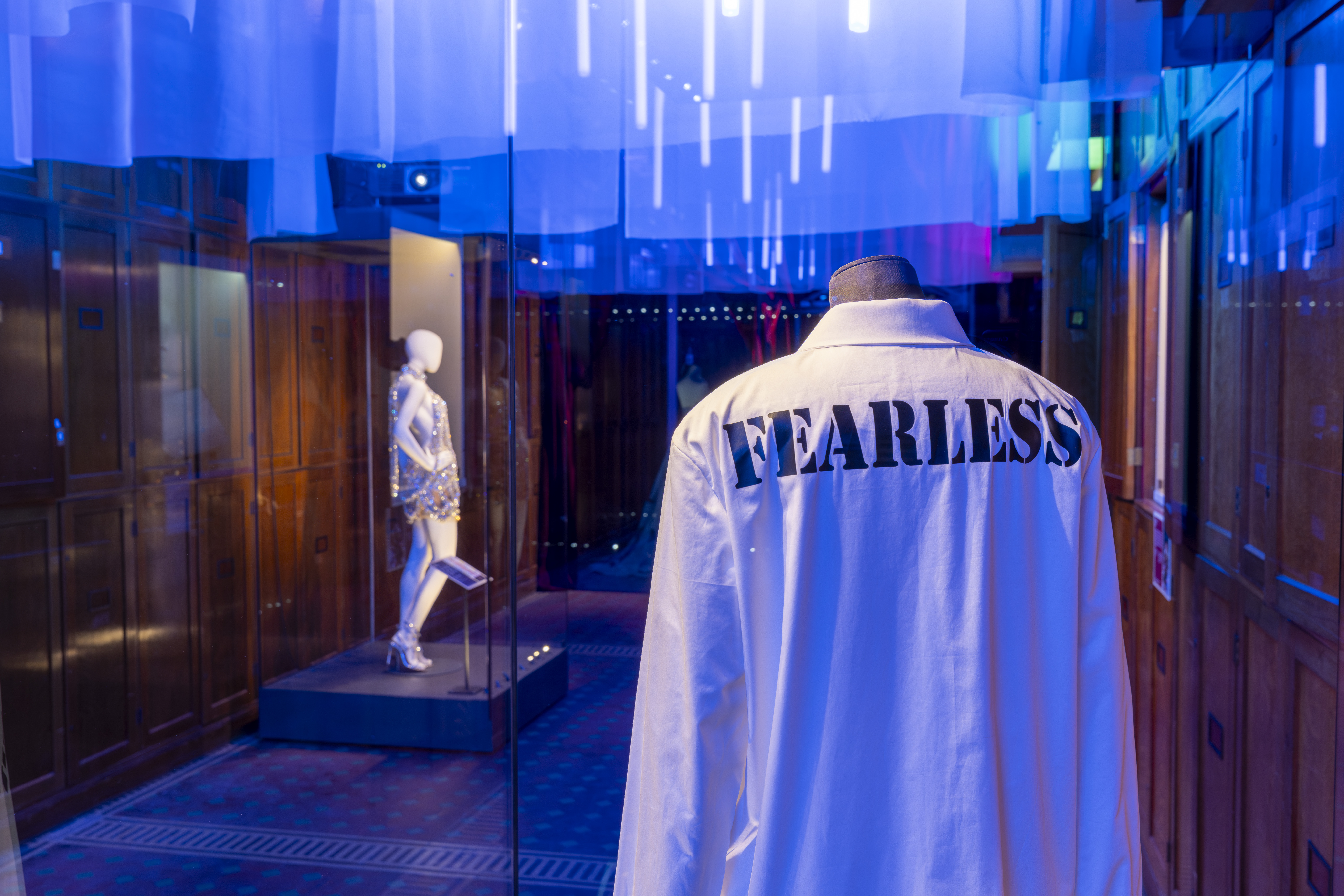
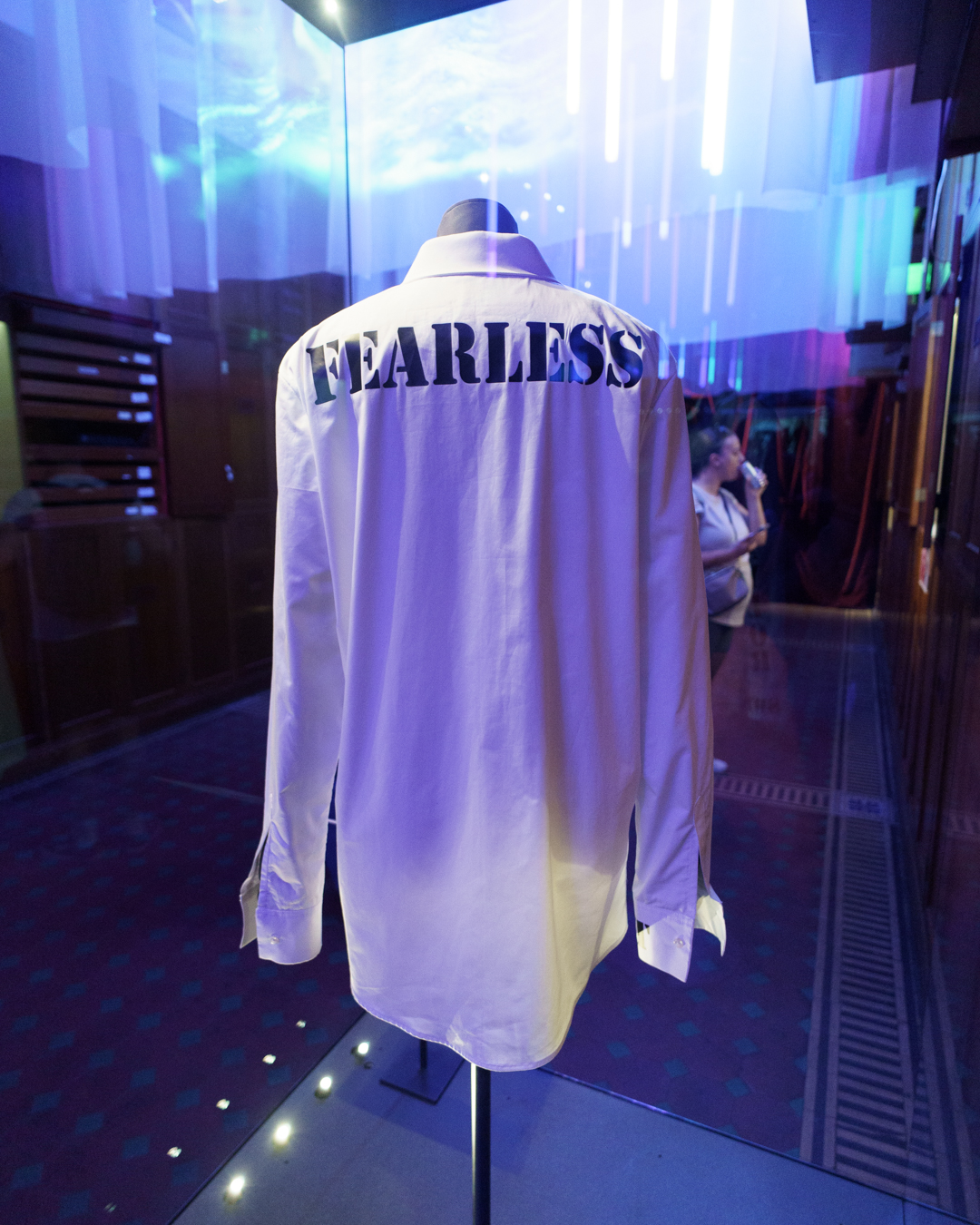
A genius at sprinkling Easter eggs, Taylor wore a white dress shirt emblazoned with the names of her first six albums at the American Music Awards in 2019 in silent protest; her plans to re-record had not been announced yet. Designed by Joseph Cassell and Jessica Jones, it is a historic piece of Swiftie lore, possibly one of the most important objects on this trail.
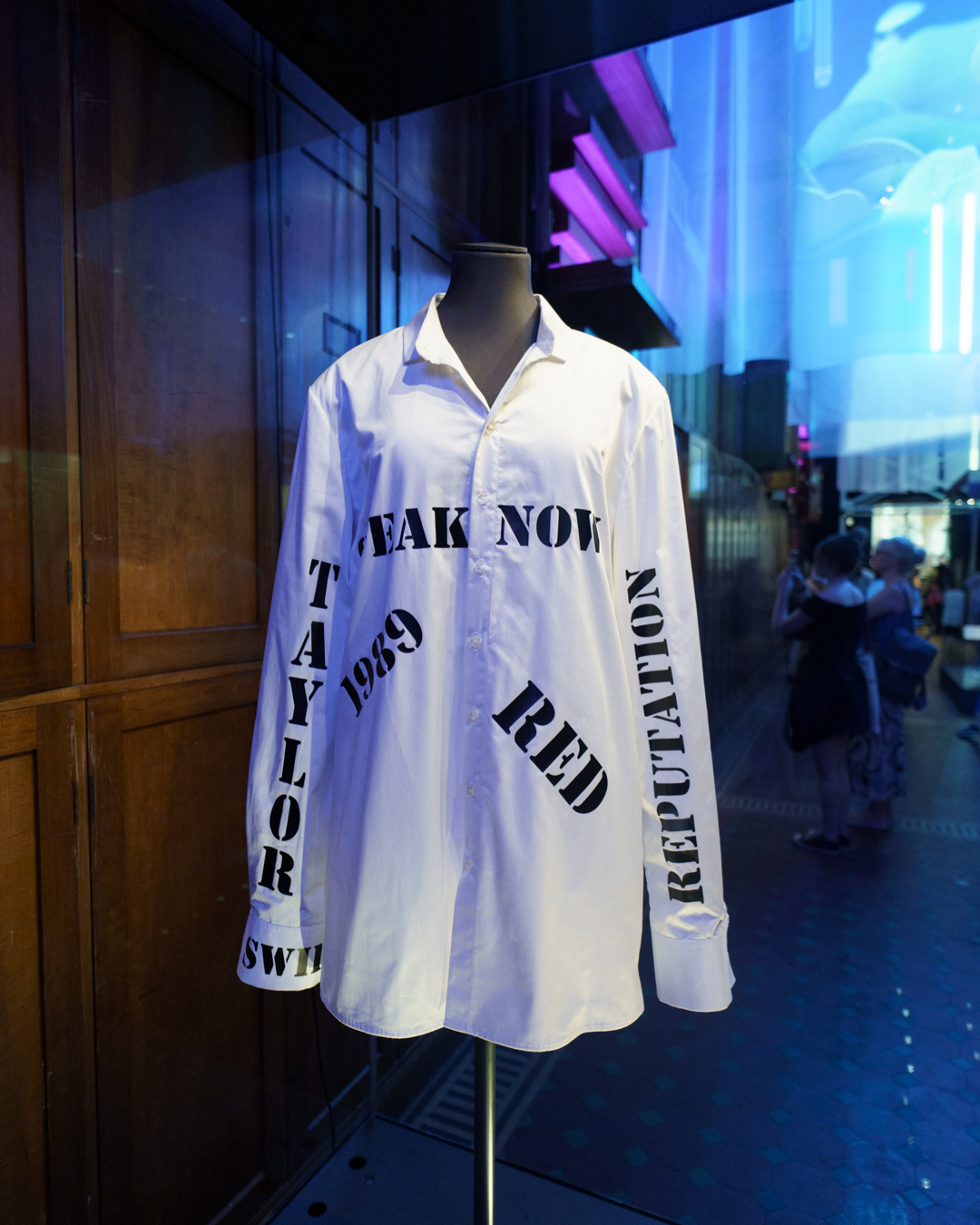
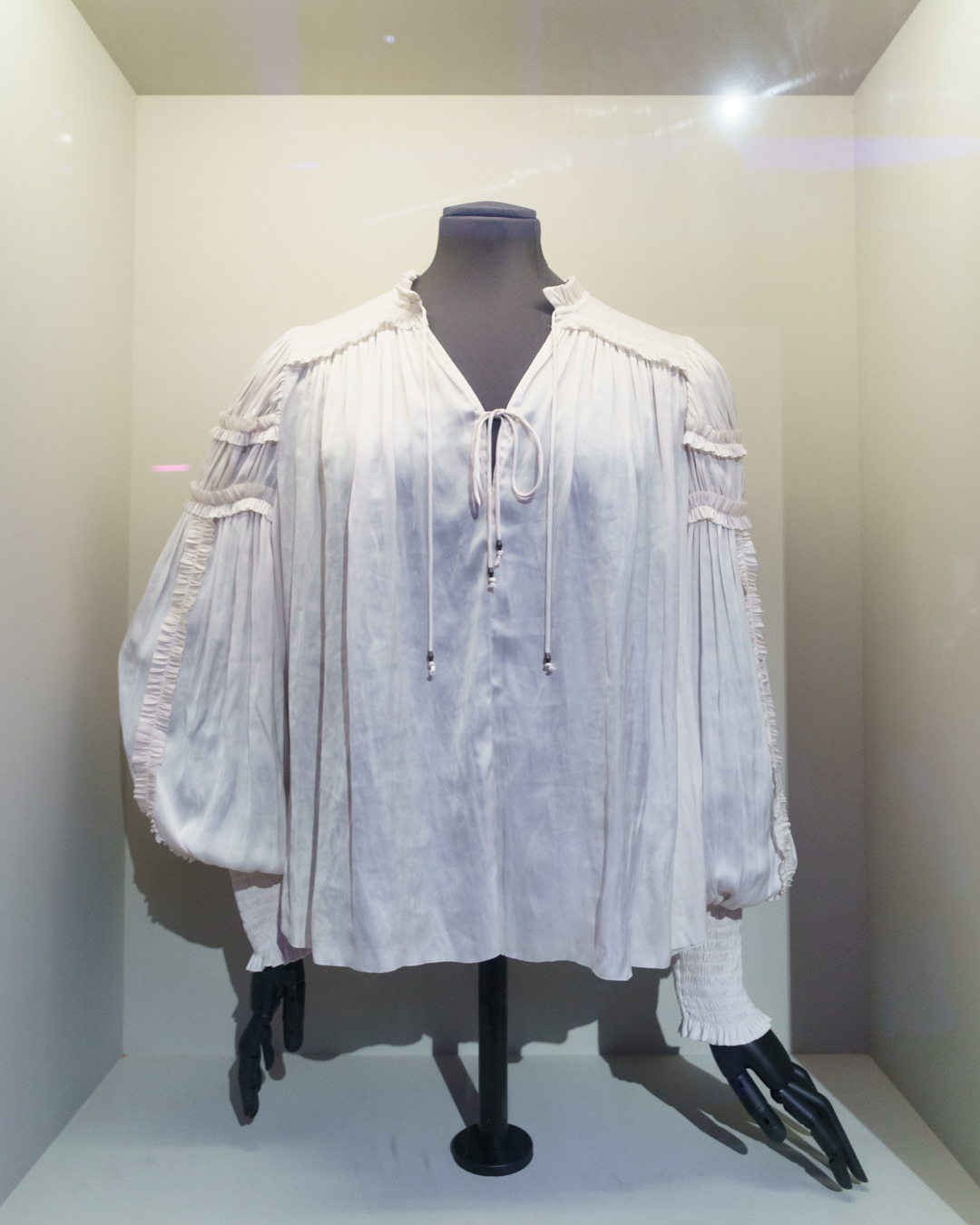
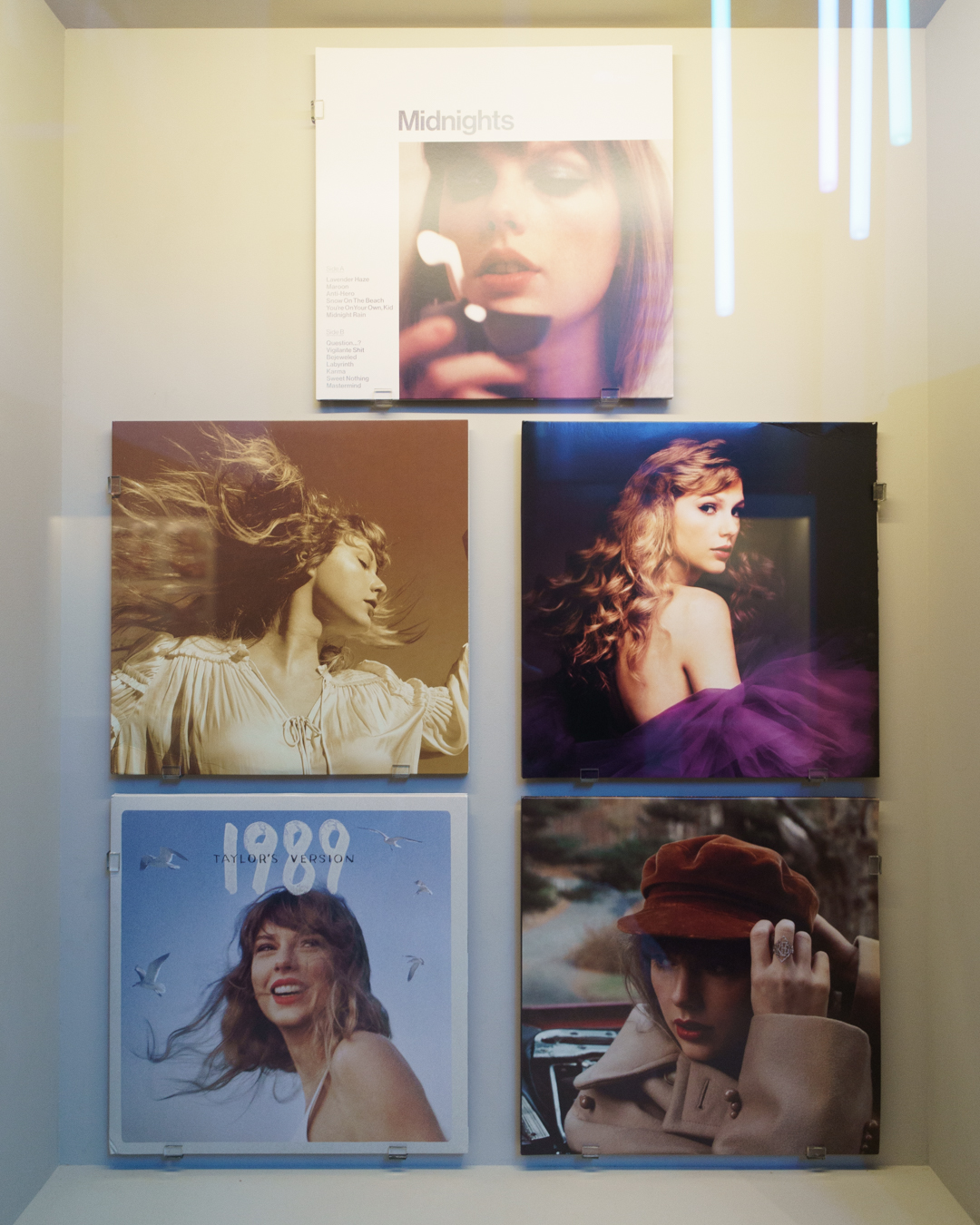
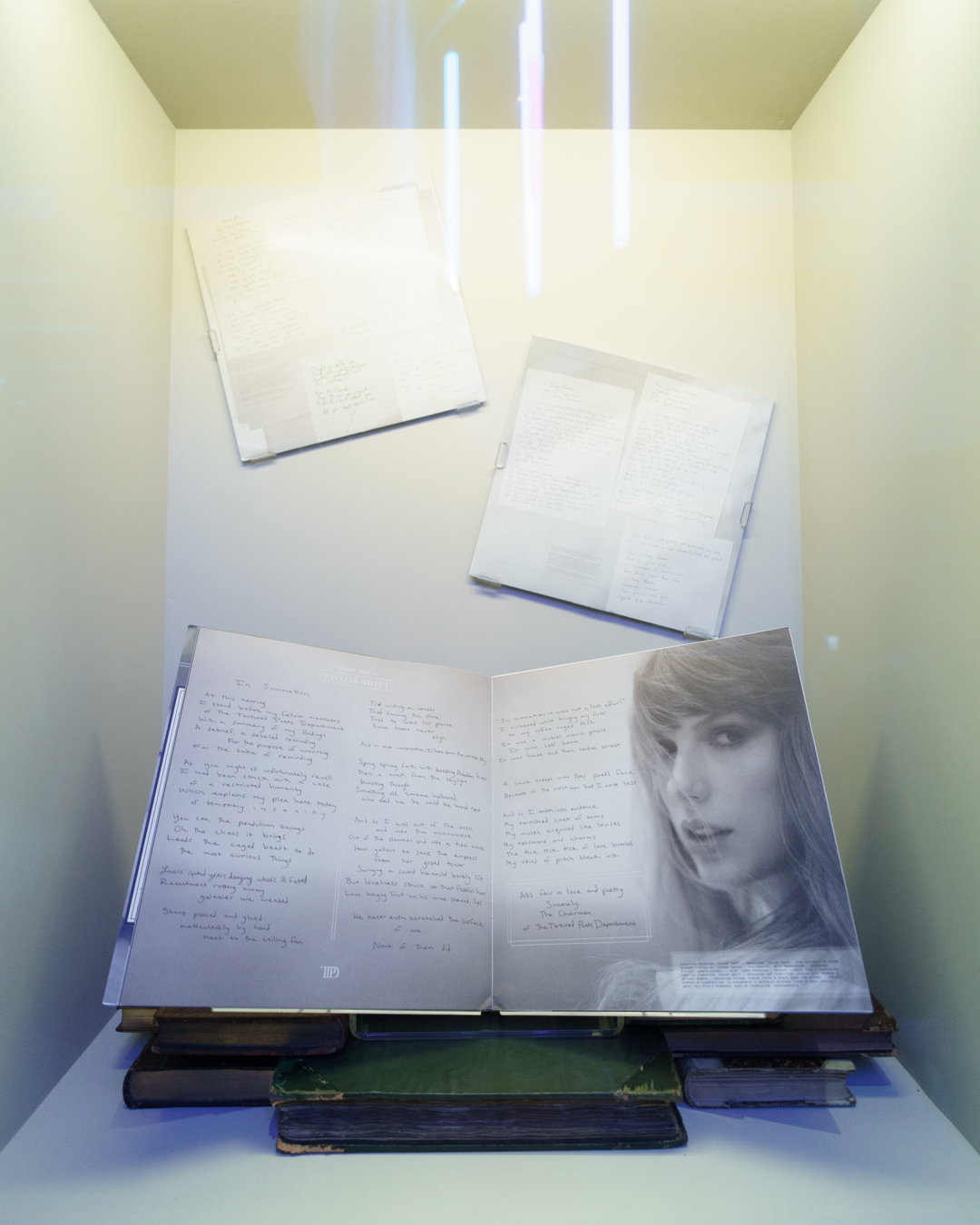
Nearby, one can find the Ulla Johnson shirt Taylor wore on the cover of Fearless (Taylor’s Version), while a later display showcases all four of her current re-records plus Midnights. The Tortured Poets Department also receives its own display, with the vinyl’s book-bound jacket open to Taylor’s prologue poem, and two exclusive posters reproducing handwritten lyrics from the album floating above it.
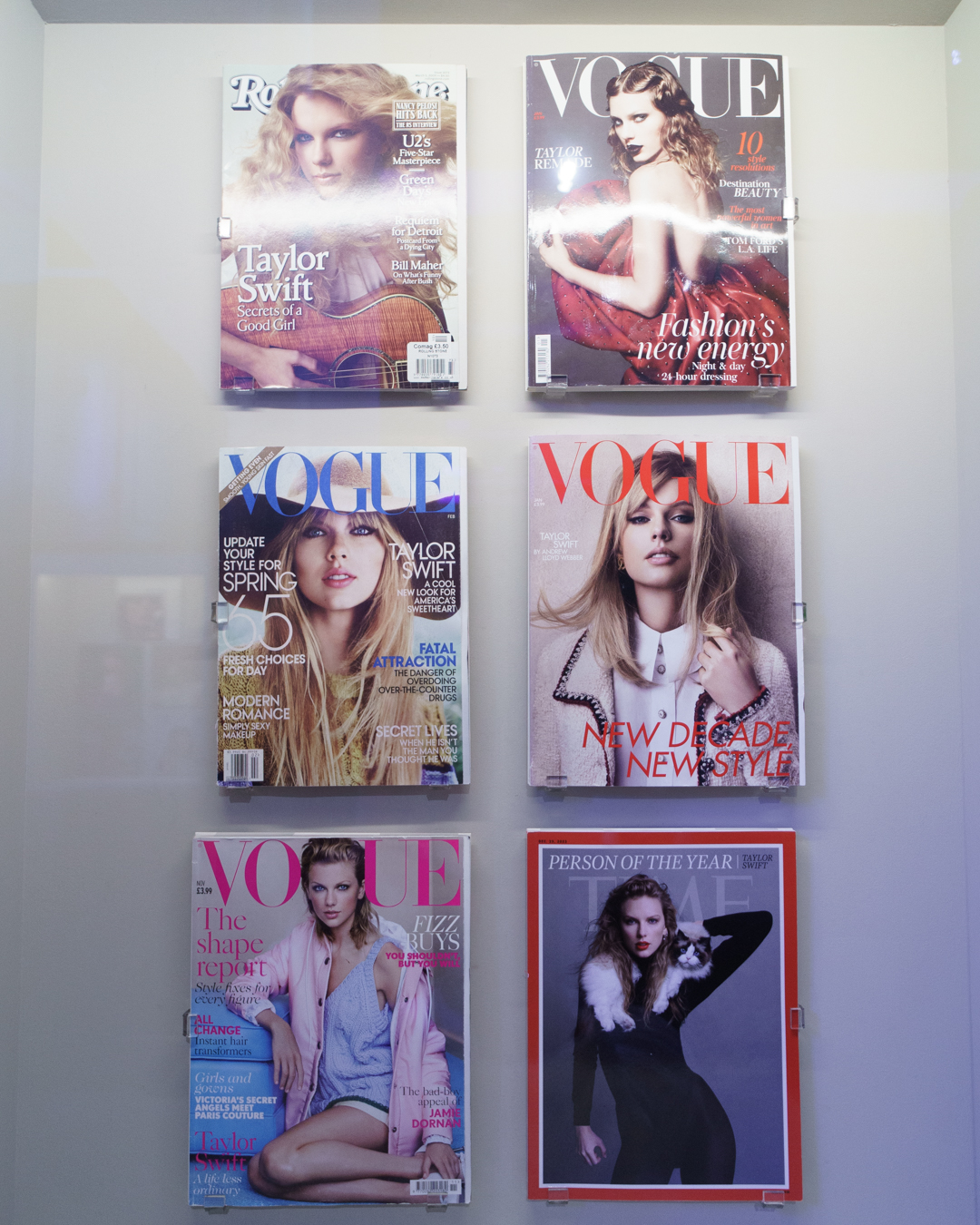
I was especially amused by the small audio component regarding a display of magazine covers, from Taylor’s first Rolling Stone cover in 2009 to her recent Time Person of the Year issue (which had three commemorative covers, the overall favourite being the one featuring her cat Benjamin Button). As one views these images, the sound of camera shutters firing can be heard from behind, as if we had stumbled in front of a group of paparazzi on the red carpet. It’s a small detail, but one that is tastefully employed to immerse visitors in the wider context of Taylor’s fame and success.
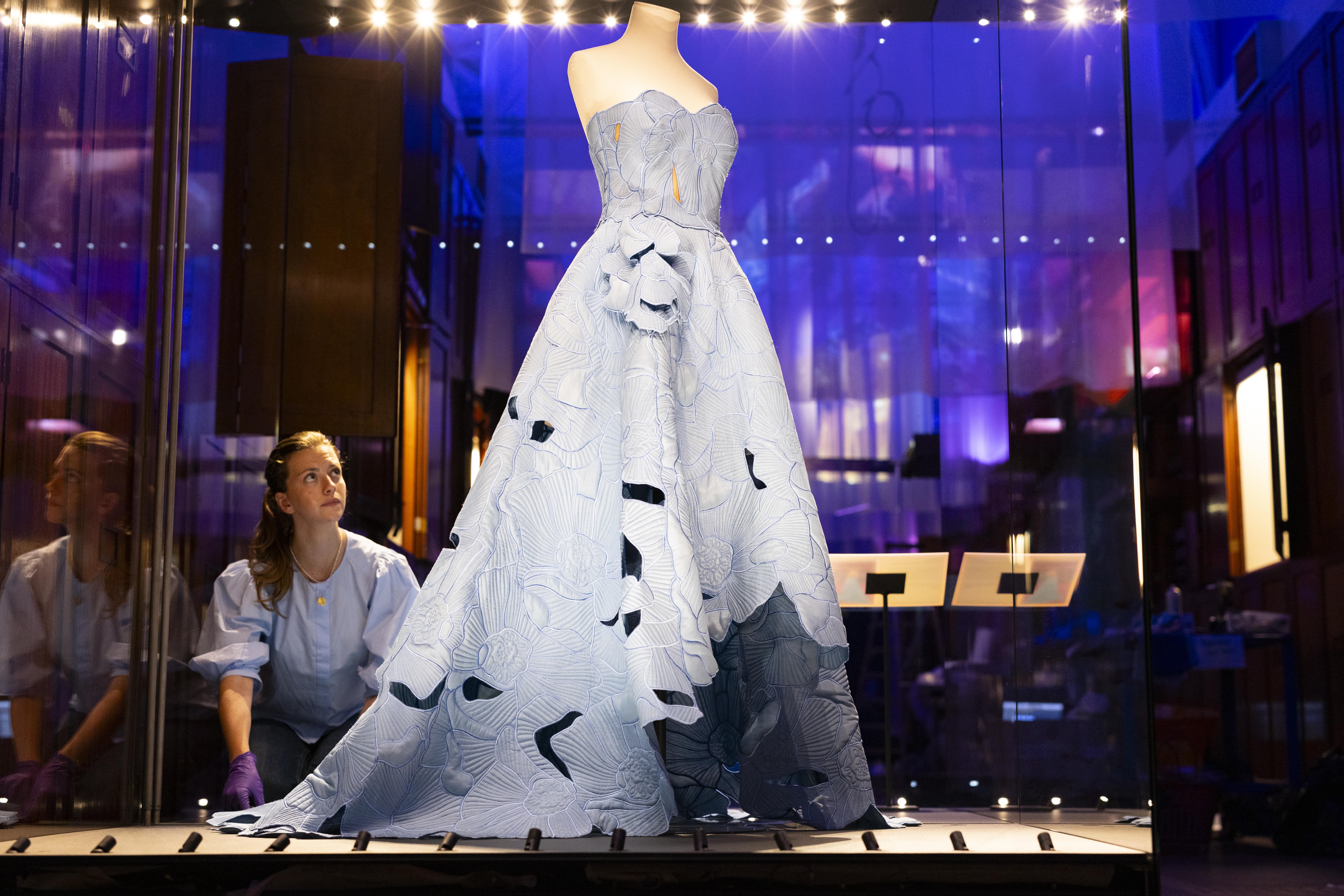
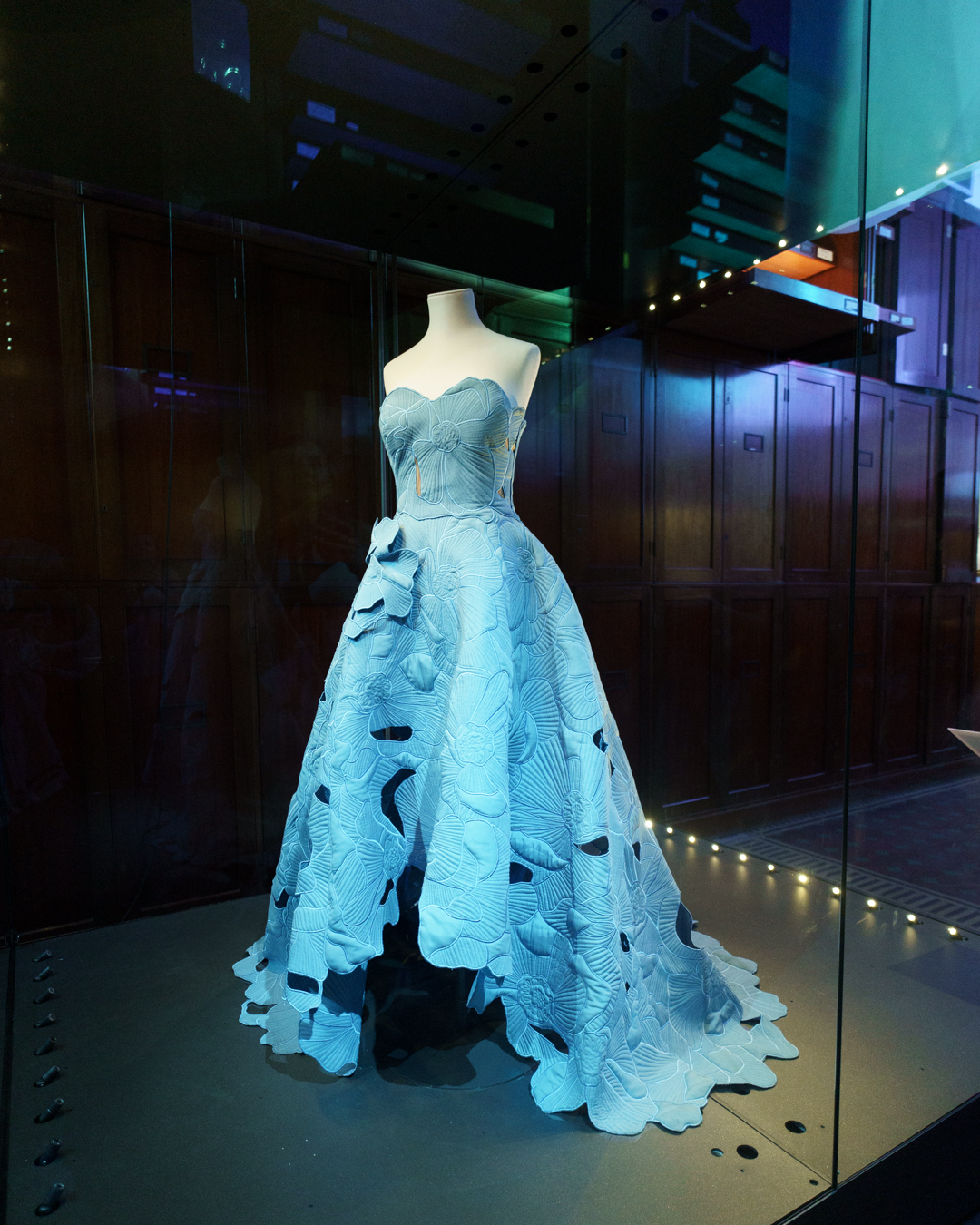
Closing the vault are two displays dedicated to the Eras Tour, the ambitious global sensation in which Taylor sings for three-and-a-half hours straight across all Eras of her career (except the self-titled Era, whose songs occasionally feature as surprise songs during the acoustic session), consisting of 152 dates in five continents since 17th March 2023; the concert film was released in cinemas worldwide in October, followed by extended versions exclusively available on certain streaming platforms. At the film premiere on 11th October at The Grove in Los Angeles, Taylor wore the blue Oscar de la Renta gown exhibited in this gallery.
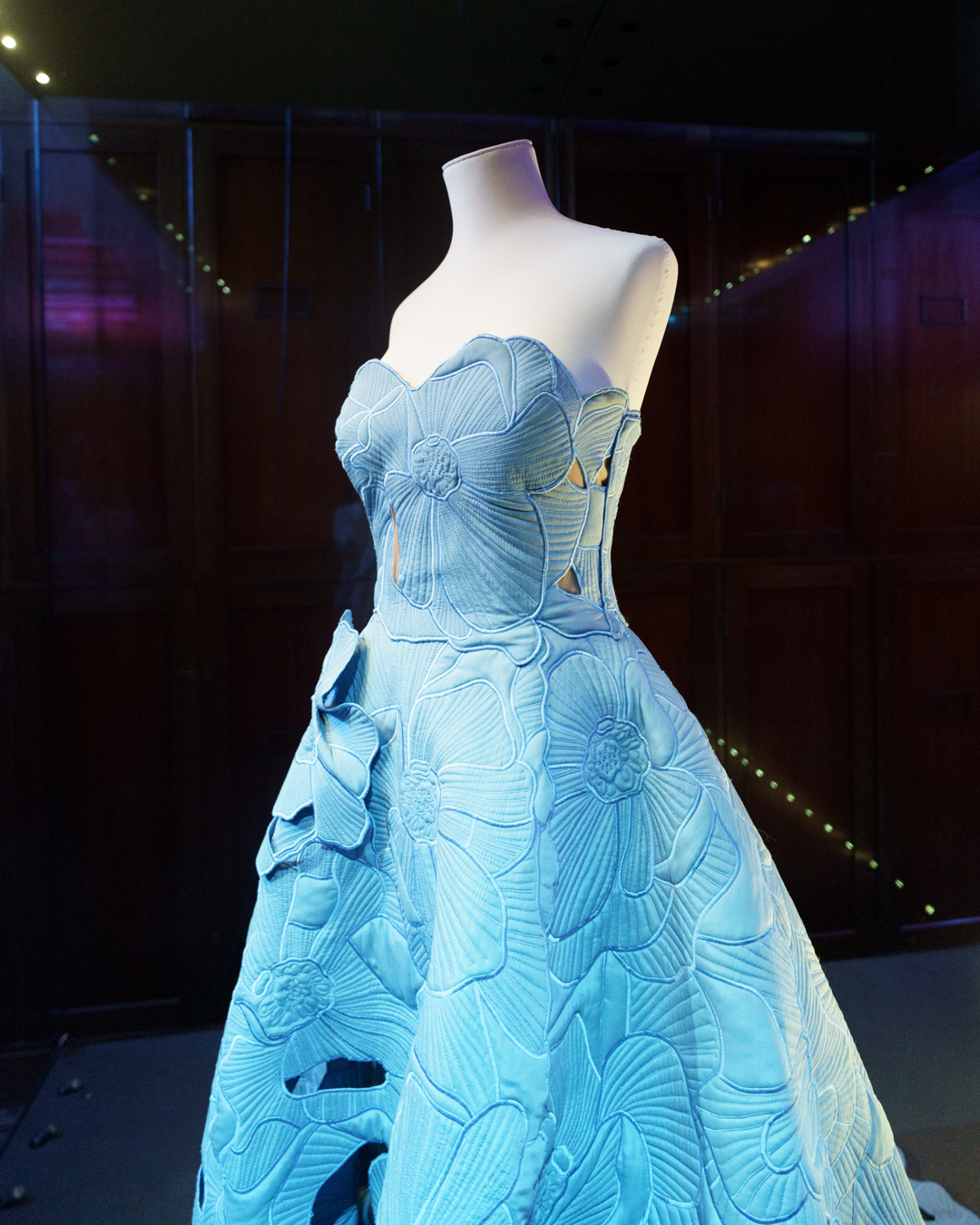
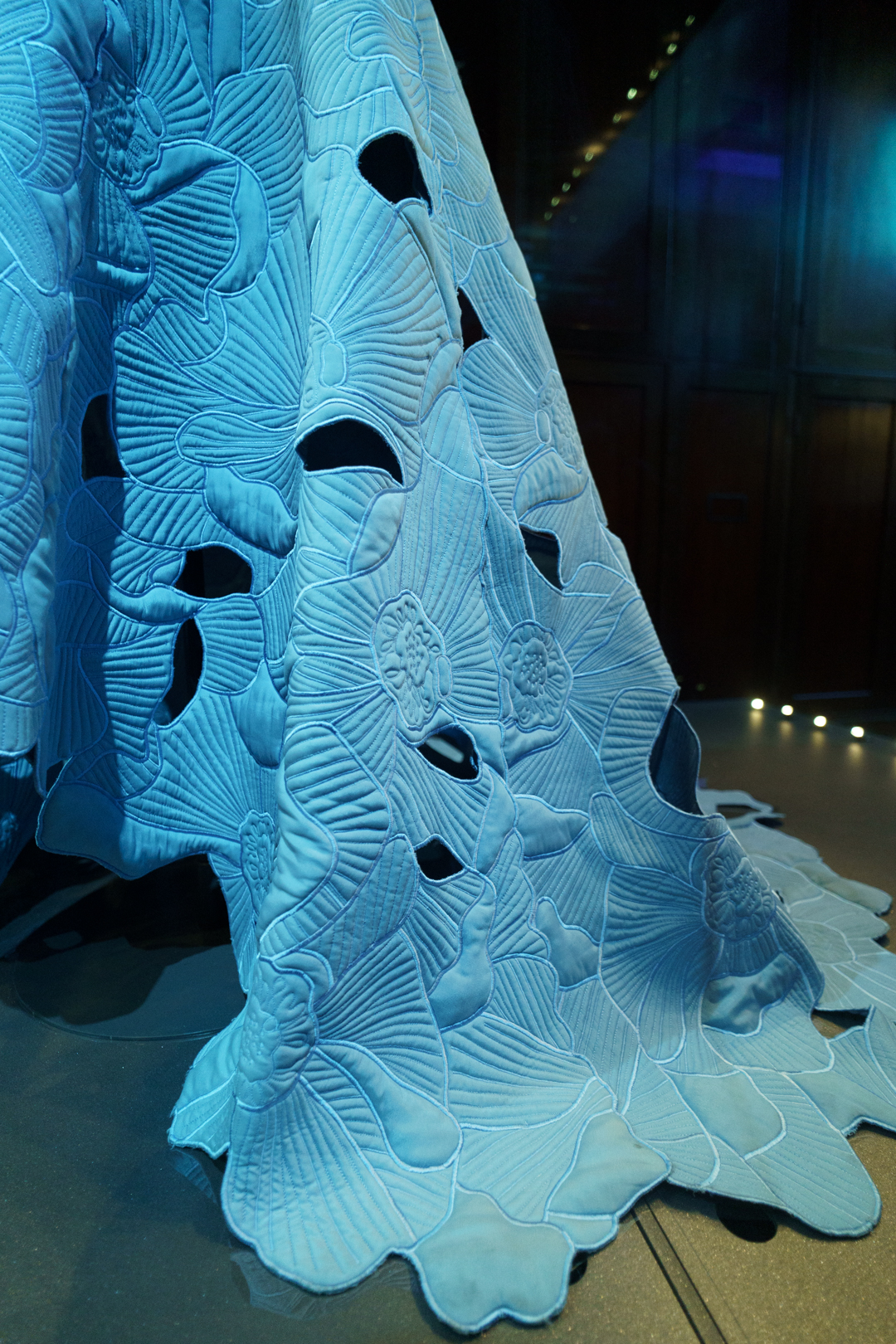
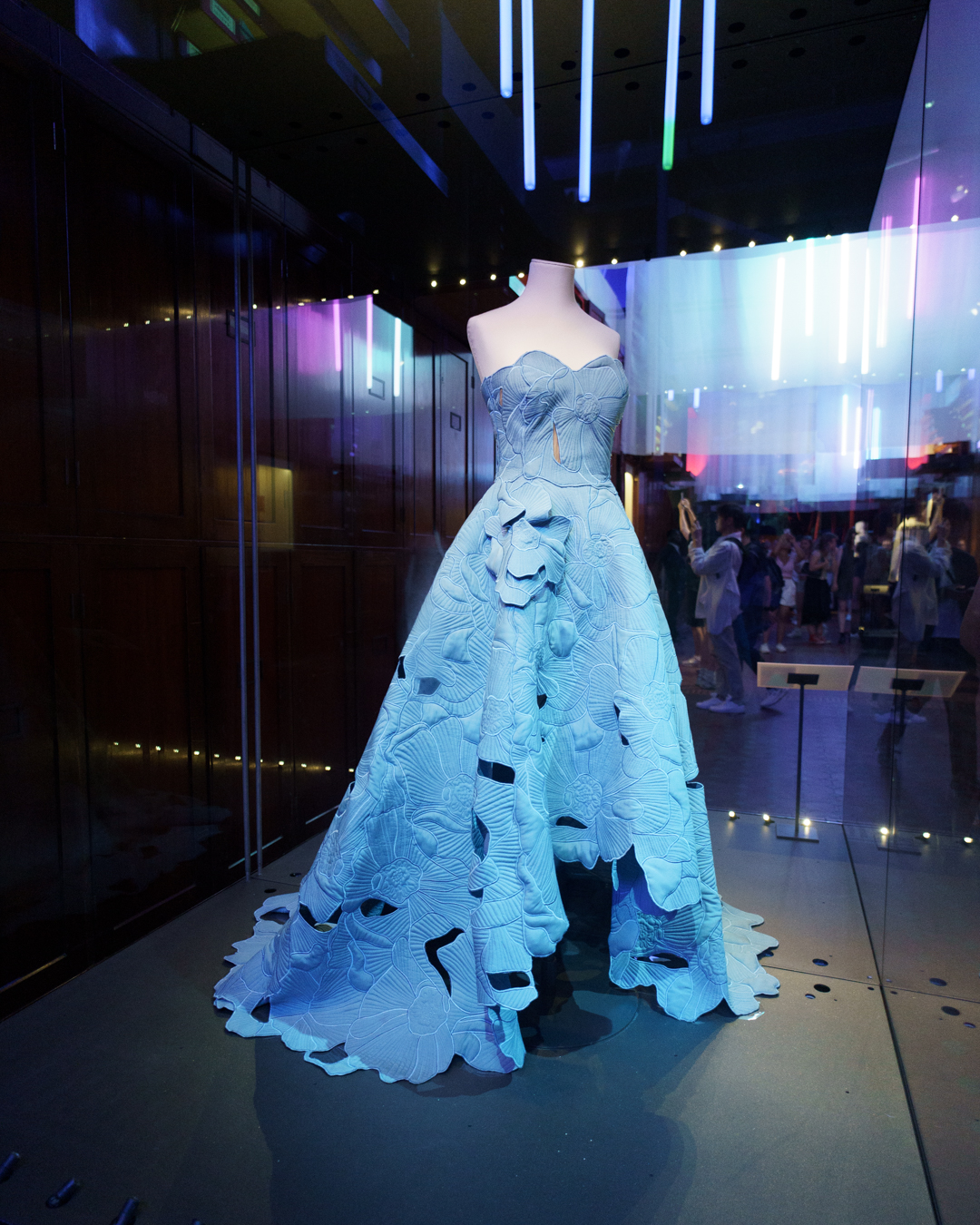
Nearby, the film poster serves as the backdrop for a small selection of album-themed friendship bracelets, highlighting the fandom’s limitless creativity and long-standing traditions, such as the bracelet-swapping trend inspired by the lyrics from the bridge of You’re On Your Own, Kid:
‘so make the friendship bracelets, take the moment and taste it / you’ve got no reason to be afraid’.
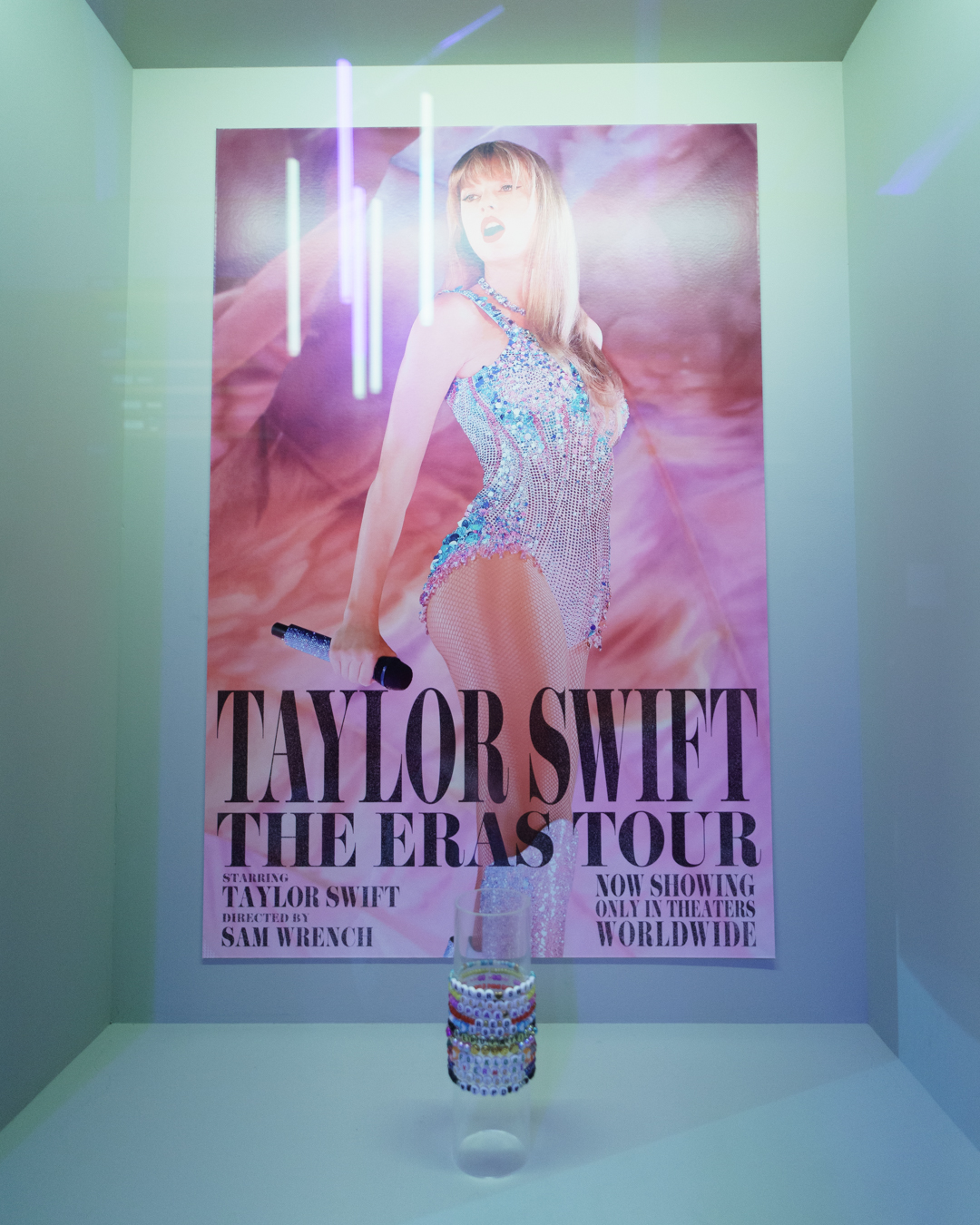
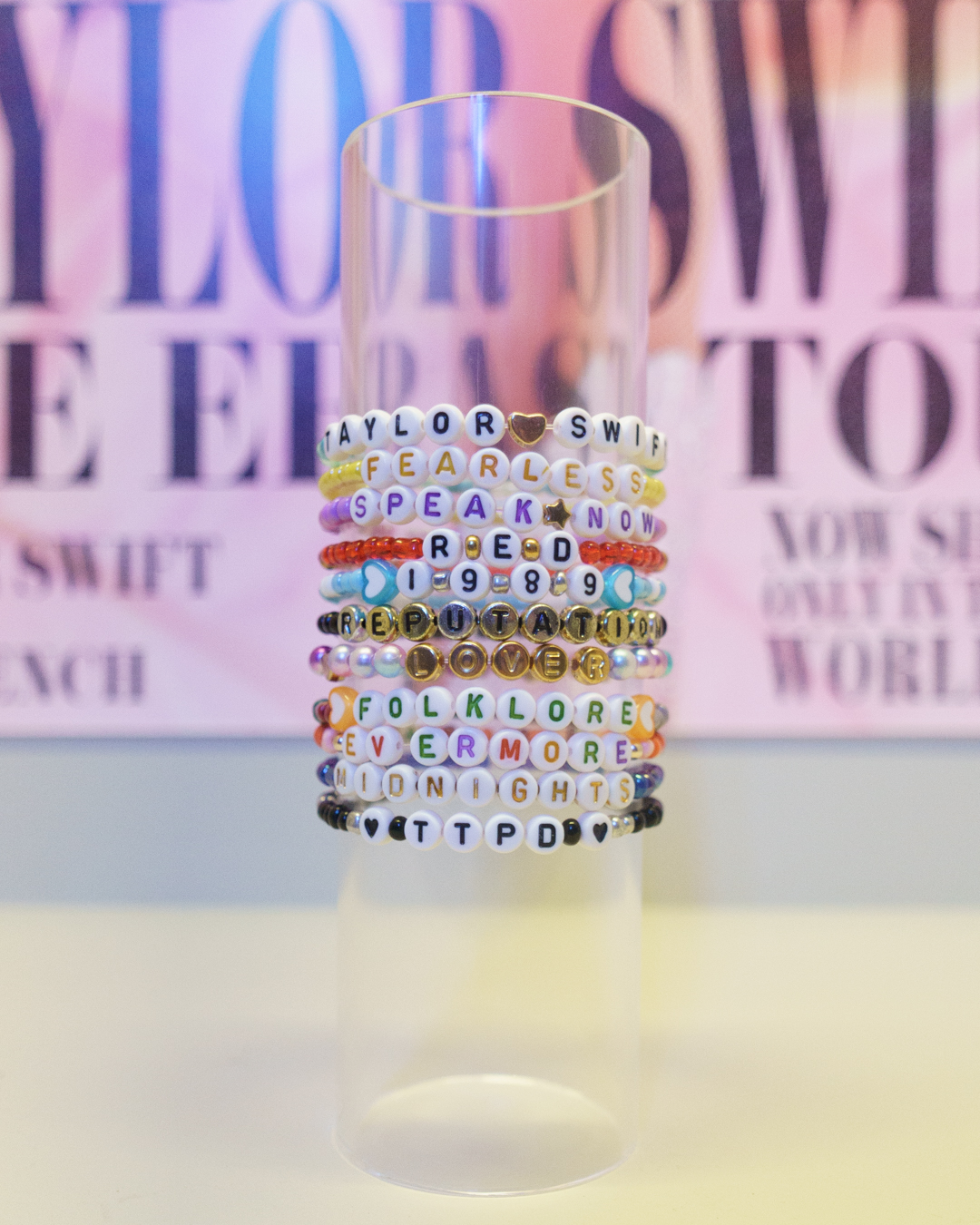
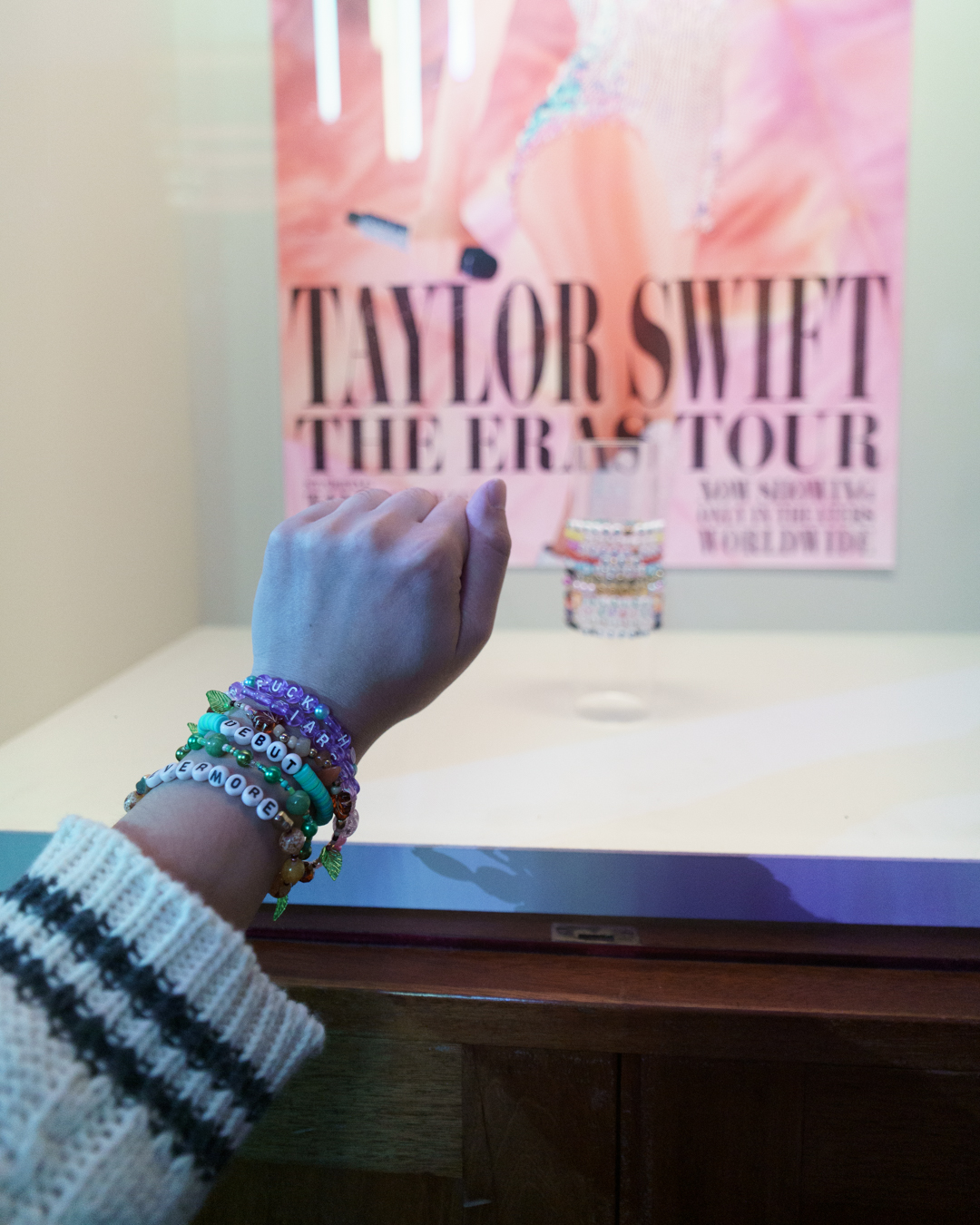
One of the captions describes Swifties as ‘one of pop music’s most devoted, engaged and influential fandoms’, which is absolutely true. The organisation and rapid response of new fan projects at the Eras Tour is admirably baffling, resulting in the establishment of four already-viral traditions within the past month – waving white flags during The Smallest Man Who Ever Lived, holding paper hearts during Lover, waving hands during Betty, and illuminating yellow/orange balloons during willow – in addition to the pre-existing fan chants and cultish rituals performed by tens of thousands of Swifties on site and watching via fan-coordinated live streams every night.
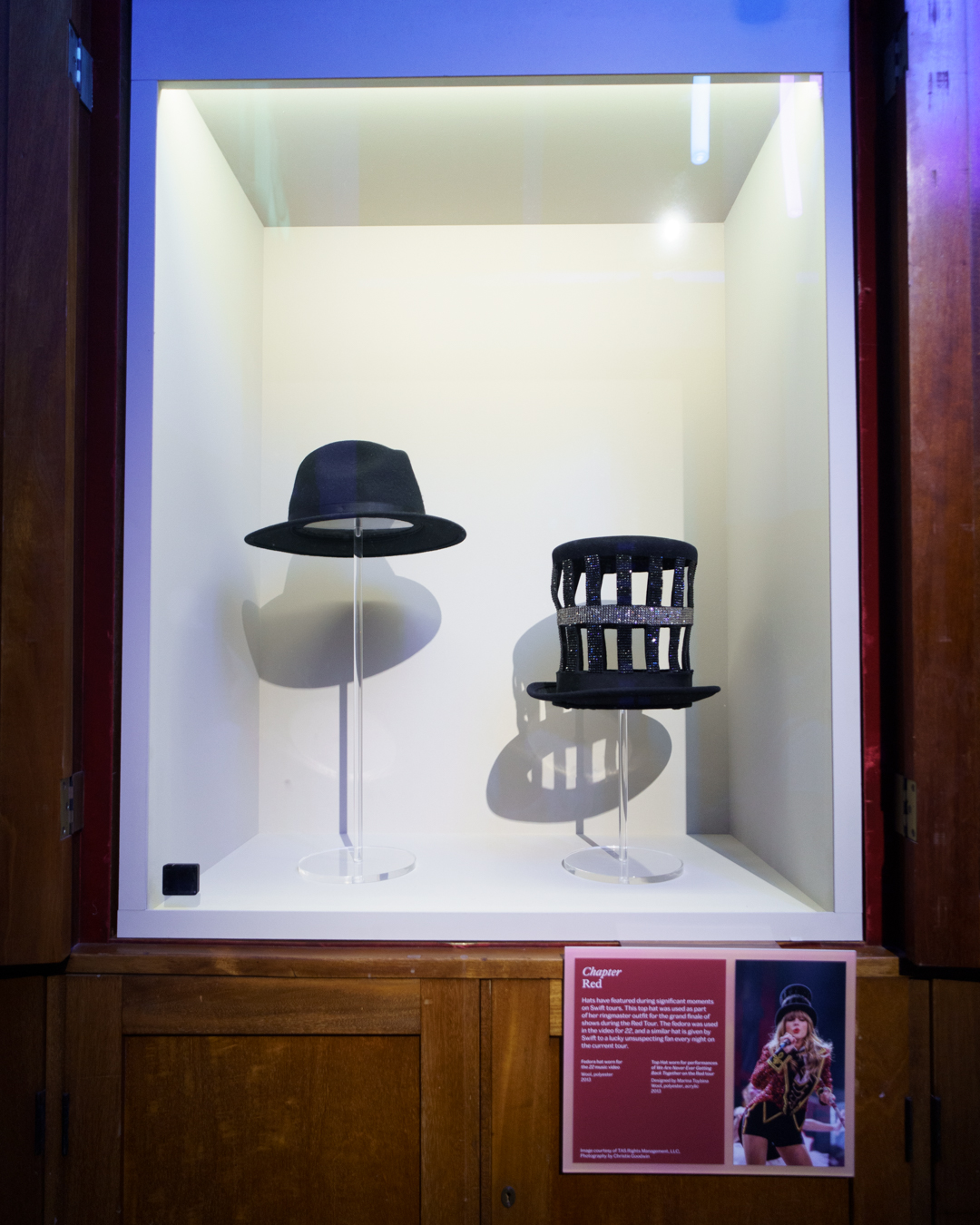
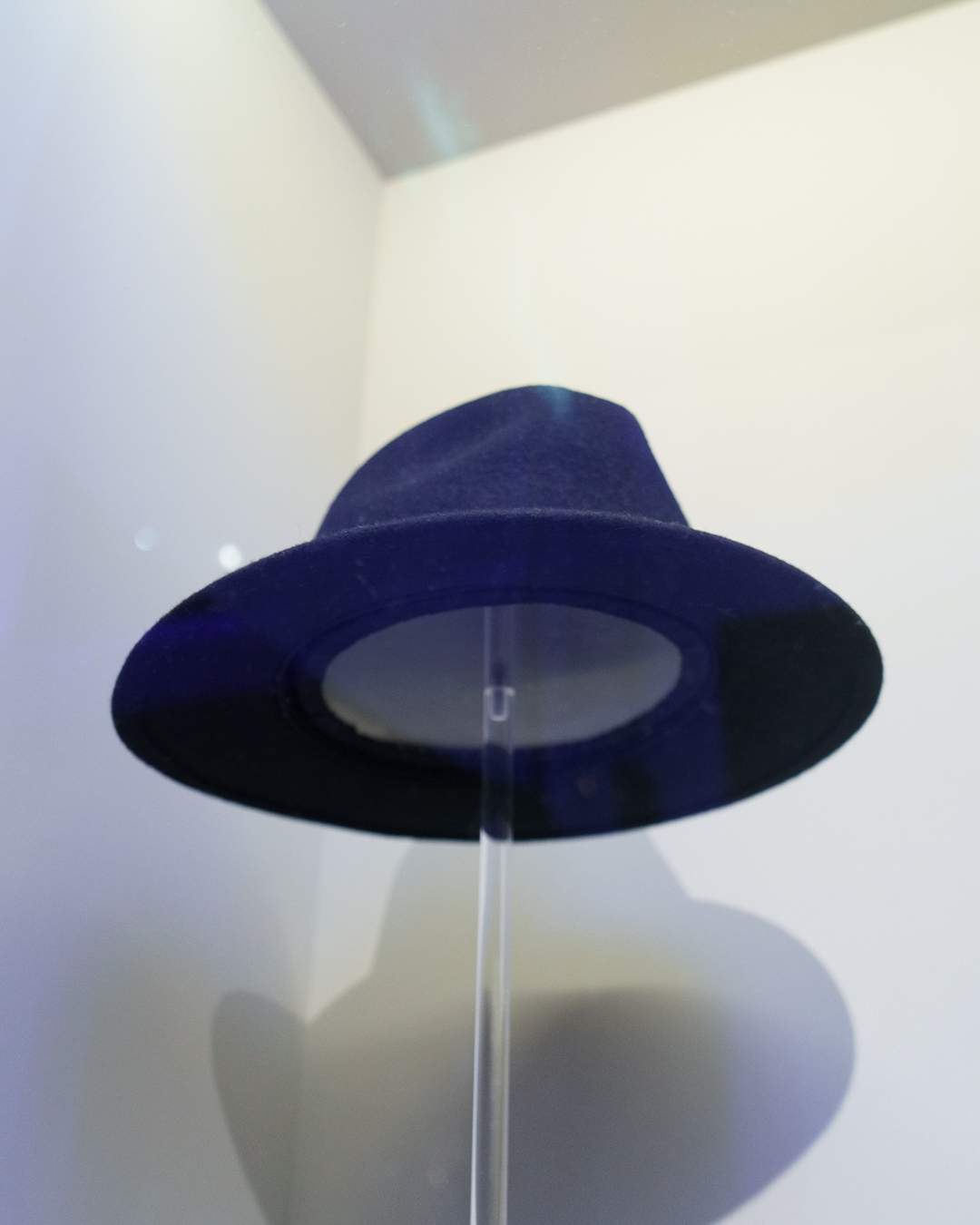
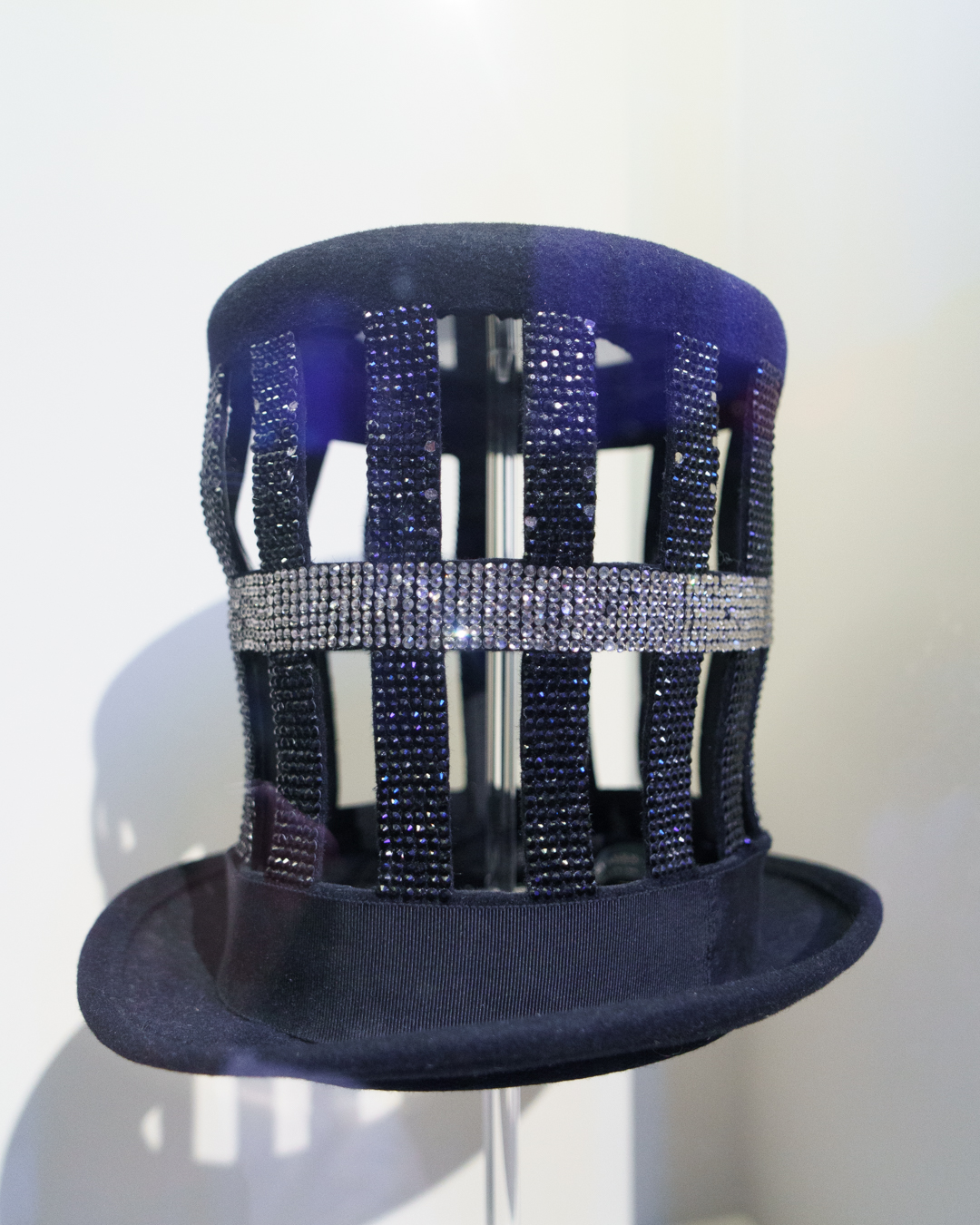
But all of this devotion comes from Taylor’s own lasting commitment to her fans, always maintaining an accessible route to interacting with them in some capacity, such as the Secret Sessions mentioned earlier as well as her frequent activities on Tumblr in the past. Occasionally, she might comment on or ‘like’ a fan’s post, which always delights the fandom. One of the celebrated traditions on the Eras Tour – initiated by Taylor – is the gifting of a signed fedora hat to a lucky, unsuspecting fan during the 22 performance, as well as hugs, hand hearts, sometimes even gifting Taylor a bracelet. The interaction only lasts about 10 seconds, but the extraordinary delight it gives the recipient is immeasurable; meeting one’s idol is ultimately an invaluable core memory for all involved. This nod to the significance of hats in Taylor’s tours is exemplified by a fedora used in the 22 music video, and ringmaster’s top hat used during the We Are Never Ever Getting Back Together performance on The Red Tour.
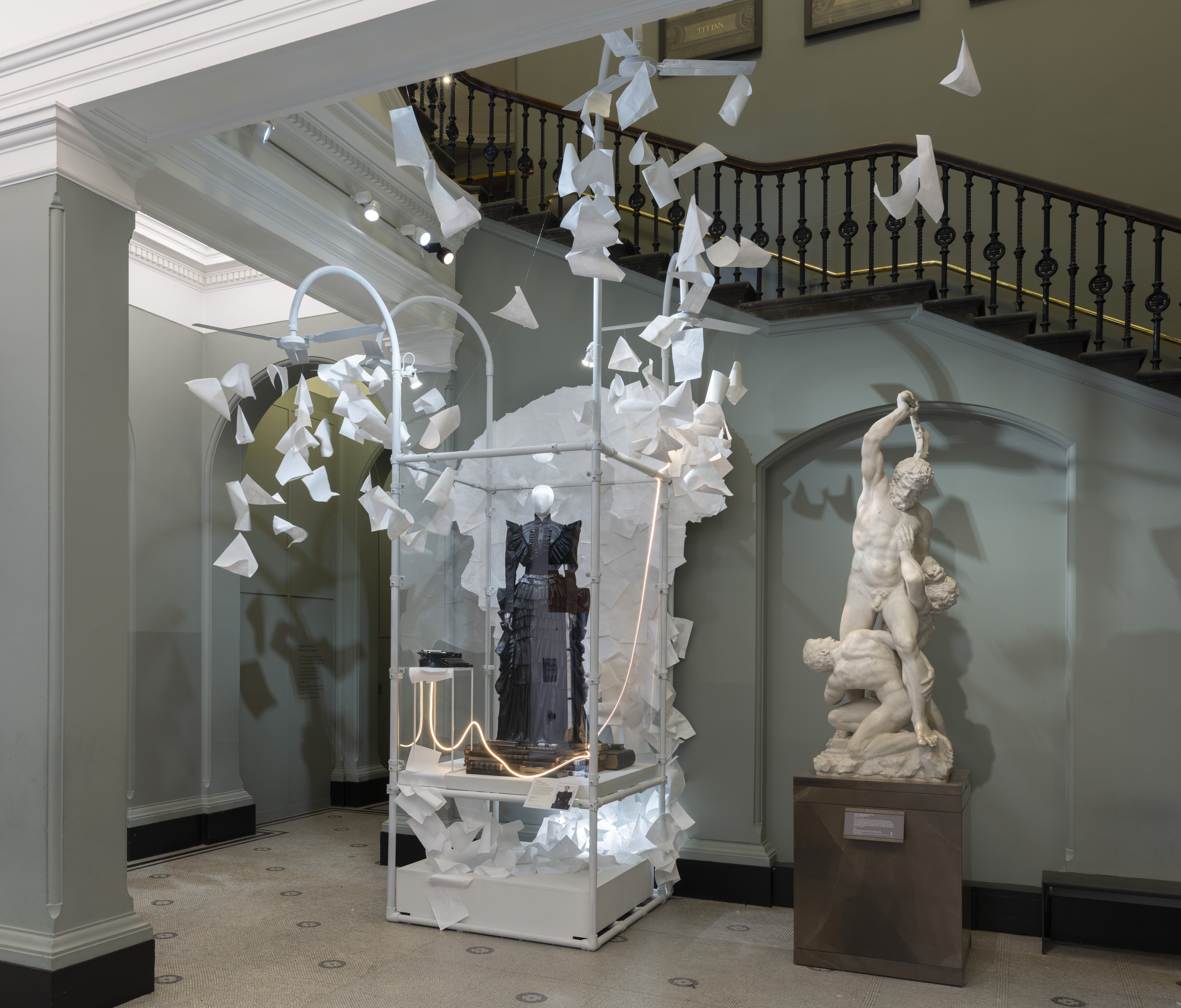
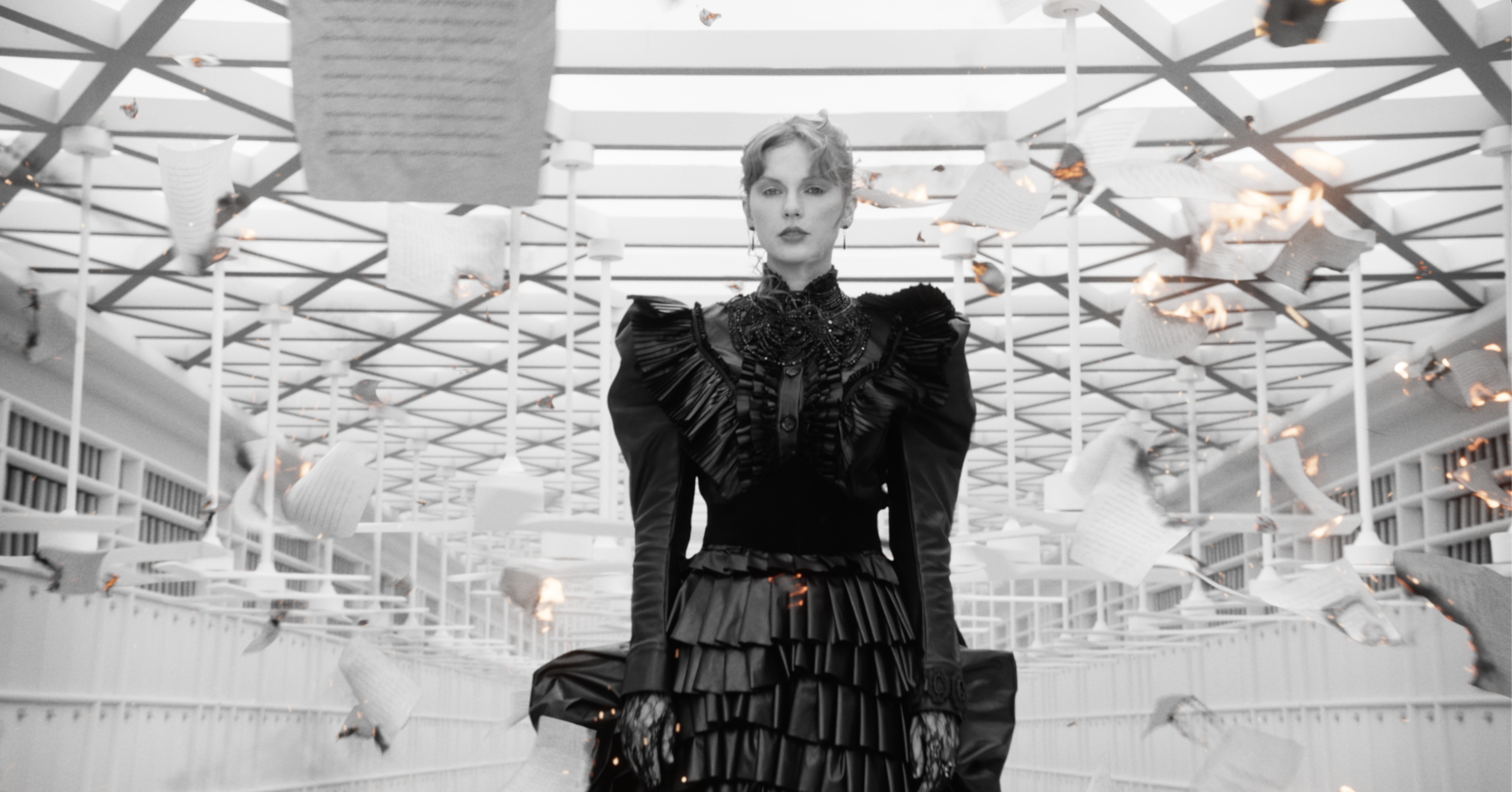
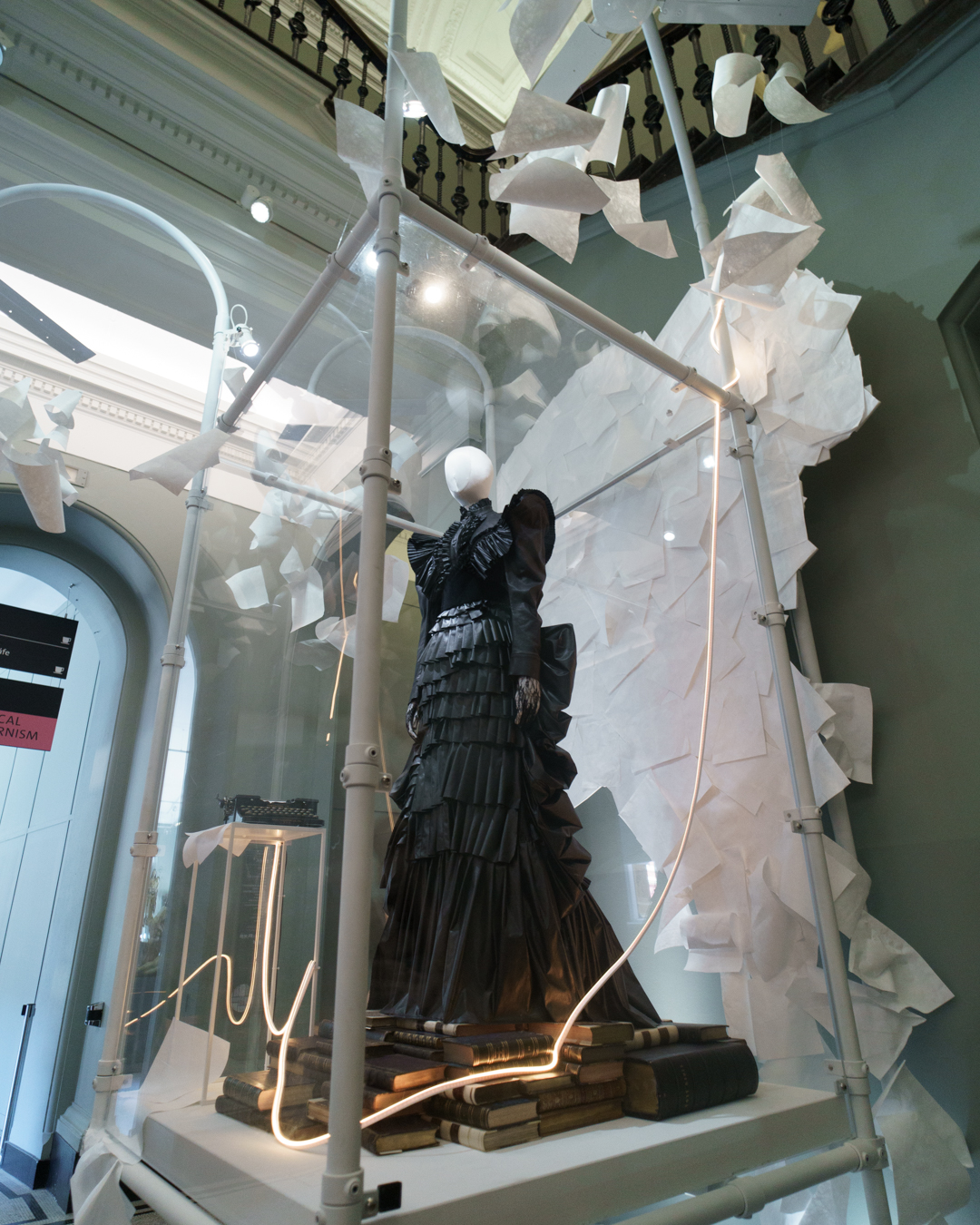
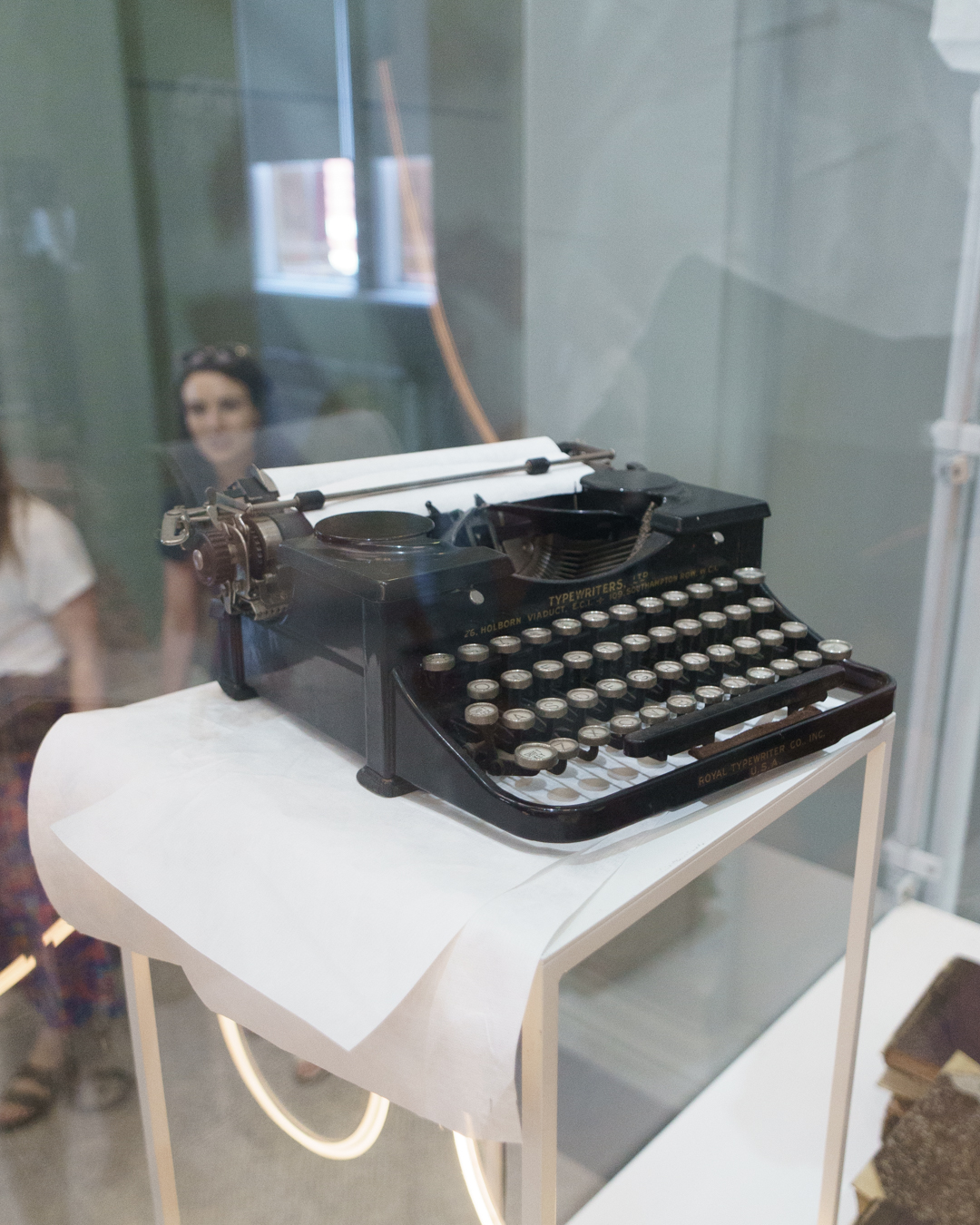
Finally, taking the spiral staircase from the National Art Library brings one to the black, Victorian gothic outfit worn by Taylor in the Fortnight music video, the lead single from The Tortured Poets Department. With a typewriter displayed beside it, the faux leather ensemble consisting of a top by UNTTLD and Elena Velez skirt stands beneath a dramatic installation of flying sheets of paper, referencing the primary motif of the music video, while also emphasising a literary connection to the National Art Library itself. The reasoning for juxtaposing the outfit with Vincenzo Foggini’s 18th-century marble sculpture depicting Samson and the Philistine is unclear, though it is dramatic in a different sense.
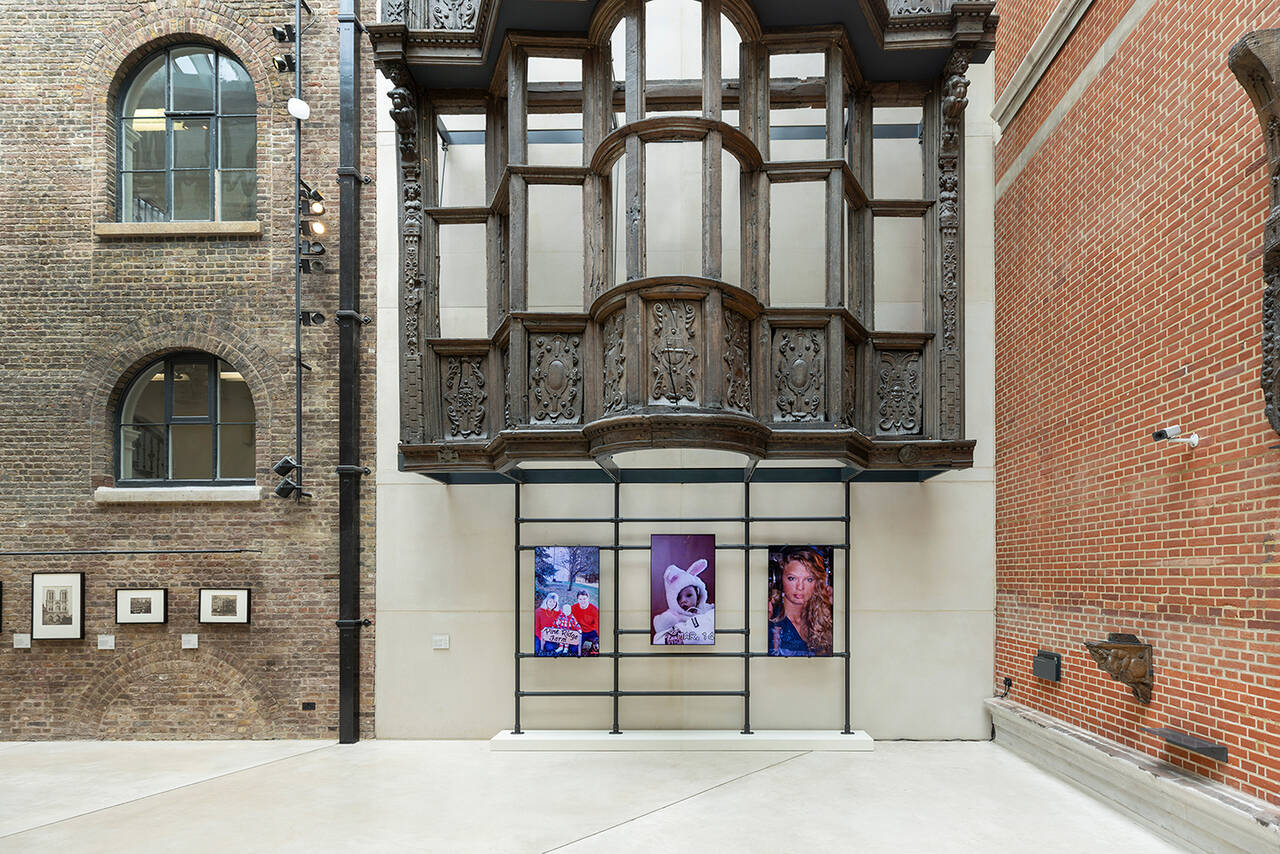
The final chapter to this 13-stop journey through Taylor’s career is a throwback to her childhood. Three video installations showing the music video for The Best Day – which utilises home footage – and family photos across the ages have been placed beneath the 17th-century wooden facade of Sir Paul Pindar’s House, possibly for aesthetic reasons. Here, one can sense Taylor’s precocious talent for singing and songwriting at a young age, but more importantly is her focused determination to succeed in this industry.
From my perspective as a long-time Swiftie (16 years and counting), this museum trail has been brilliantly executed with incredible attention to the details of Swiftie lore, no doubt informed by the recent hiring of four Taylor Swift superfan advisors and the many unsuccessful applications for said roles, of which I was an applicant too. To the museum’s benefit, it greatly introduces new and younger audiences to discover parts of the collection that may seem less interesting – or perhaps neglected by seasoned visitors – by offering an entirely different frame of reference to expand or invigorate their interests. While I wish the curators had made a greater effort to address more explicitly the links being made between Taylor’s objects and the permanent collection, I think they have done a remarkable job, nonetheless, in highlighting the diverse facets of Taylor’s music and career.
Taylor Swift | Songbook Trail runs from 27 July to 8 September 2024 at the Victoria & Albert Museum, London, https://www.vam.ac.uk/
A full list of works and itinerary (Nigel’s Version) can be found below:

 Nigel Ip
Leave a comment