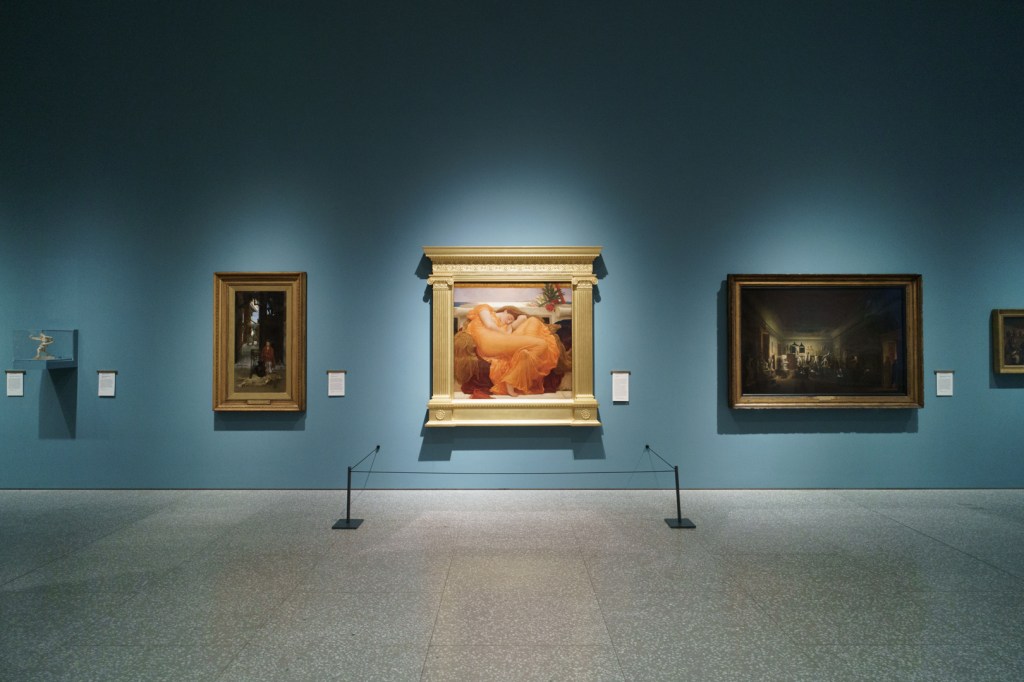
Flaming June (1895) has always been one of those paintings that got away, largely due to shifting tastes in contemporary British art. When it was rediscovered in 1962 by an Irish builder behind a panel above the chimney-piece of a to-be-demolished house in Clapham Common, Victorian art had gone largely out of fashion.
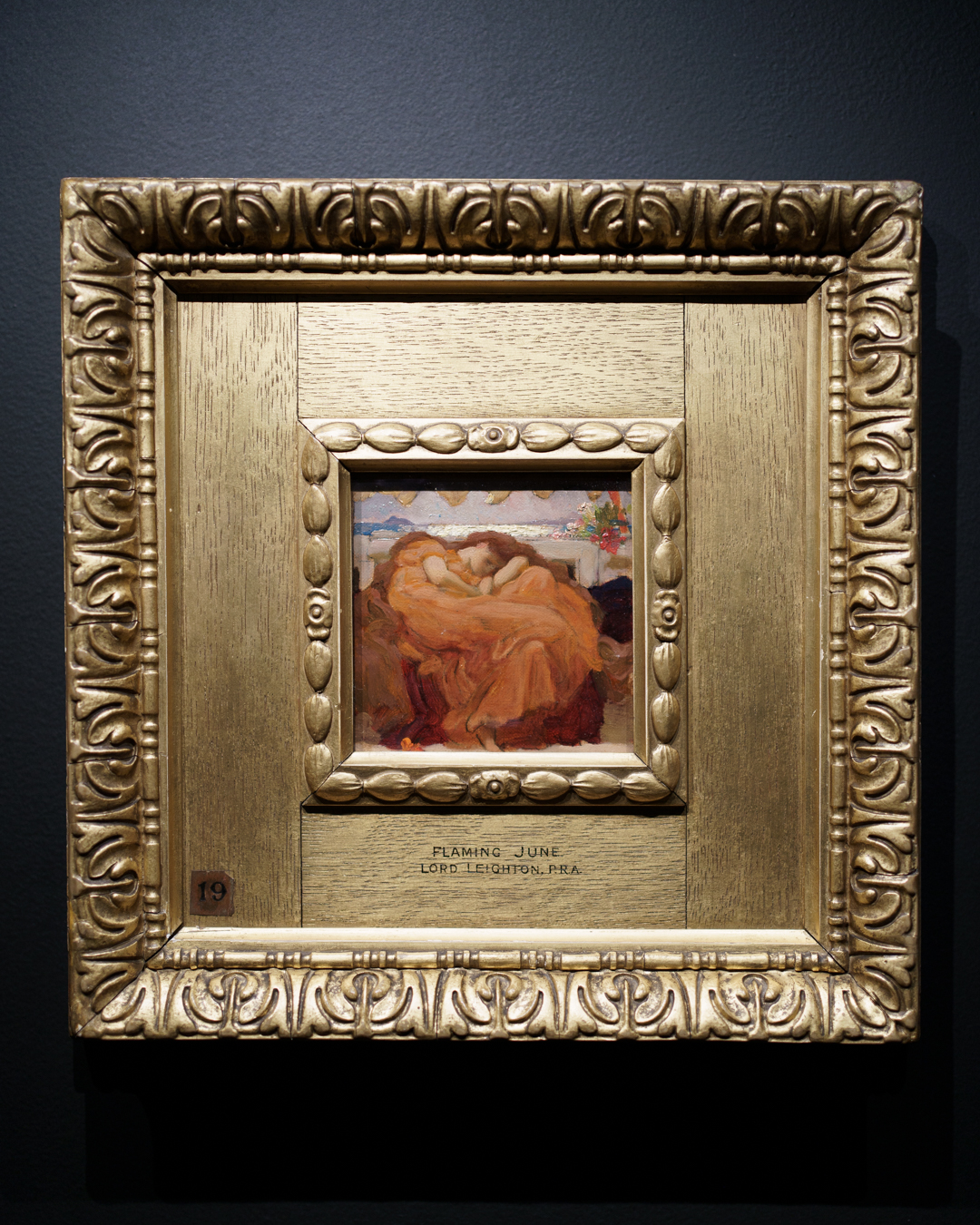
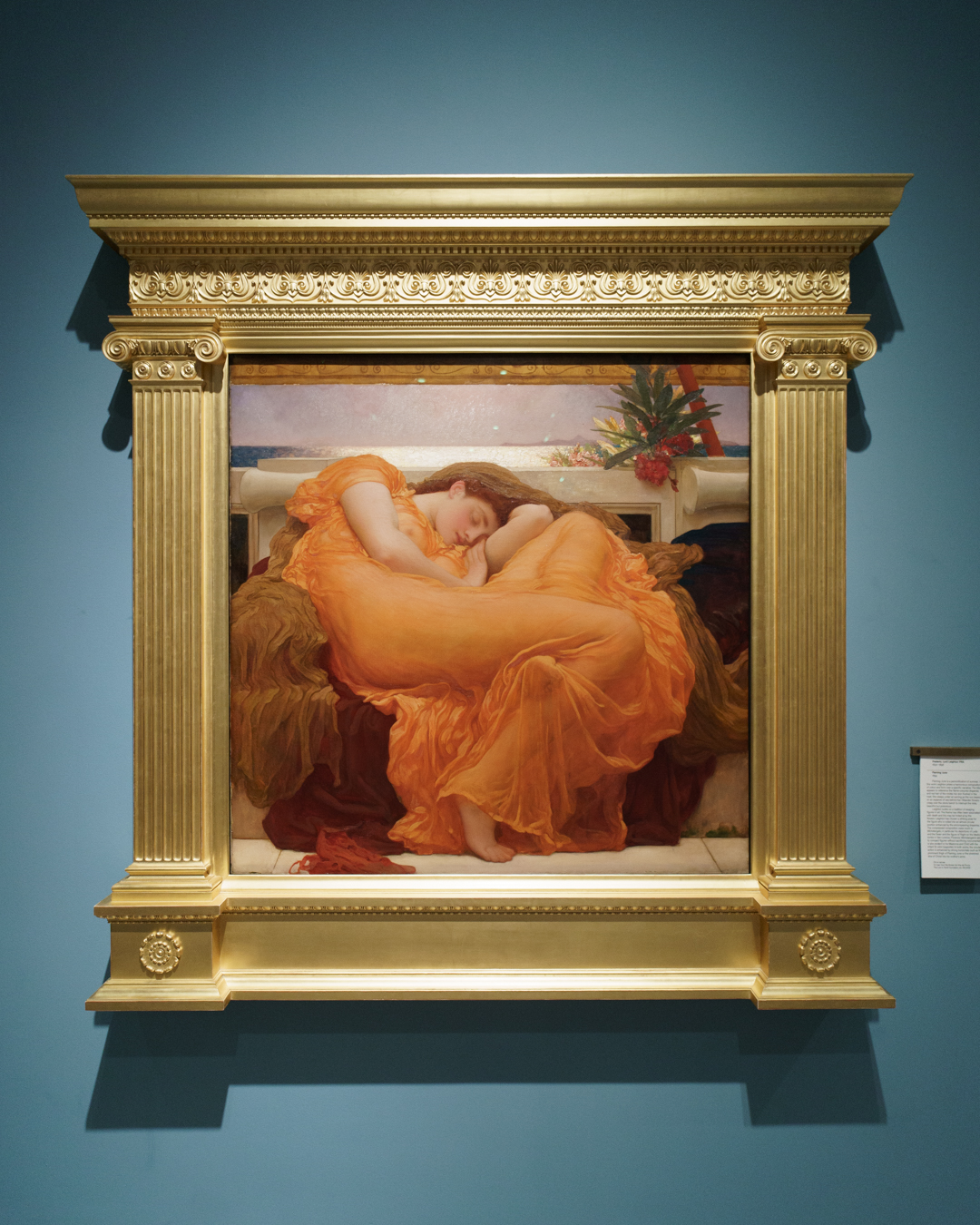
Eventually, it was sold by the Maas Gallery to Luis A. Ferré, founder of the Museo de Arte de Ponce, on the advice of its director René Taylor. And so Britain lost the painting to Puerto Rico; it would go on to become an icon of Victorian art and beauty, even inspiring a Vogue cover in the digital age.


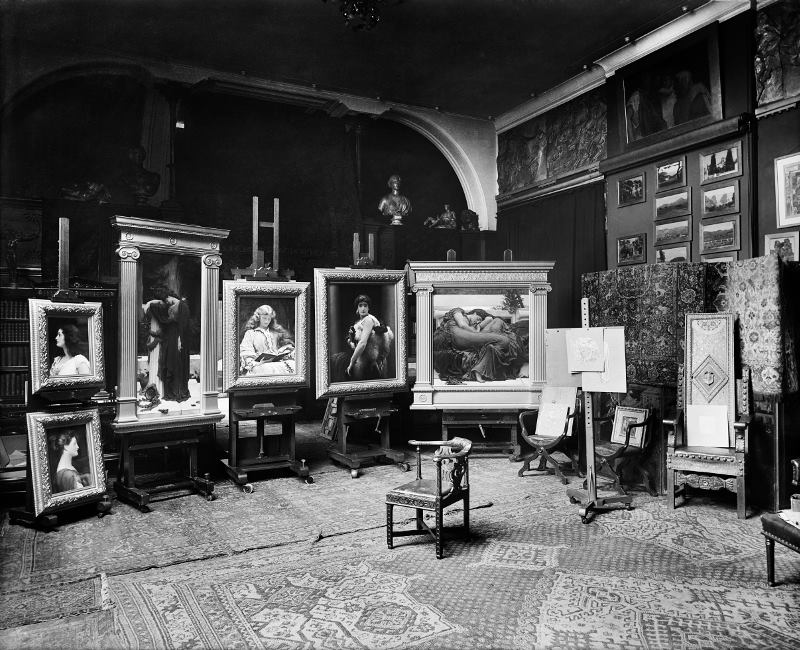
I was lucky enough to be volunteering at Leighton House when it came back on loan in 2016 for a landmark exhibition exploring the painting’s conception and public reception. It was hung in a display recalling a studio photograph of Leighton’s submissions for the 1895 Summer Exhibition. Throughout the house, practically all relevant drawings related to the painting were gathered together, divided between the Royal Academy of Arts, Royal Borough of Kensington and Chelsea, and private collections.

The painting is now on loan to the RA for a whole year while the Museo de Arte de Ponce undergoes renovations, facing off with Michelangelo’s Taddei Tondo (c.1504-05), whose New Sacristy tomb sculptures (1526-31) heavily influenced Flaming June‘s design. To commemorate this, the RA have brought out those same drawings in an extended display highlighting Leighton’s working process from sketches and squared-for-transfer drawings to creating maquettes for cast sculptures such as Perseus and Andromeda (1891). Flaming June underwent the same process.


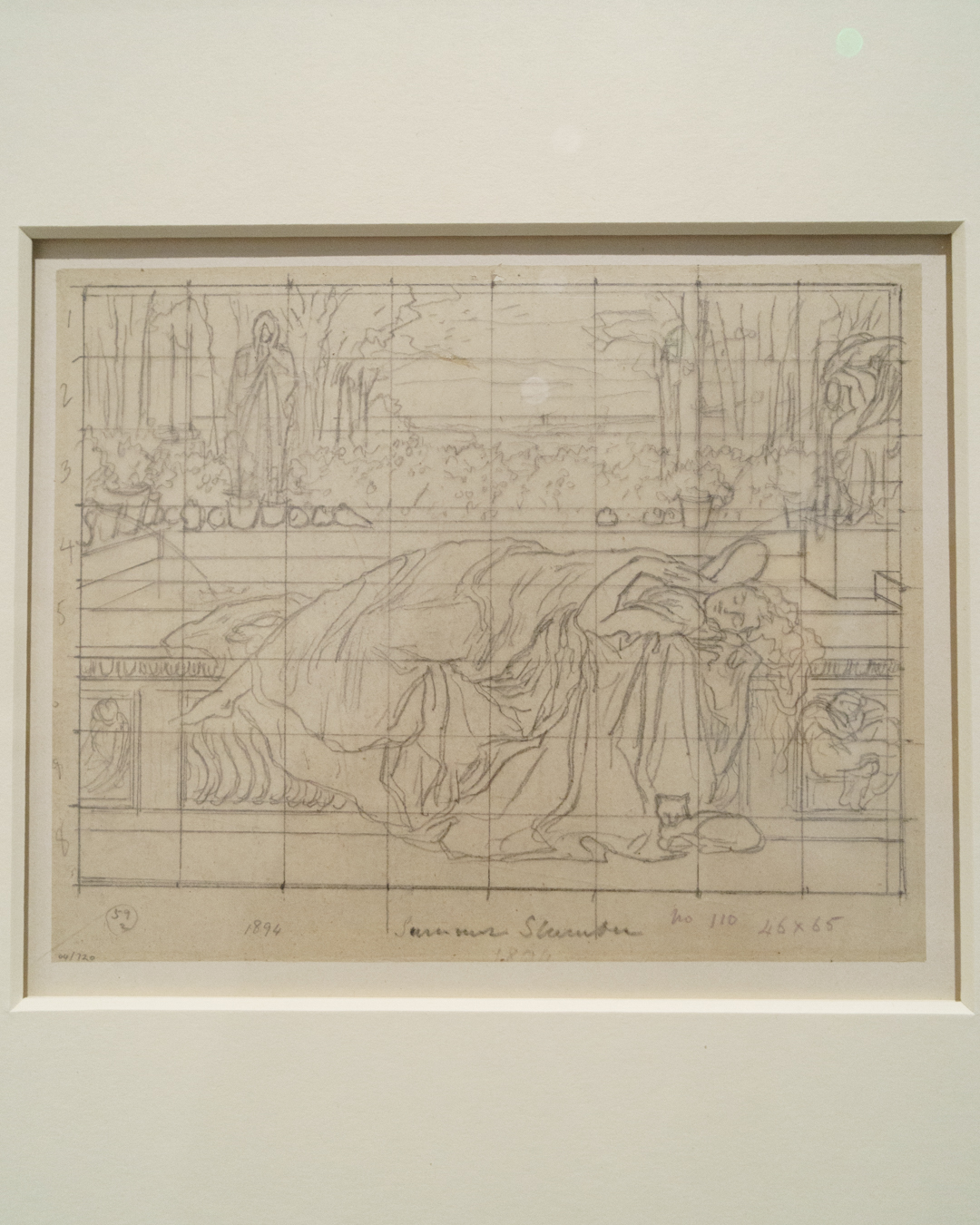
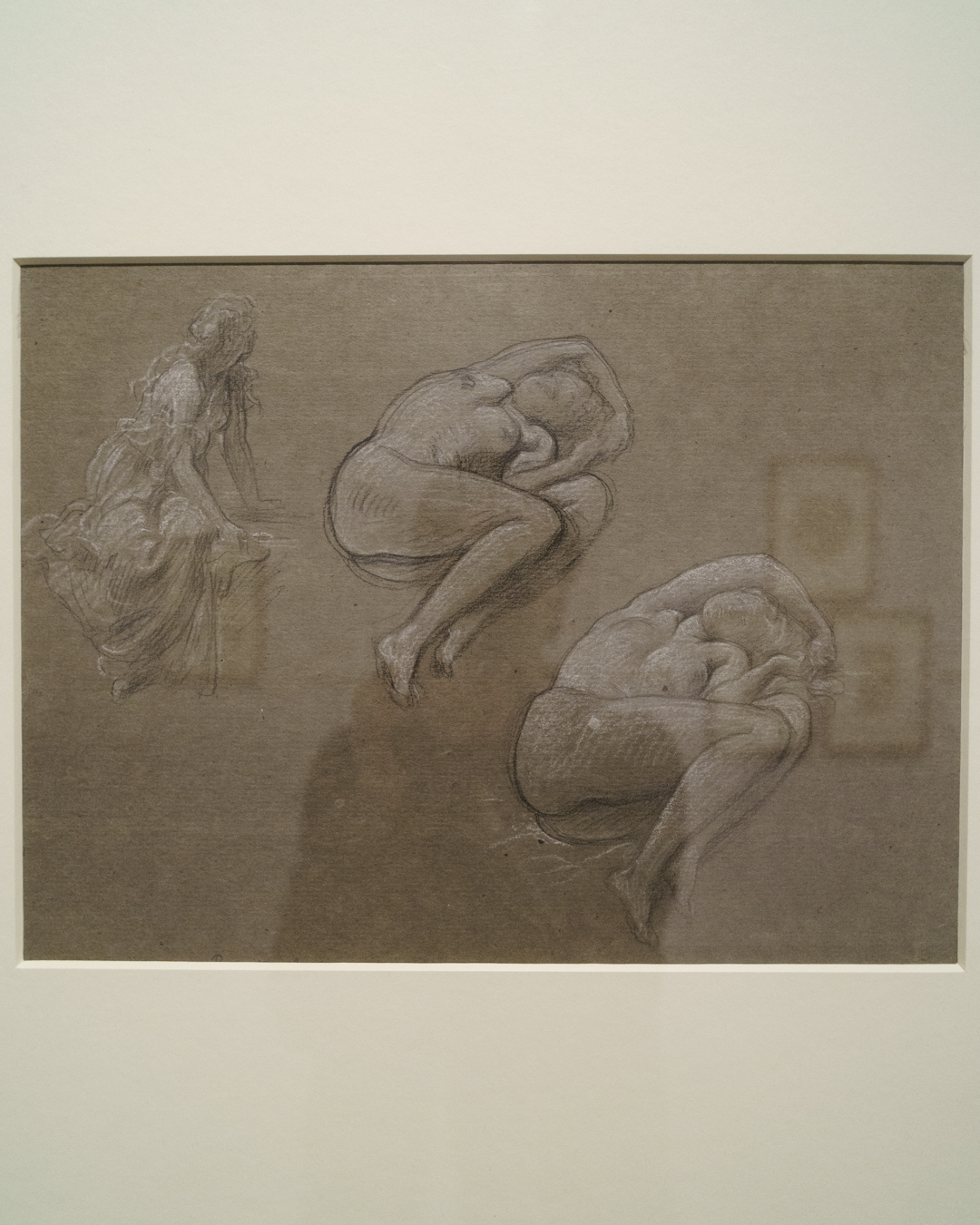


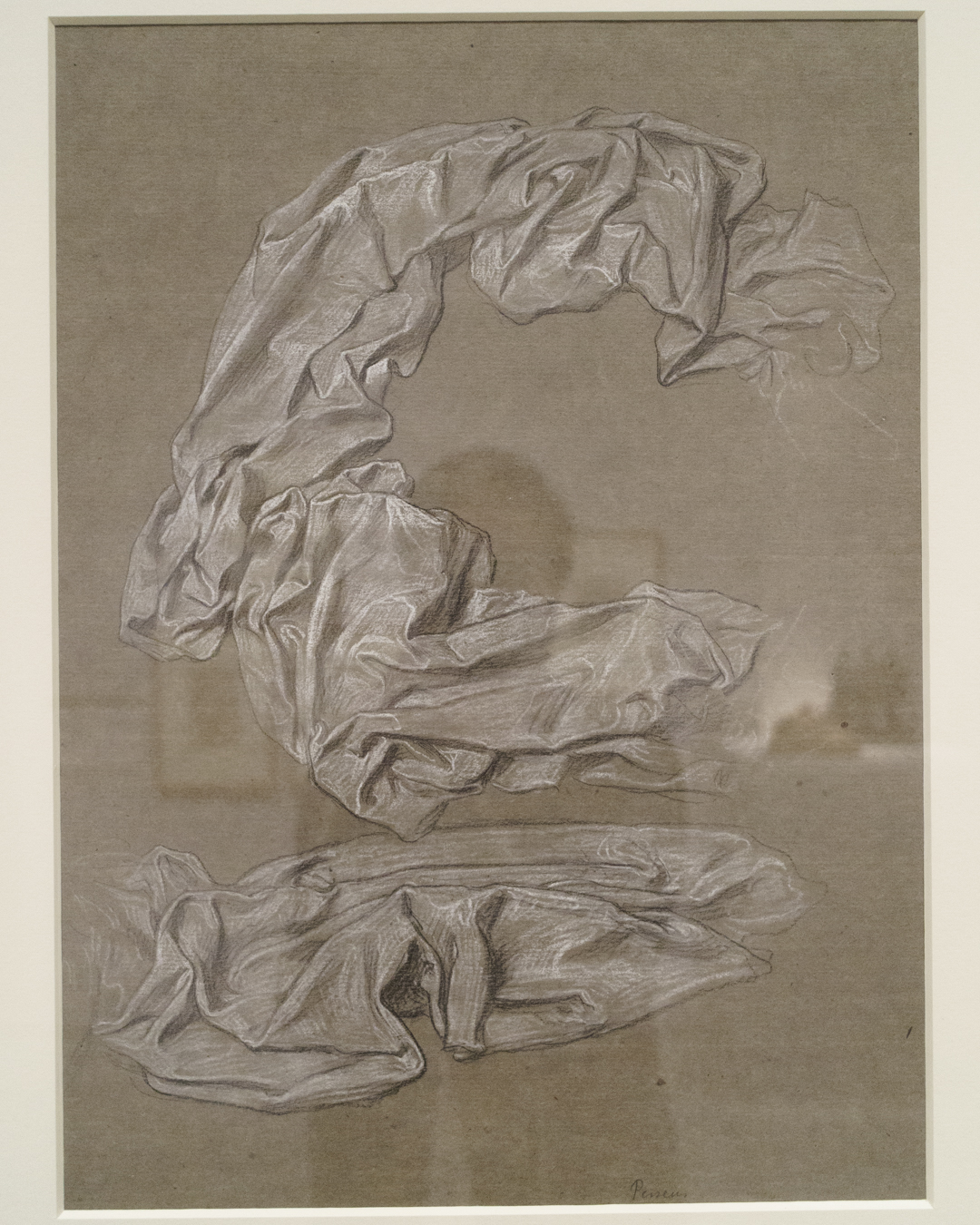


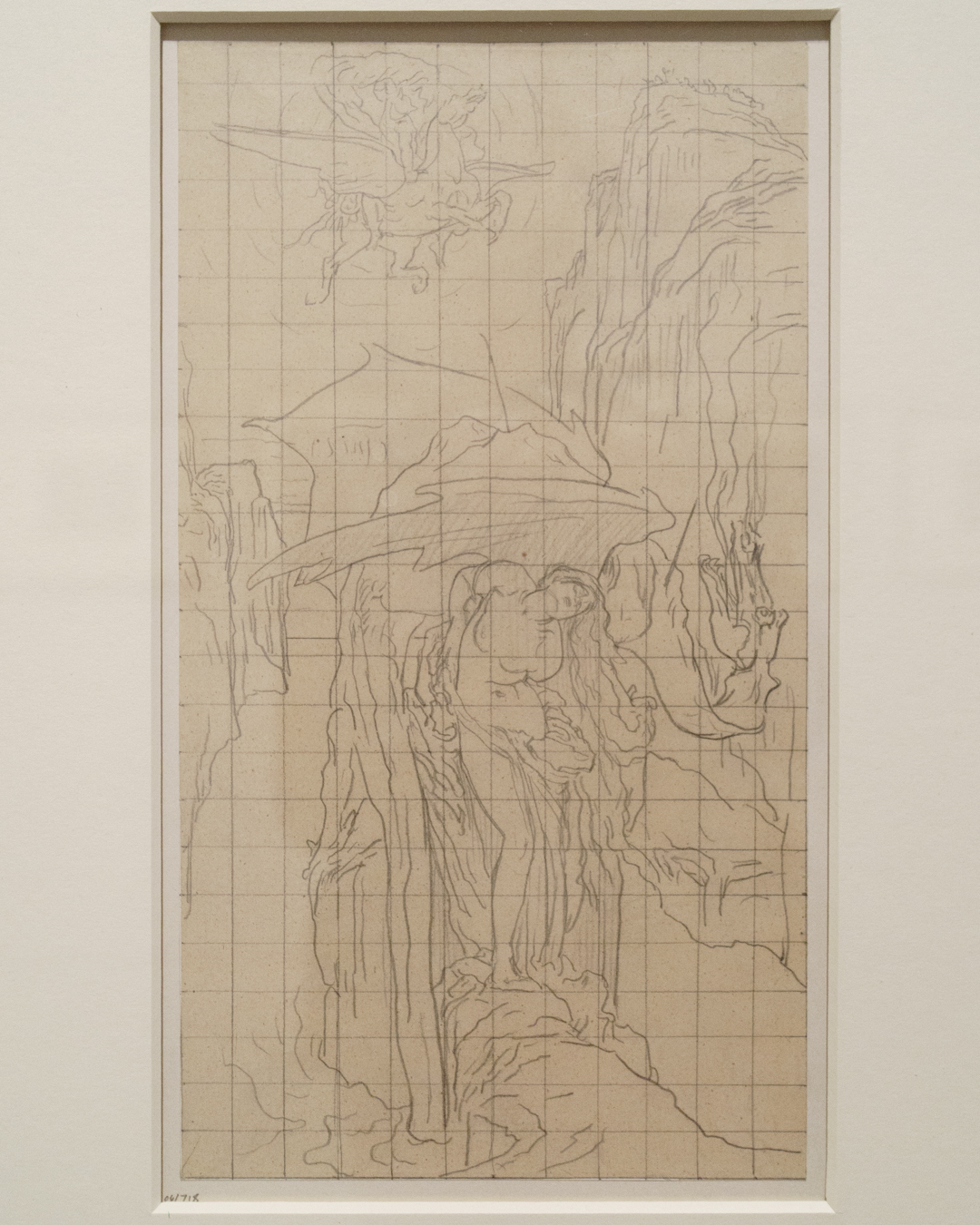


The sole surviving oil colour sketch at Leighton House continues this journey, presented with four drawings from the RBKC collection, including the most finished drapery studies. Leighton recalled that ‘[t]he design was not a deliberate one, but was suggested by a chance attitude of a weary model who had a peculiarly supple figure.’

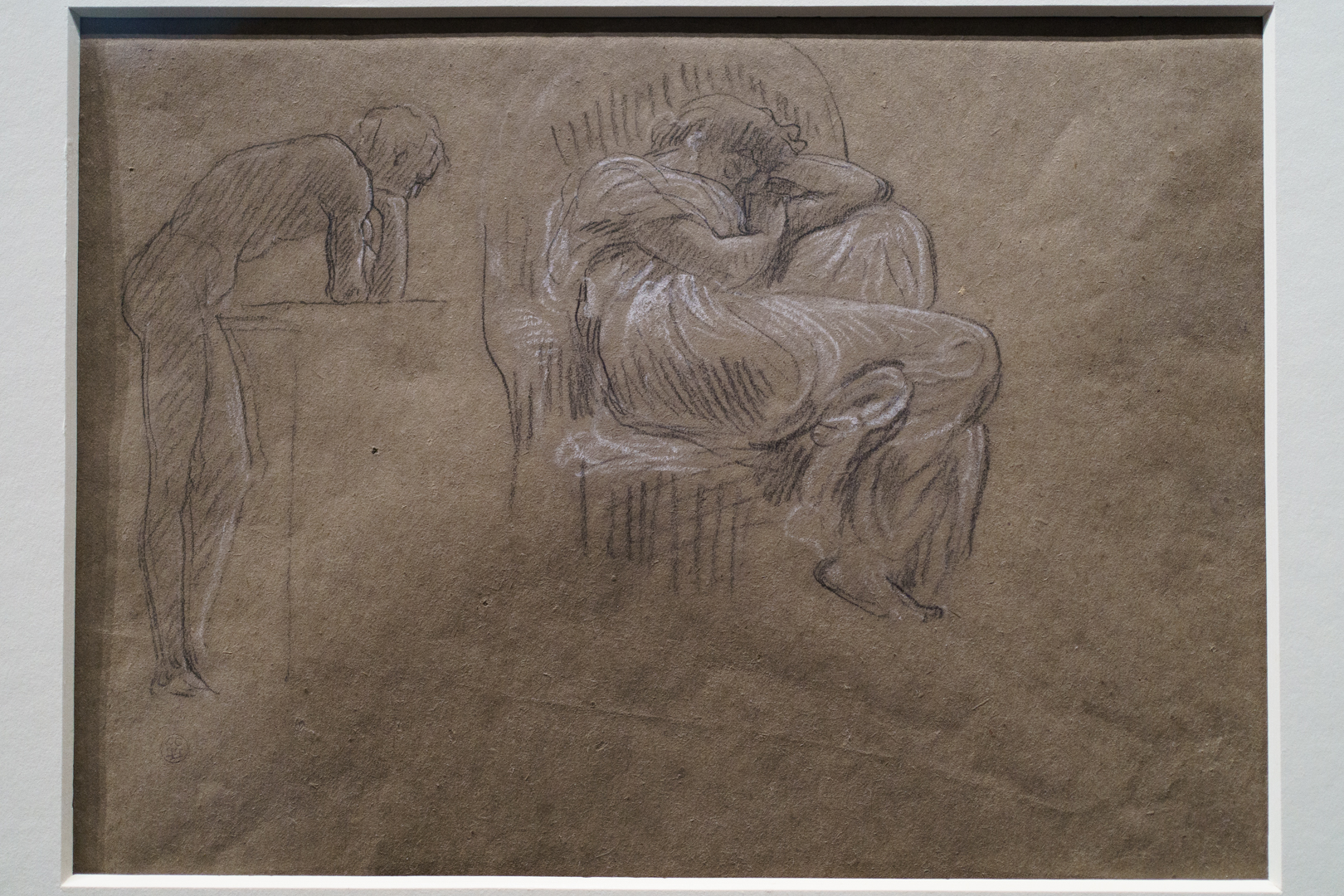


As the RA’s extended display shows, Flaming June‘s pose slowly emerged from a series of other paintings Leighton had made in previous years: Summer Moon (1872; untraced), The Garden of the Hesperides (1891-92), and Summer Slumber (1894; untraced).

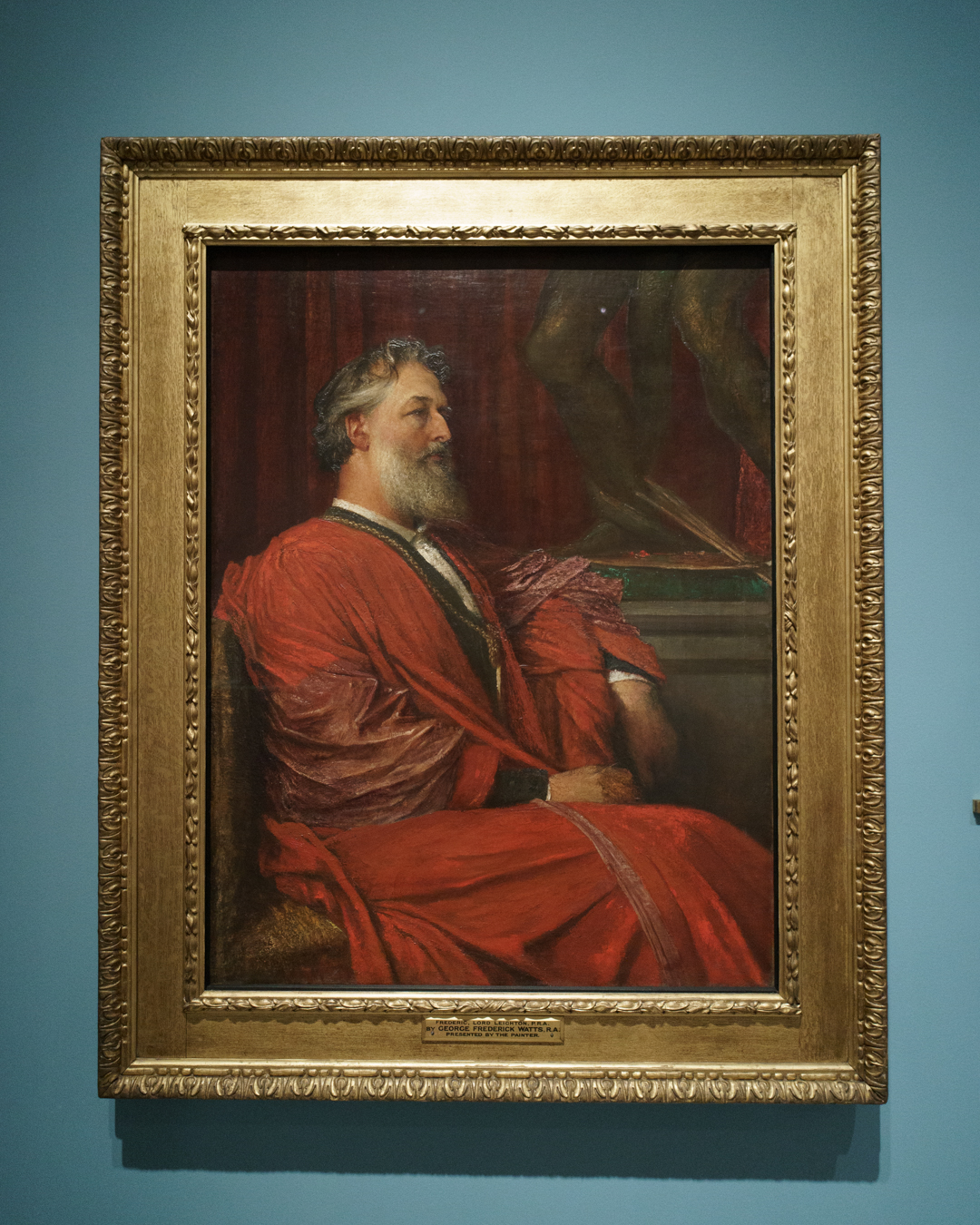
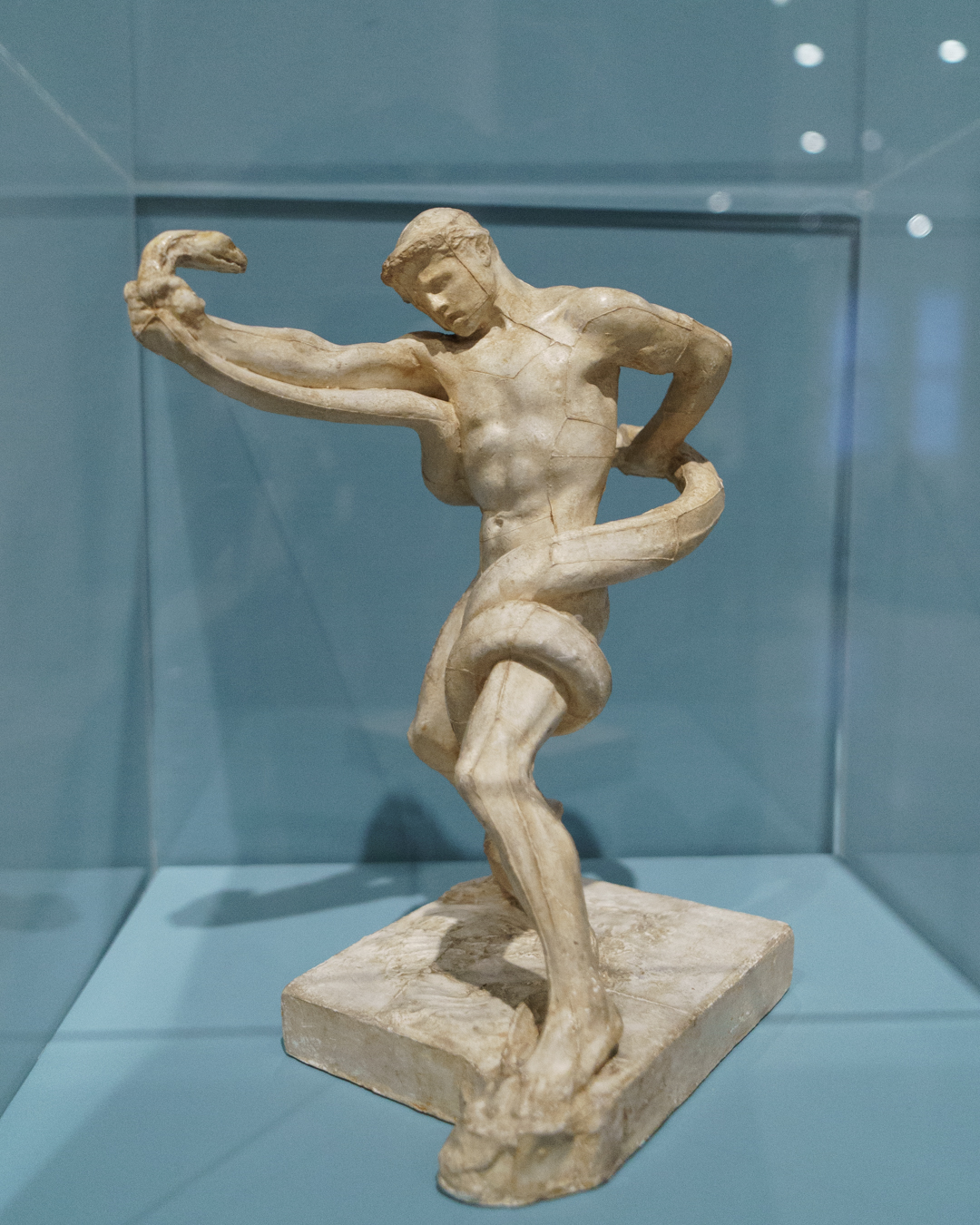
Collectively, both presentations are fitting tributes to the RA’s best known President. The displays are entirely free, but a paid admission to Leighton House proper will offer a broader, immersive understanding of Leighton’s eccentric life and travels, which greatly informed Flaming June‘s idealised Mediterranean setting.


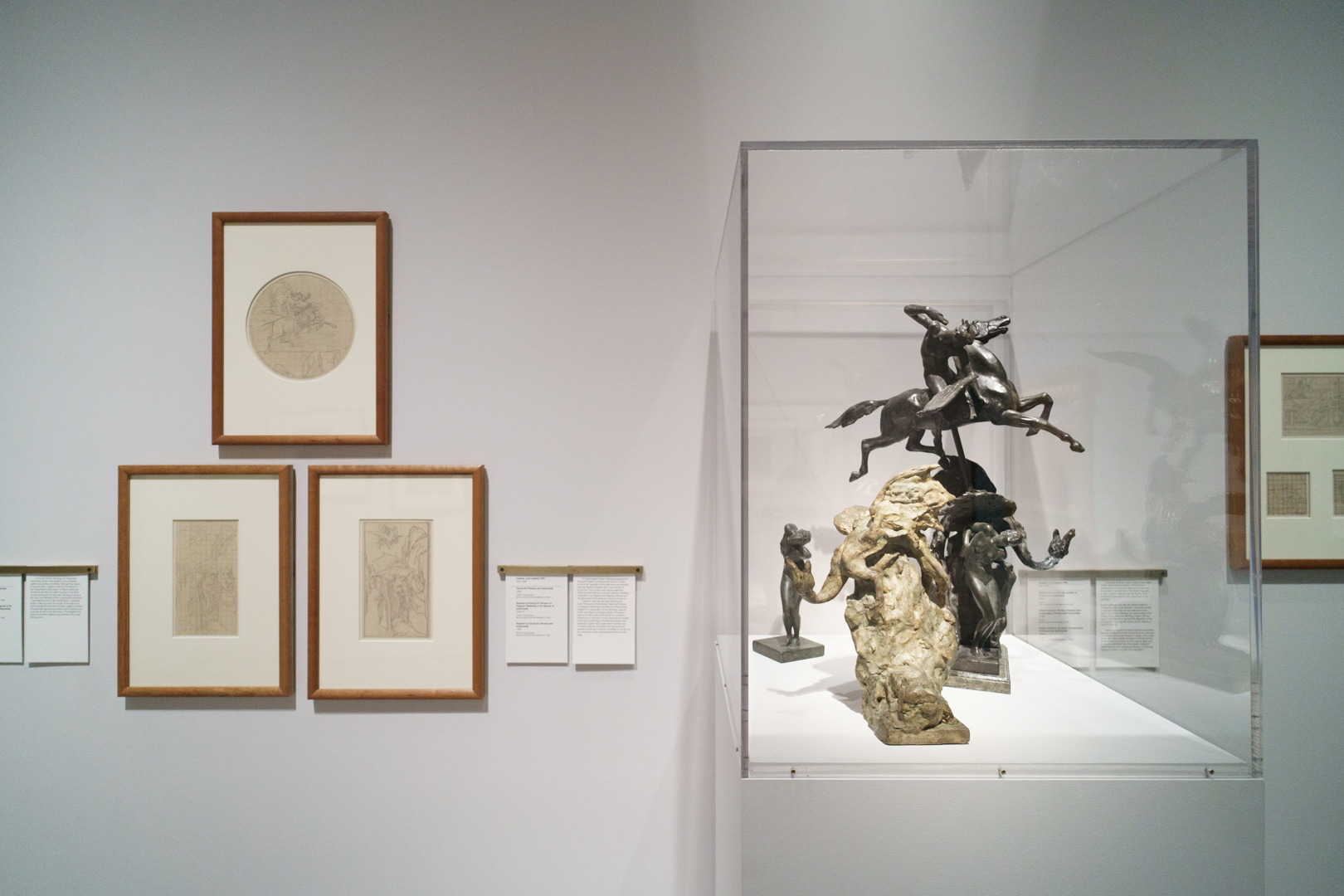


Flaming June runs from 17 February 2024 to 12 January 2025 at the Royal Academy of Arts, https://www.royalacademy.org.uk/
End date unknown for the free showcase at Leighton House, https://www.rbkc.gov.uk/museums/leighton-house

 Nigel Ip
Leave a comment