
In the first ever exhibition devoted to Francesco Pesellino, each of the nine carefully selected works adds a little more character to the artist’s production and cultural legacy. Being a highly collaborative artist, the National Gallery show also reveals the ongoing trials of connoisseurship.


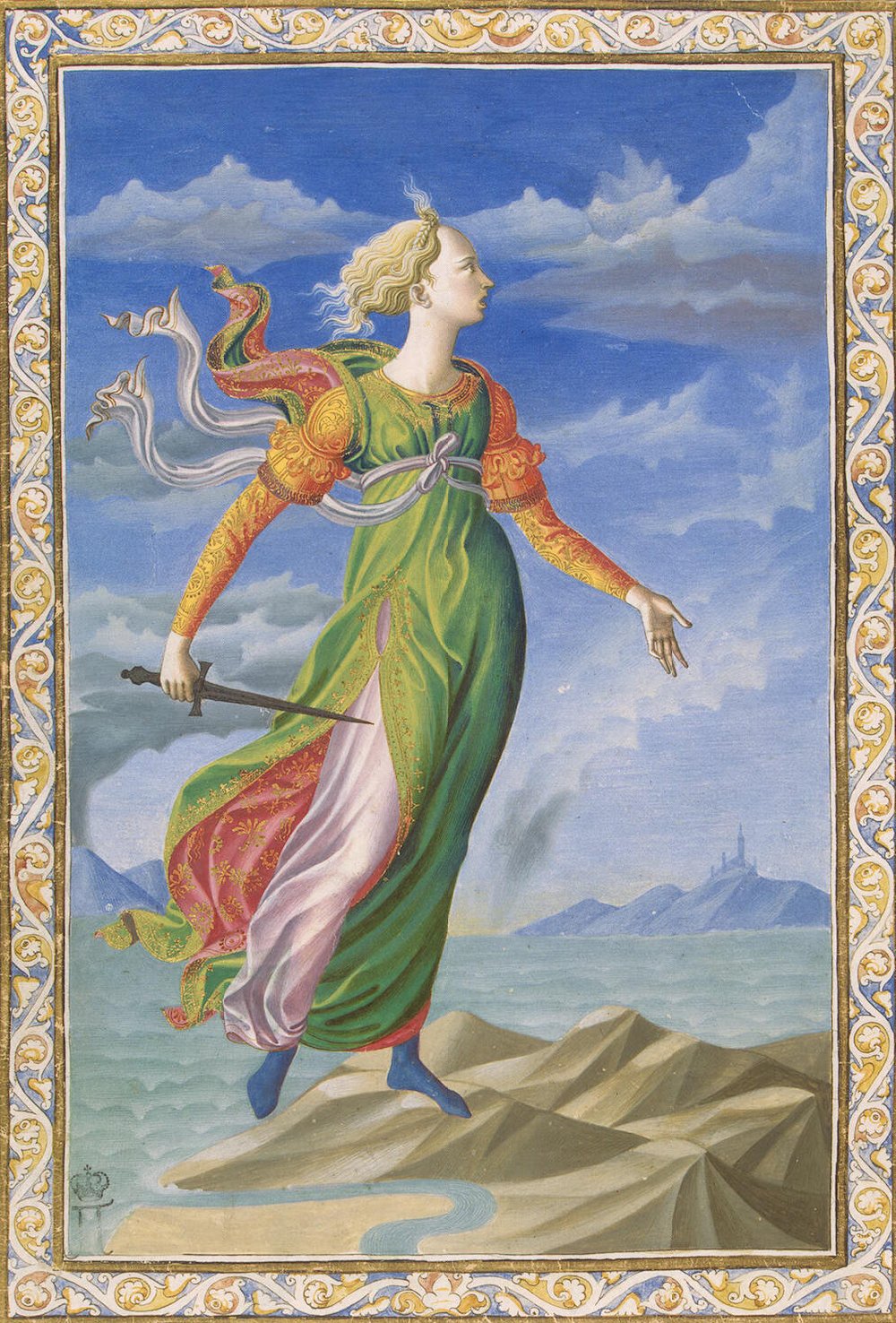
Connecting most of the works is Pesellino’s proficiency in miniature painting. His earliest surviving painting is a five-scene predella panel (1442-45) for the lower register of Fra Filippo Lippi’s Florentine altarpiece for the Novitiate Chapel at Santa Croce. Sawn in two in the 19th century, only the left half is exhibited, revealing Pesellino’s nascent proficiency as a colourist akin to his older contemporary Fra Angelico. This is most evident in the seven full-page miniatures he created for a deluxe presentation manuscript for Pope Nicholas V in 1447, one of his collaborations with Zanobi Strozzi; although unexhibited, two of the brightly coloured miniatures are massively reproduced on the walls.

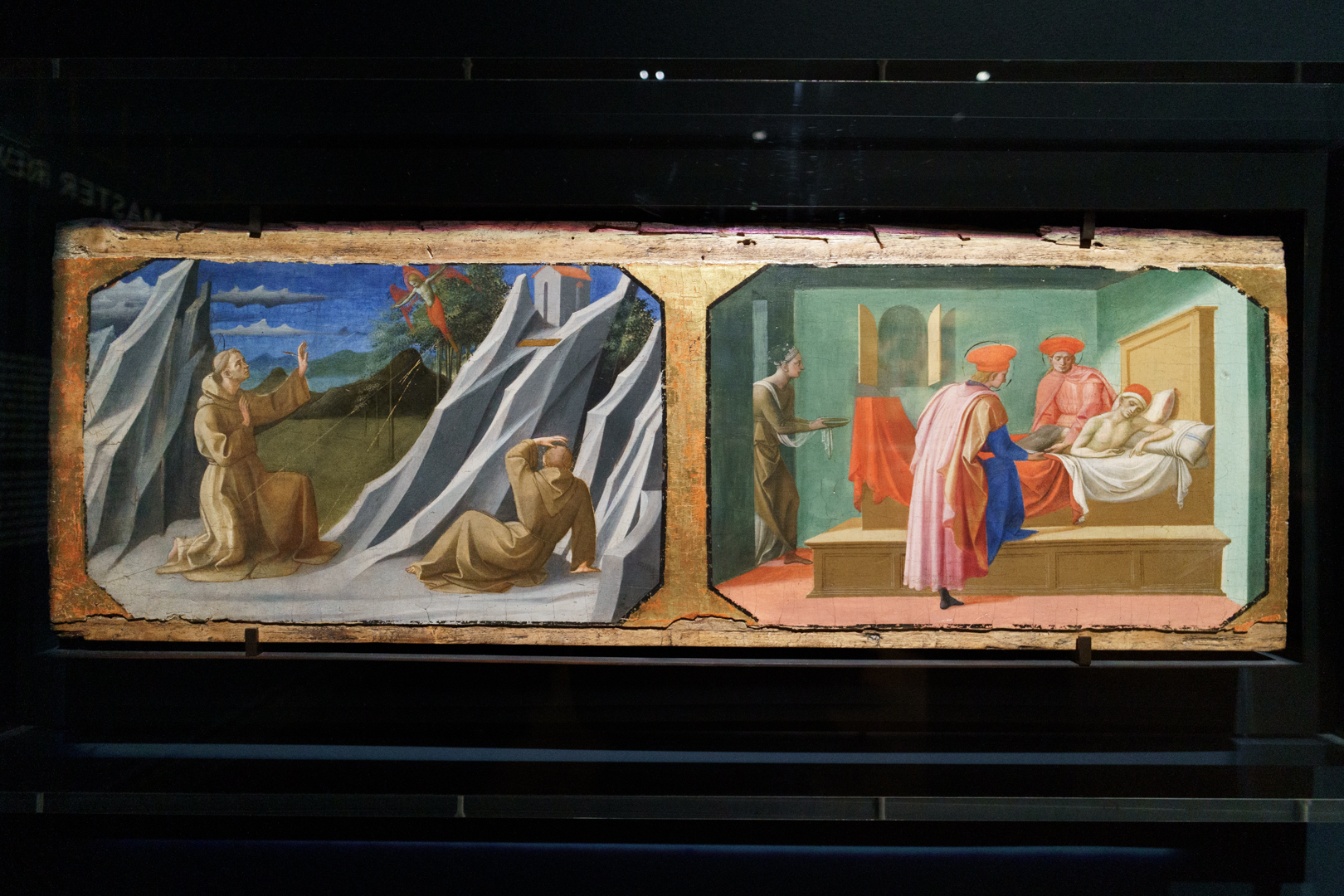

One of the key issues concerning collaborative works is the difficulty in distinguishing multiple hands within a stylistically homogeneous work. In a large decorative panel depicting King Melchior sailing to the Holy Land (1445-50), Pesellino worked with Strozzi and his workshop again, while a predella panel of the Miracle of St Sylvester (1450-53) for a lost altarpiece suggests a possible collaboration with an unidentified artist. One can only piece together his contributions from a handful of works by his hand alone, such as the Courtauld’s portable Annunciation (1450-53) diptych, which shares a similar colonnaded loggia with the predella panel.


Even on a surface level, these four works alone reveal two stylistic phases in Pesellino’s development: the early one in the 1440s when he preferred bright colours, sharp shadows, and the 1450s one where a muted palette and diffused lighting brings him closer to Lippi’s style.

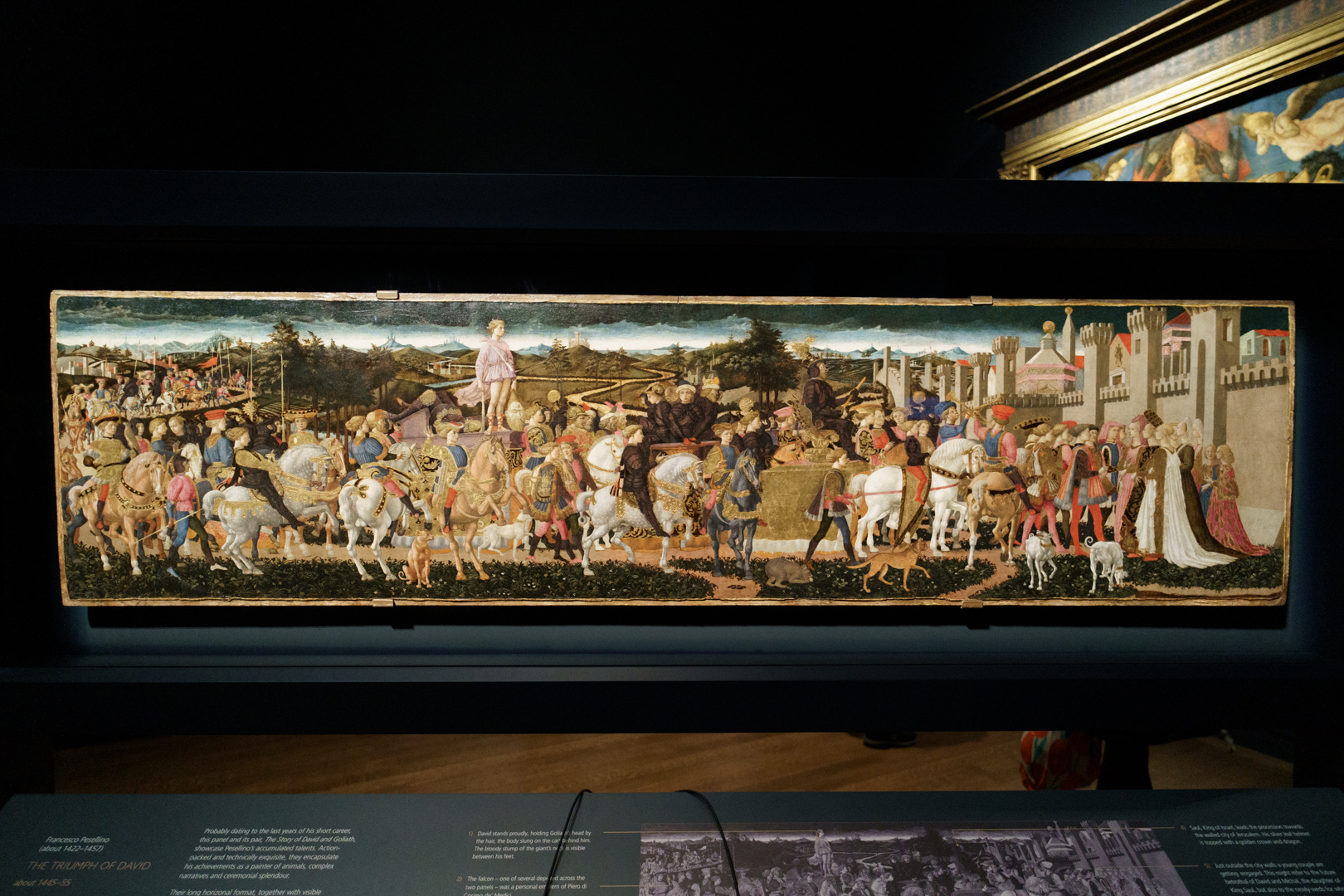
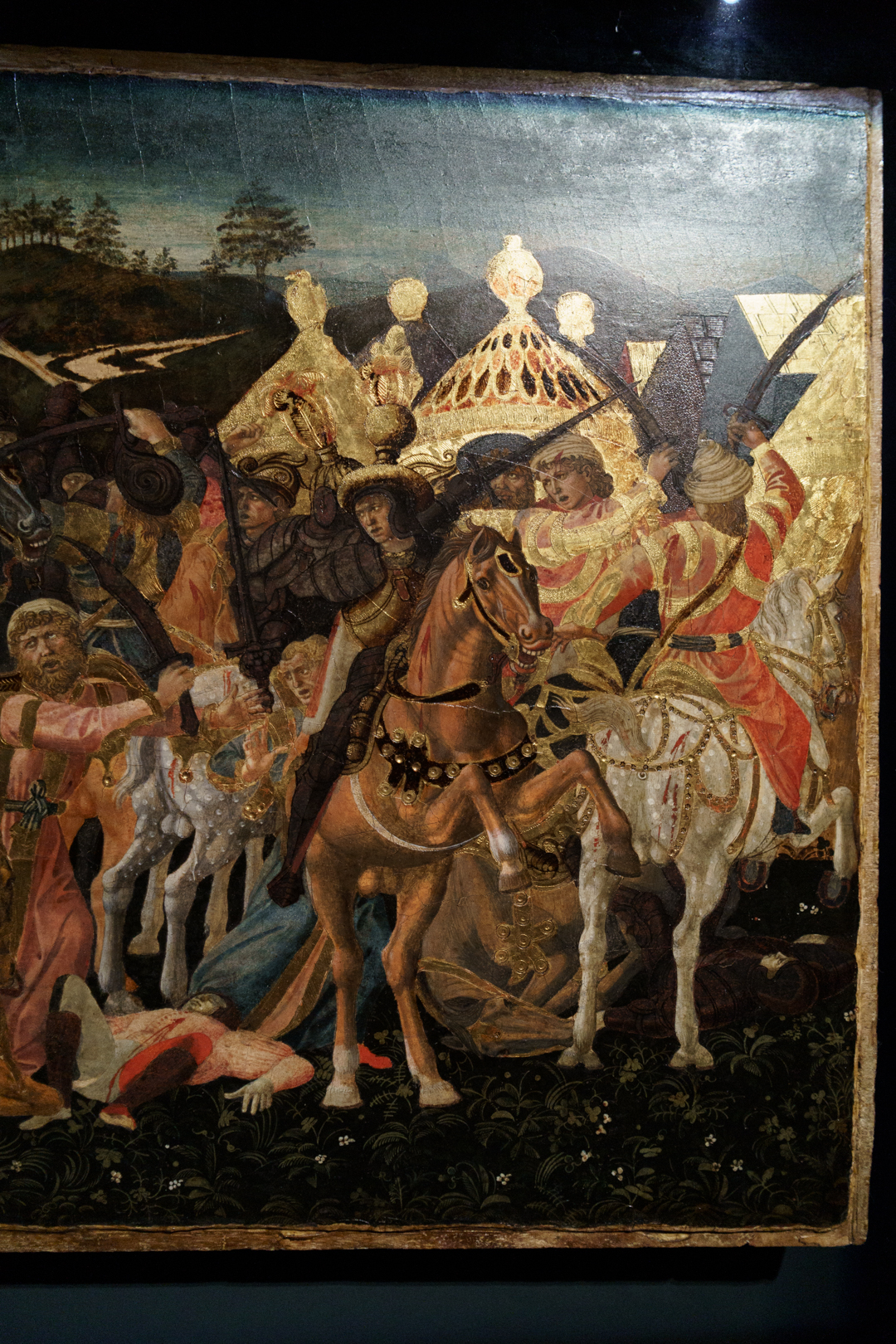
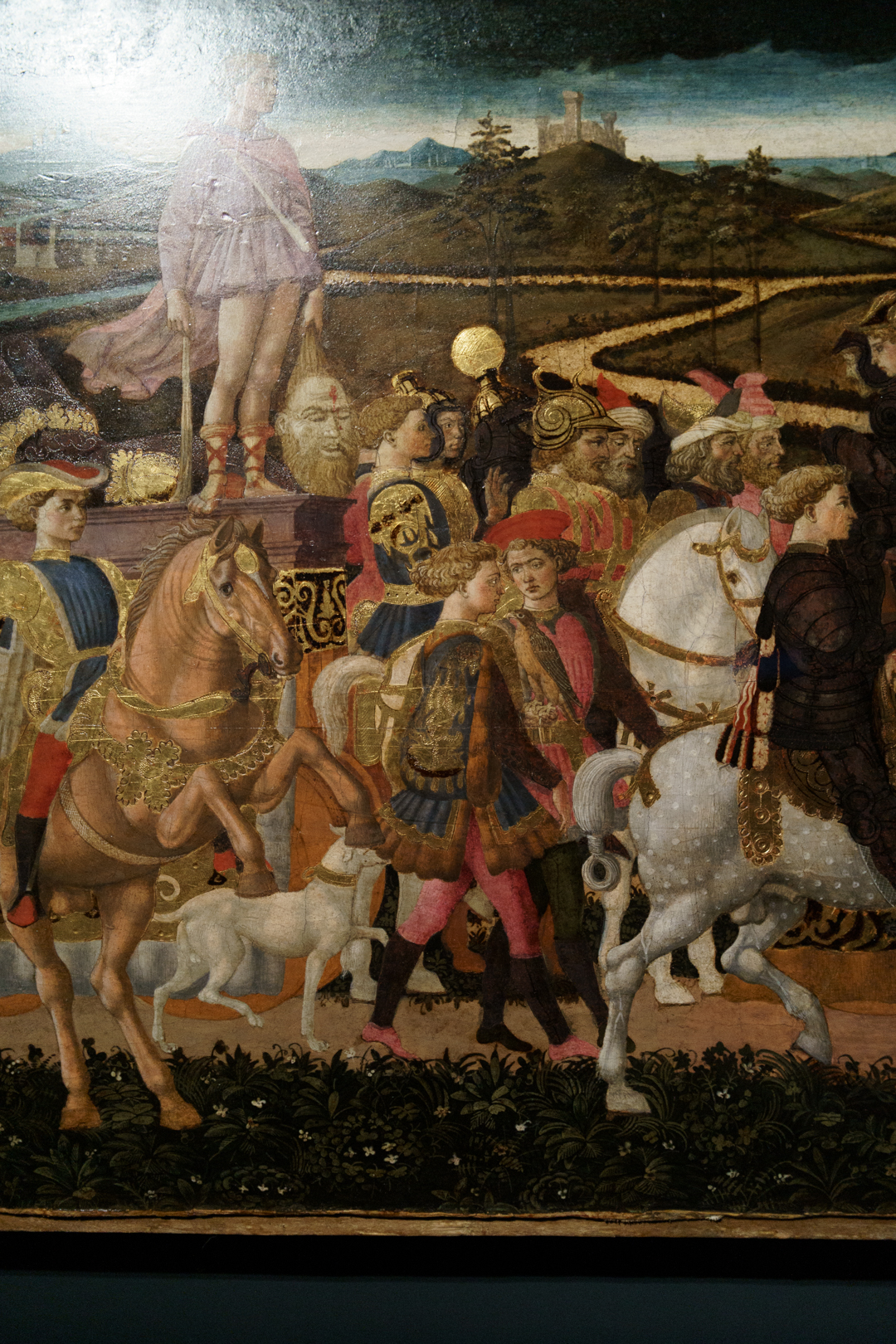
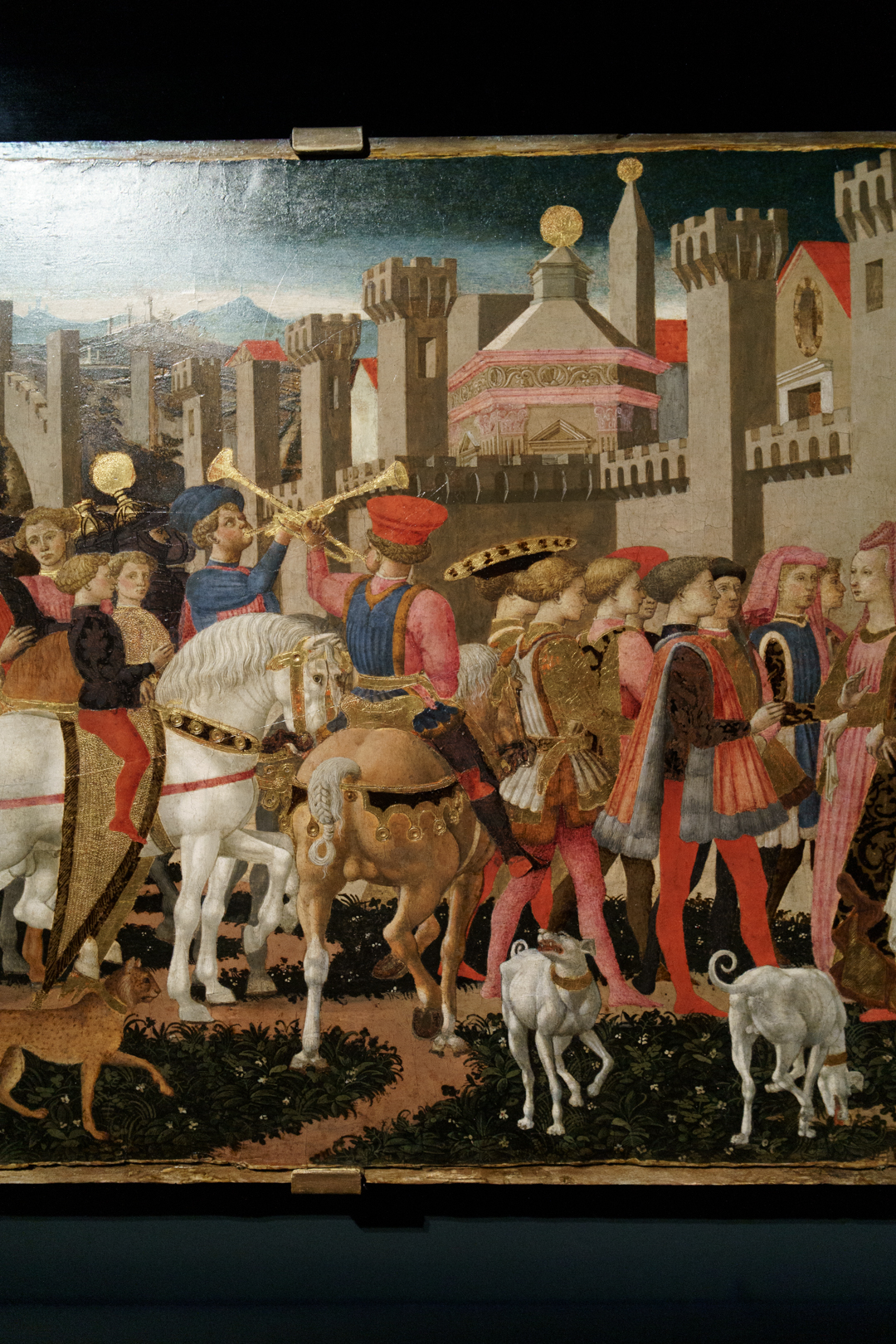
Another connoisseurship issue concerns the original function of paintings of similar size and format, in this case long horizontal panel paintings. At the heart of this discussion are the gallery’s two recently conserved cassone panels depicting the Story of David and Goliath, and the Triumph of David (1452-55). There is still debate over whether they really served as fronts to cassoni (marriage chests) or if they were, in fact, spalliere inserted into the wainscoting of a bedchamber. Possibly a Medici commission, an exceptional amount of preparation went into designing their tightly-woven narratives, numerous figures, animal, and foliage, and lavish but strategic placement of silver and gold leaf practically everywhere.







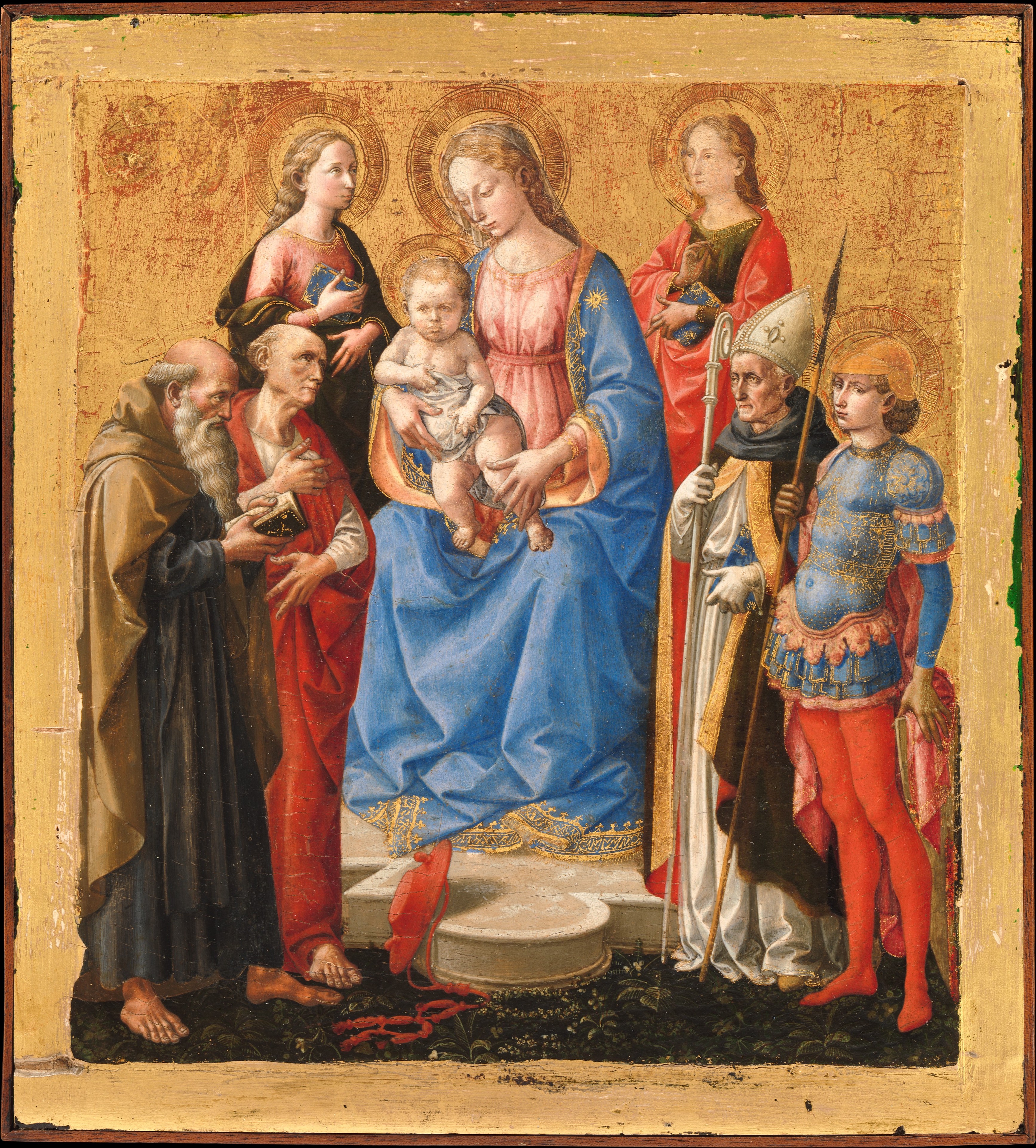
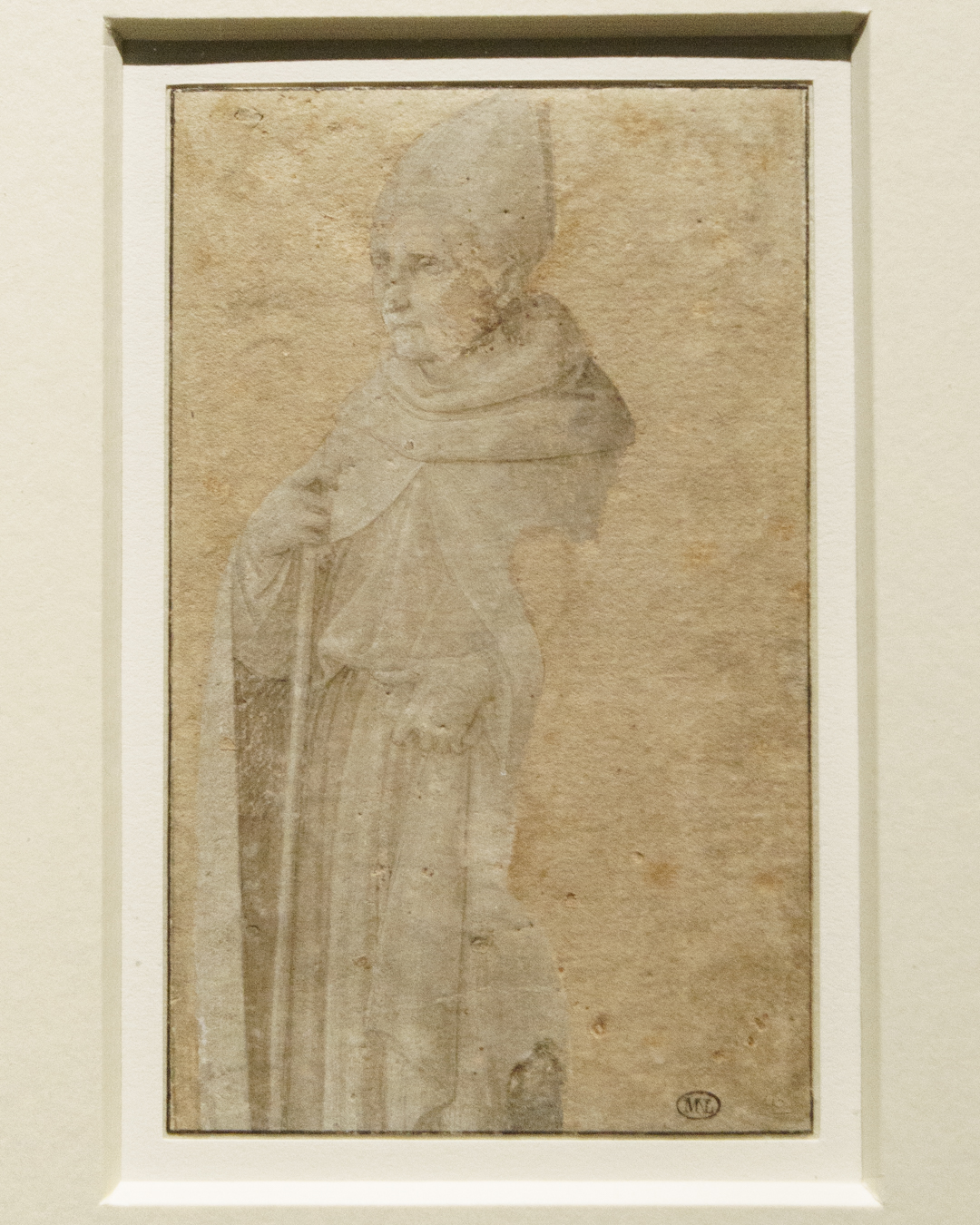
A lone drawing elucidates the kind of studies Pesellino would have made. However, this one is an enigma because it remains unclear whether it is a preparatory study for St Augustine in the related devotional panel (reproduced in the caption), or a copy after it for replicative purposes at a later date. Its one-to-one scale and negative space for the adjacent figure of St George turns conventional drawing analysis on its head.
Appropriately, the exhibition’s symbolic coda is the Pistoia Santa Trinità altarpiece (1455-60), left ‘half finished’ in Pesellino’s studio when he died suddenly of plague in 1457; it was subsequently completed by Lippi and his workshop, including all four predella panels. Still, Pesellino’s design of the main panel and execution of the two hovering angels is a testament to his improved skill in modelling larger figures with exceptional grace and foreshortening. Those angels would prove to be rather influential to artists in Lippi’s entourage. Incidentally, this is also the gallery’s earliest single-field altarpiece (pala), a revolutionary new format that replaced traditional multi-panel polyptychs.

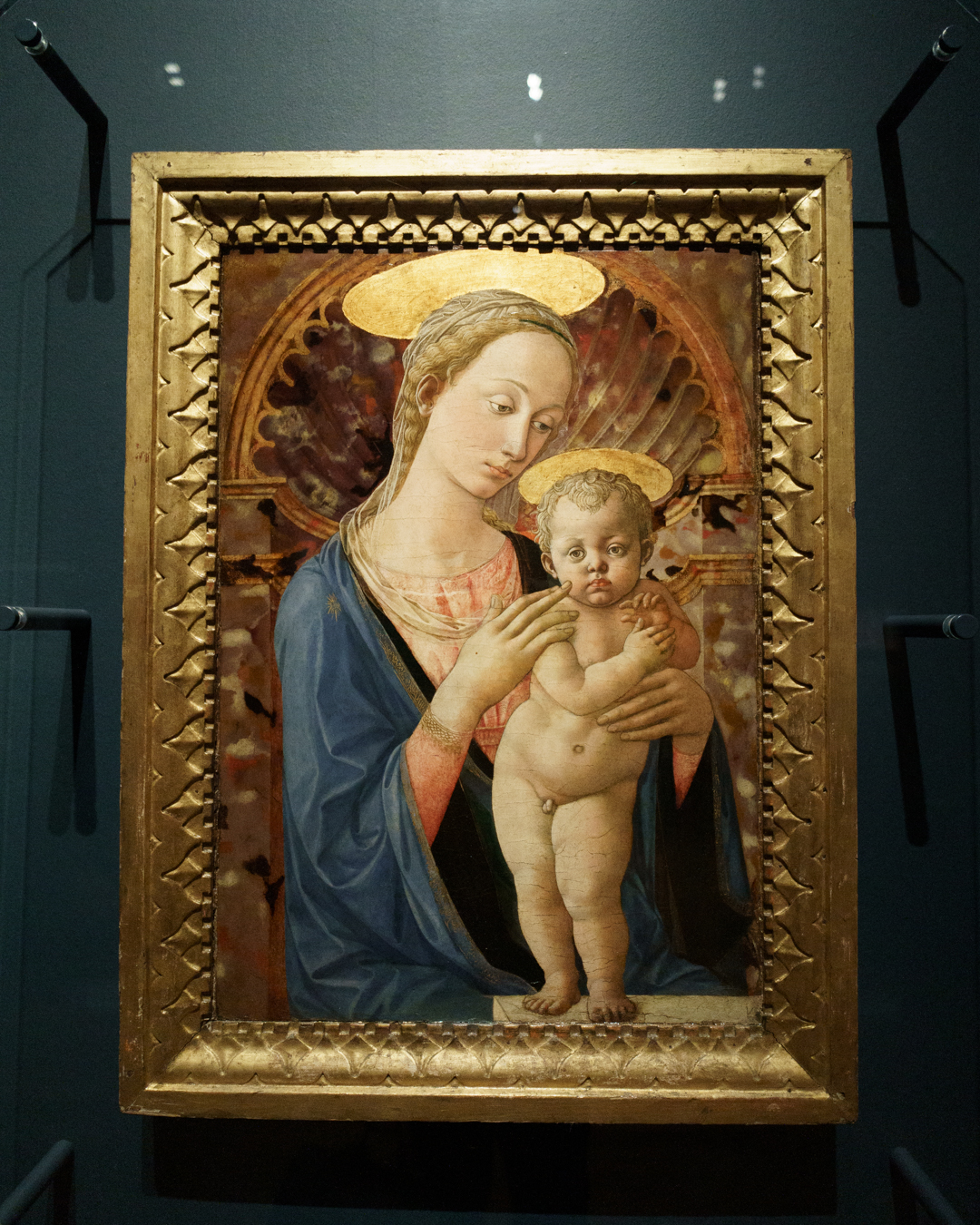
Finally, Pesellino’s legacy is represented by an unassuming half-length Madonna and Child with its truncated ledge subtly revealing the seated position of the Madonna’s legs. This little feature immediately re-establishes her spatial position in relation to the variegated marble niche behind her. The composition proved especially popular, appearing in countless copies and variants by the so-called Lippi Pesellino imitator(s).
This exhibition is really just a teaser for what could one day be a very insightful and comparative gathering of works contextualising Pesellino and his circle. His heavyweight status in the artistic climate of 15th-century Florence is indisputable, yet specific details of his life and career are remarkably scarce. Every loan matters, and you really notice it in this stunning free exhibition.
Pesellino: A Renaissance Master Revealed runs from 7 December 2023 to 10 March 2024 at the National Gallery, London, https://www.nationalgallery.org.uk/

 Nigel Ip
Leave a comment