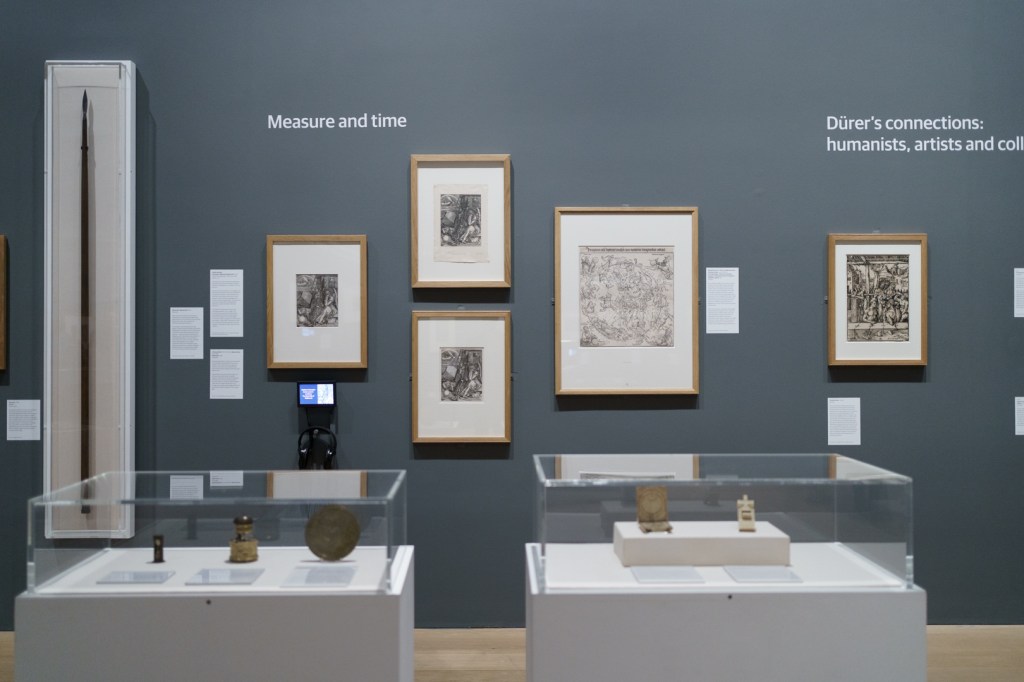
Of the endless exhibitions on Albrecht Dürer over the years, so many can feel tired and repetitive. This is especially true of those exploring his prints. Albrecht Dürer’s Material World at the Whitworth tries to offer something more by immersing us with tangible objects familiar to the artist in Nuremberg.
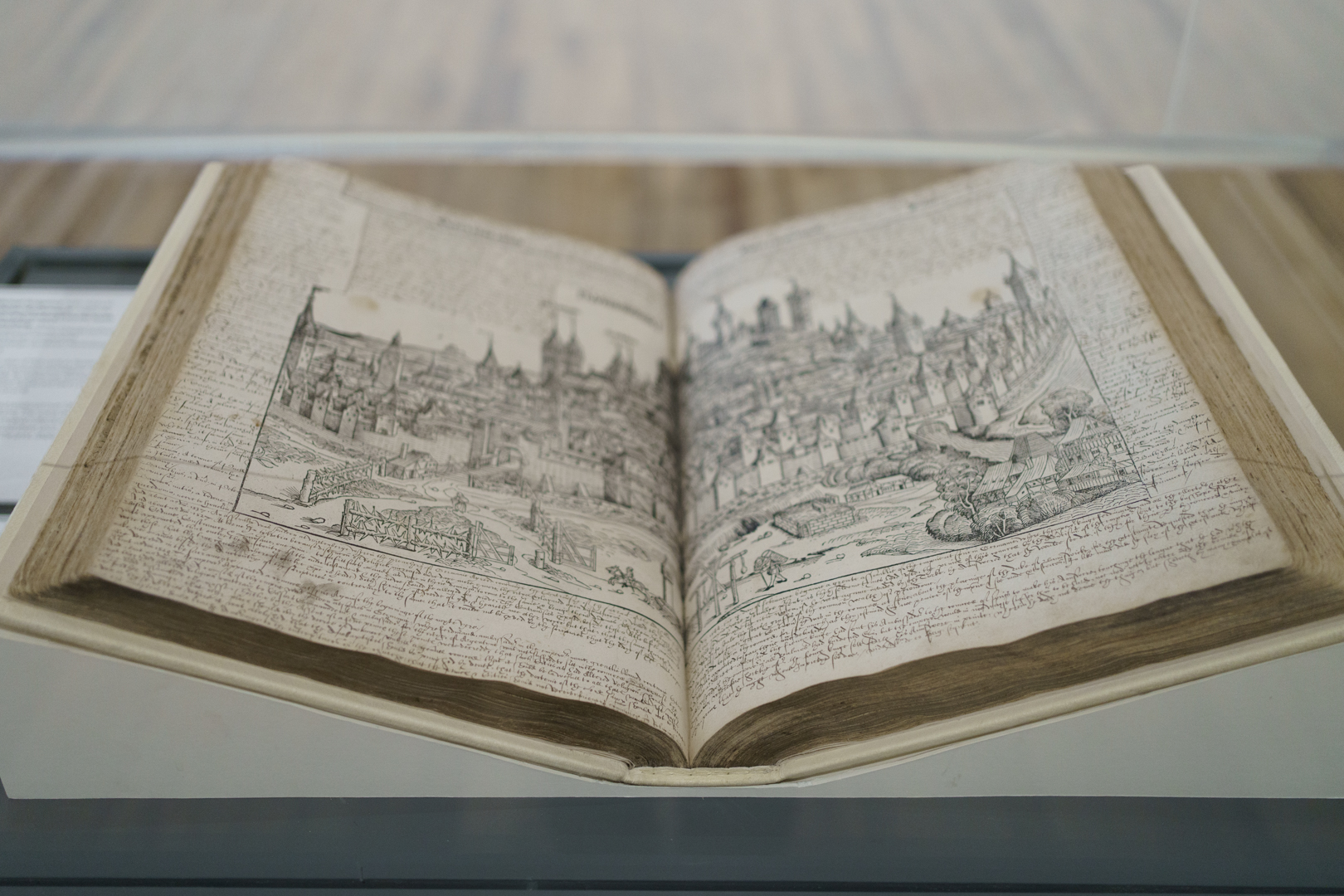
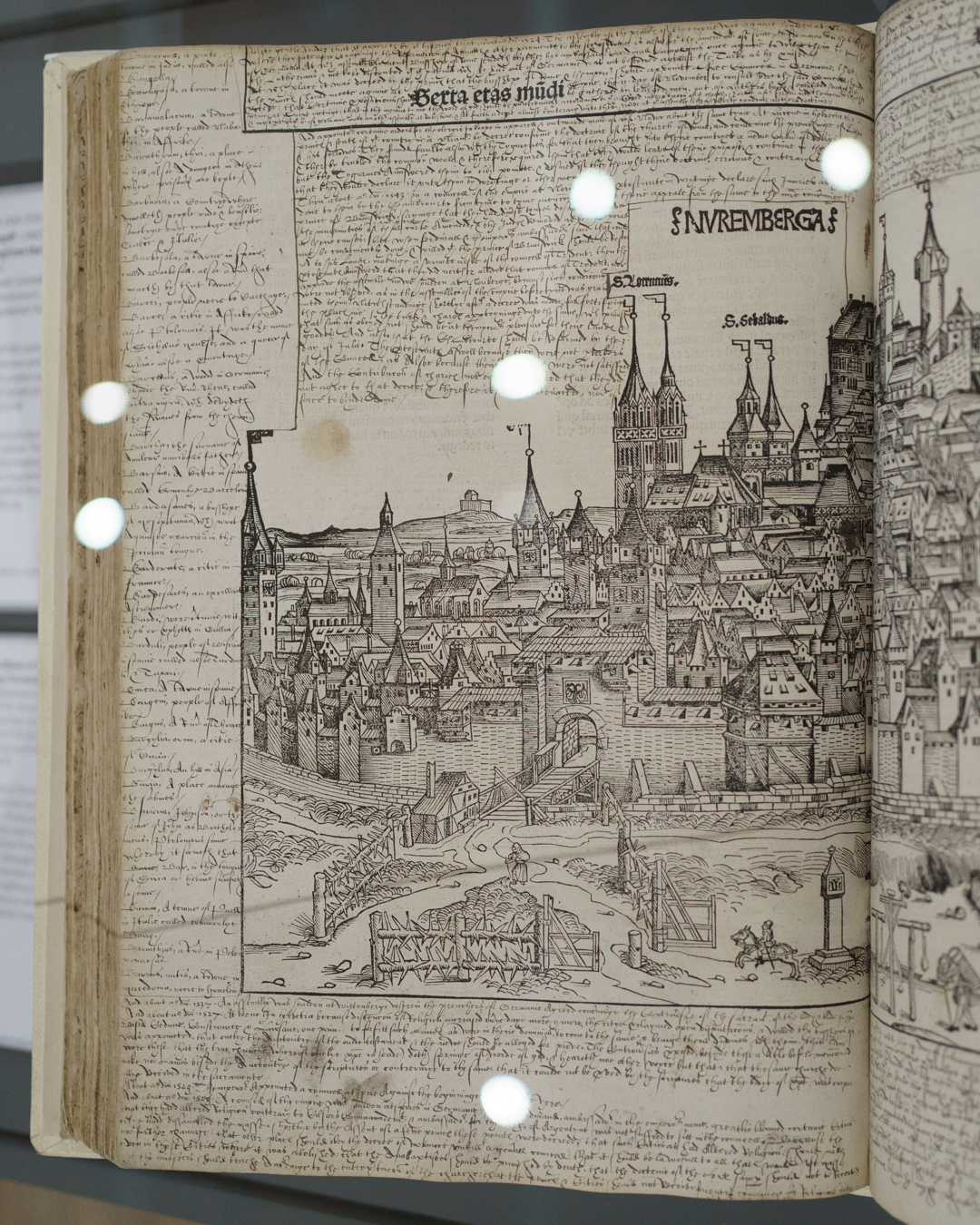
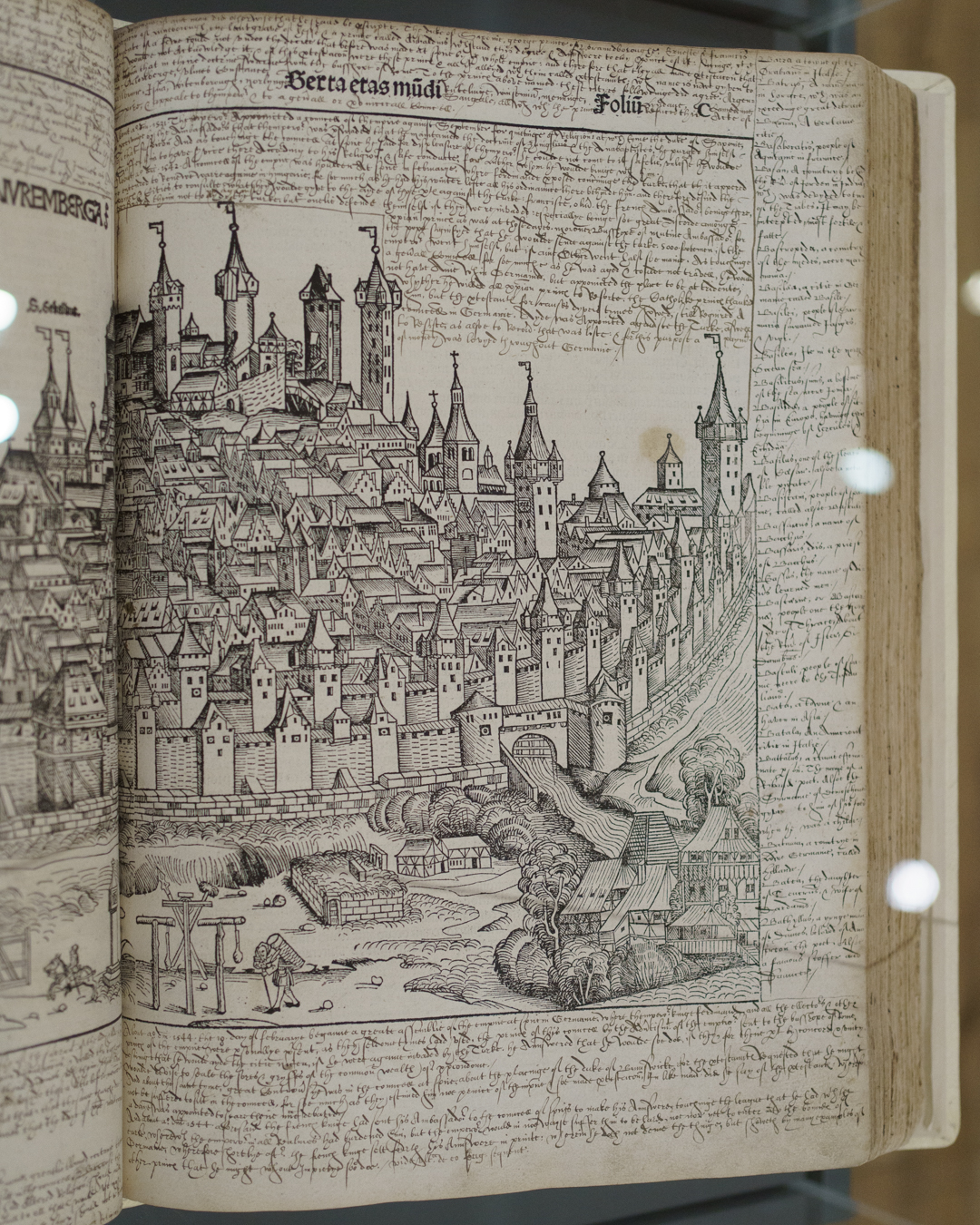
An annotated copy of the Nuremberg Chronicle sets the scene, its margins adorned with notes and observations aby a travelling scholar. Across the room, Dürer’s friends, patrons, and the artist himself line up against a wall, anticipating our visit like a welcoming party.
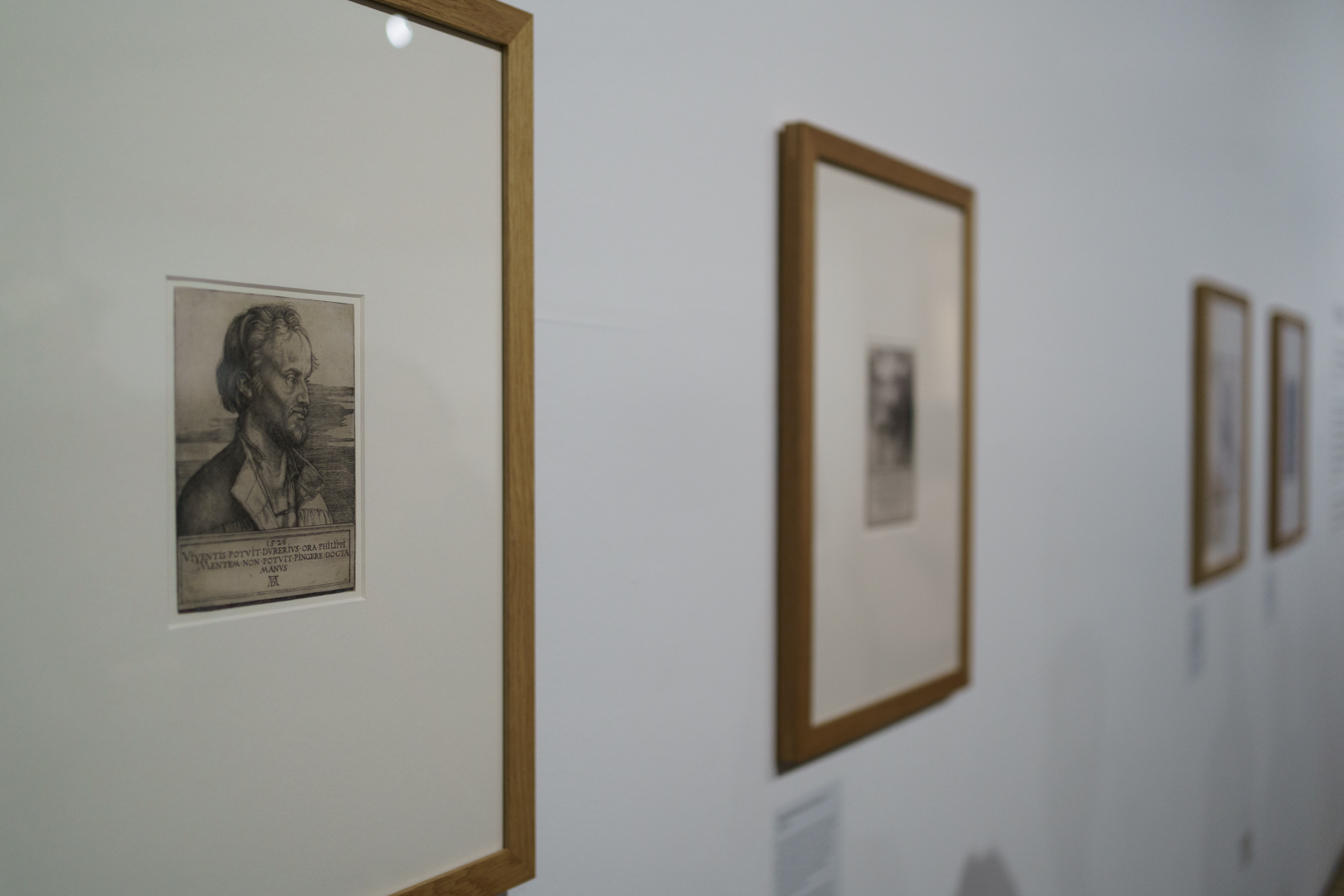
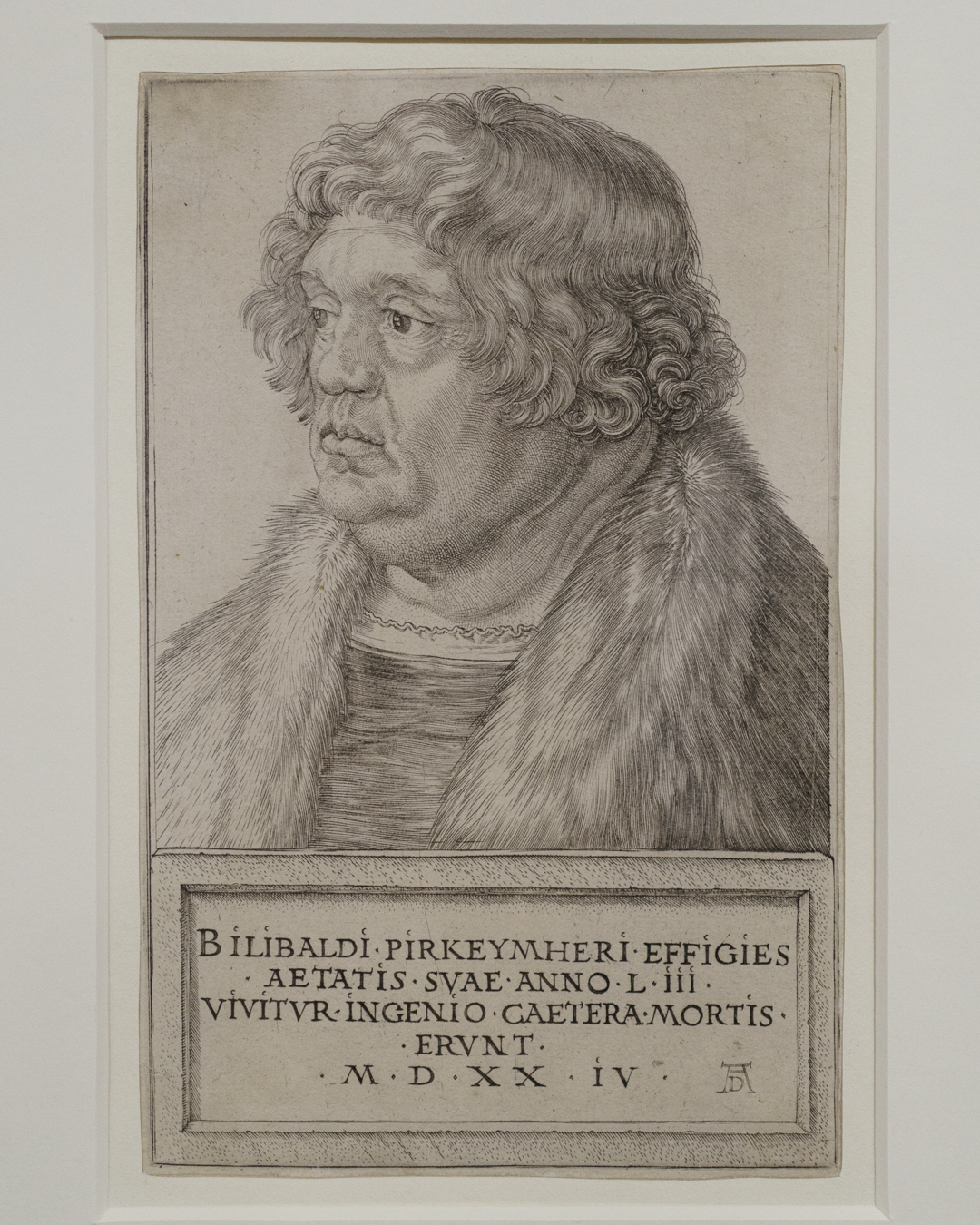
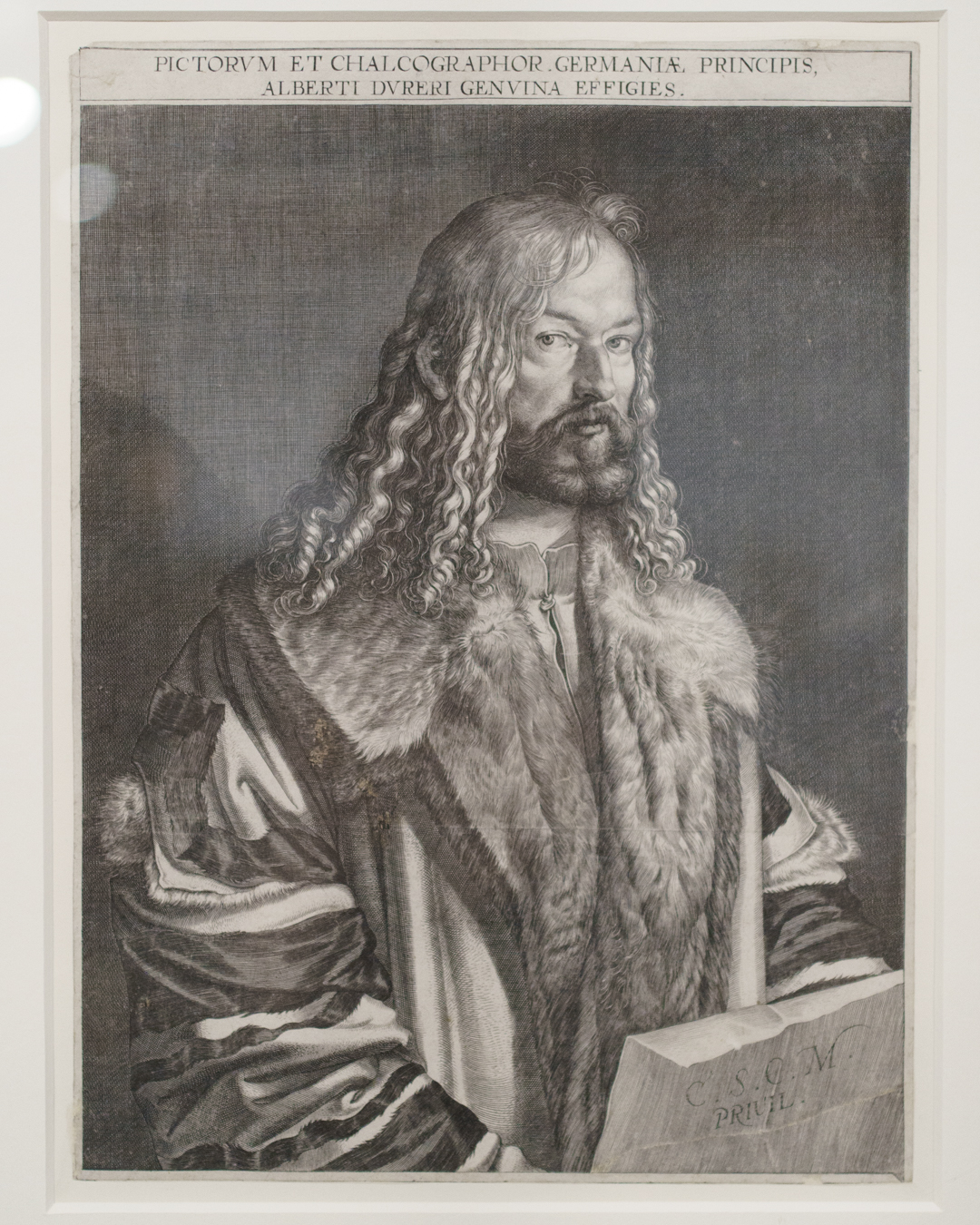
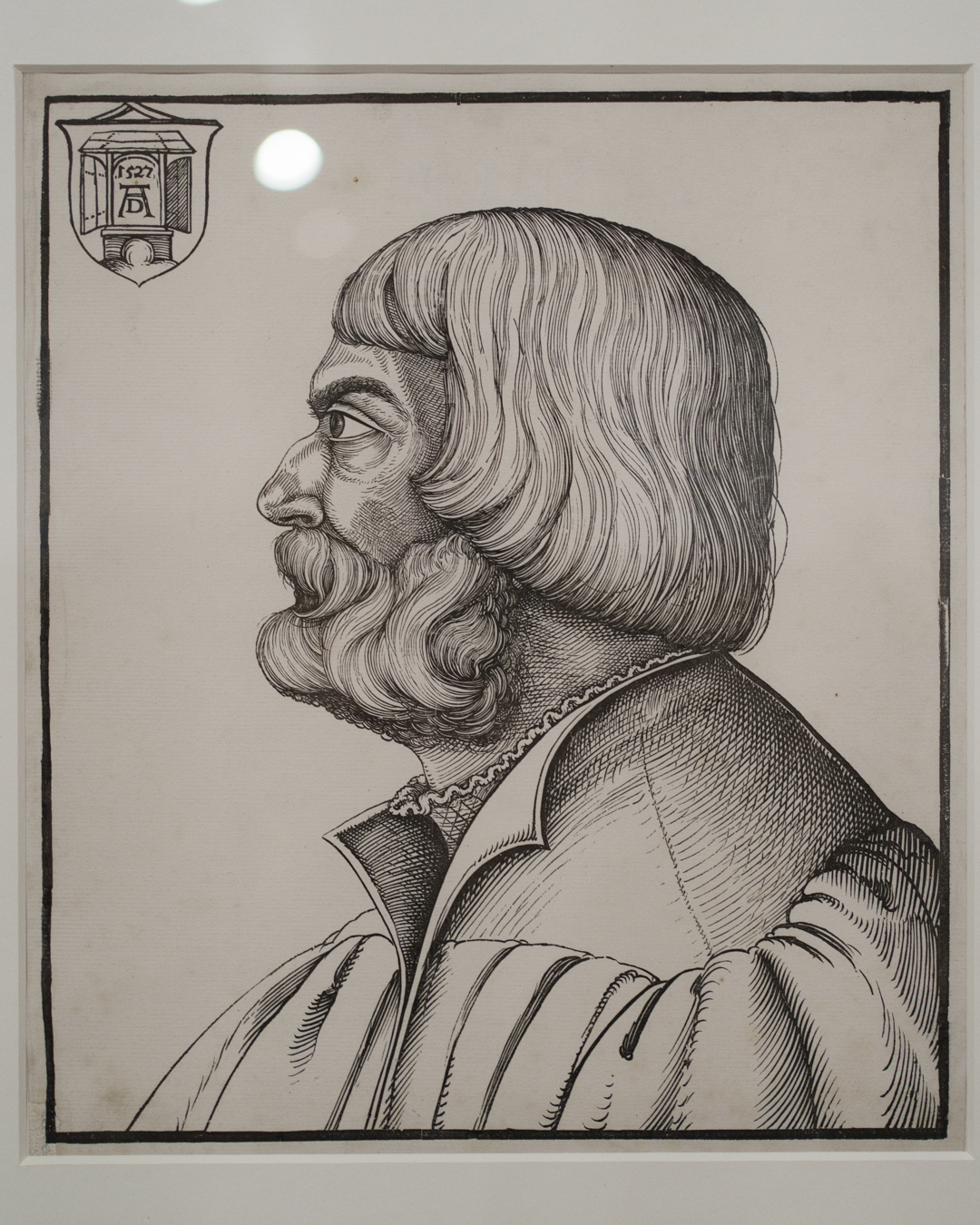
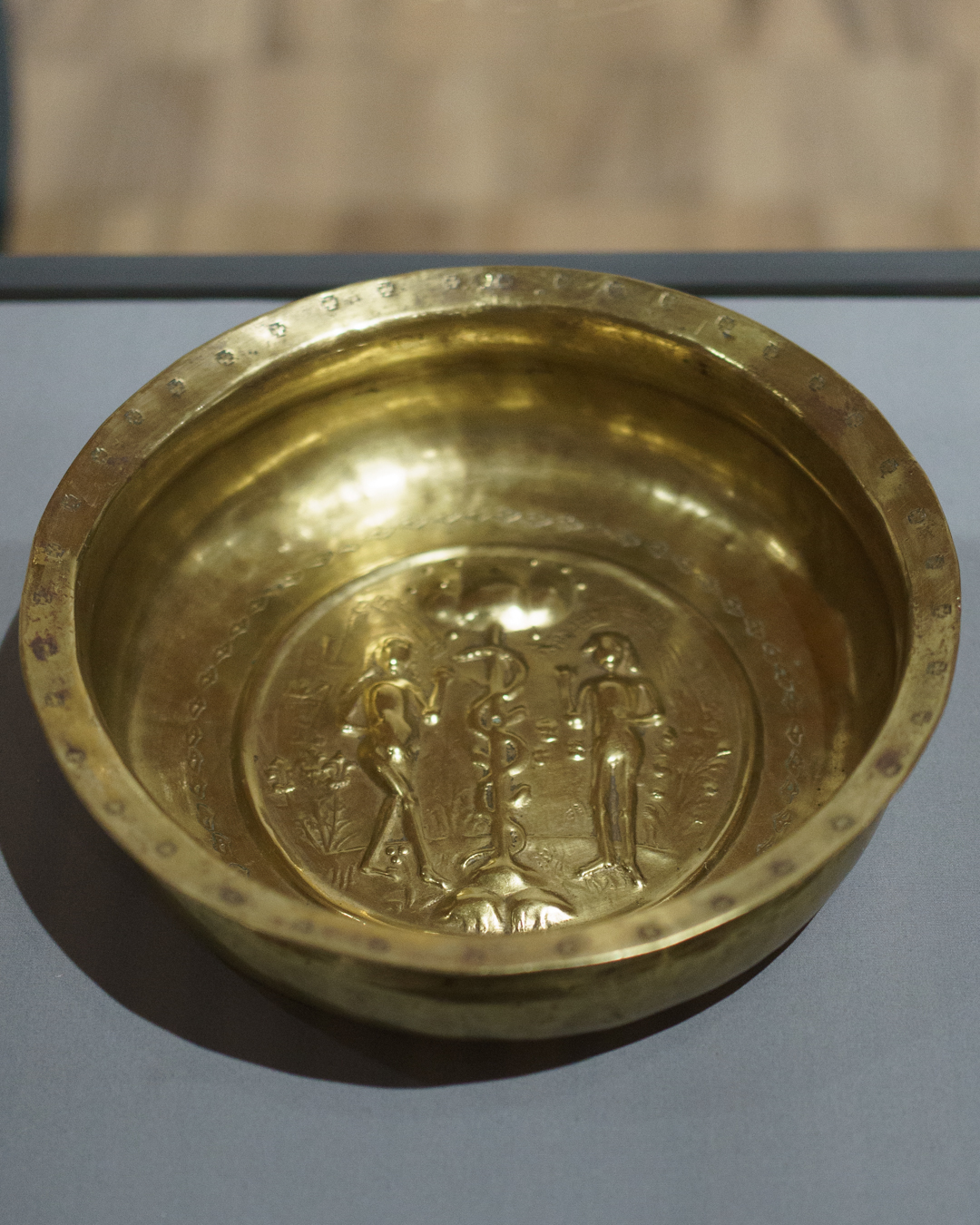
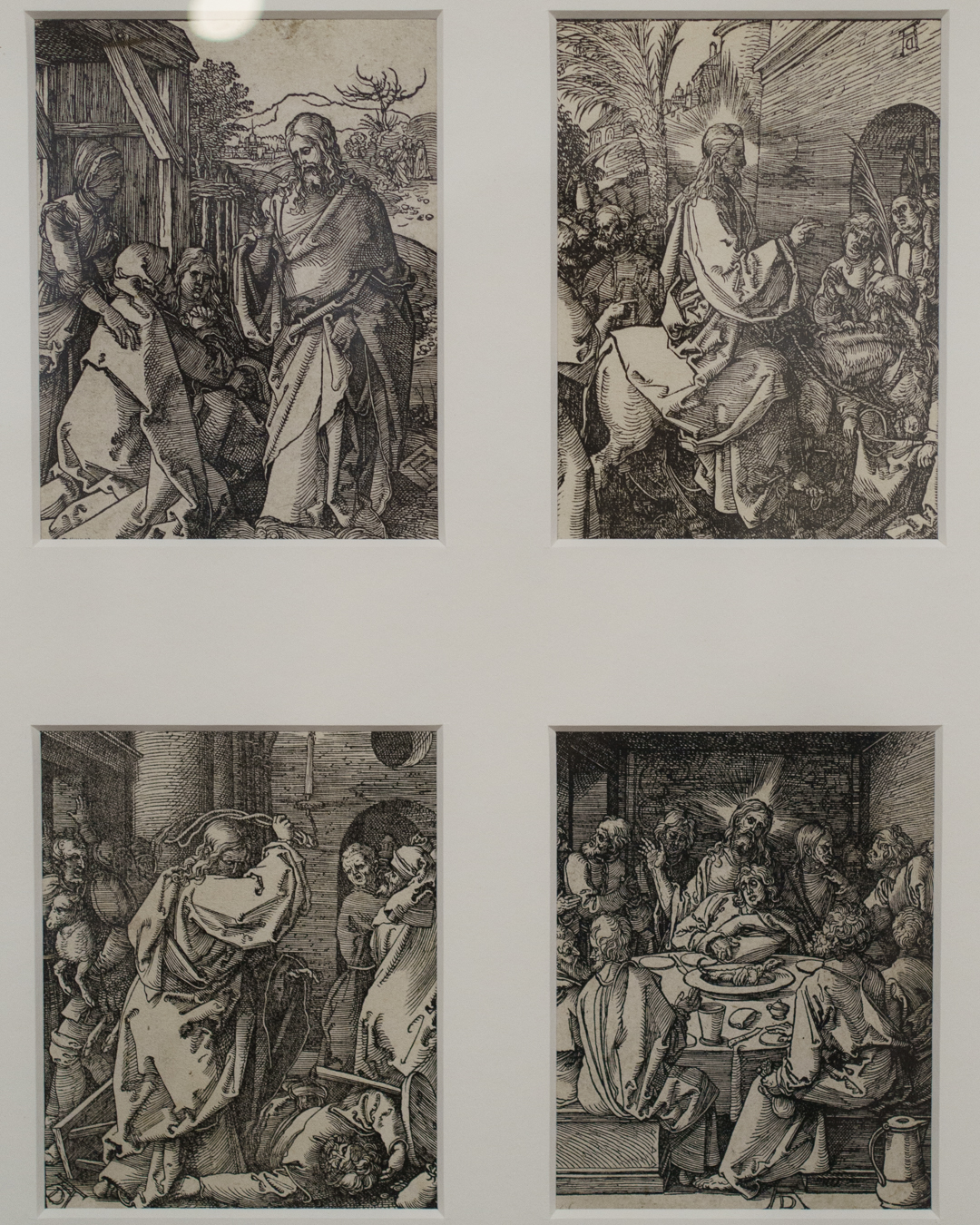
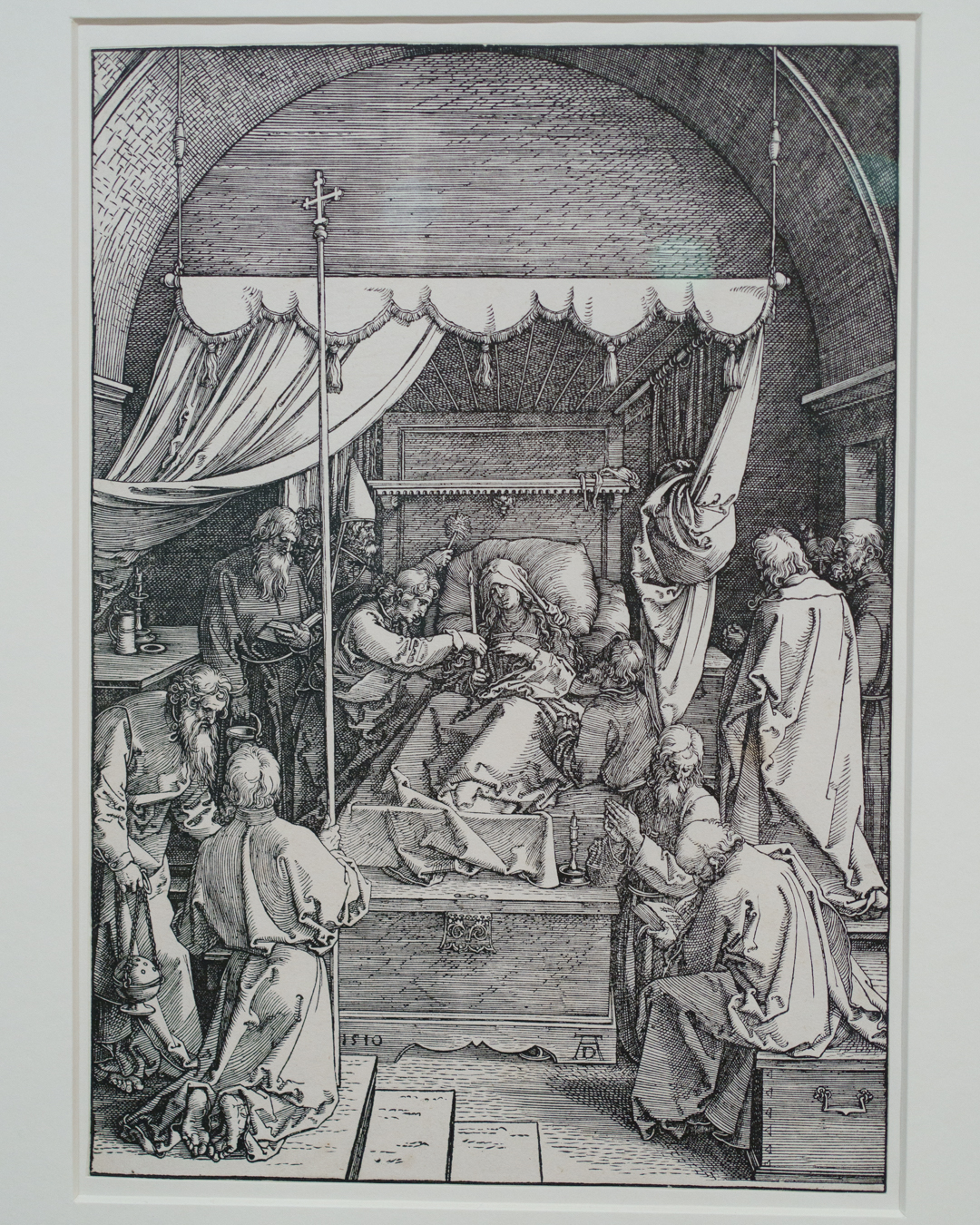
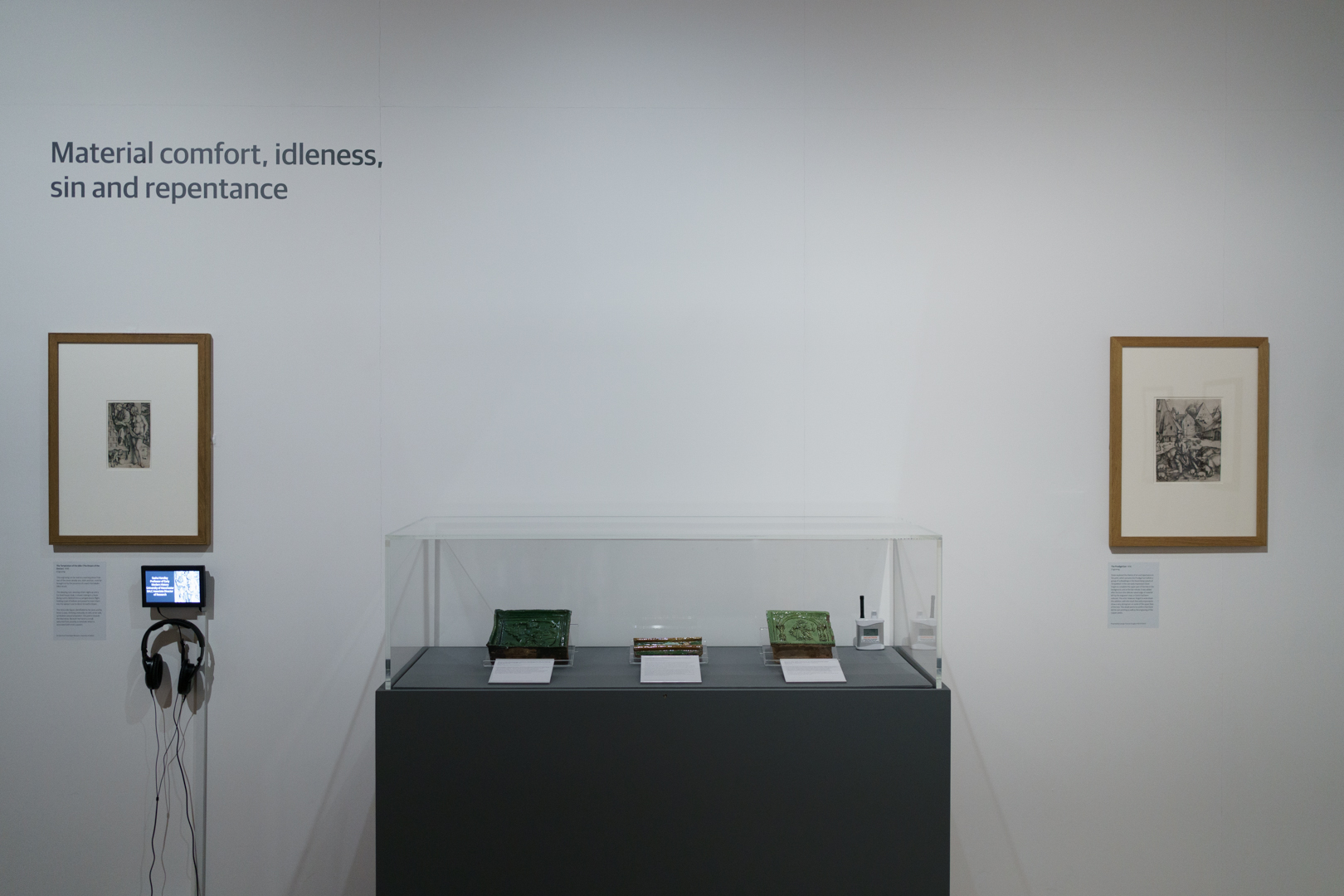
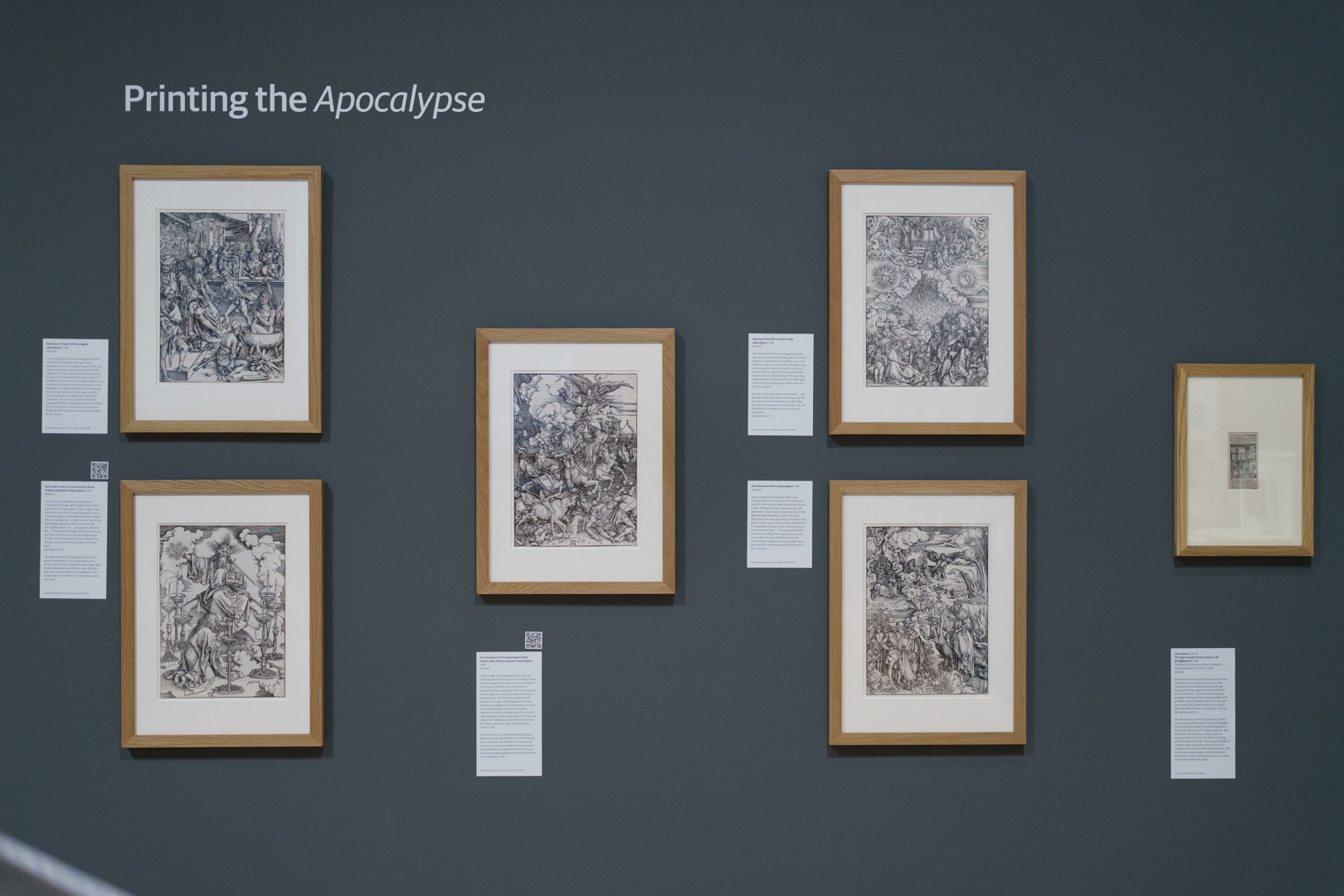
Devoted mainly to religious works, the first room presents us with selections from the Life of the Virgin, the Large Passion, and the Small Passion. A display case houses a variety of objects, such as brass bowl embossed with an image of Adam and Eve beside the Tree of Knowledge, and a gorgeous collection of silver-gilt spoons cast with likenesses of the Apostles. The takeaway here is to hone in on the numerous little details that fill each scene: chalices, books, daily household items, etc.
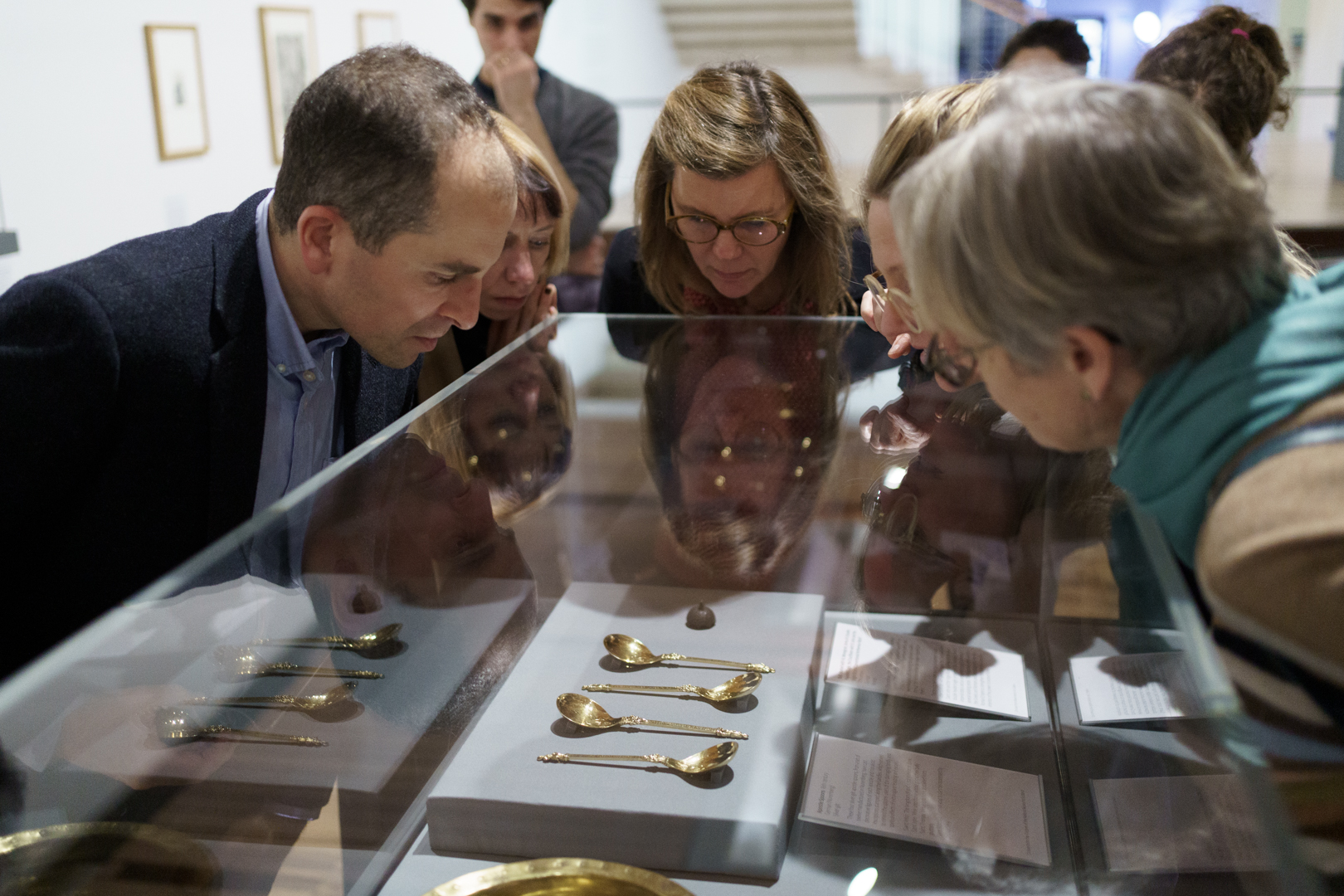
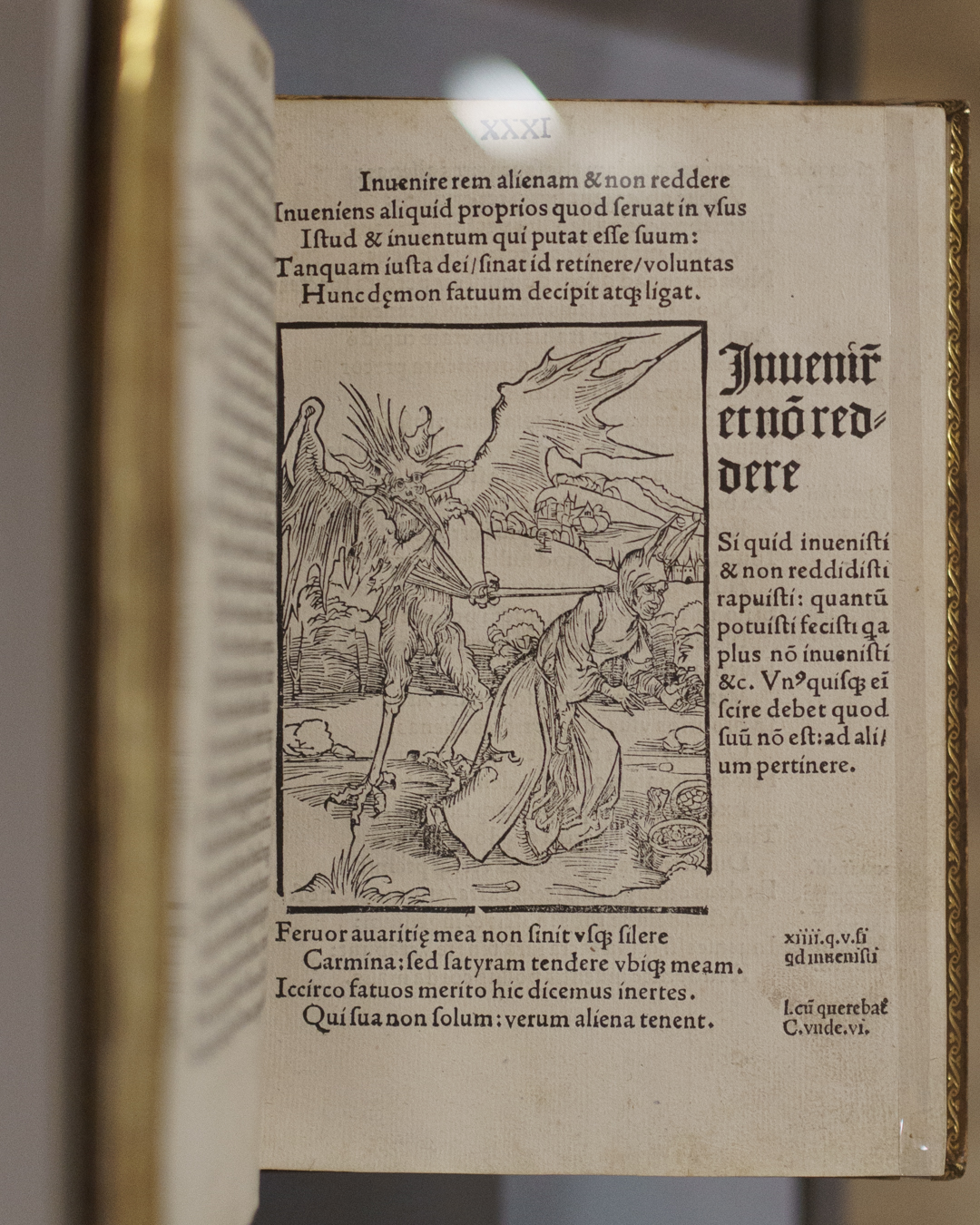
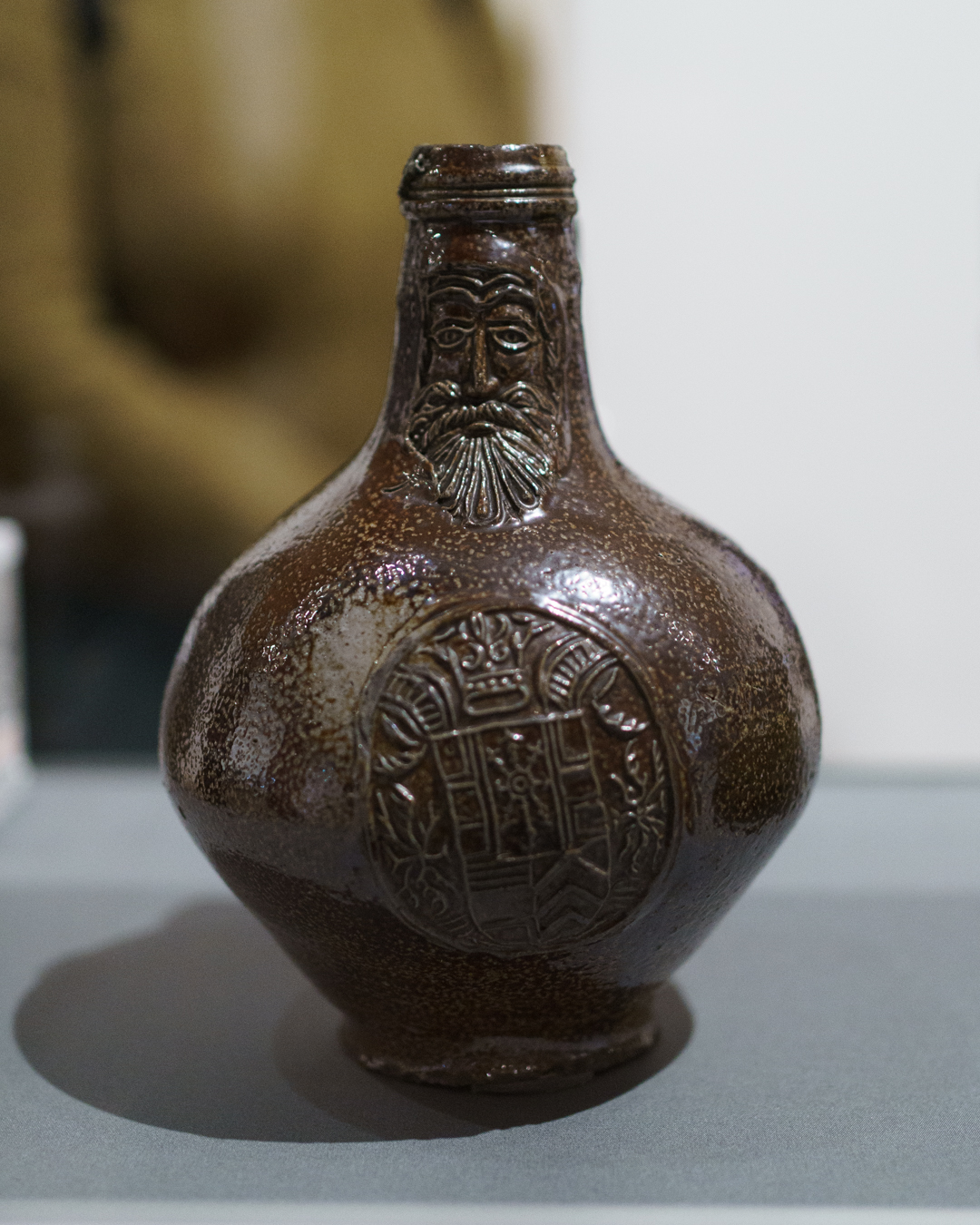
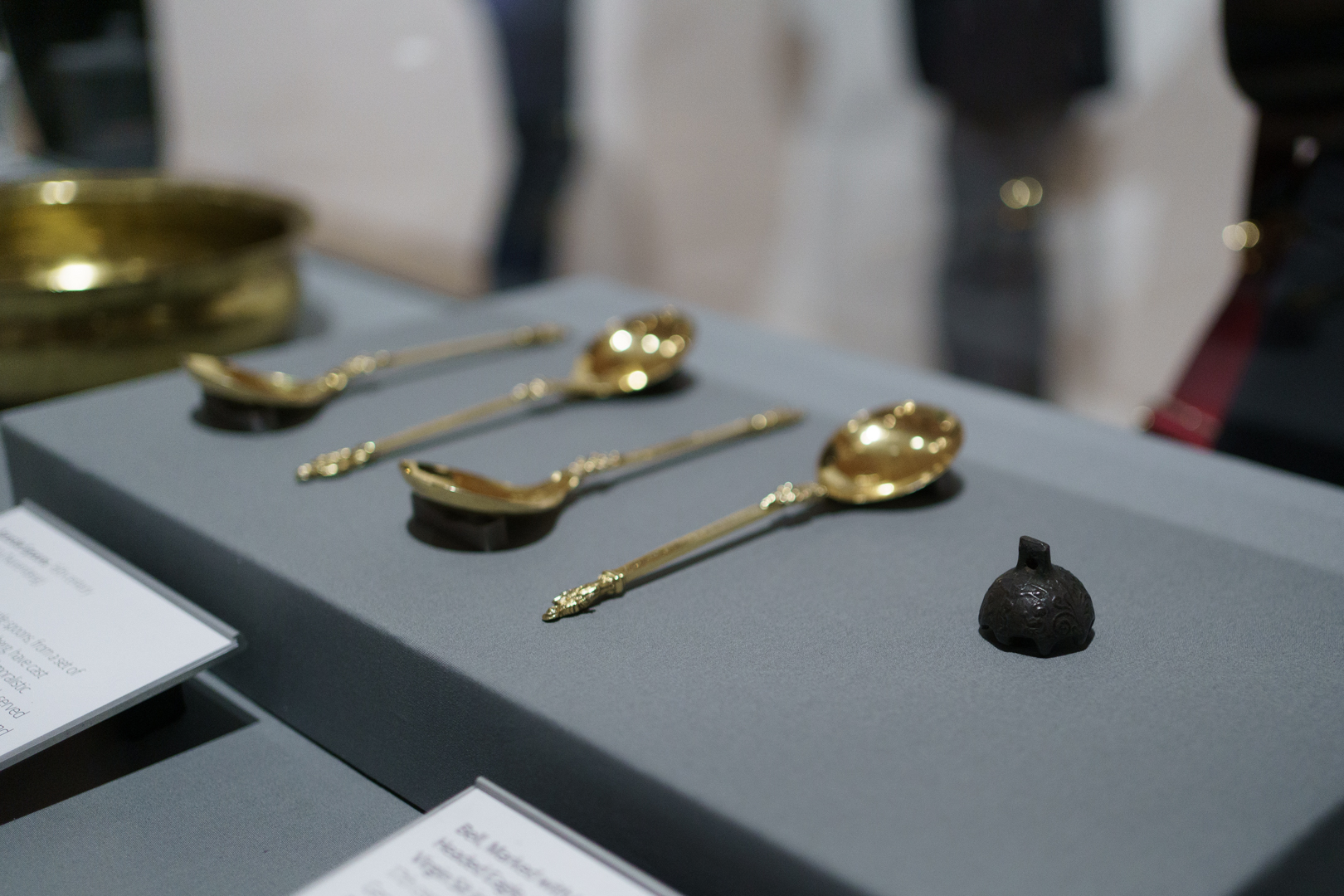
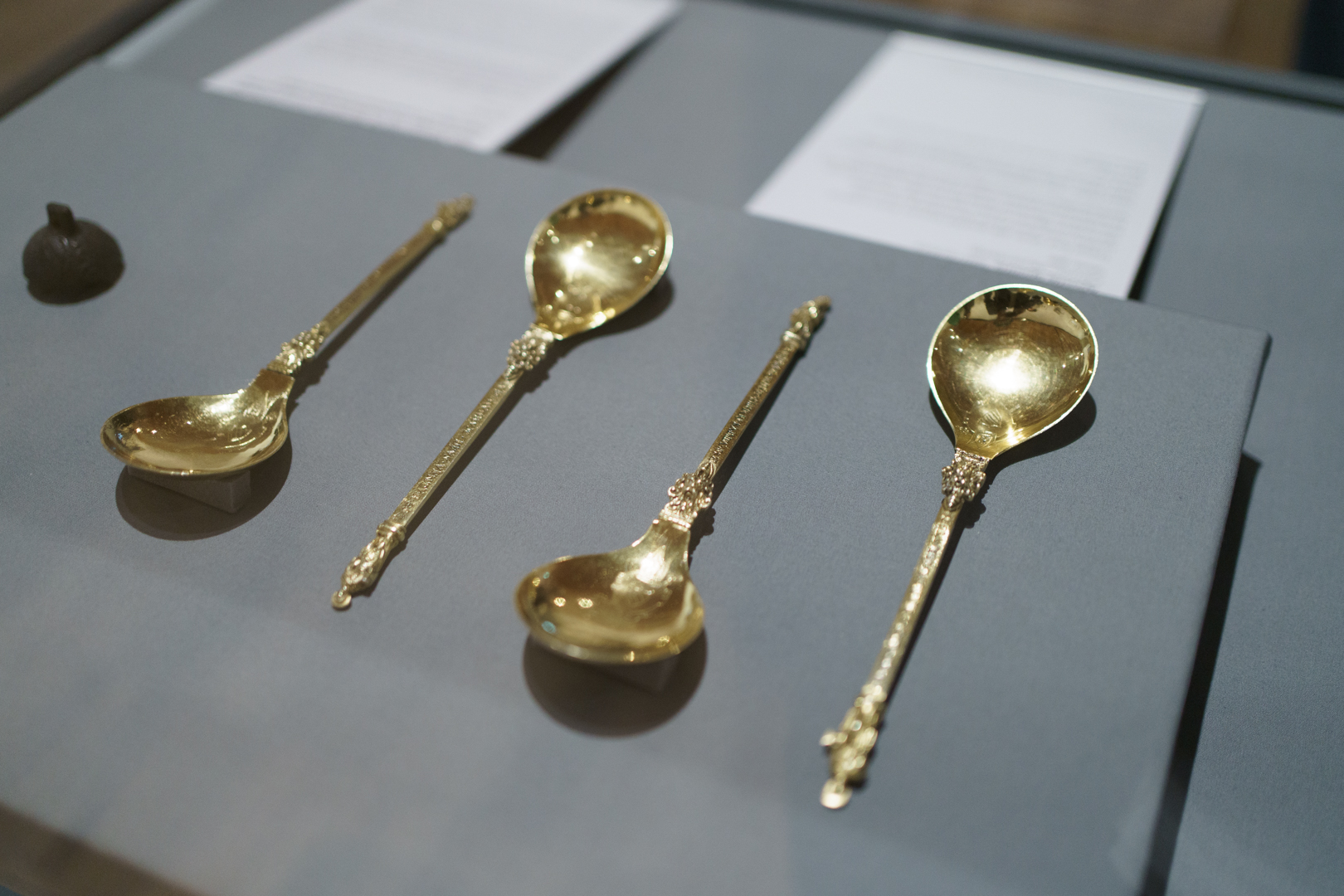
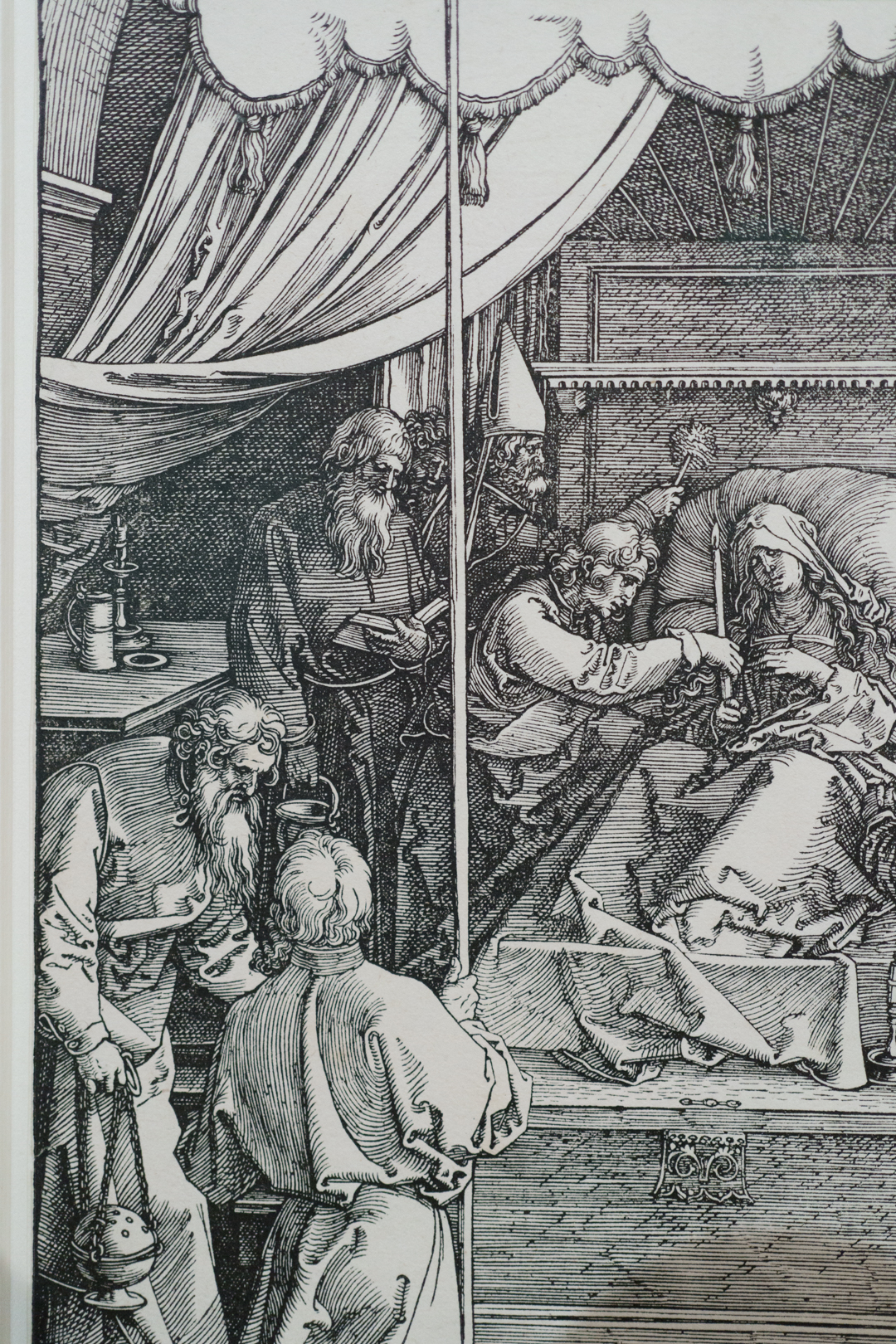
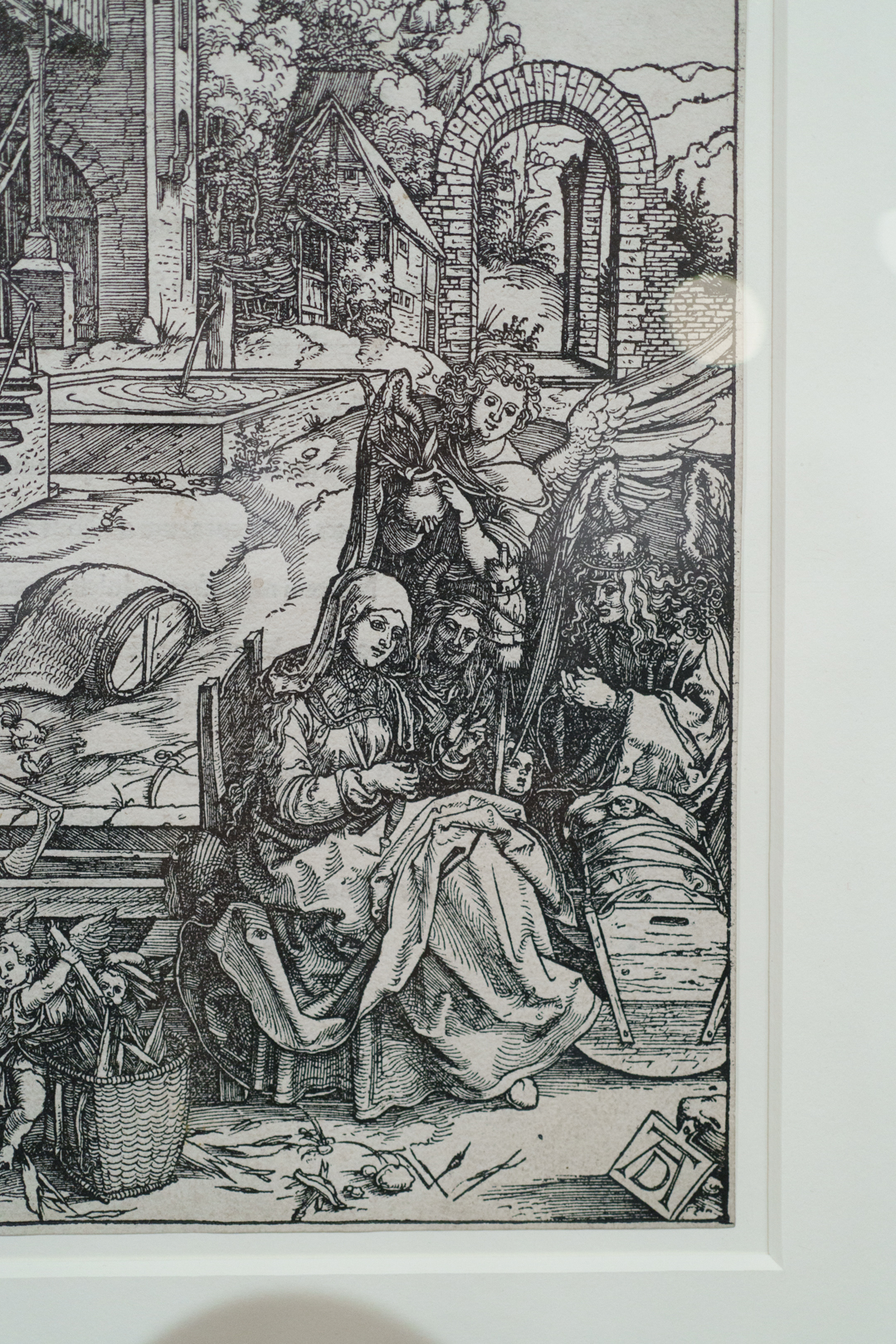
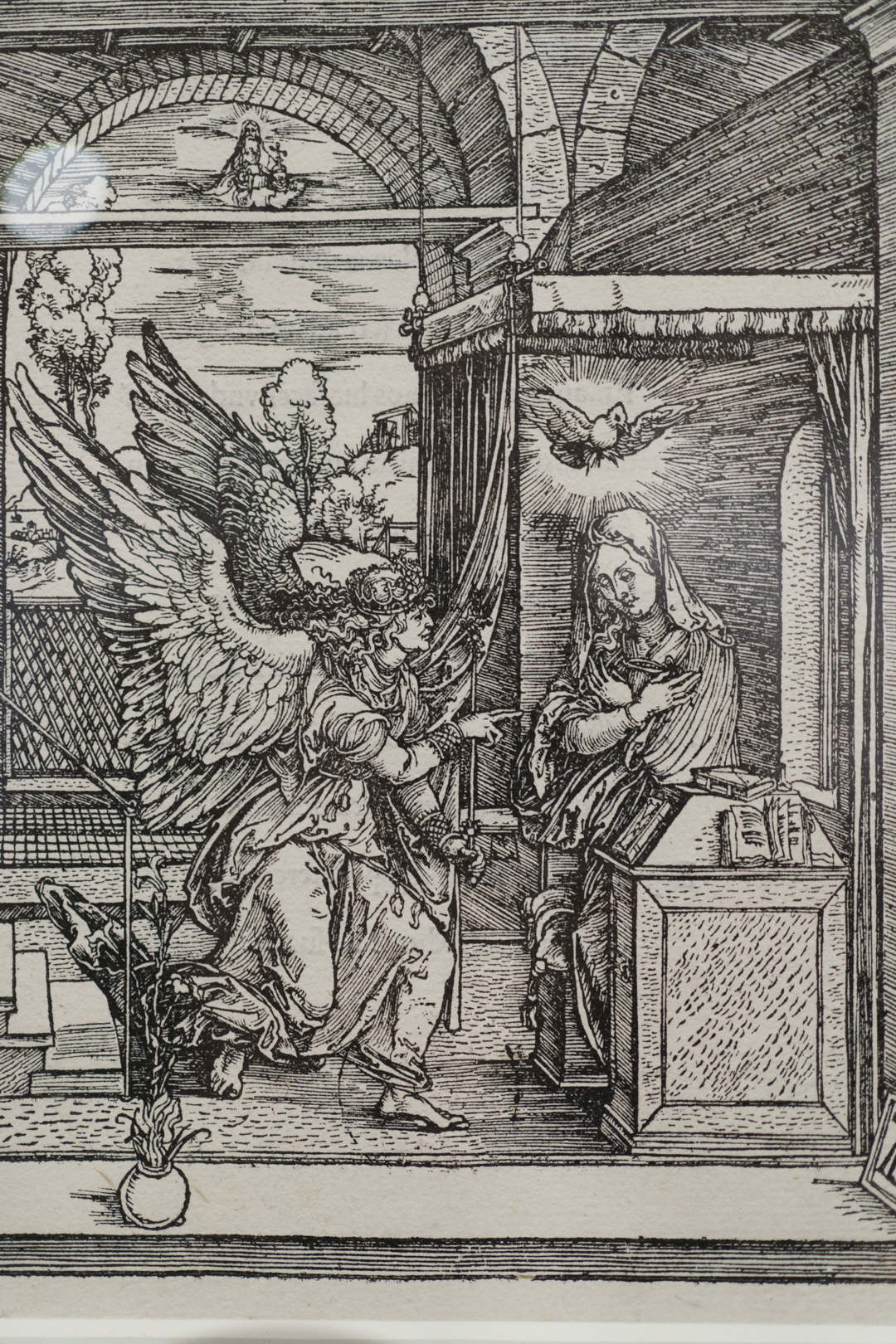
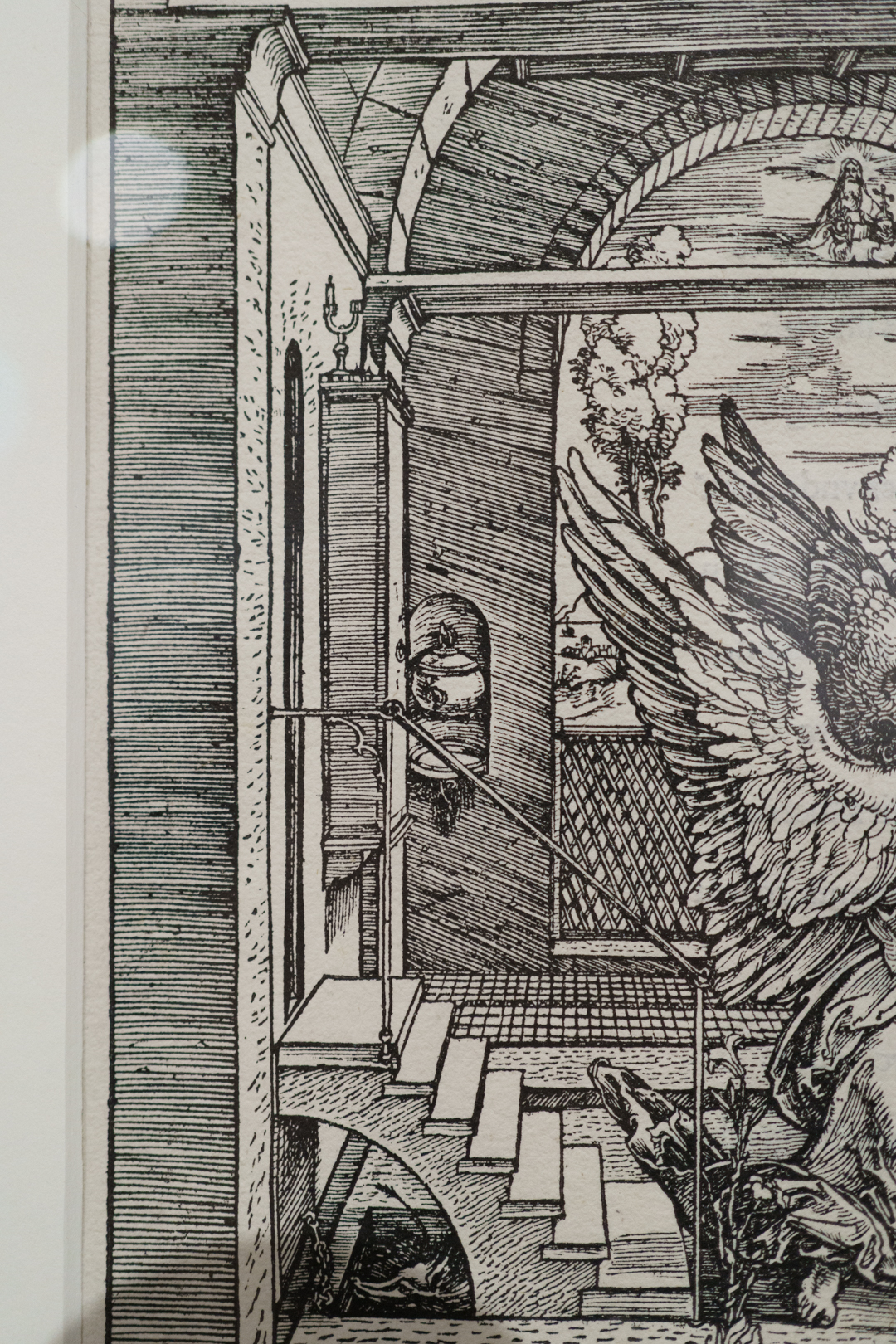
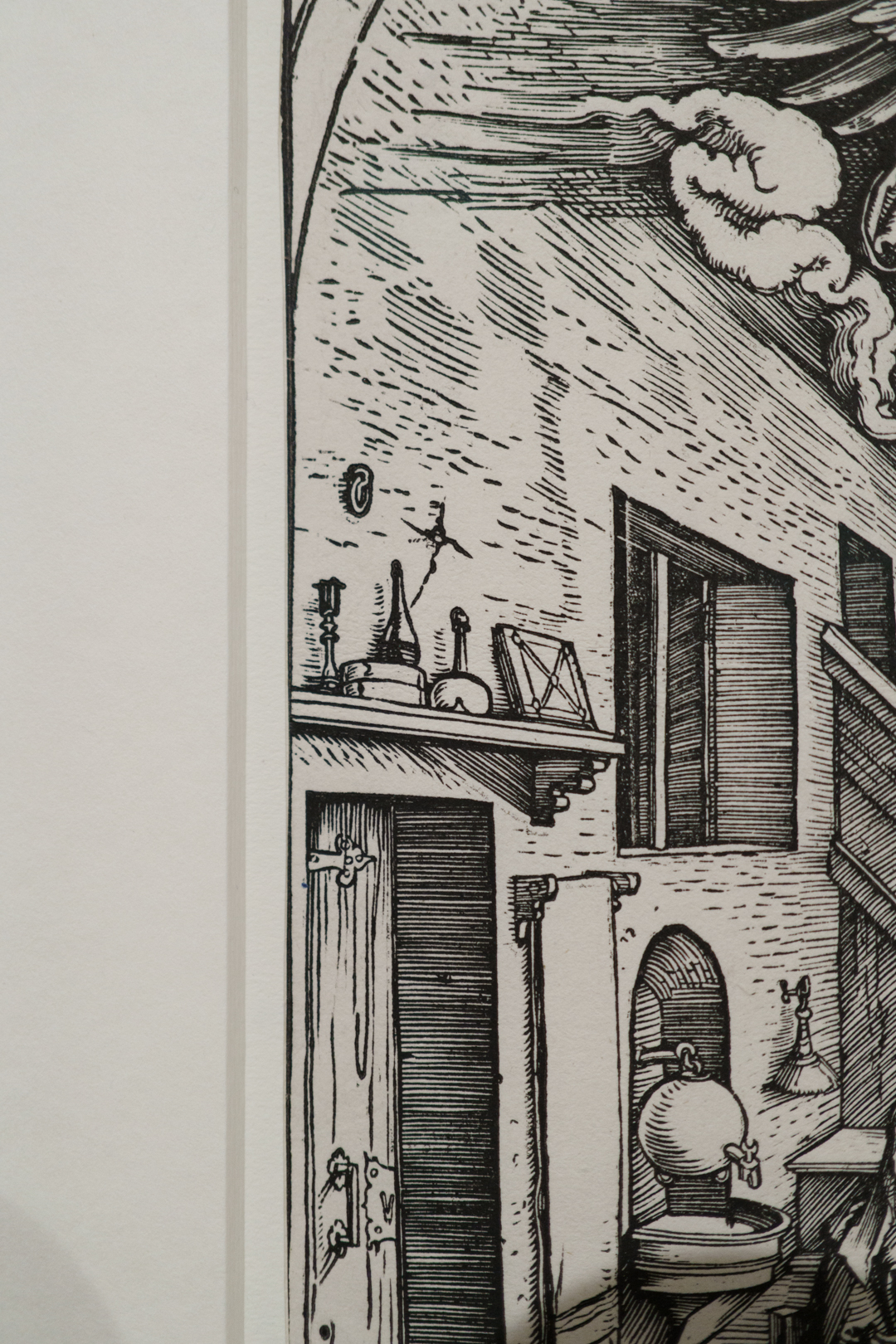
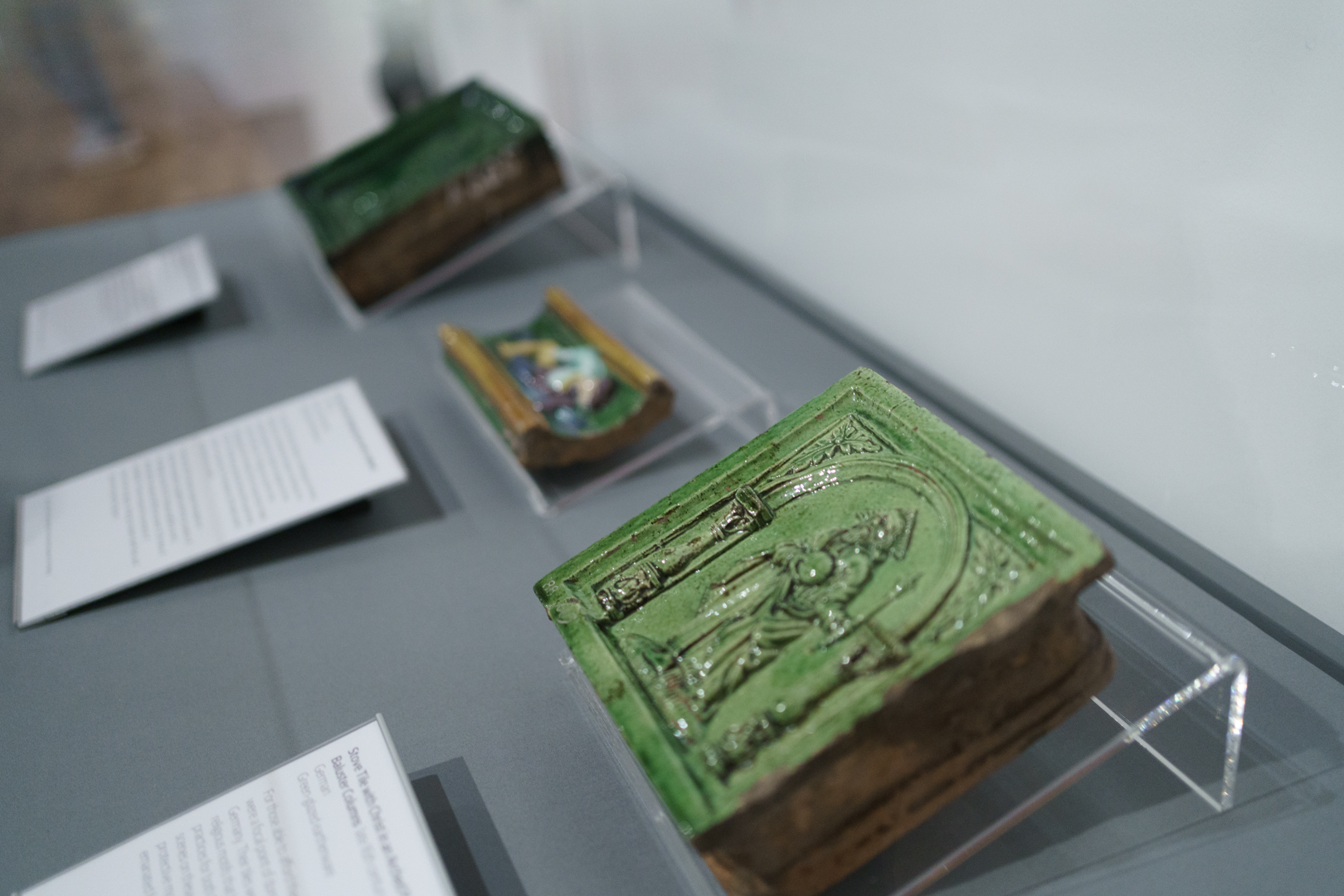
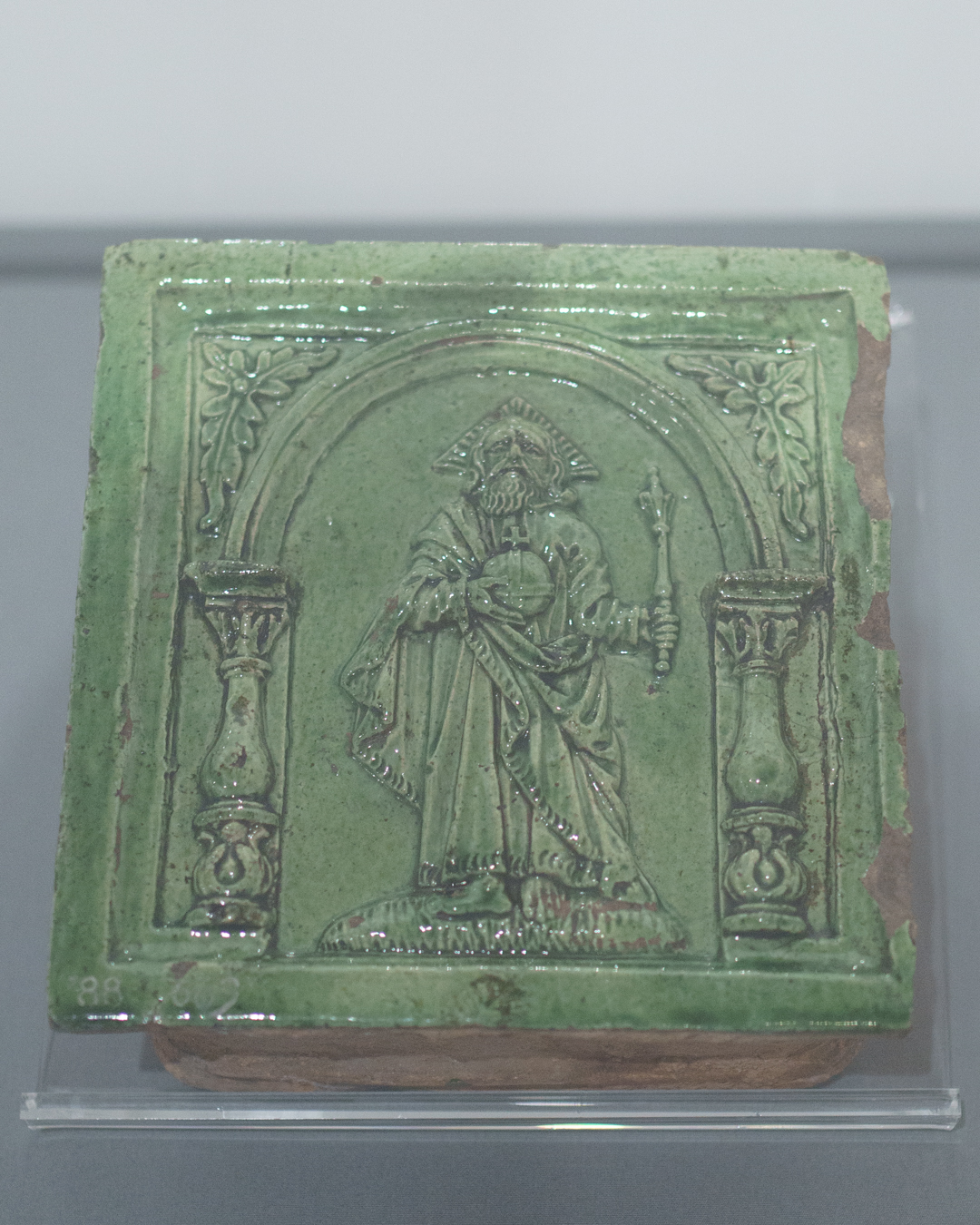
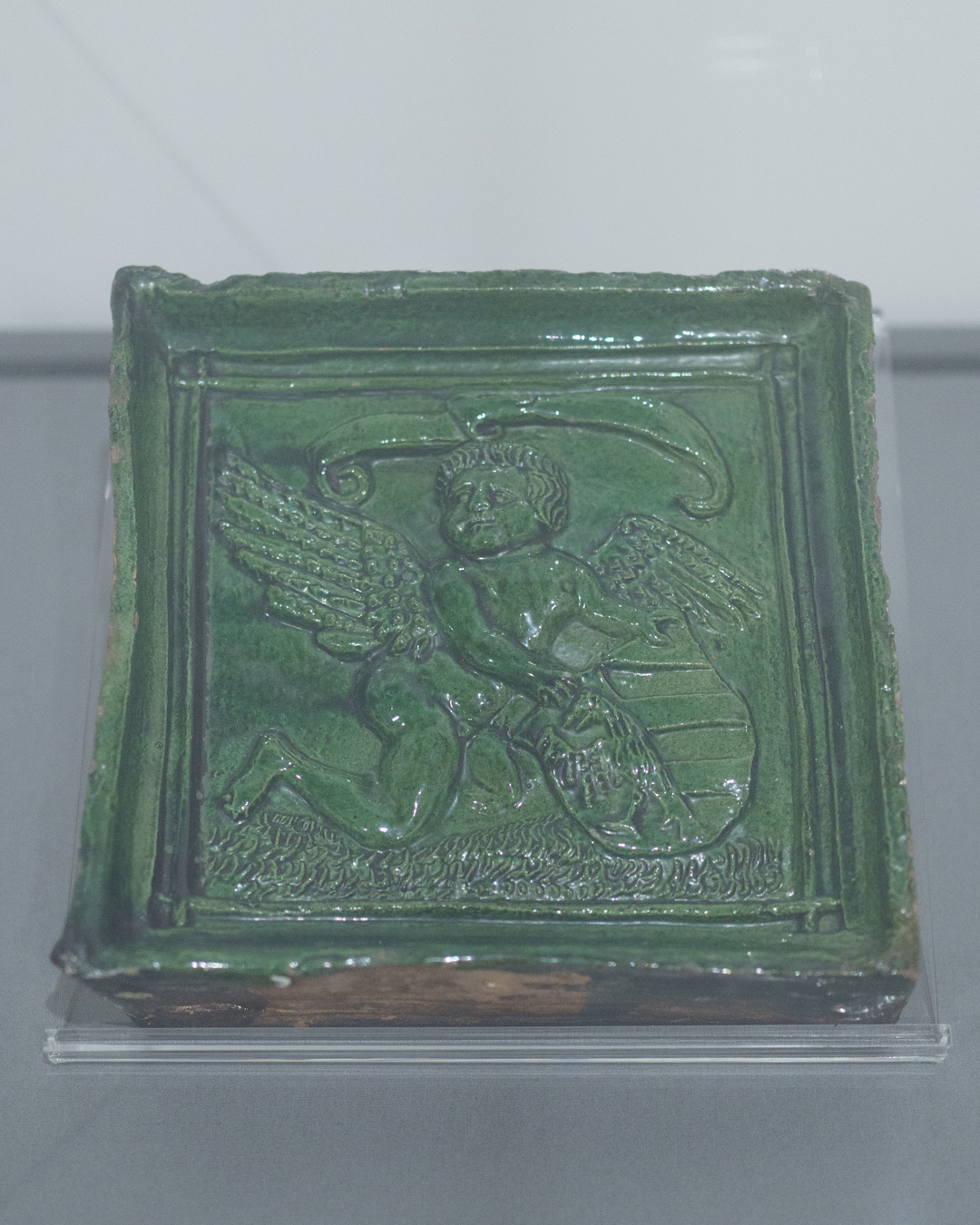
Several beautifully glazed tiles produced in Nuremberg have also been loaned. Here, it is interesting to see how a stove tile’s arched surround is emulated to frame several scenes from the Life of the Virgin engravings.
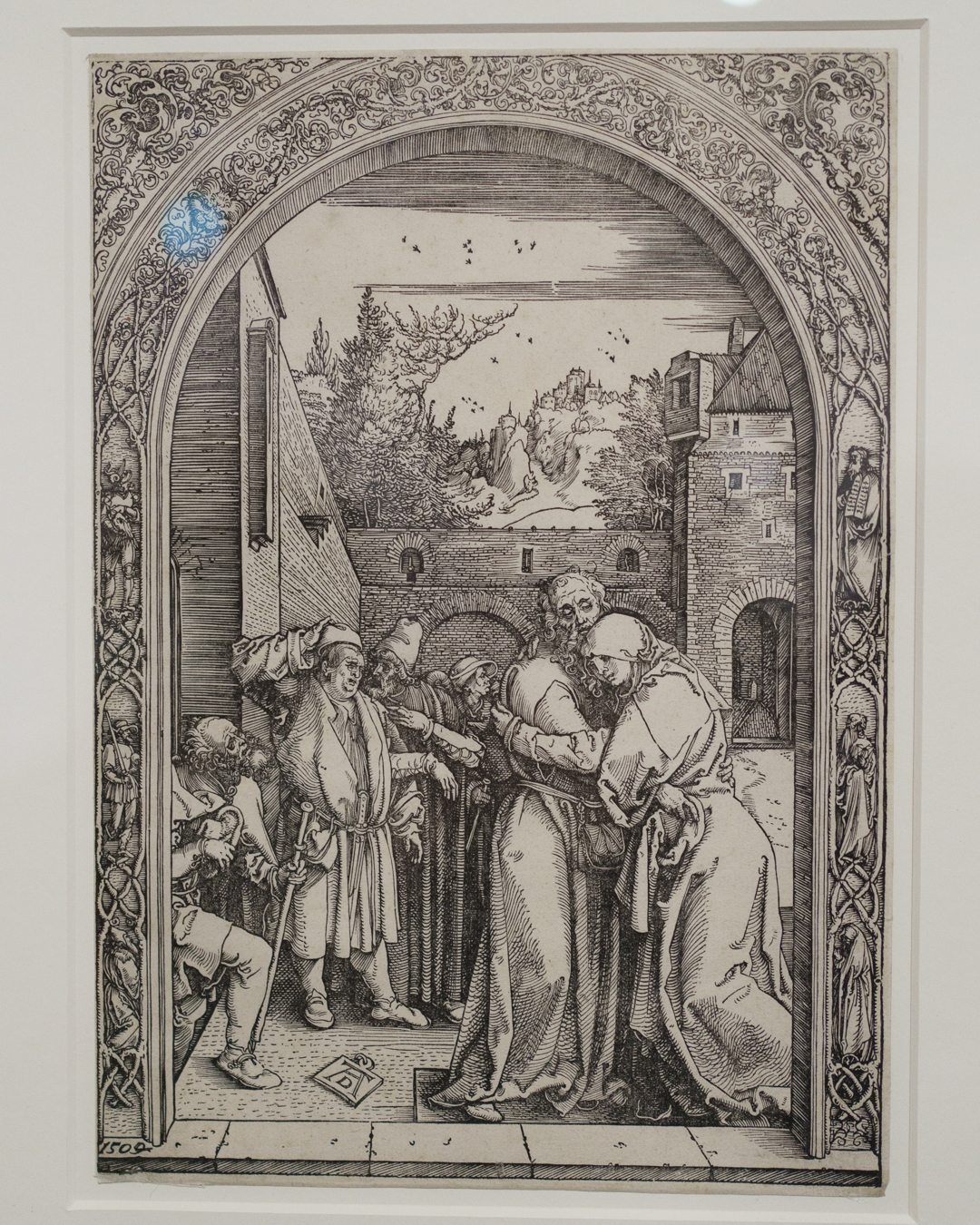

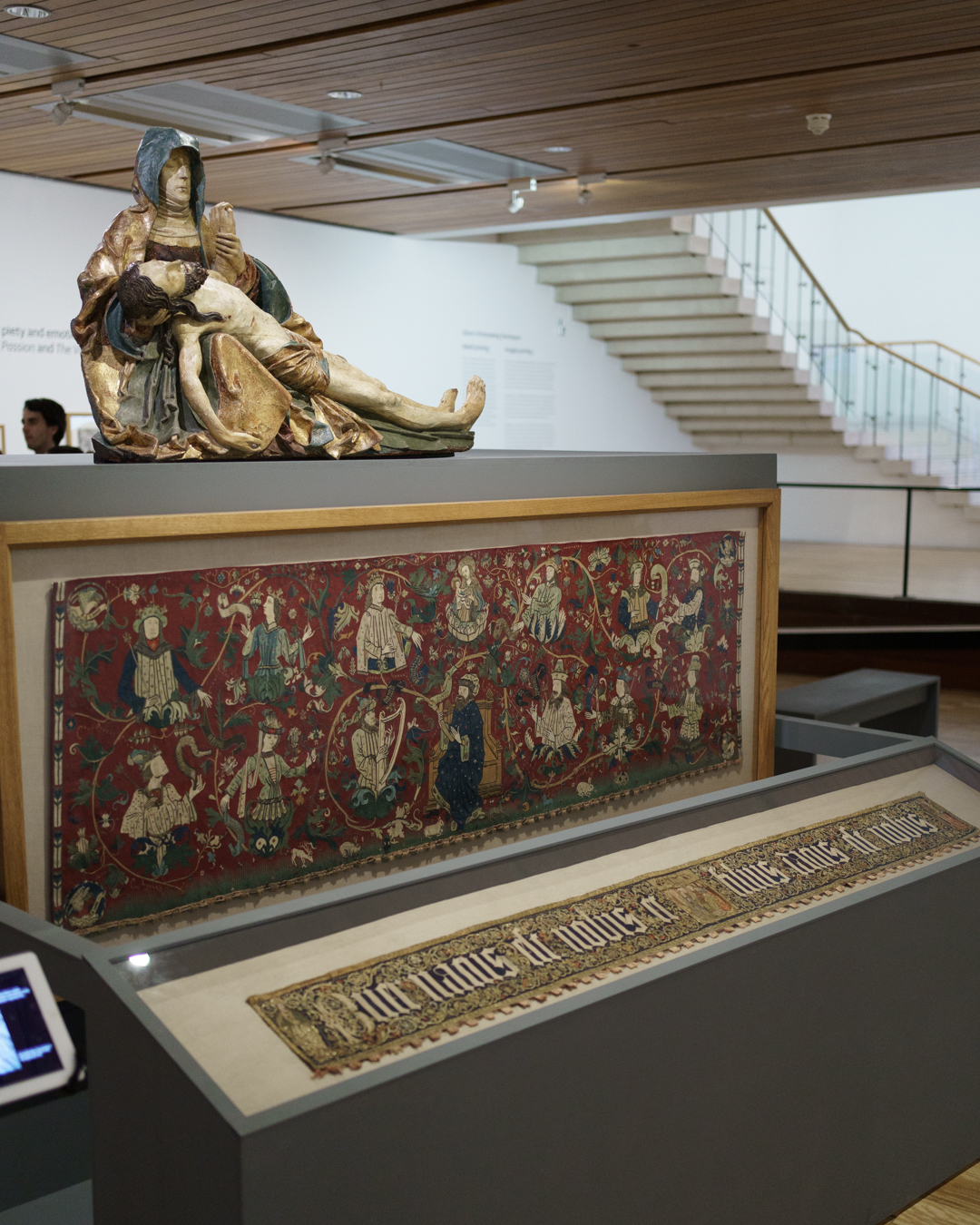
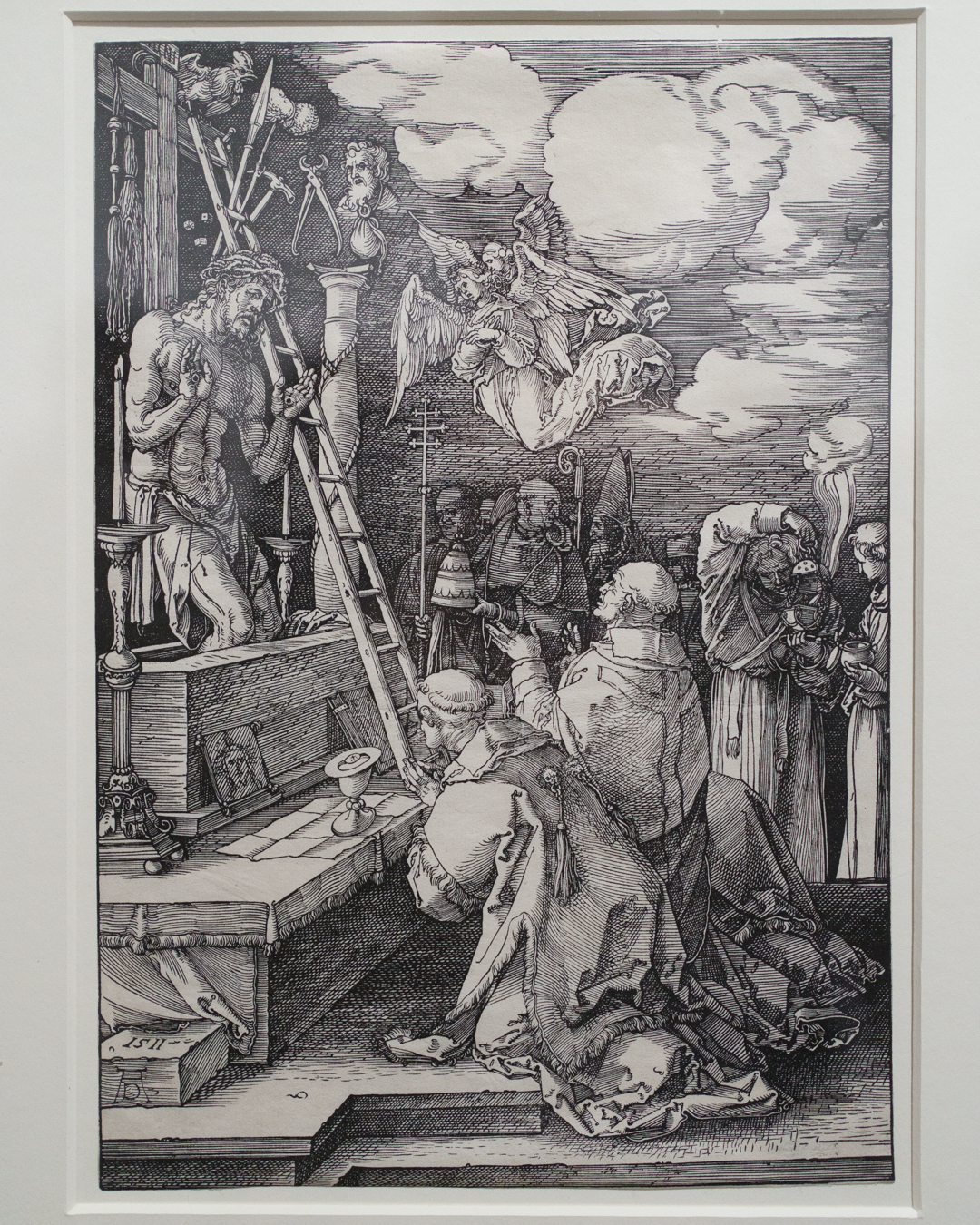
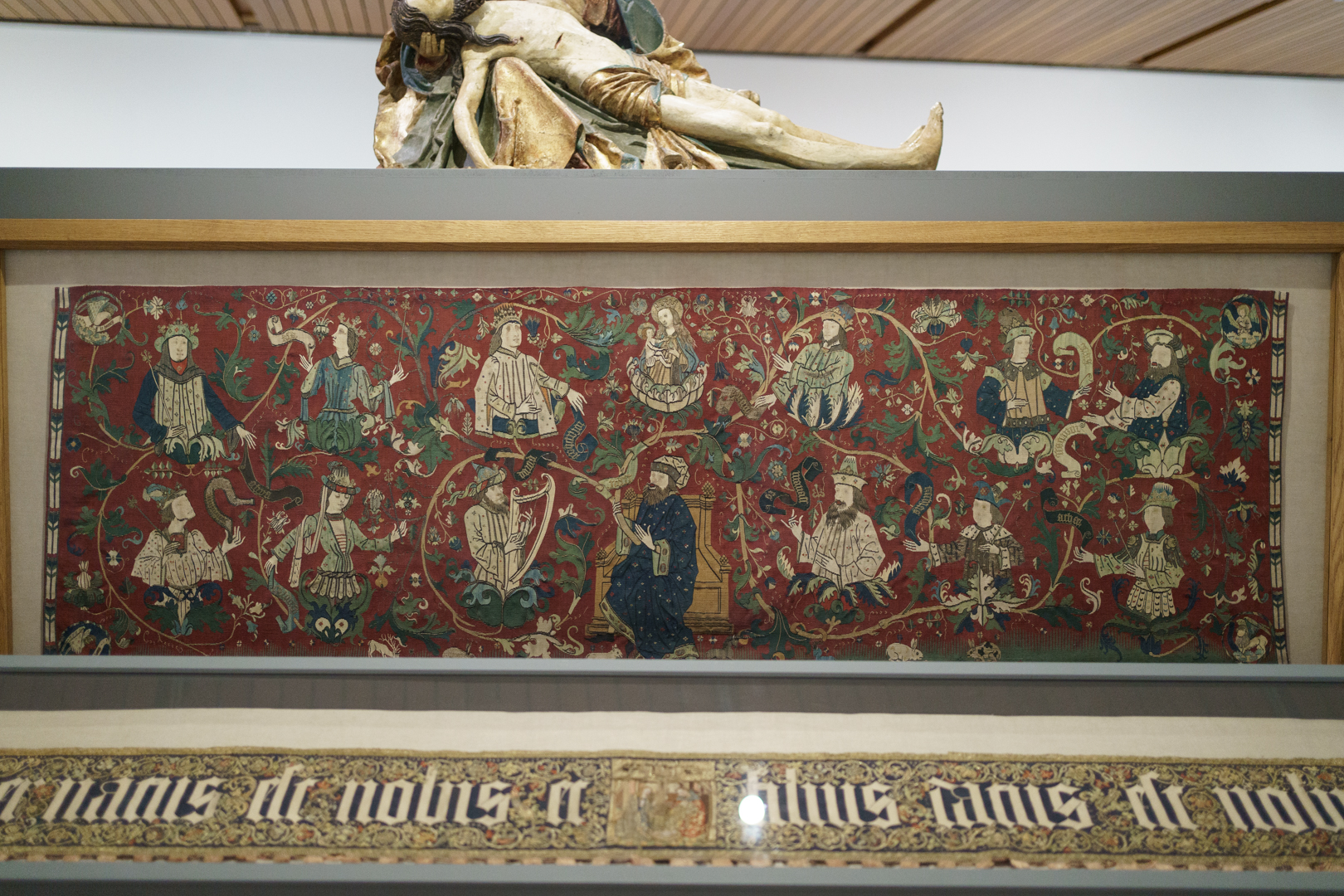
In a clever gesture of life imitating art, an ensemble consisting of a recently restored polychrome Pietà sculpture and embroidered altar frontals – both of German origin – has been made to resemble the kind found in the Mass of St Gregory woodcut displayed on the back.
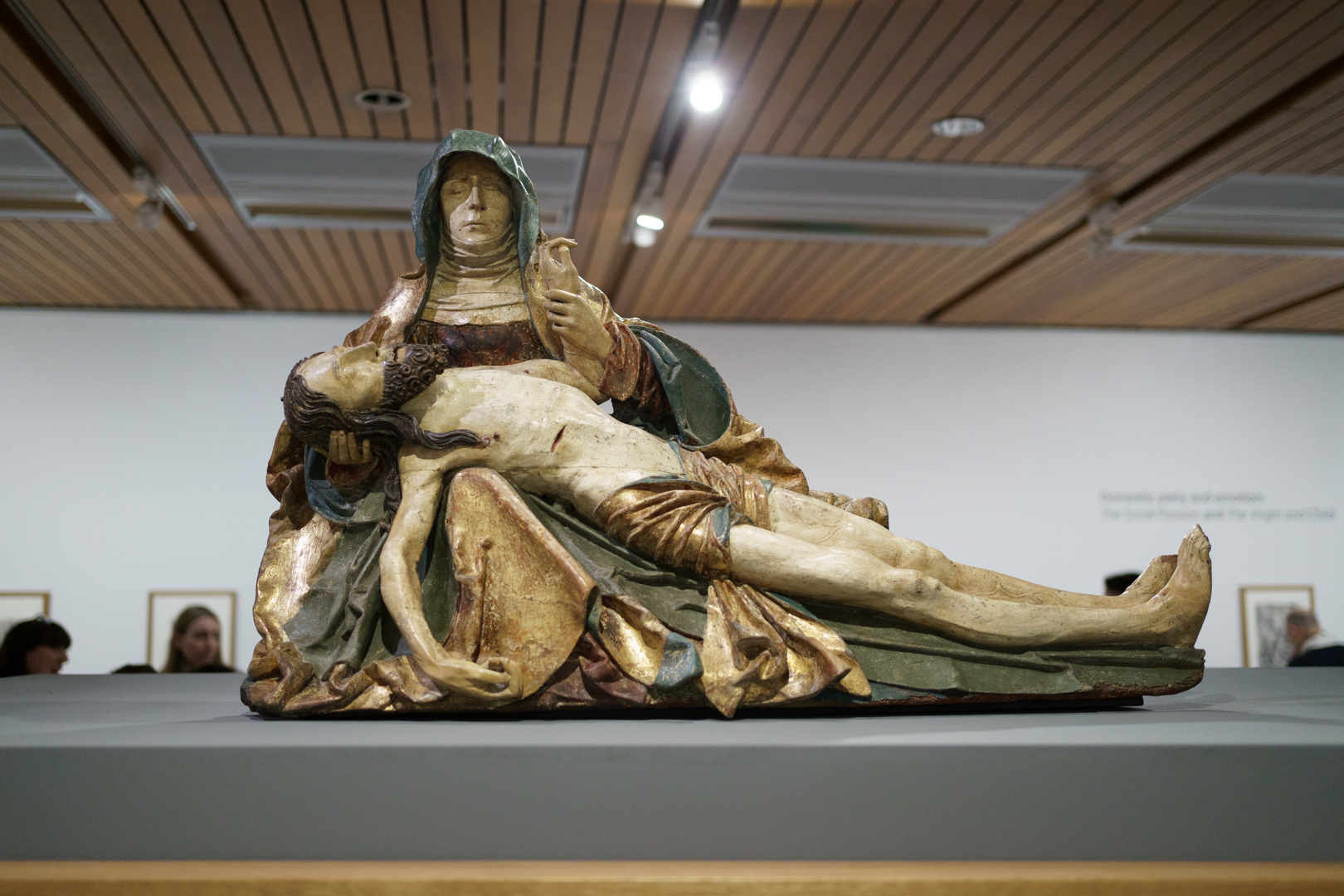

In the second room, scientific, military, and artistic knowledge come together in a grand celebration of Dürer’s erudition and innovation, portraying him as a kind of polymath.
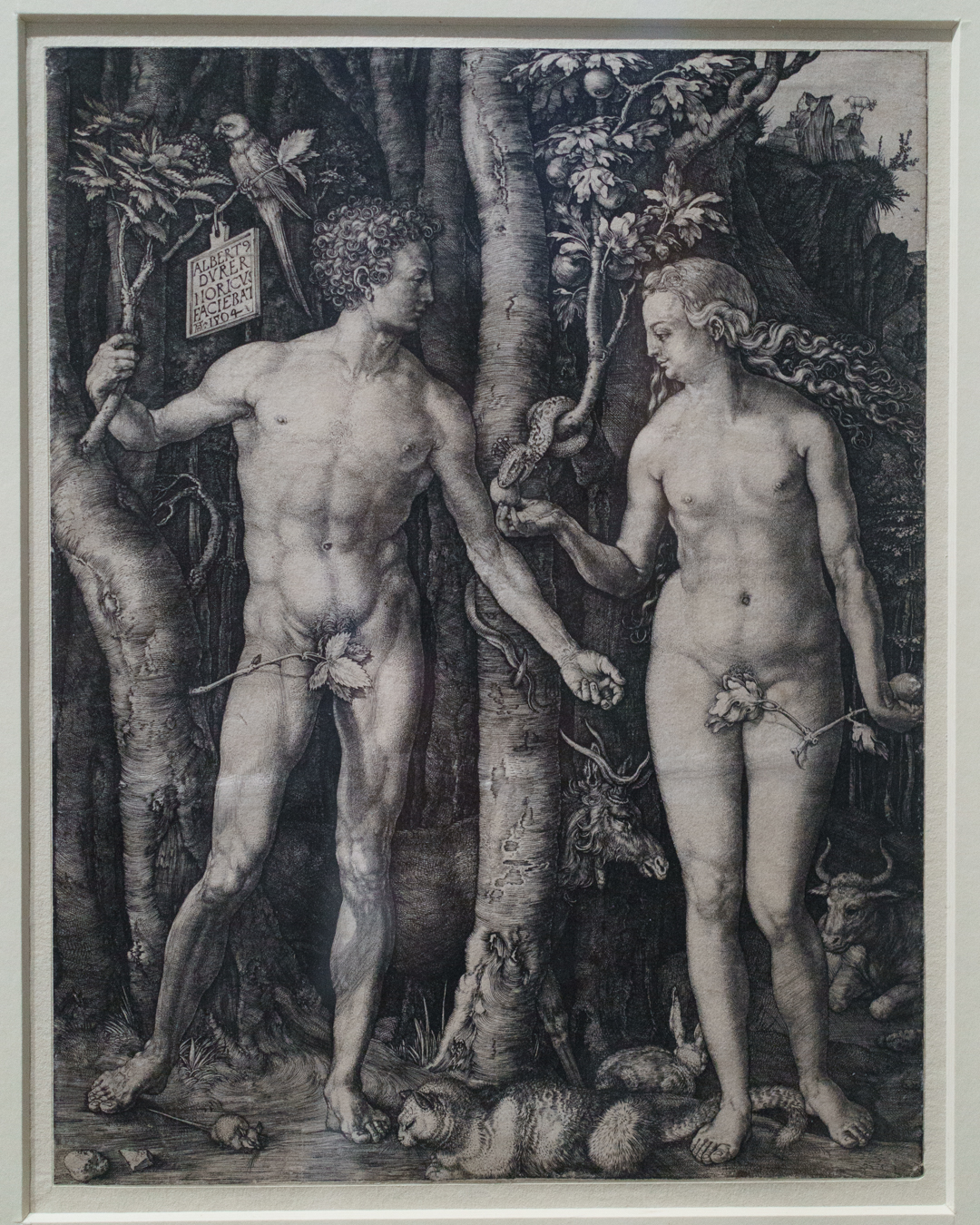
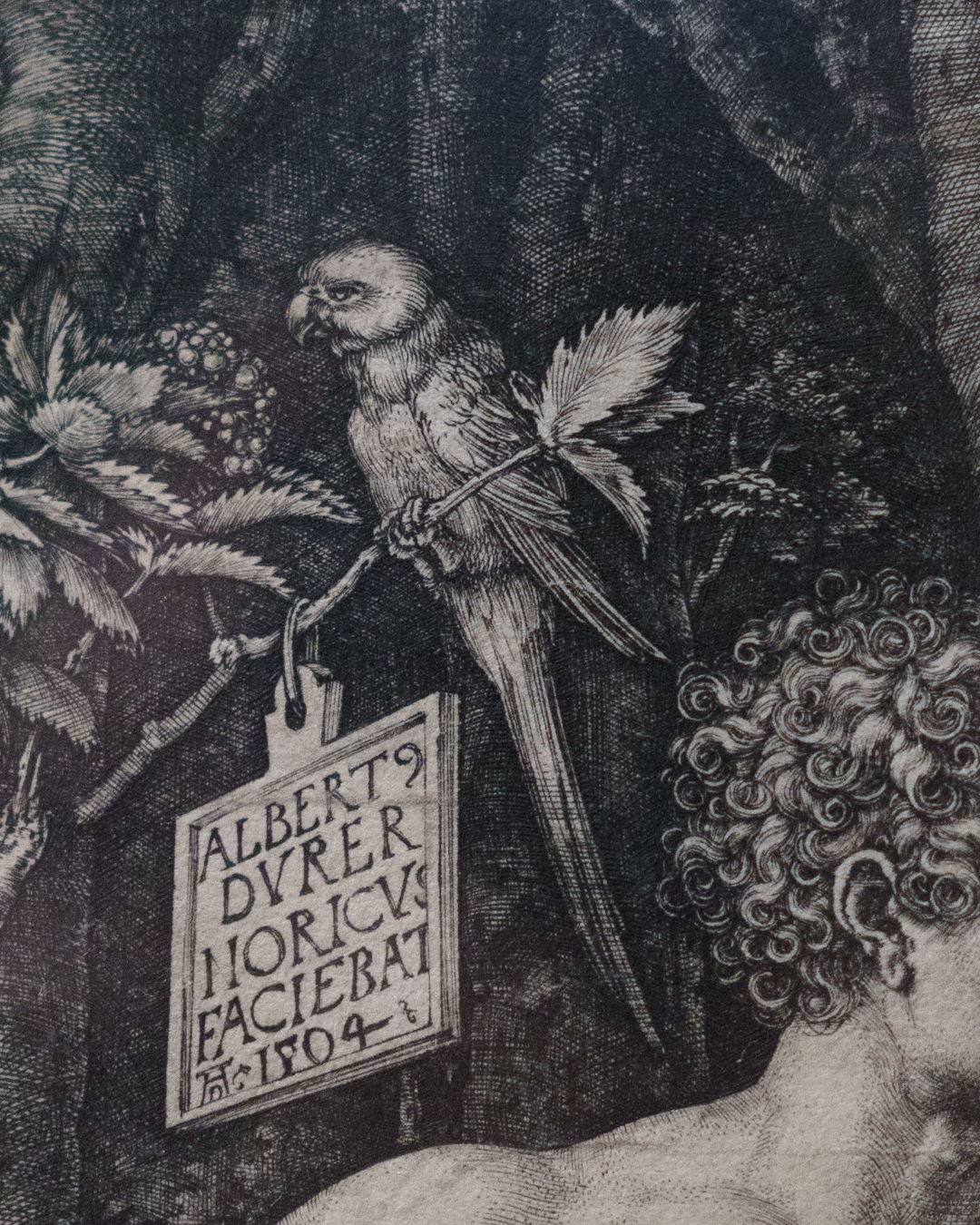
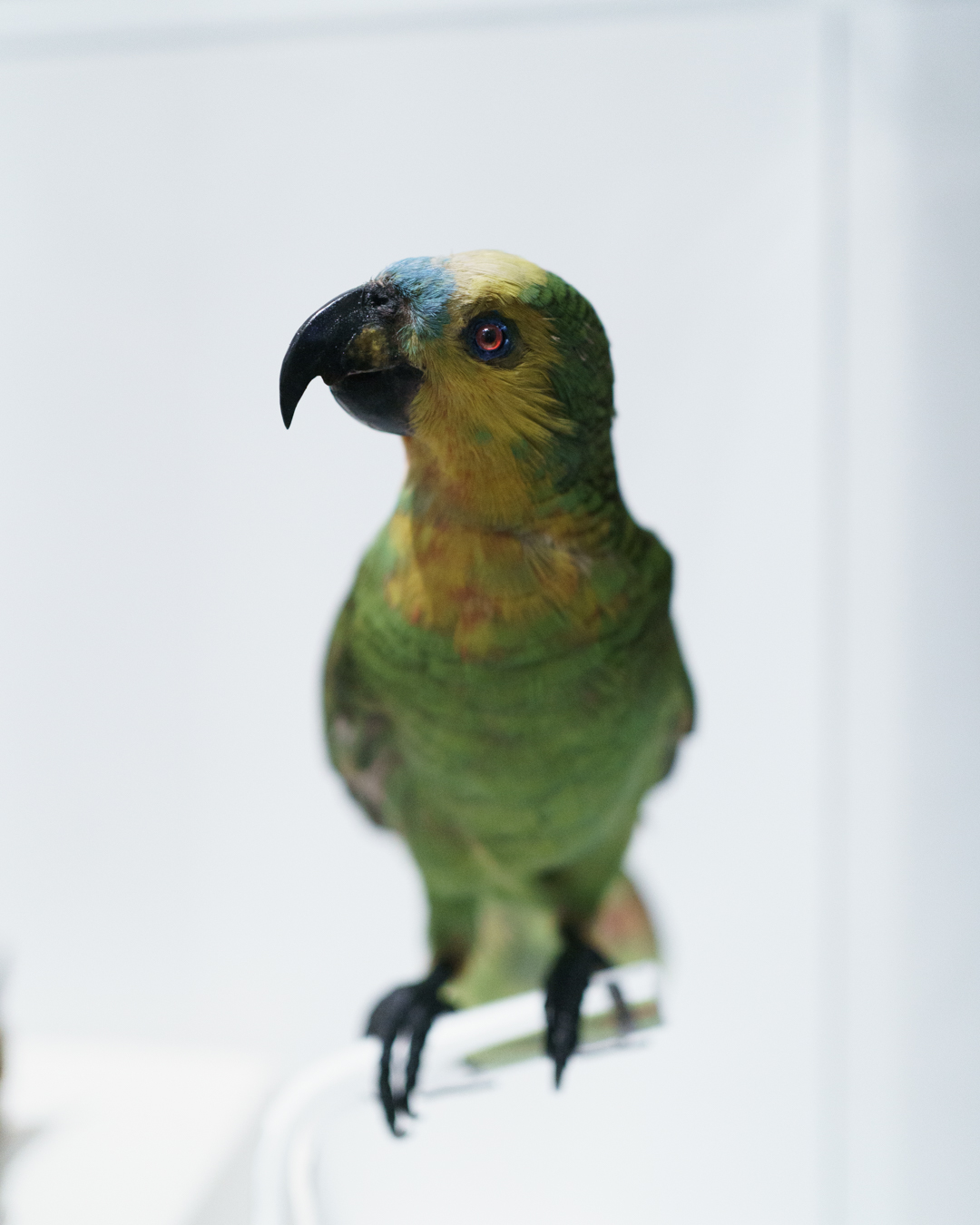
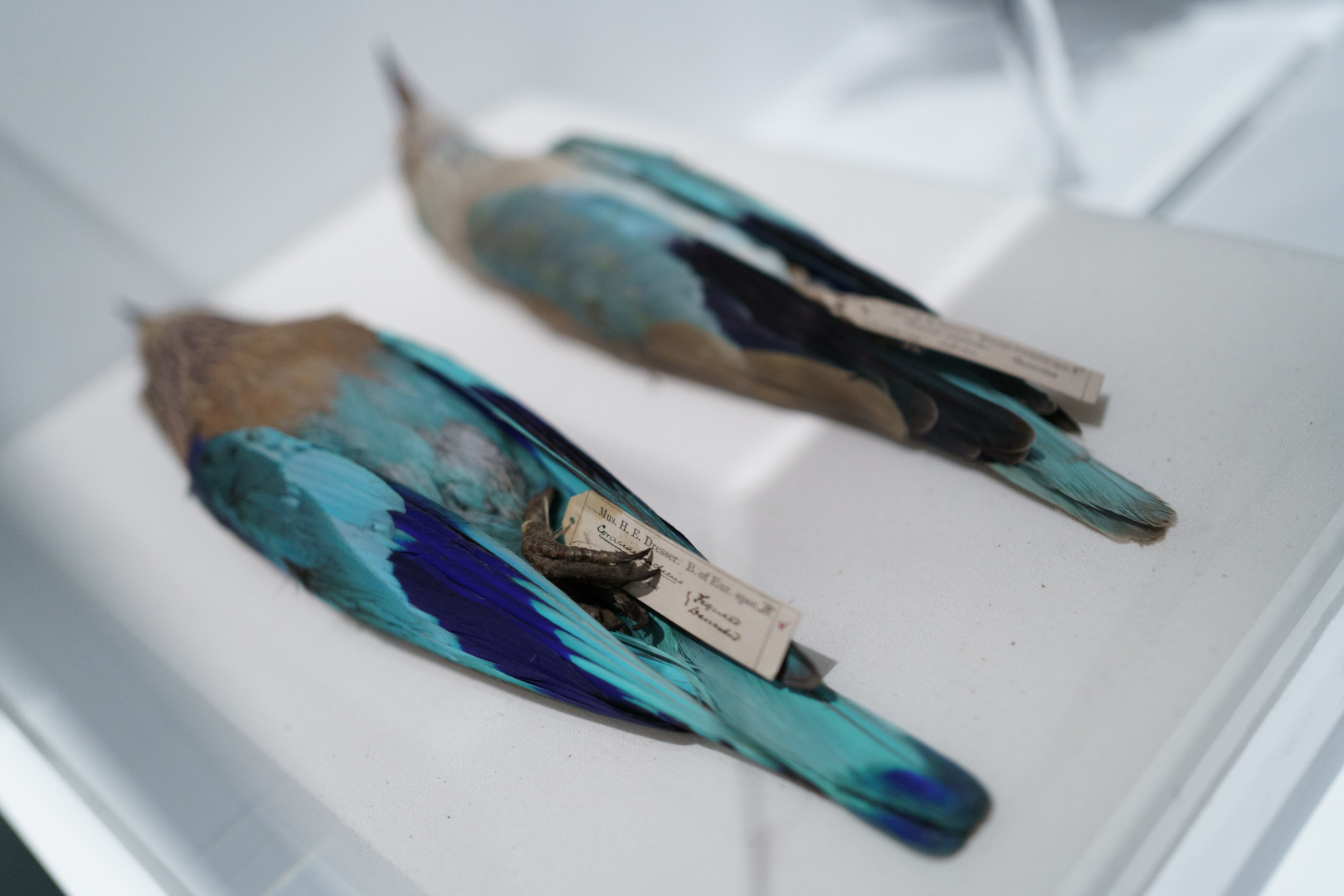
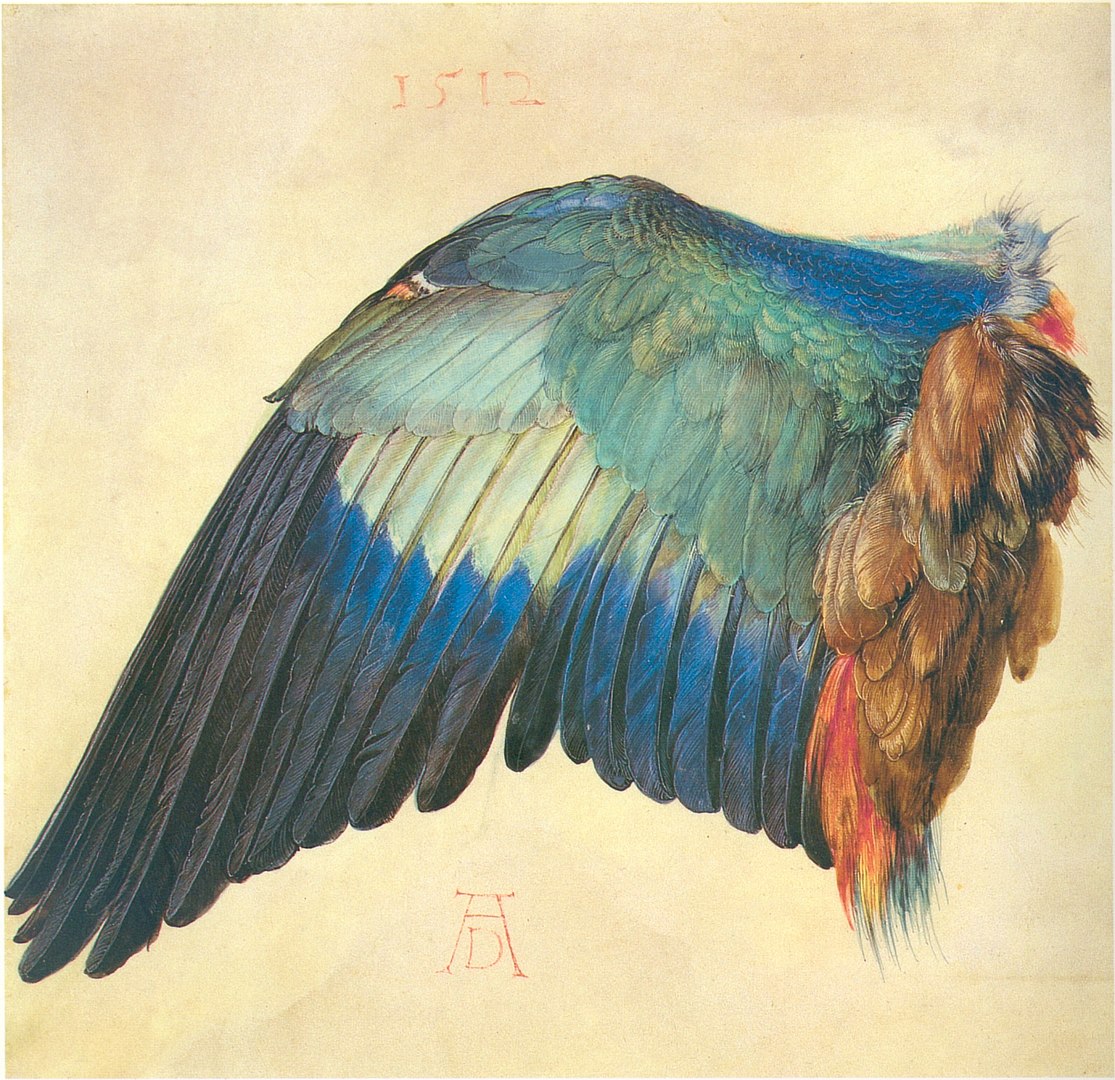
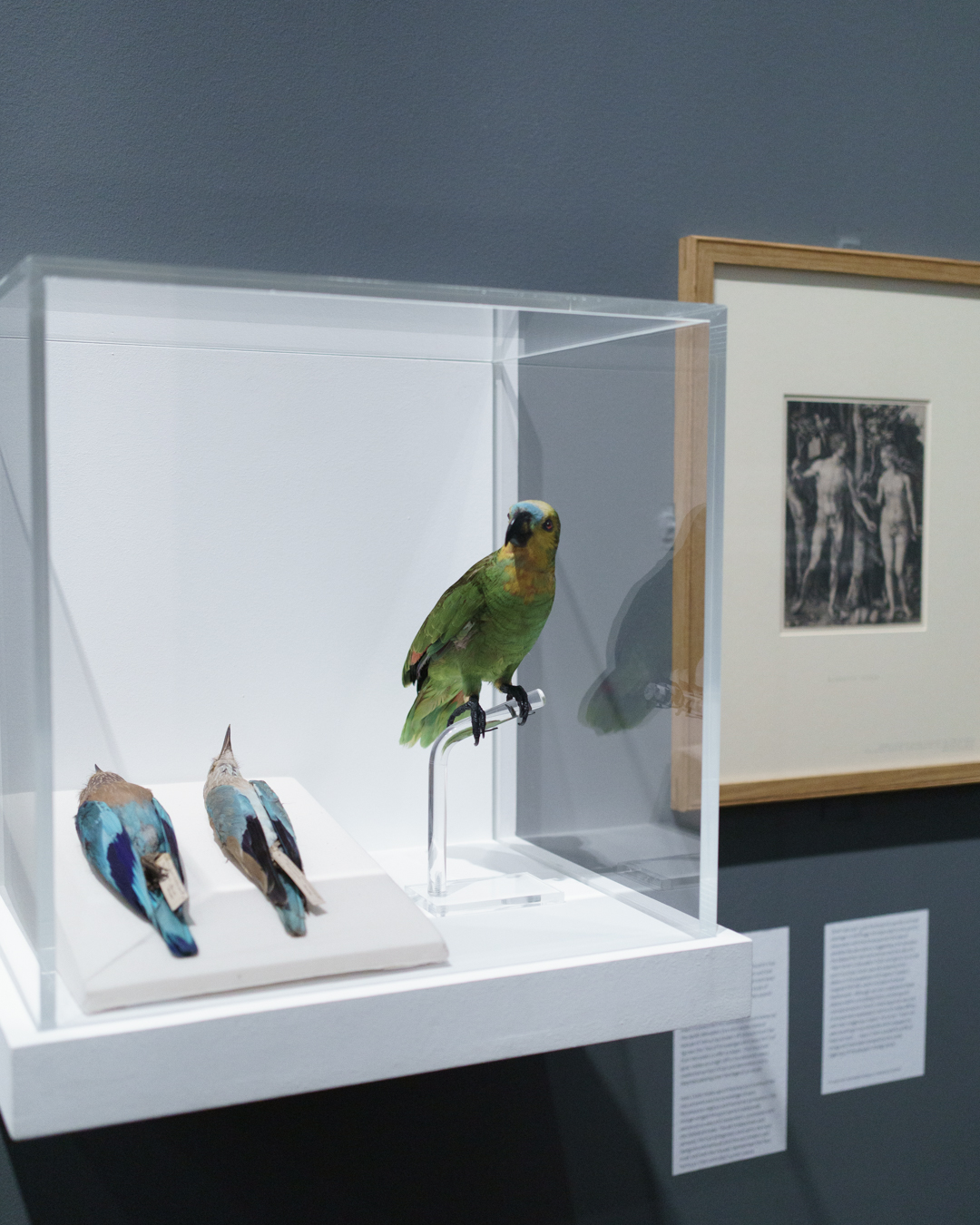
While some may question why the brass Adam and Eve bowl wasn’t accompanied by the related engraving, it is because they decided to display them latter with the exact breed of orange-winged parrot found above Dürer’s monogram, an unexpected but welcome pairing. Next to it, a European roller and Indian roller pay homage to the artist’s watercolour studies of a blue roller (Albertina, Vienna).

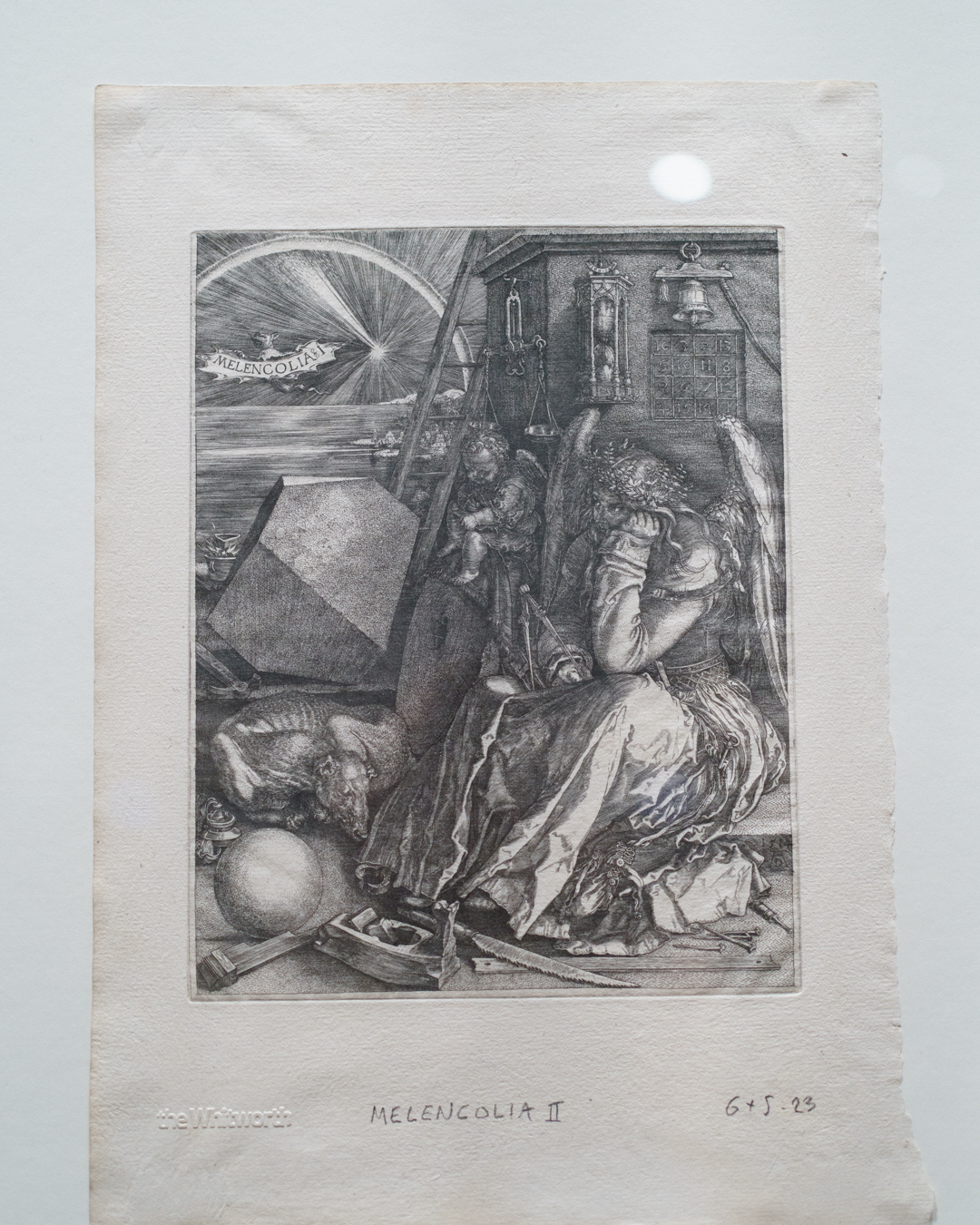
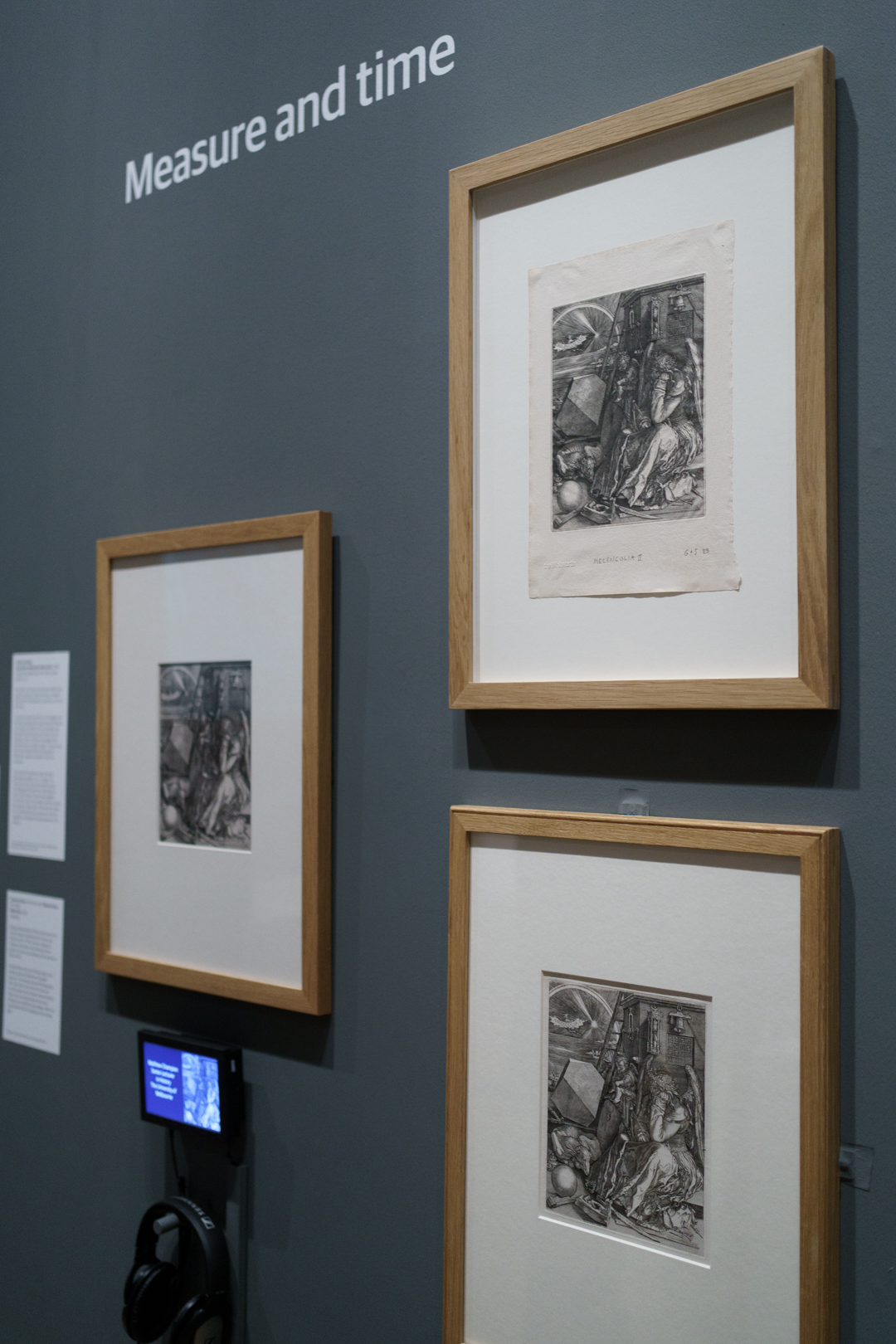
There are so many interesting groups here. A selection of timepieces and astronomical devices accompany one of Dürer’s hemisphere woodcuts and three separate impressions of Melencolia I. However, one of these impressions is in fact a contemporary printing by Goldin+Senneby from a recreated plate based on an original impression, officially dubbed Melencolia II-XIX with the Whitworth’s blindstamp; this new edition of 18 (printed on 16th-century paper) can, in fact, be purchased for £5,000 at the time of writing.


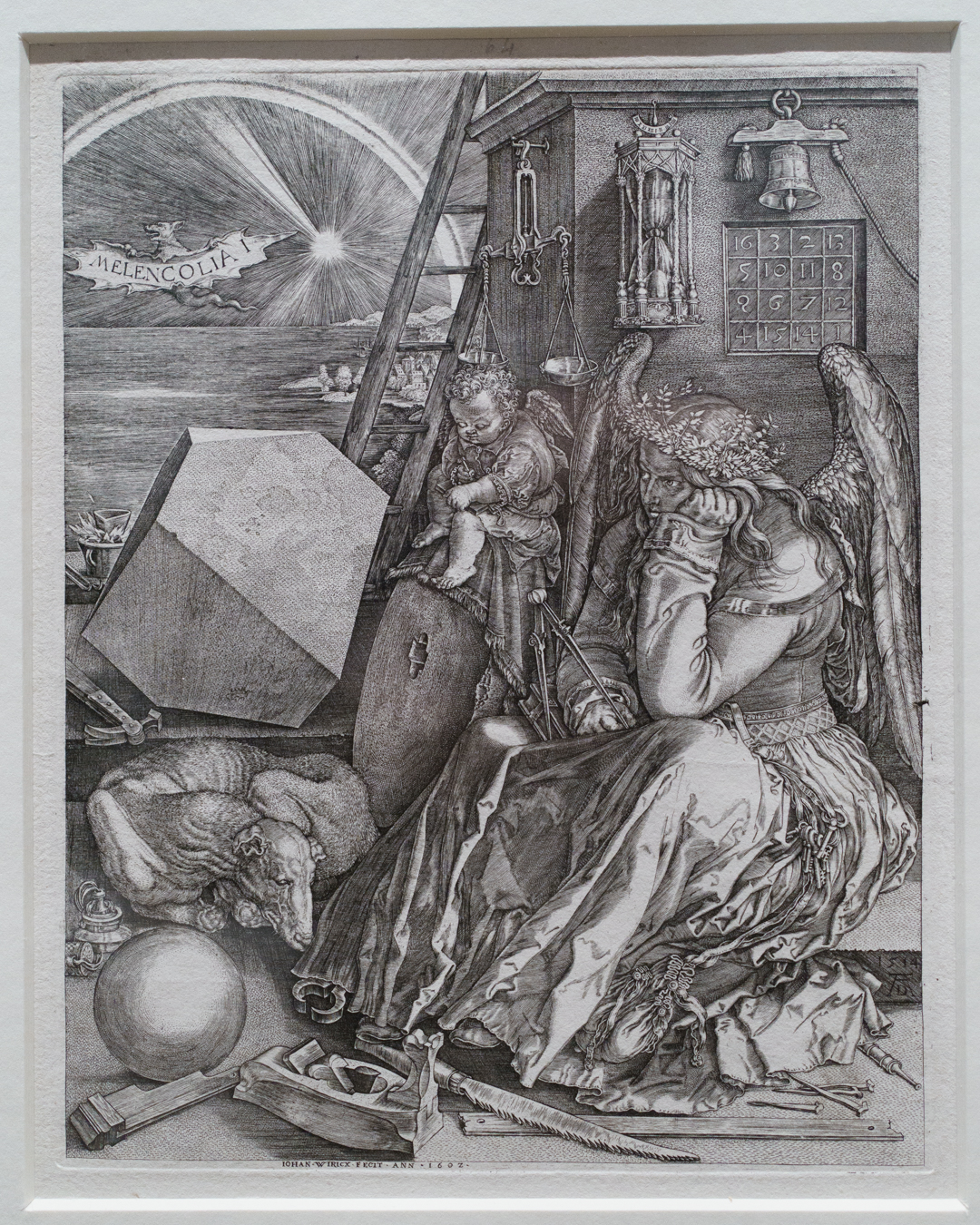
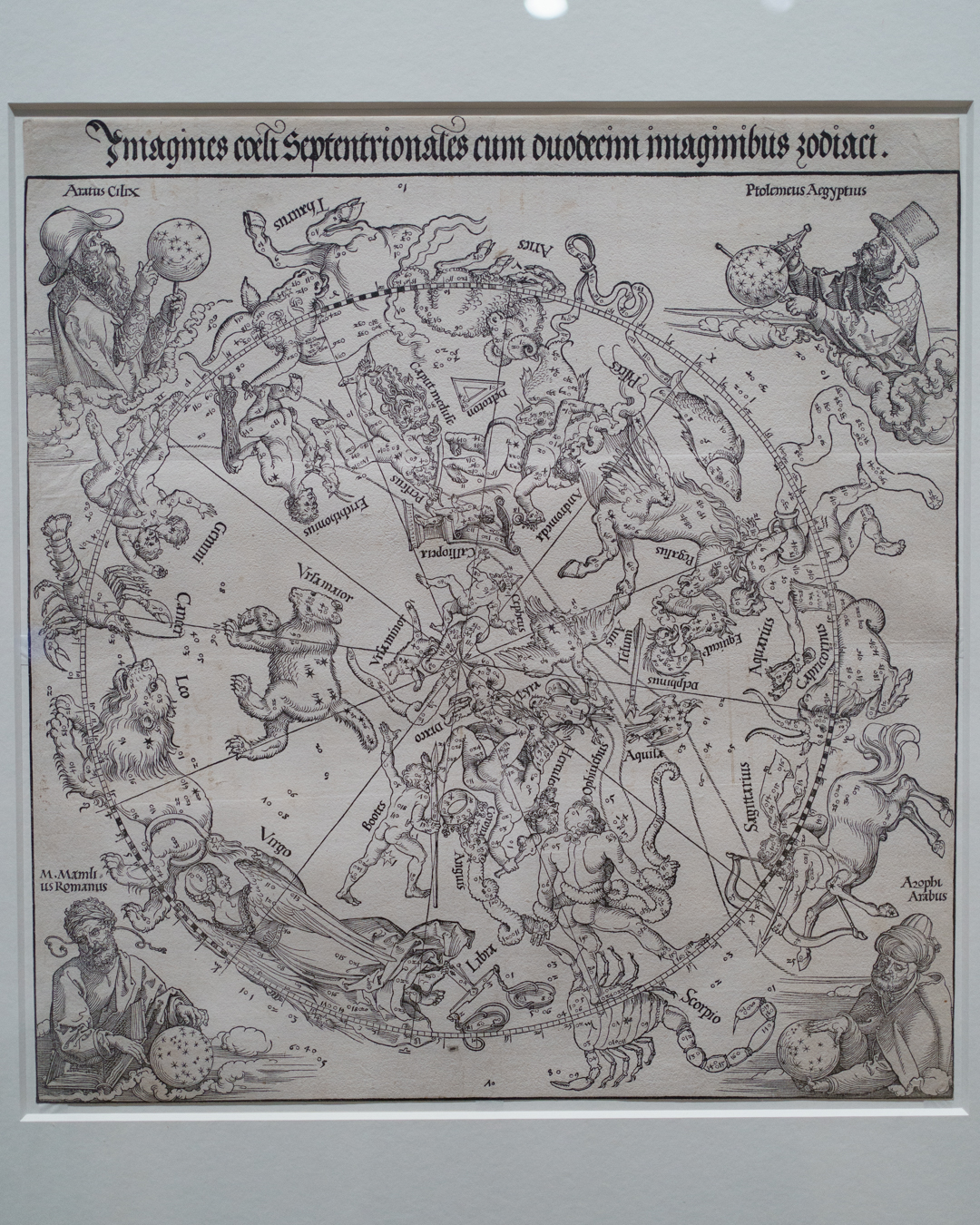
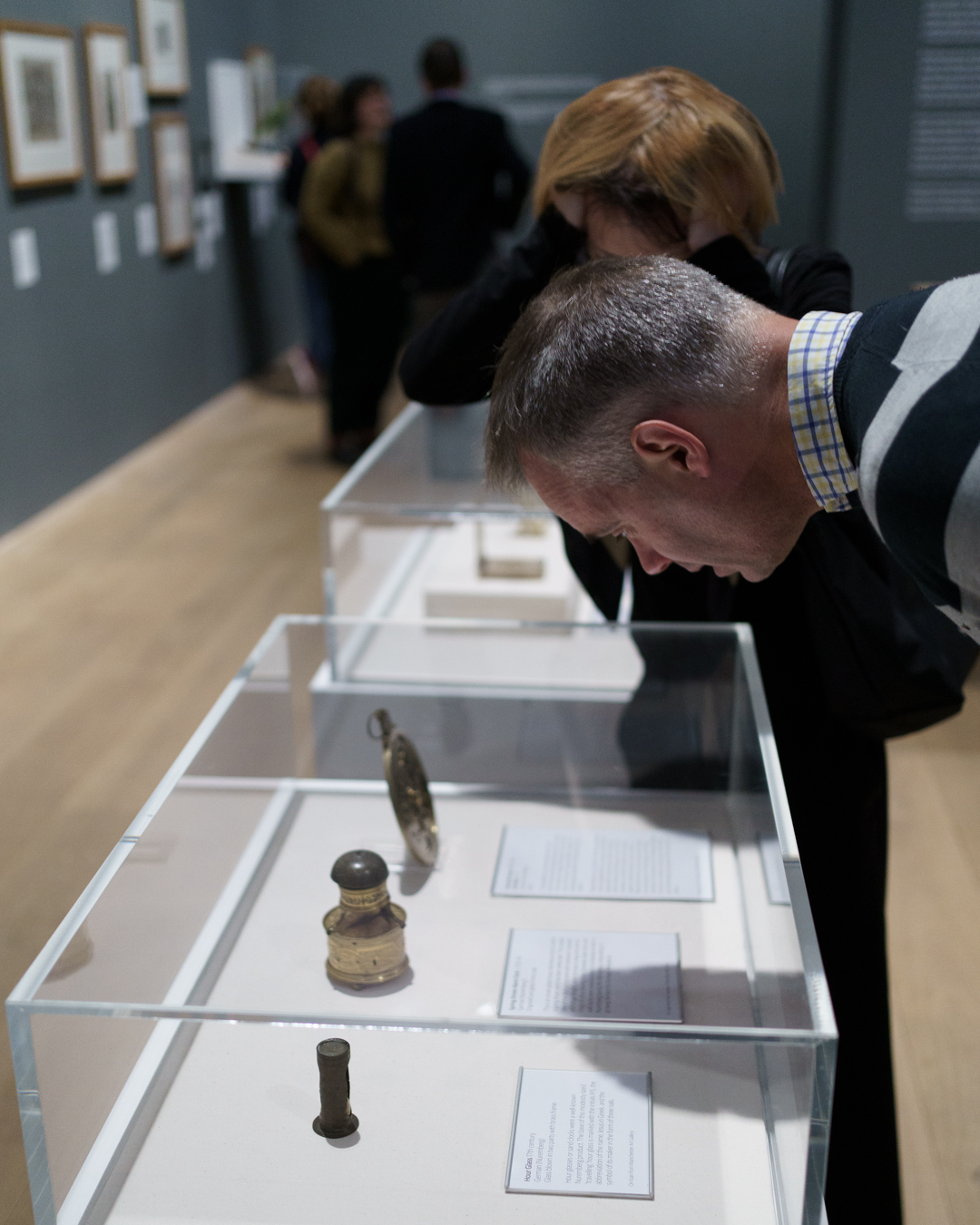
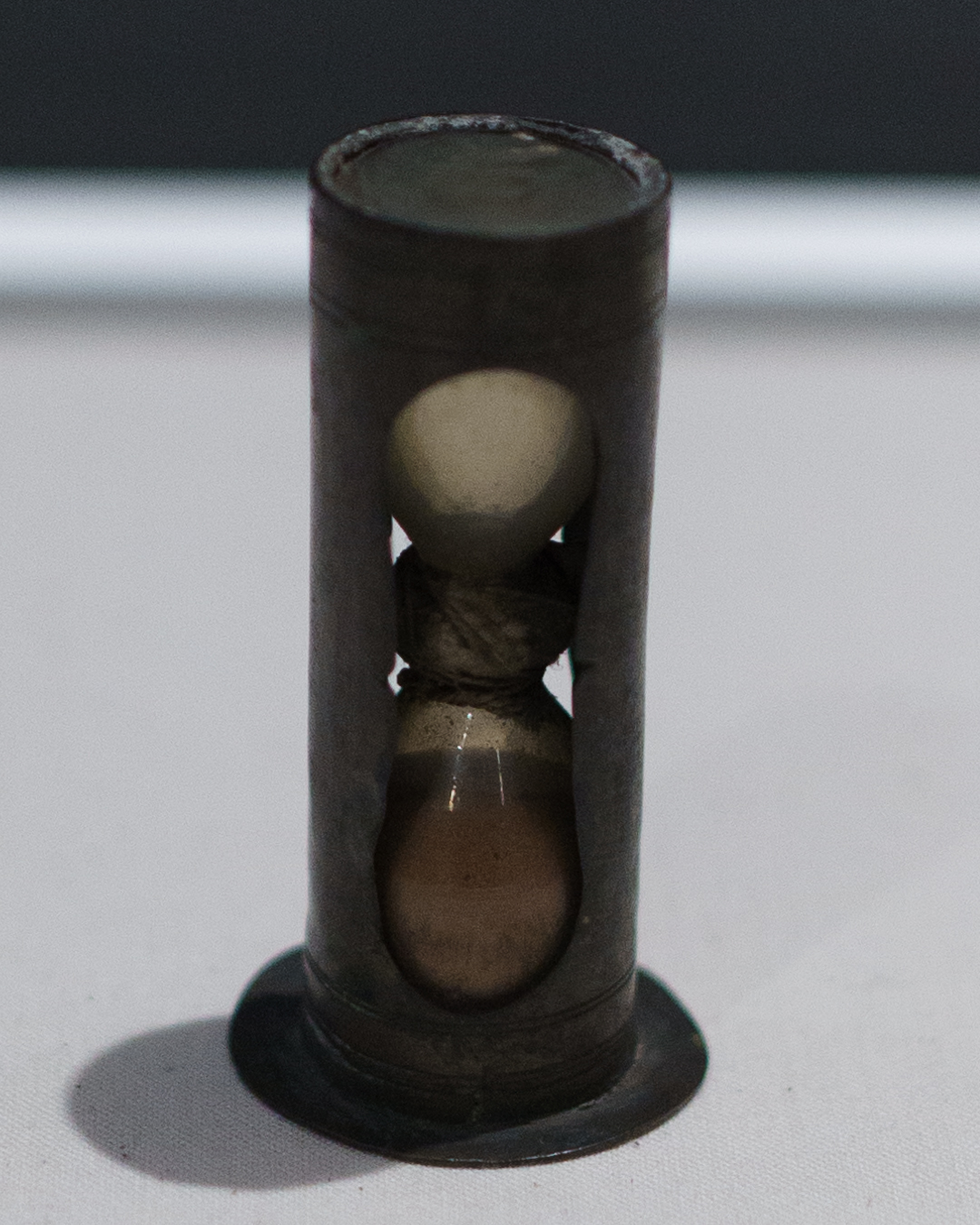
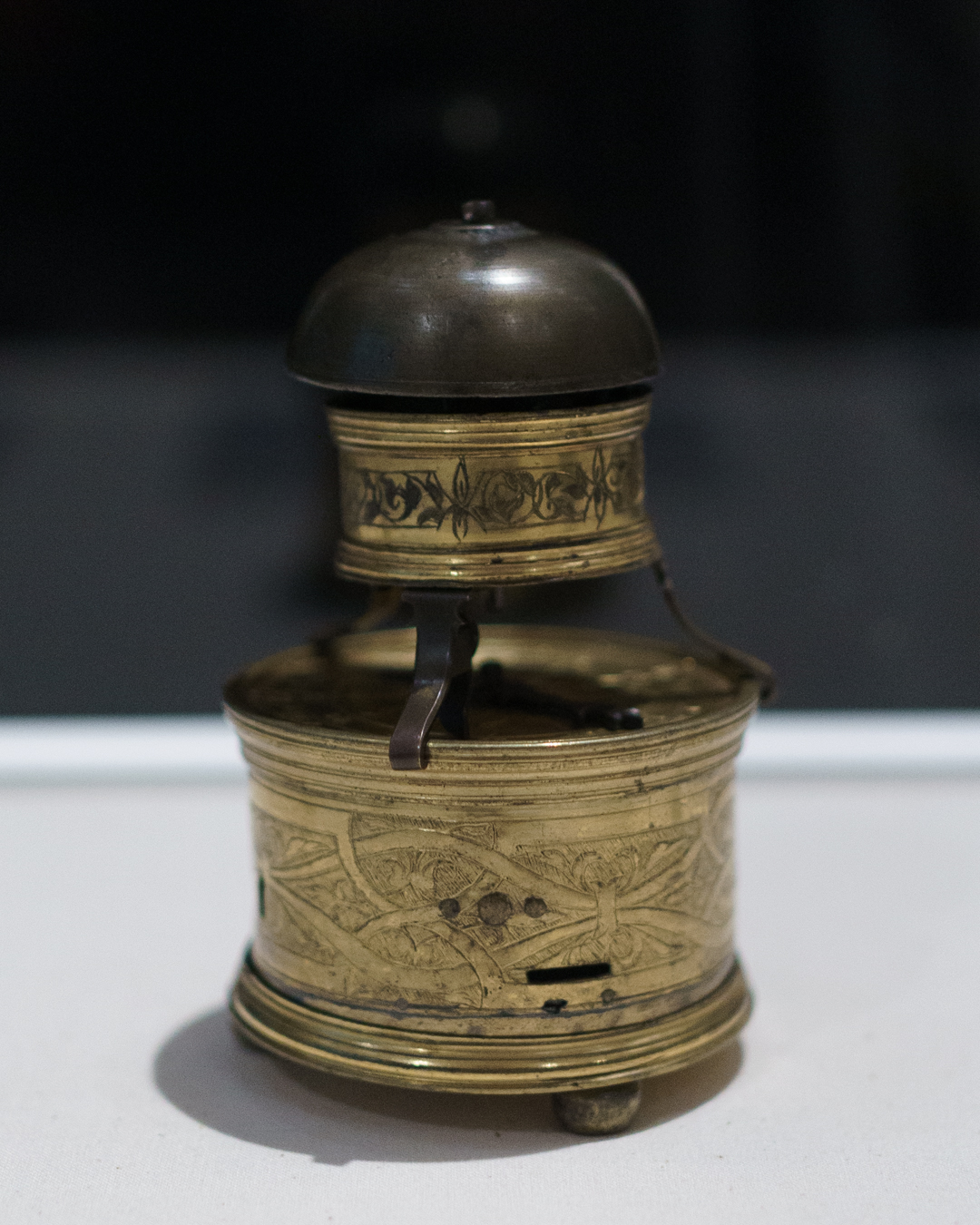
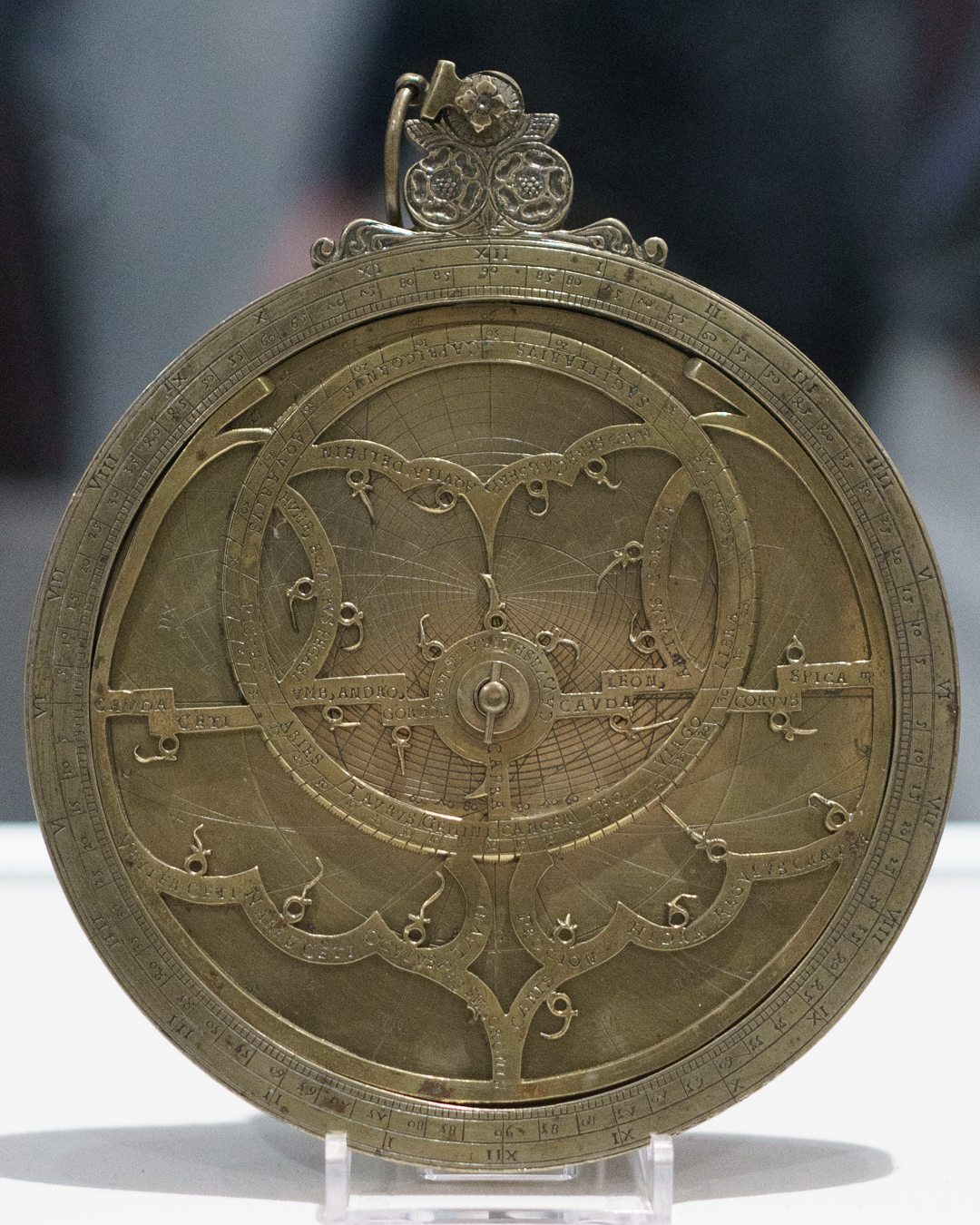
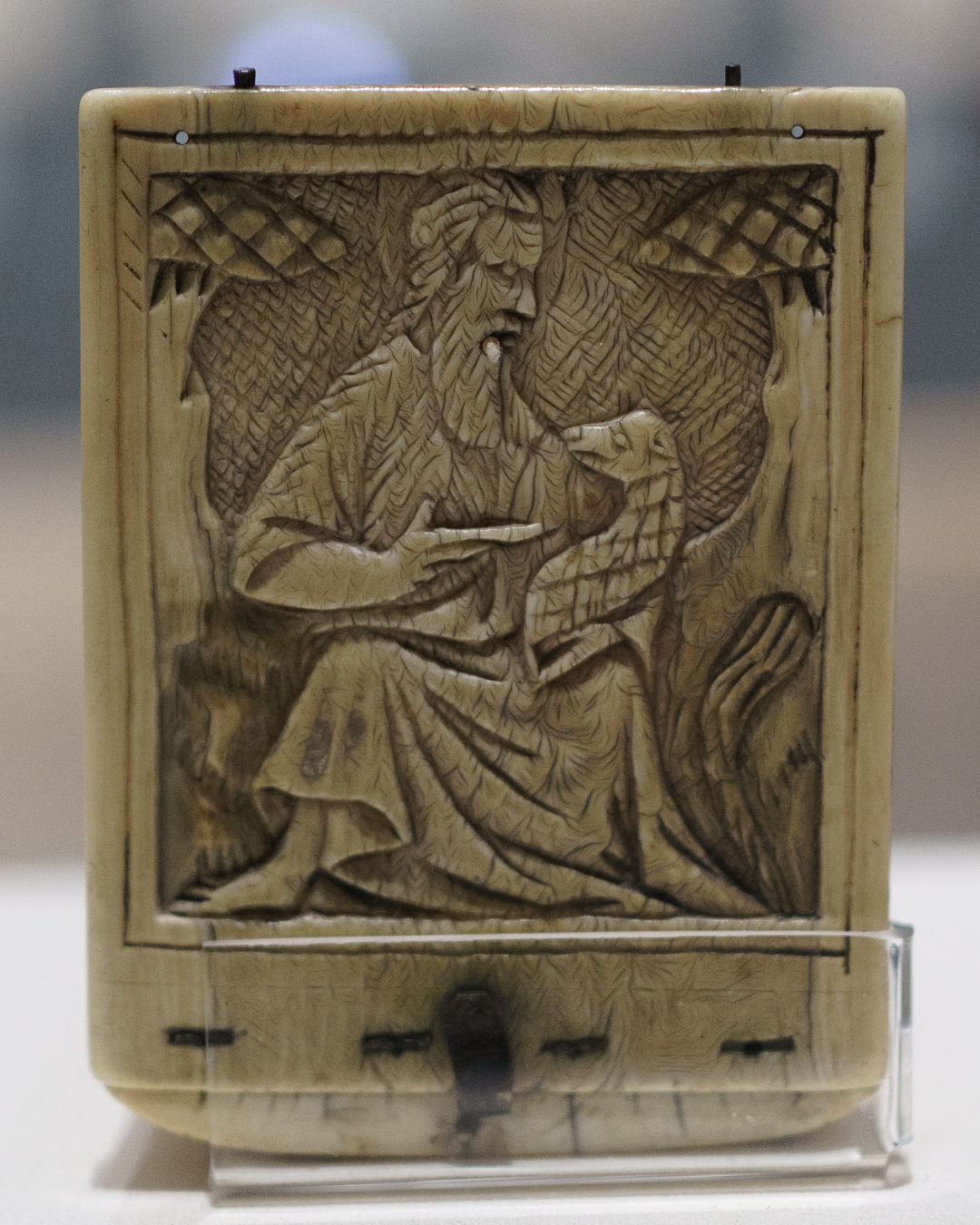

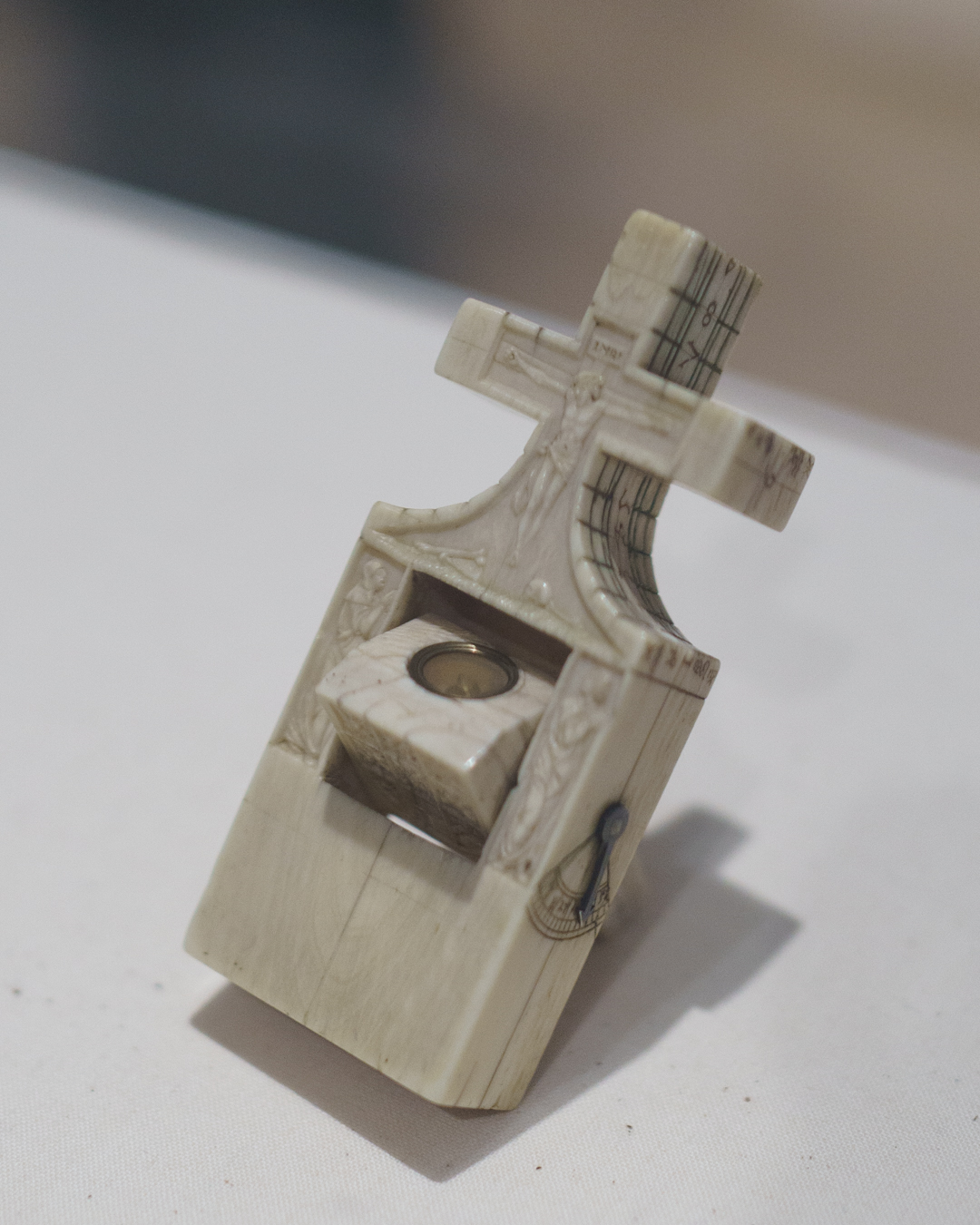
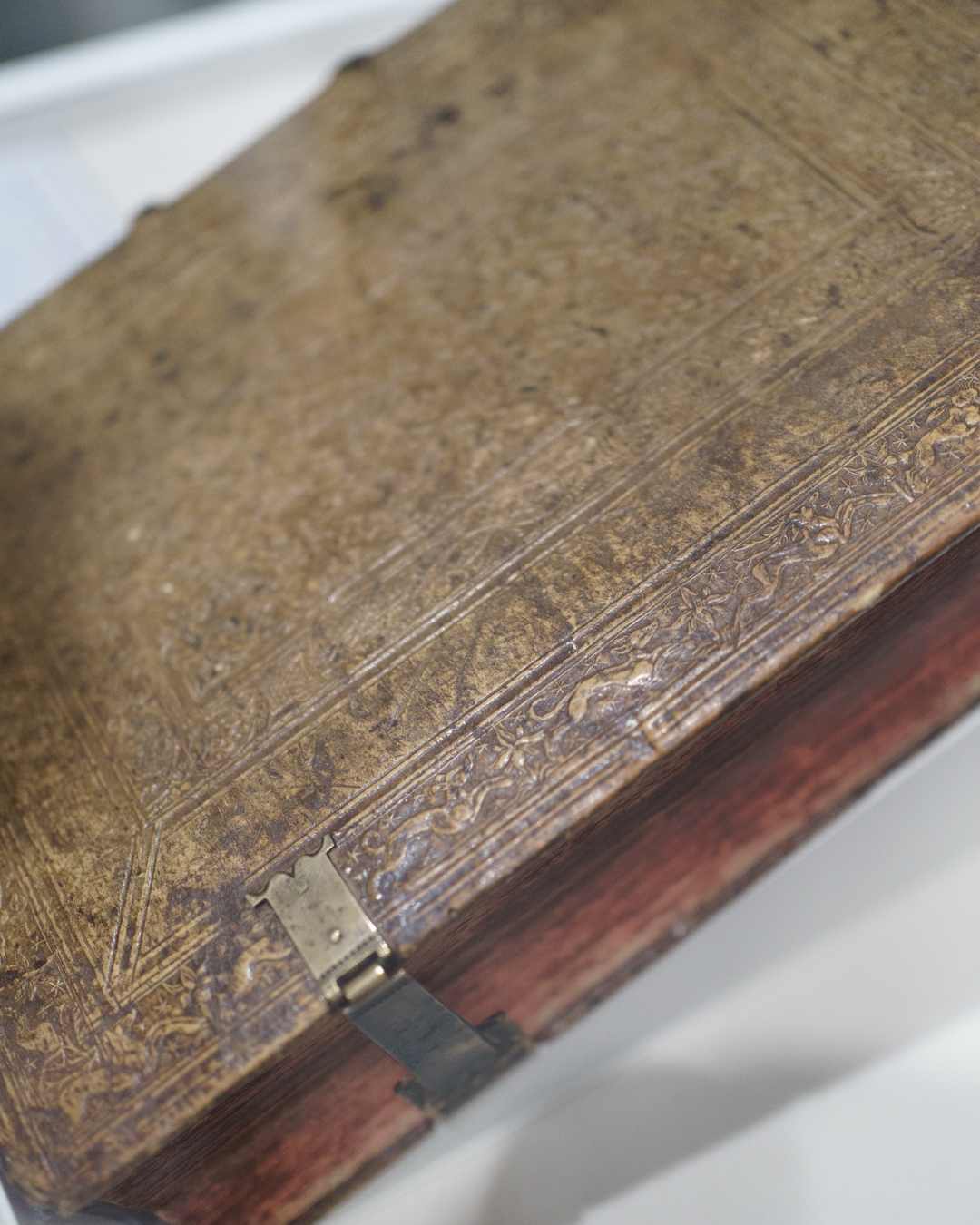
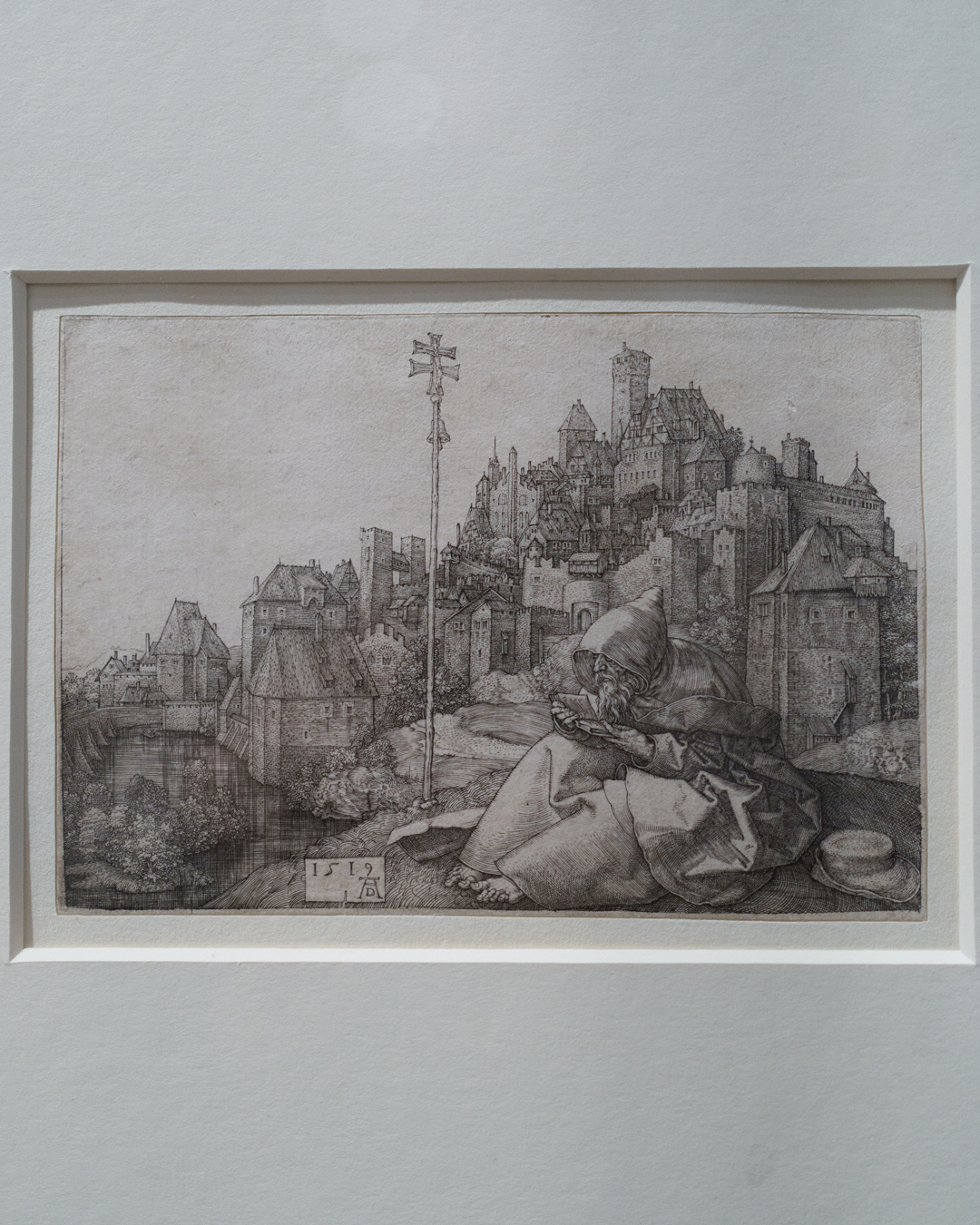
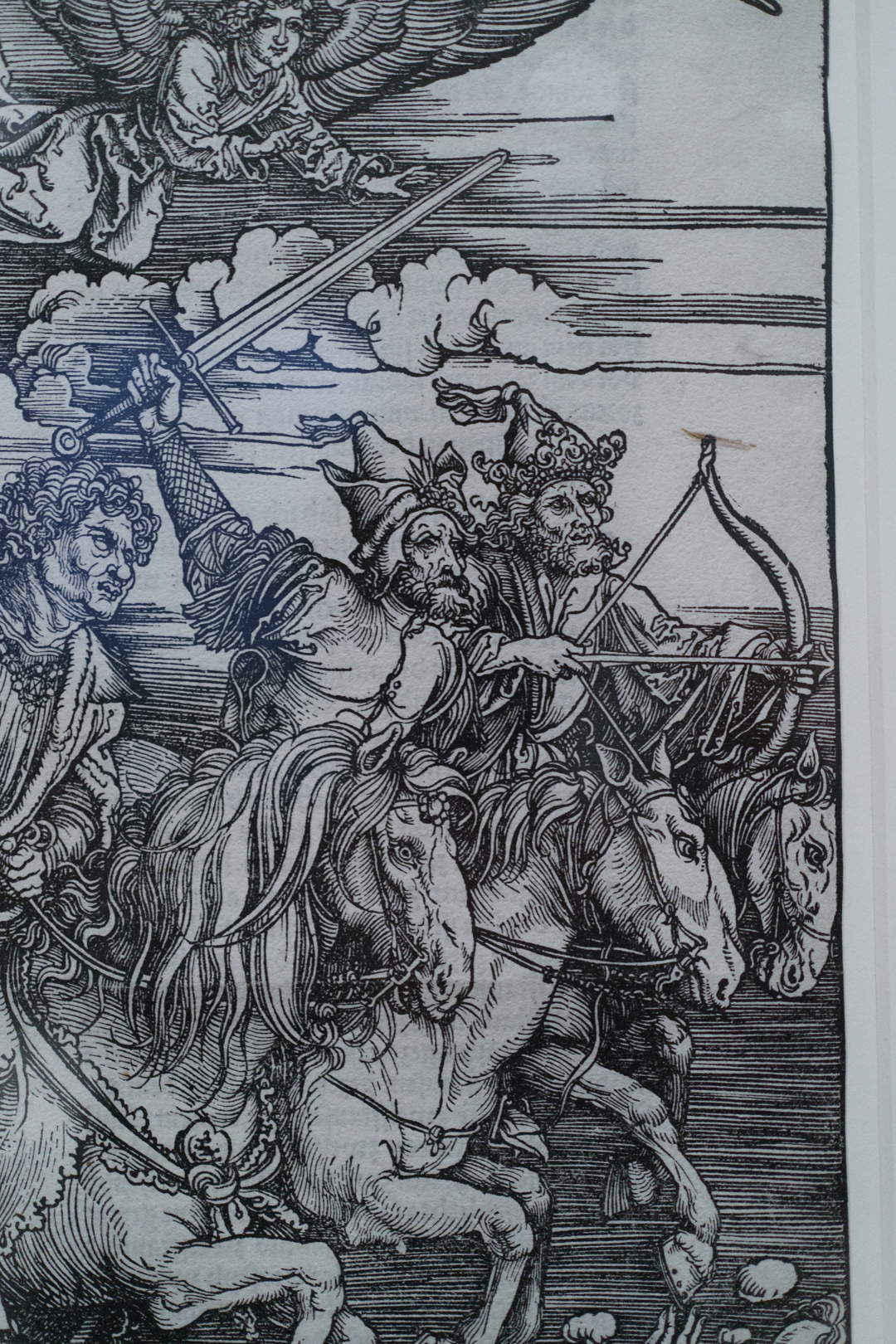
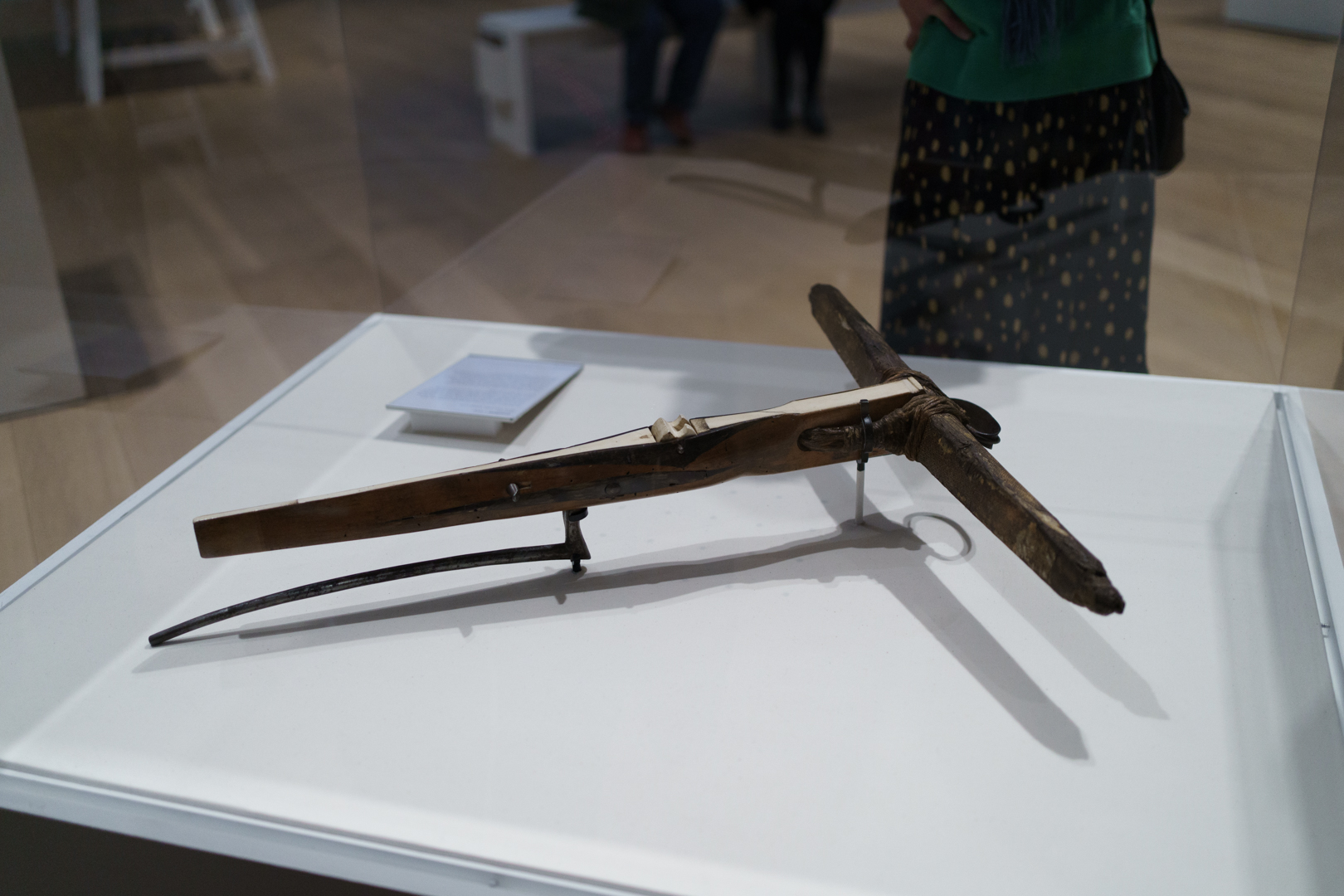
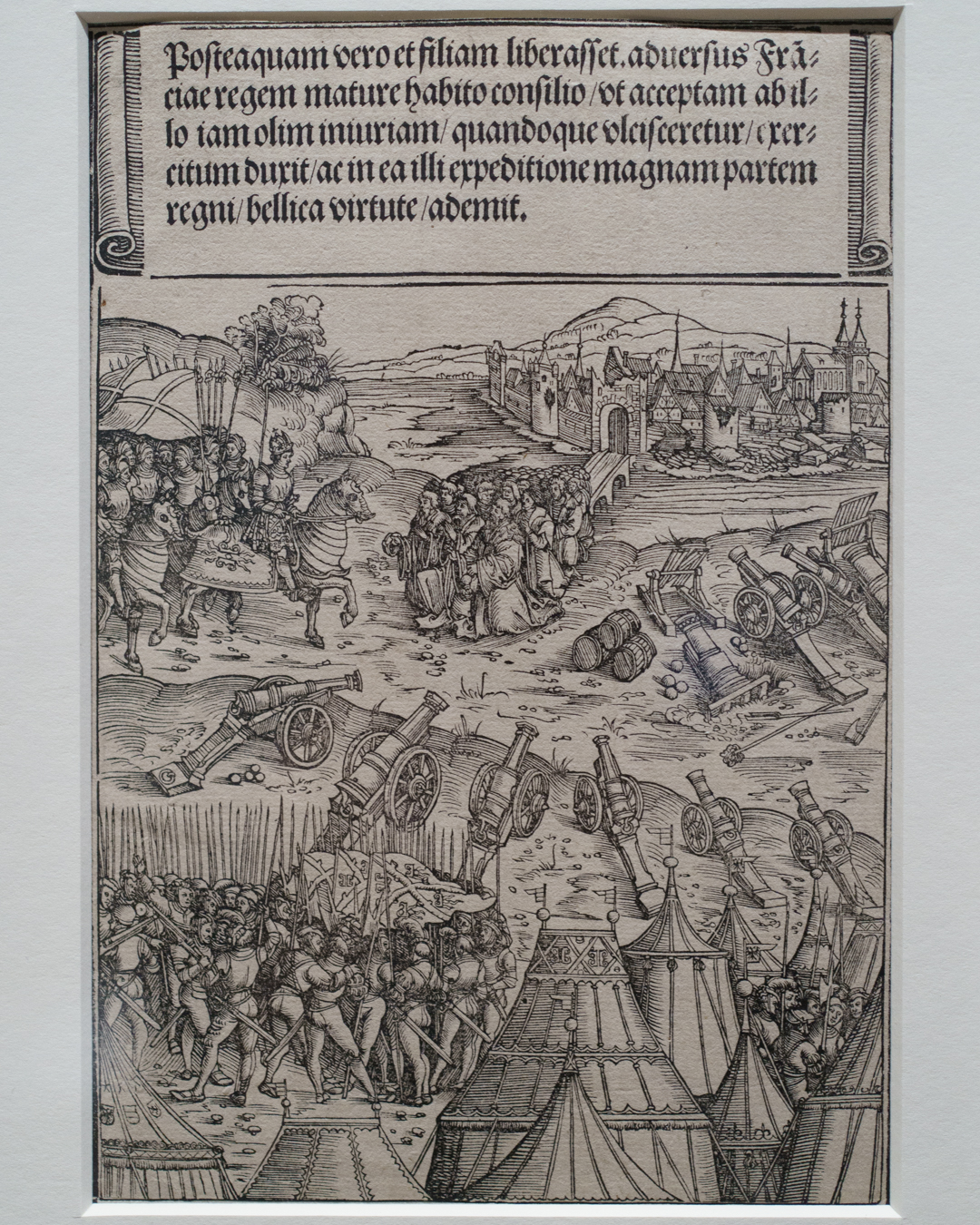
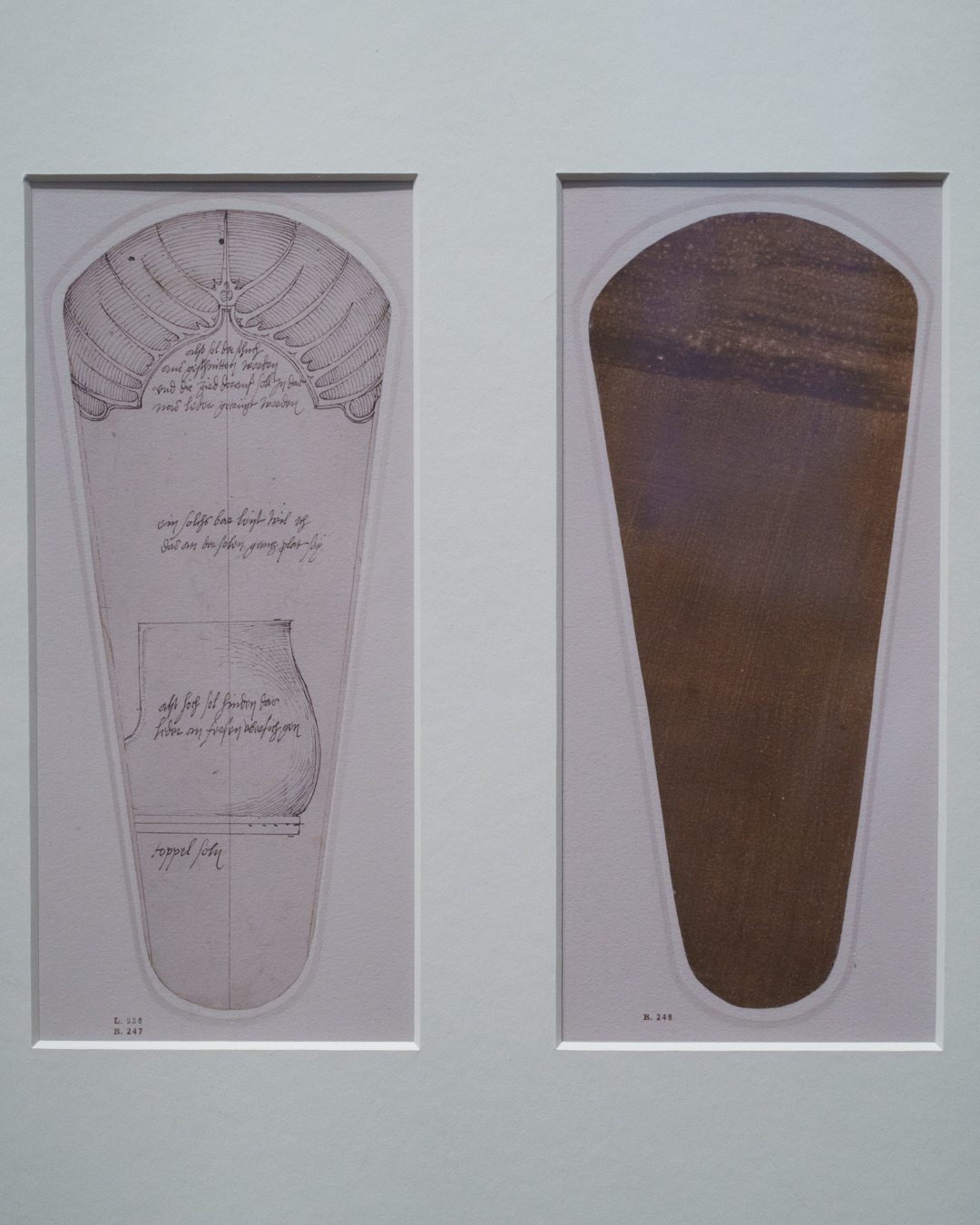
Martin Luther’s translation of the New Testament with rabbits on the leather binding accompanies a procession of St Jeromes; a sallet helmet and pike joins Dürer’s two engravings of knights, alongside a projection of the behemoth of woodcuts that is the Triumphal Arch of Maximilian I. Elsewhere, a crossbow tenuously relates to images of St Sebastian and one of the Four Horsemen of the Apocalypse. He also designed footwear and chalices, knowledge of which carried through into his artistic depictions.
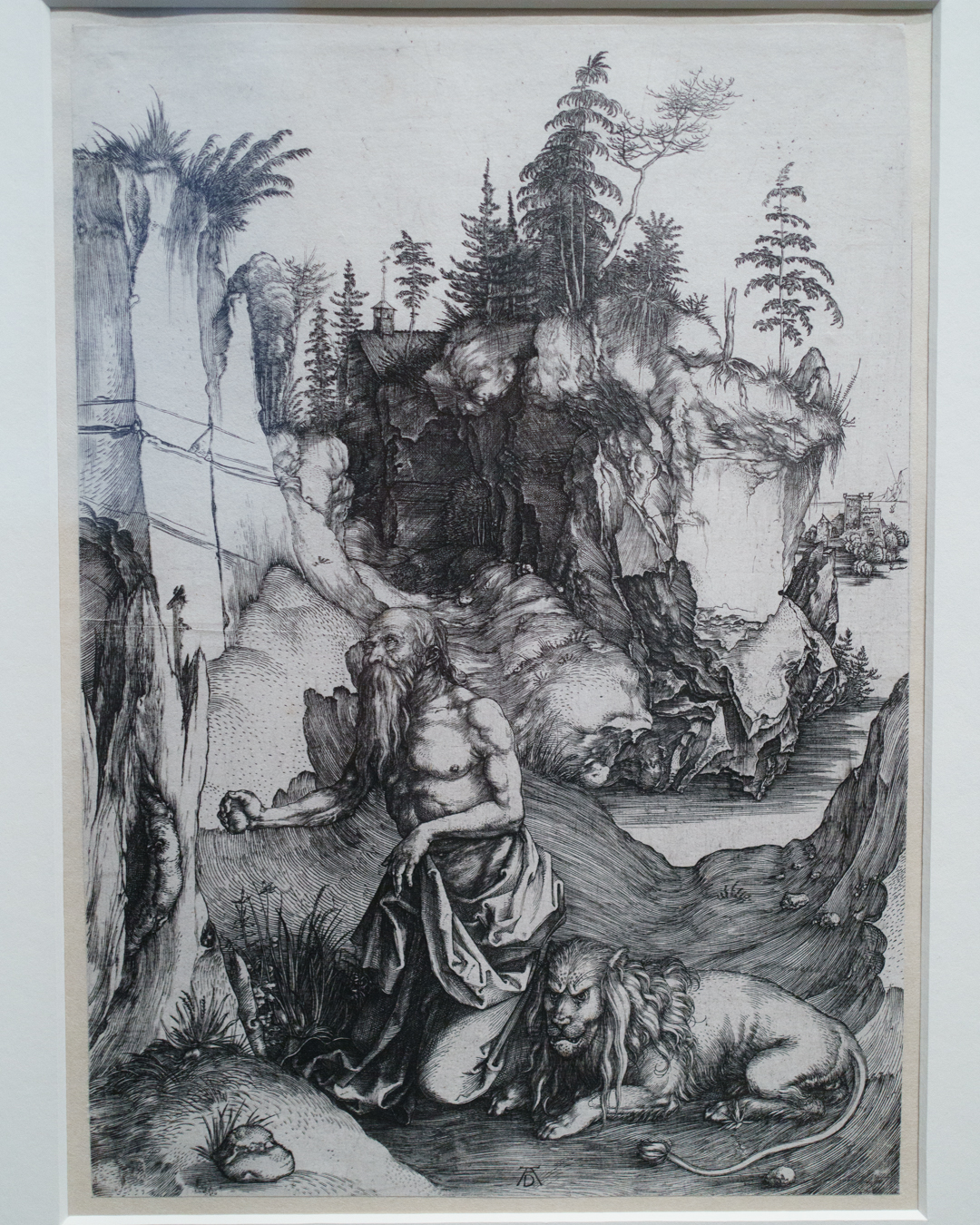
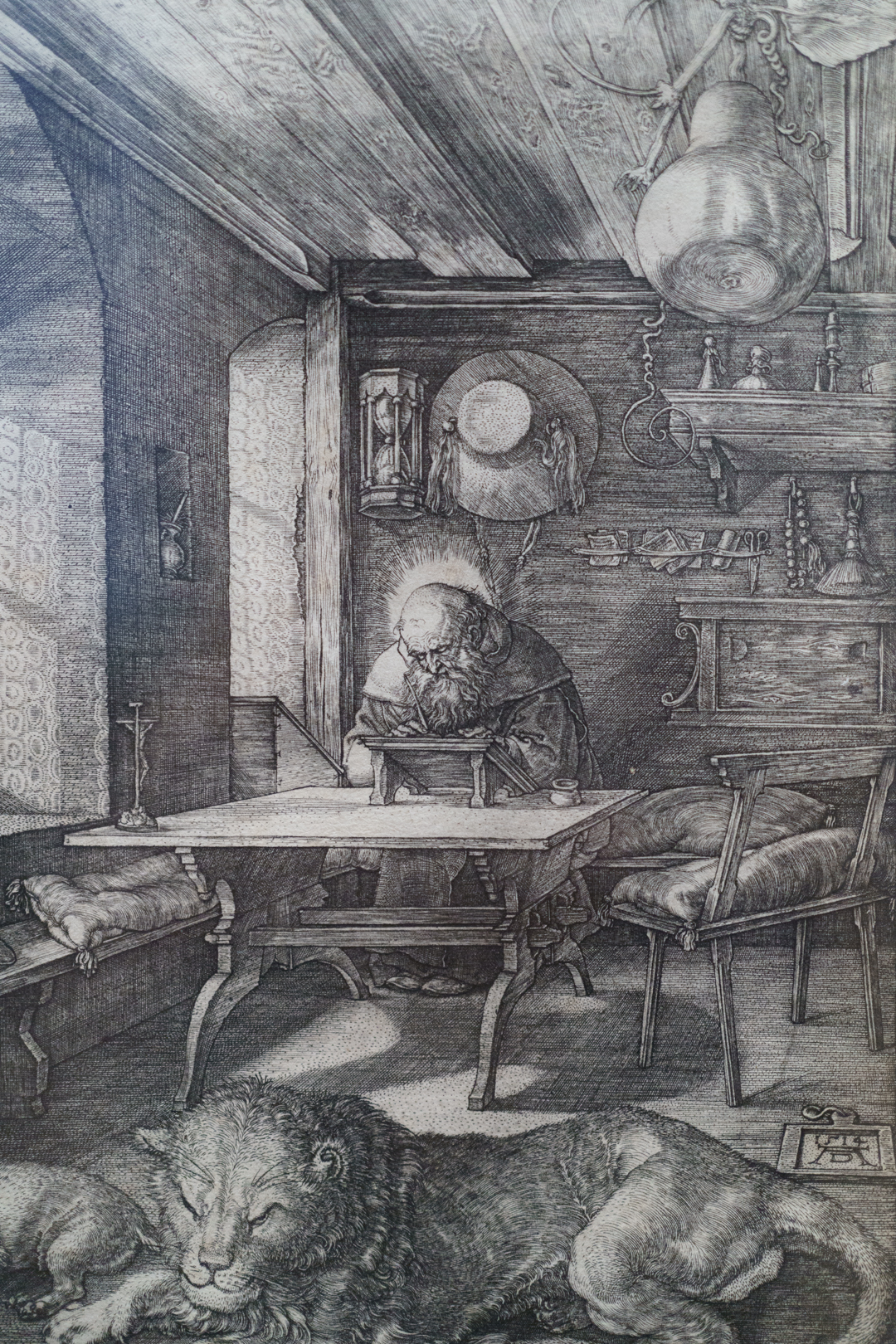
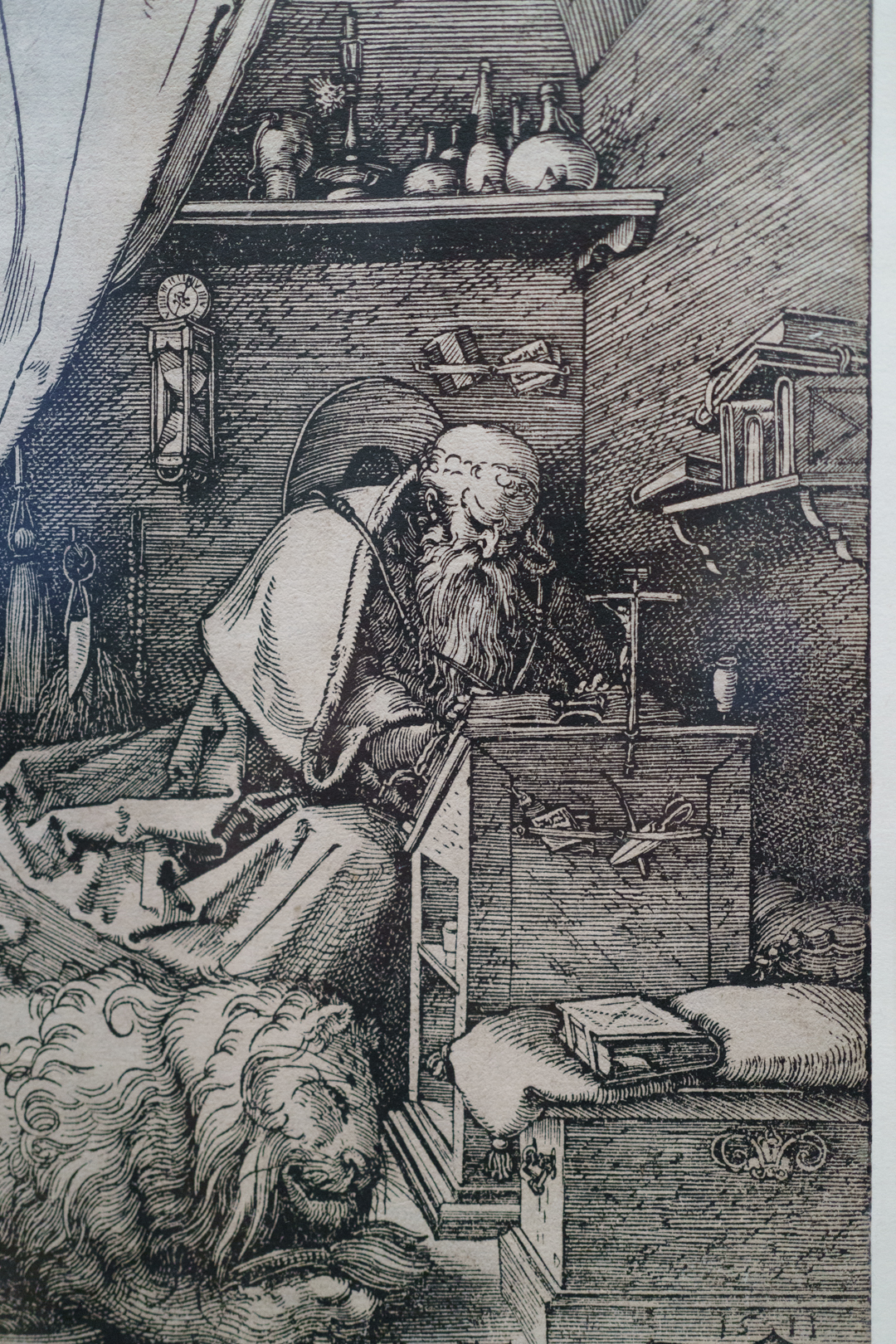
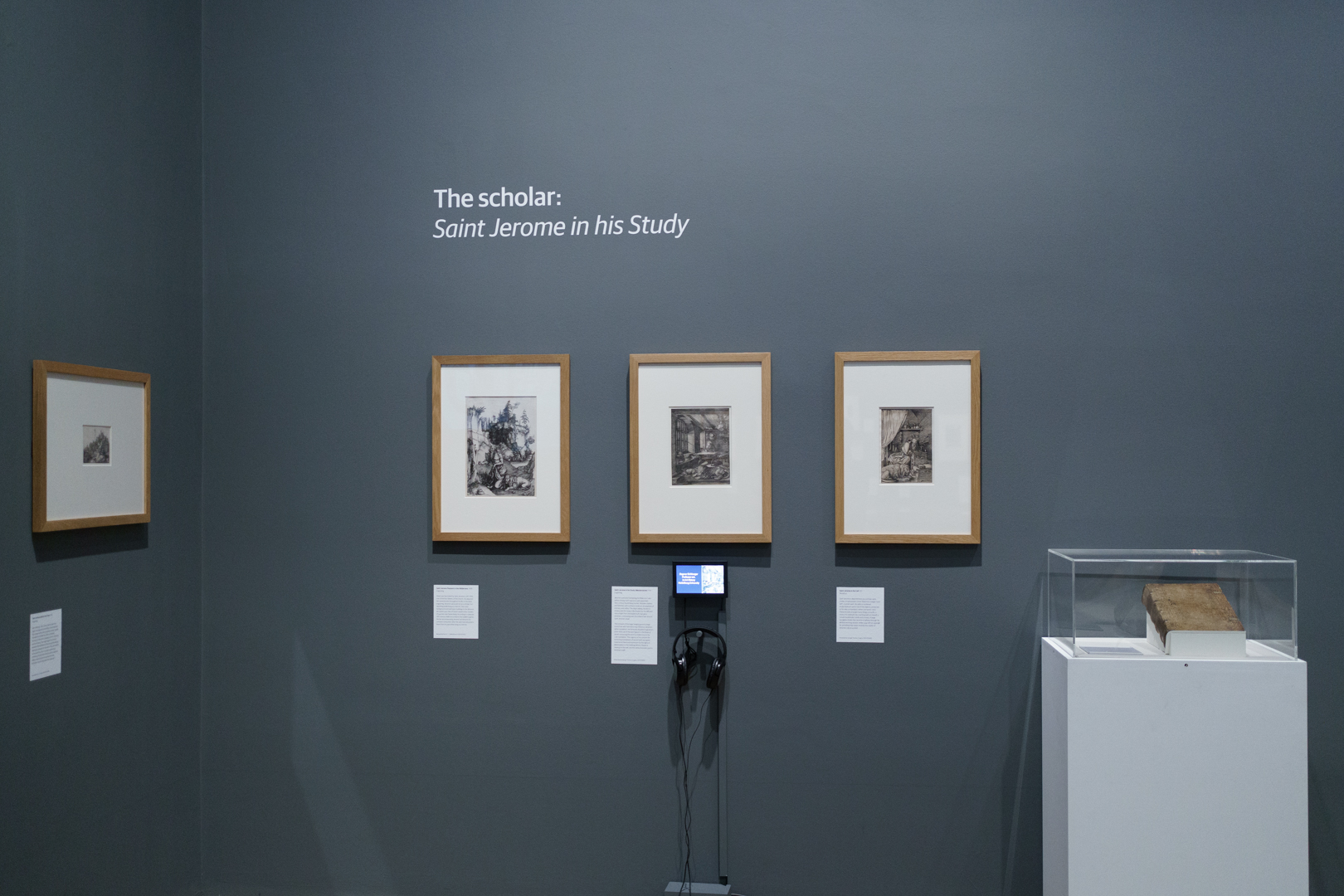
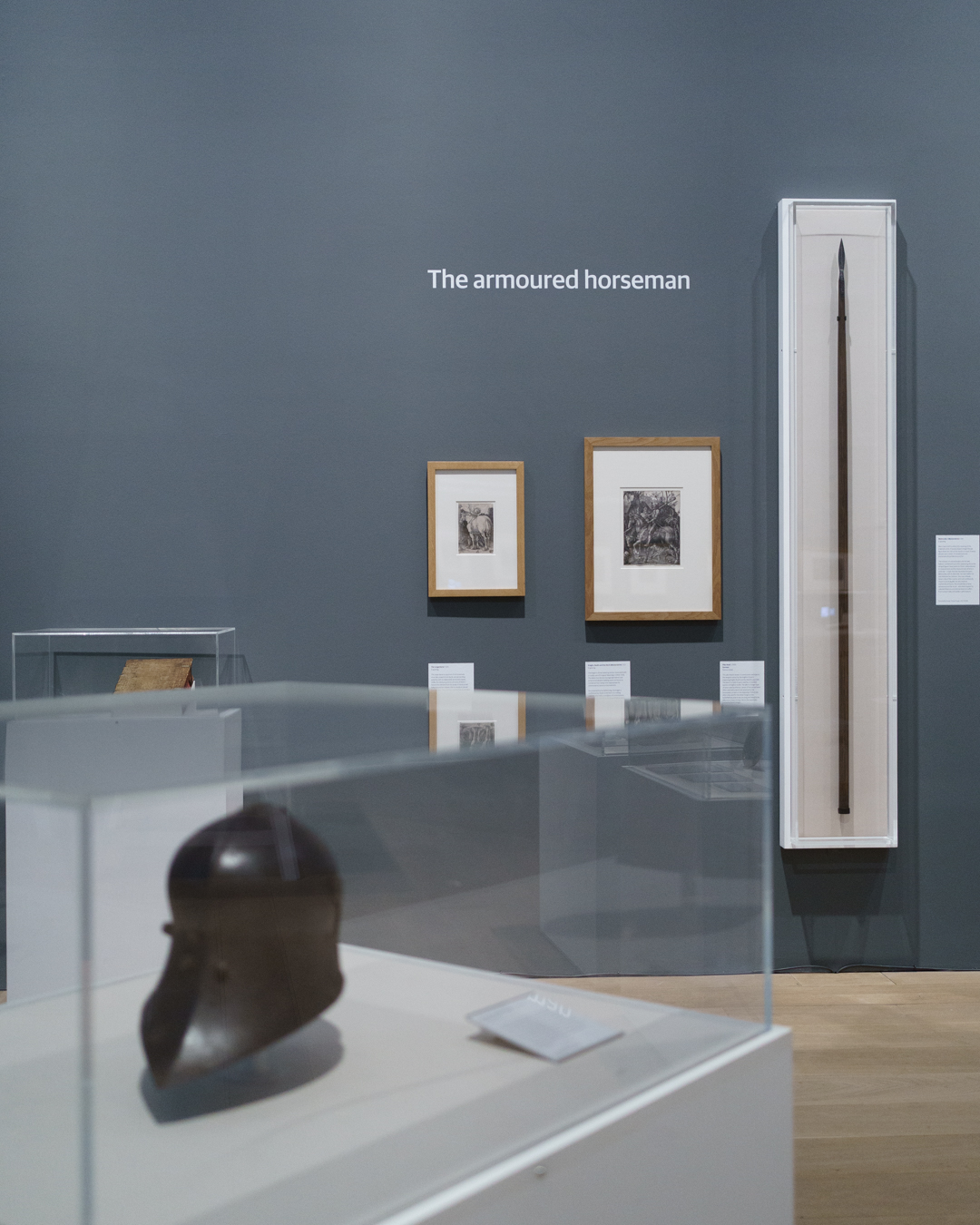
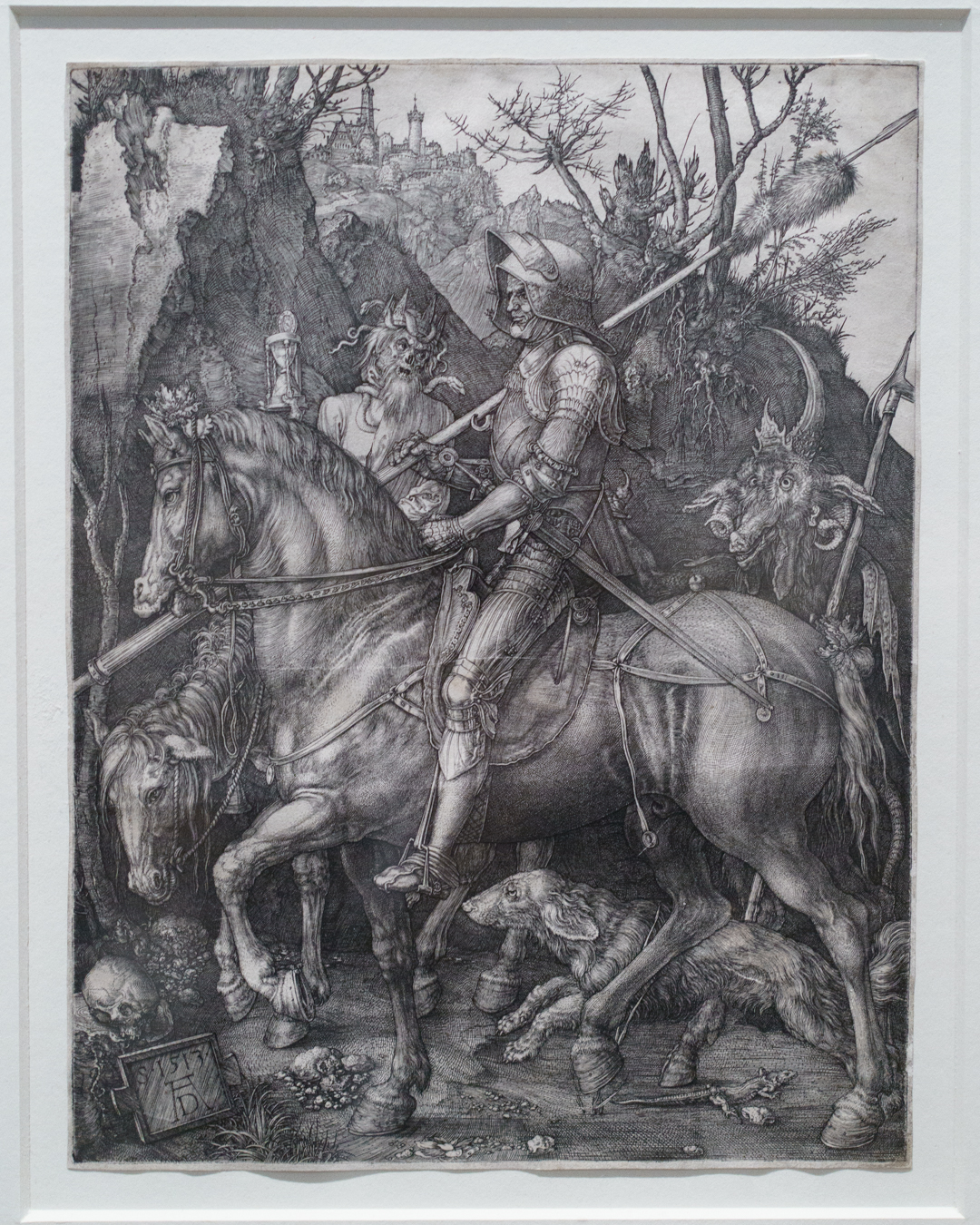
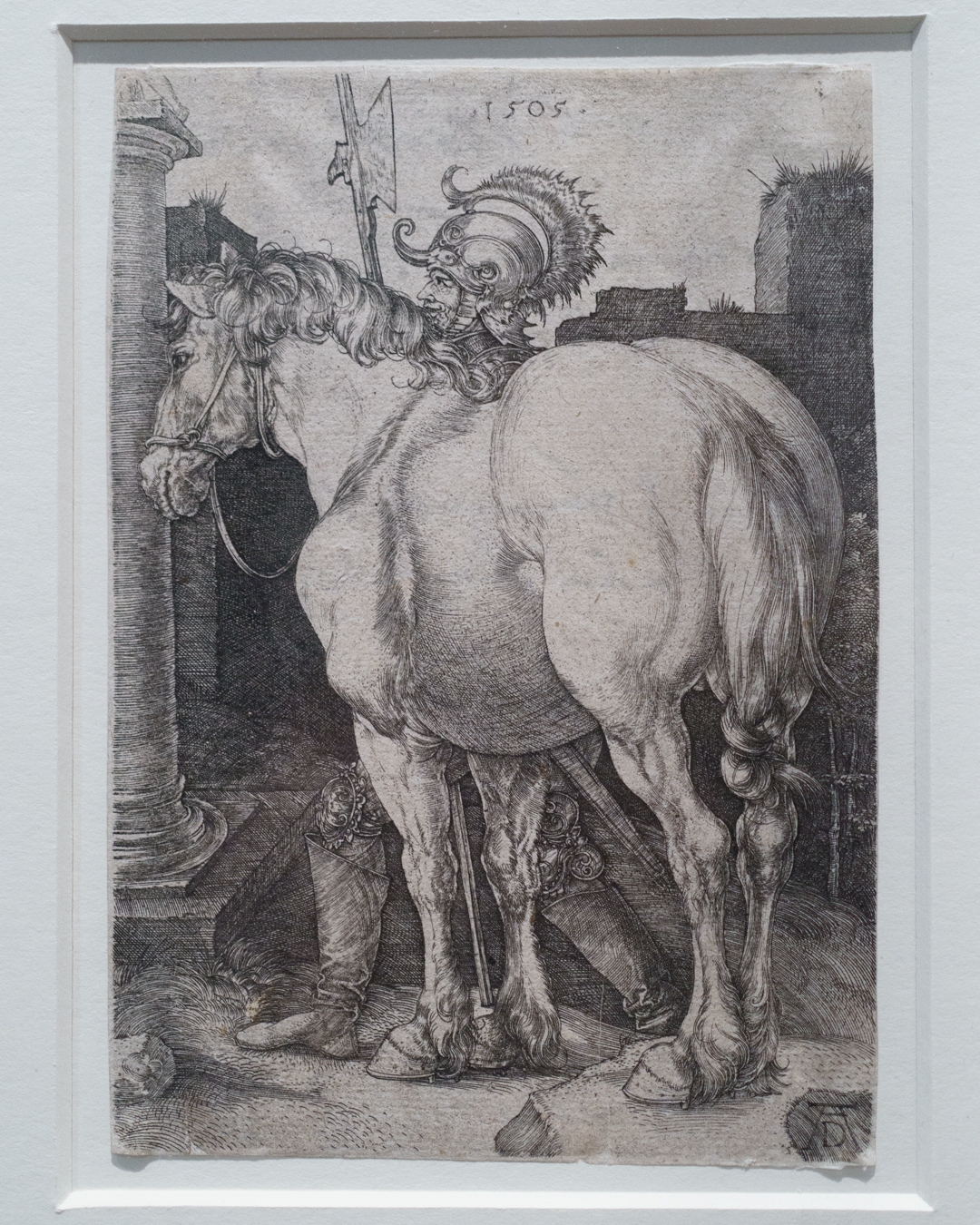
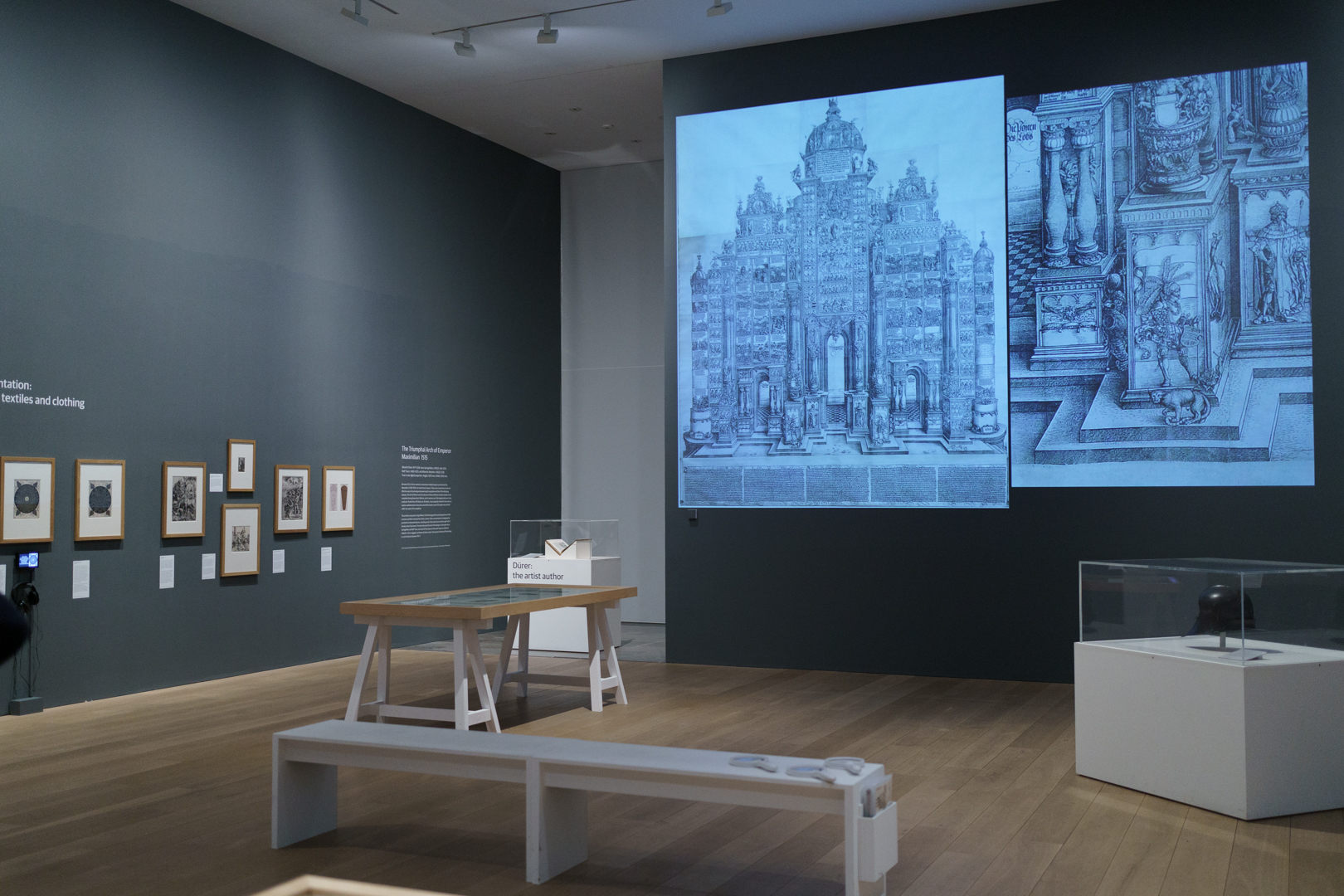
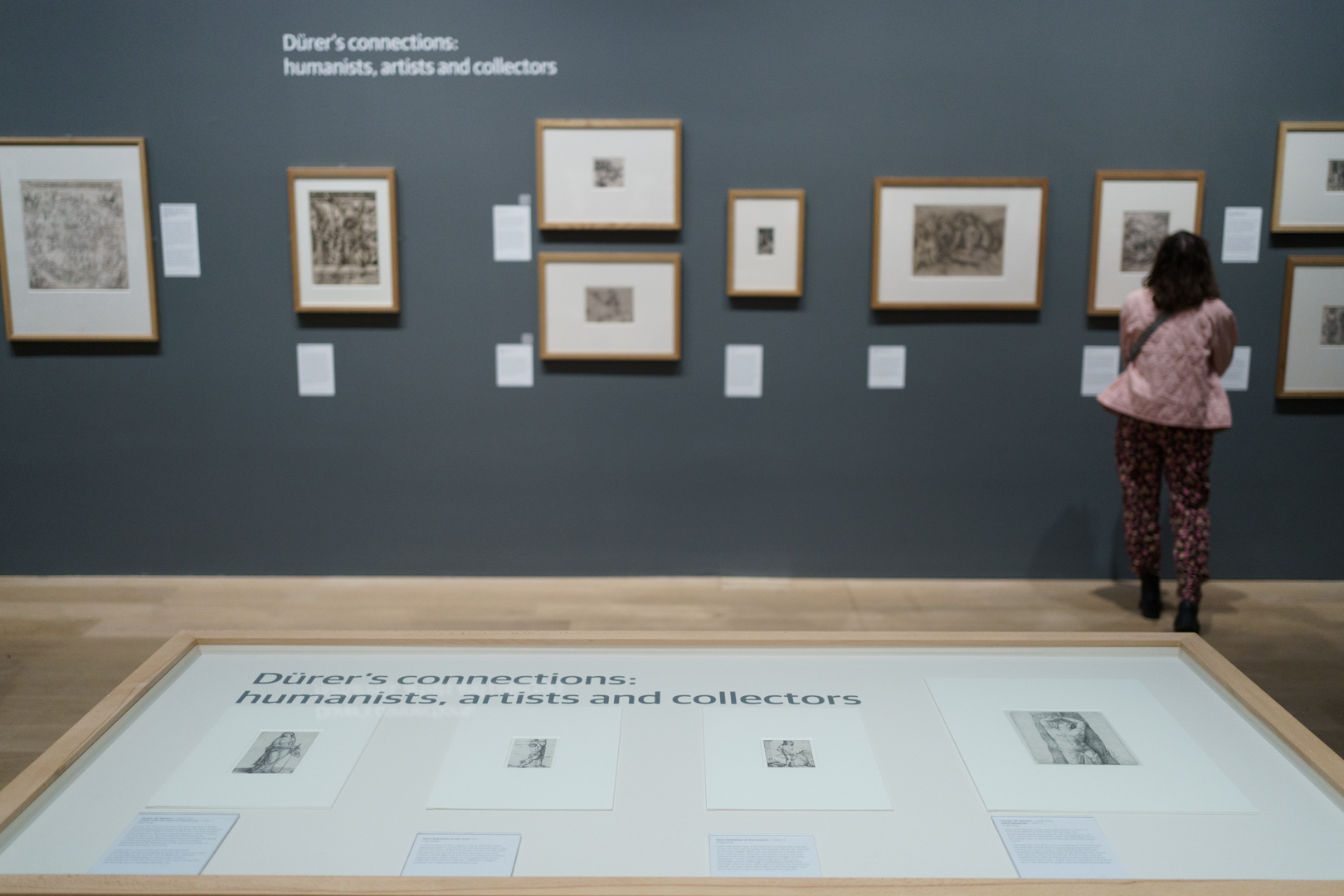
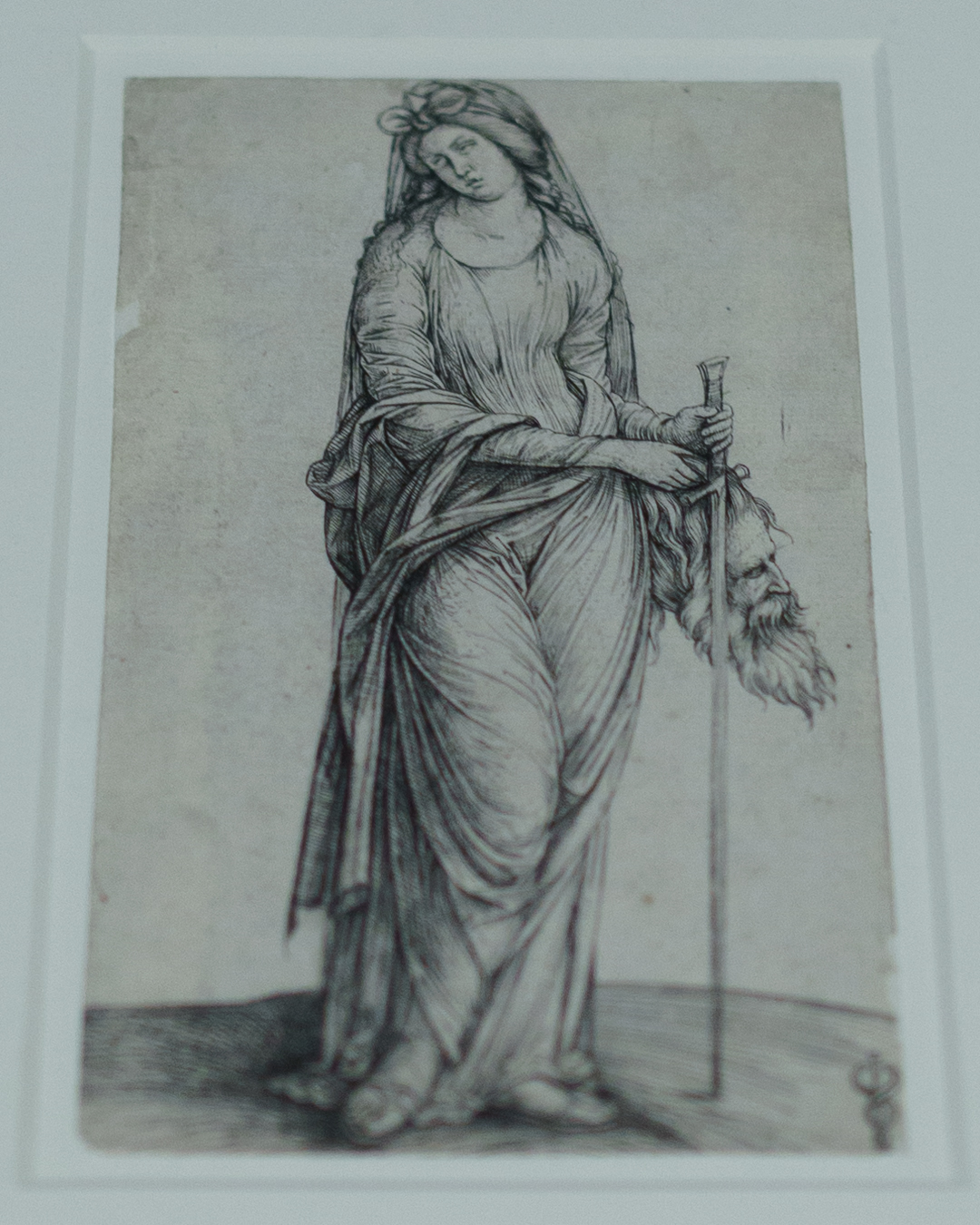
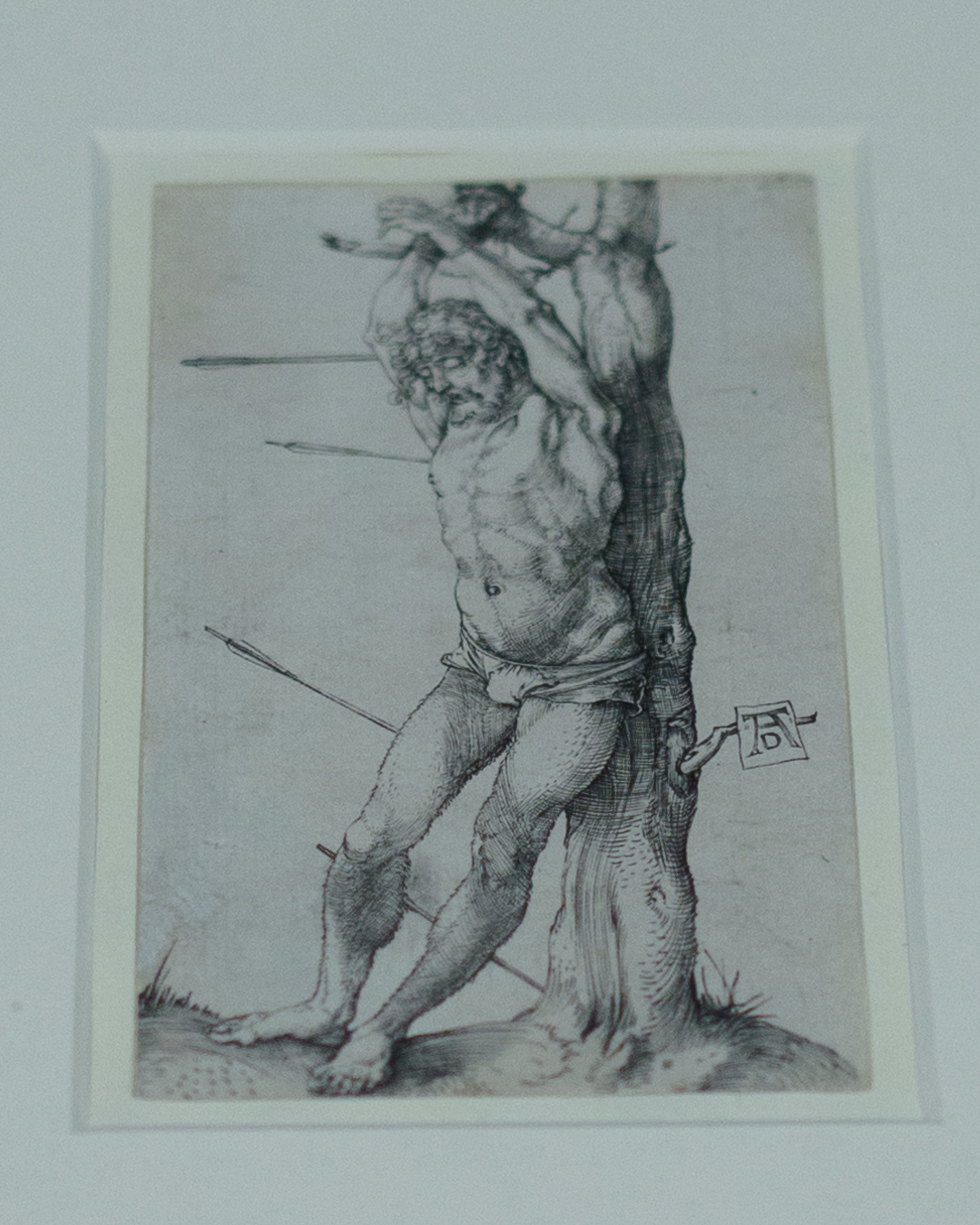

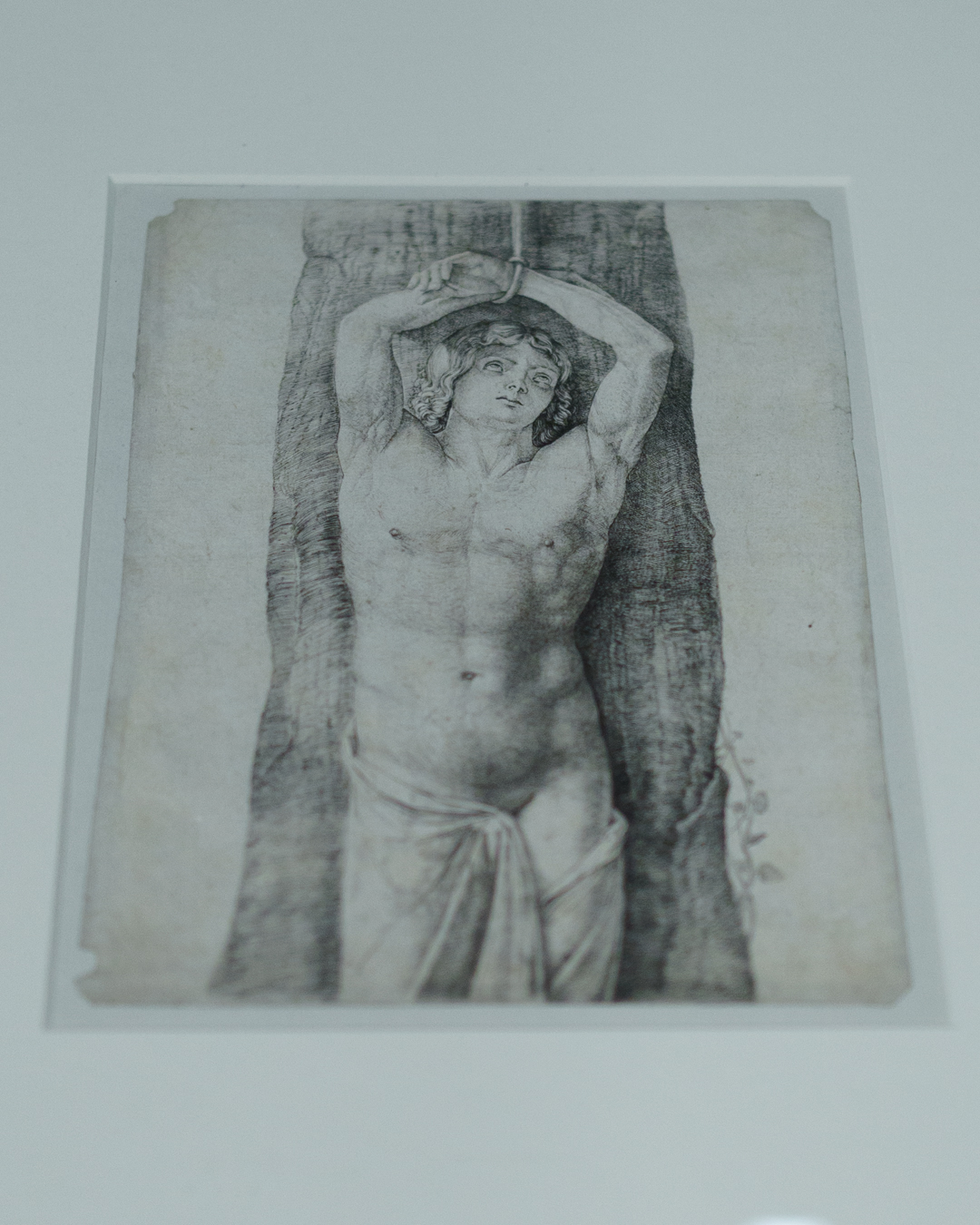

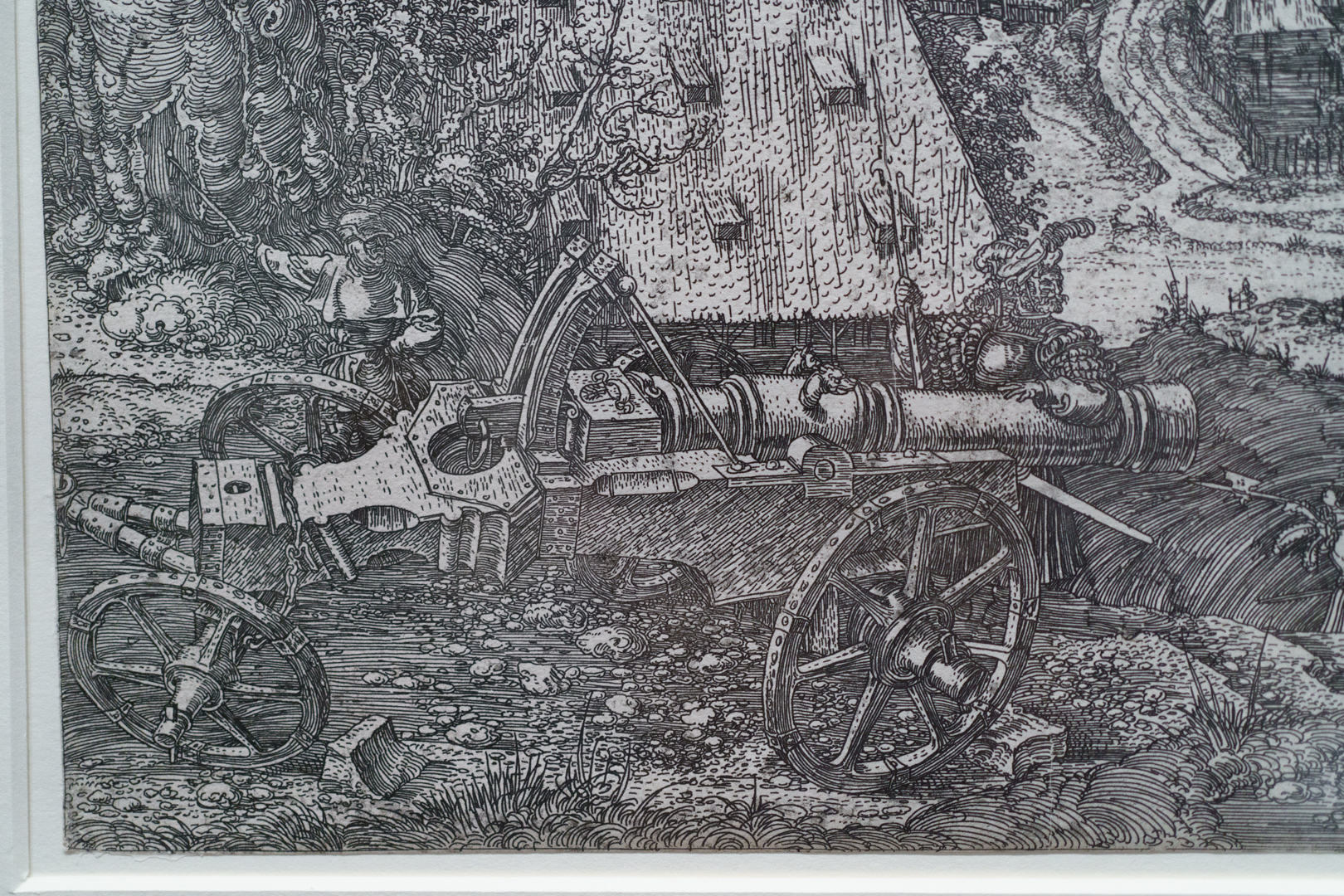
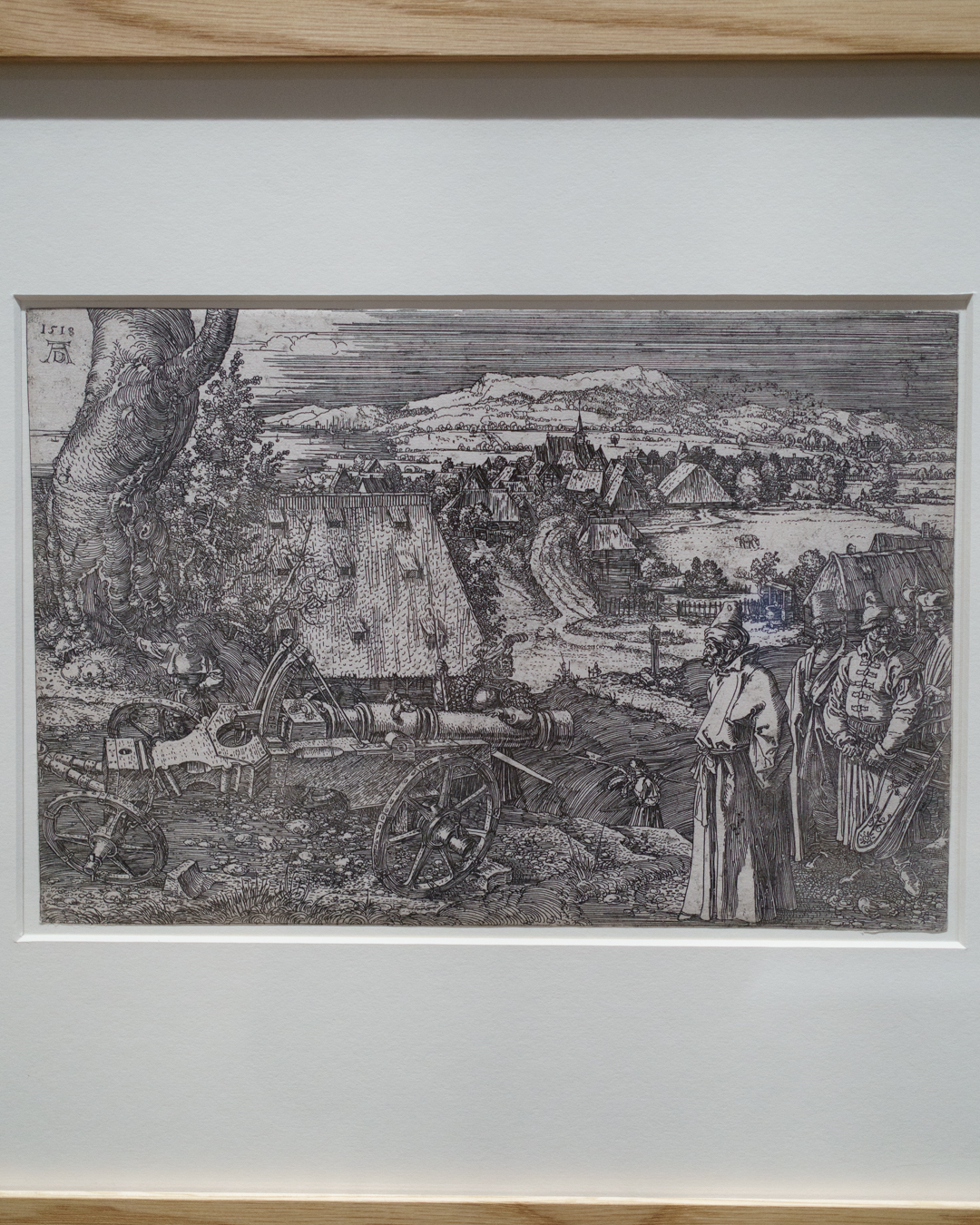
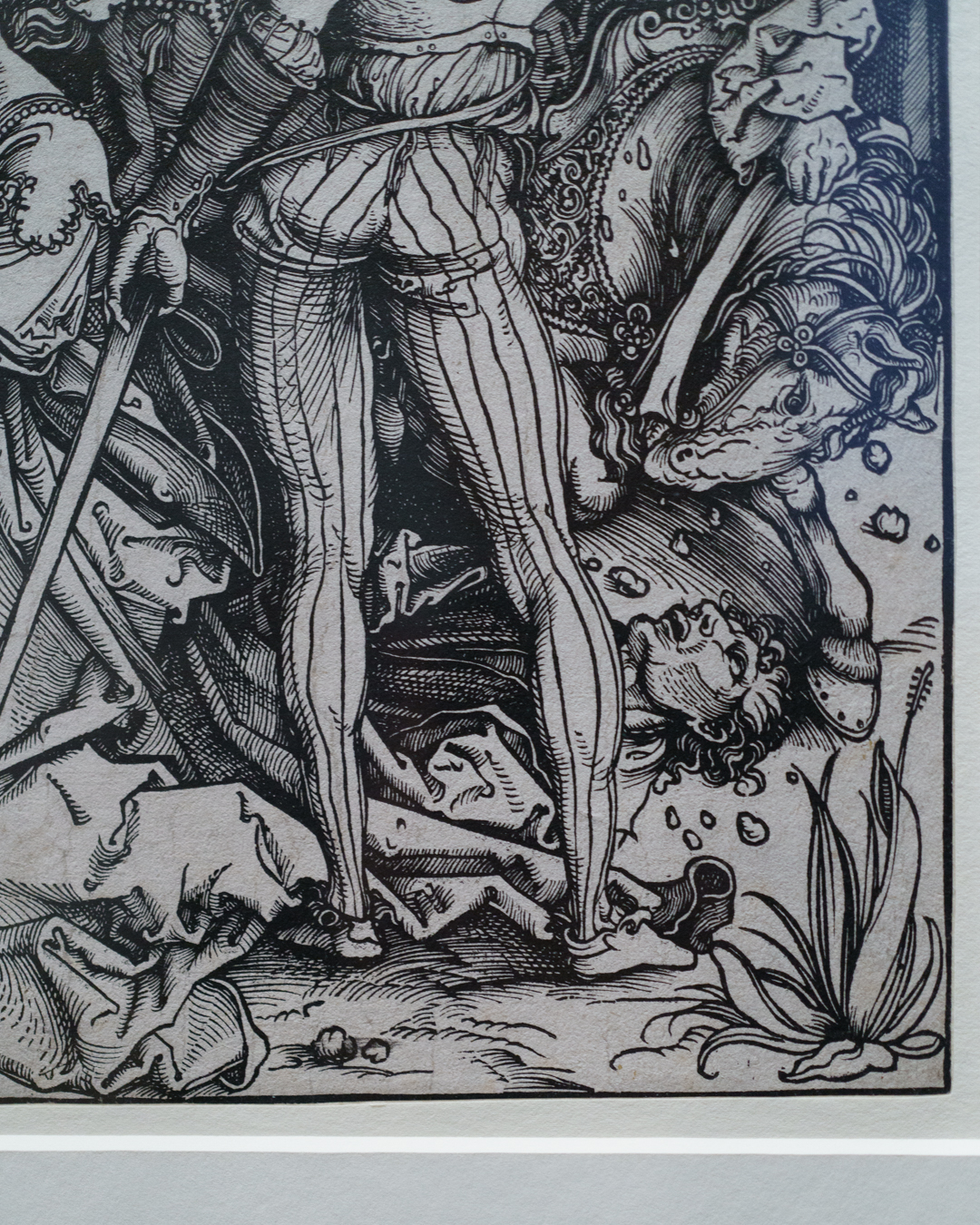
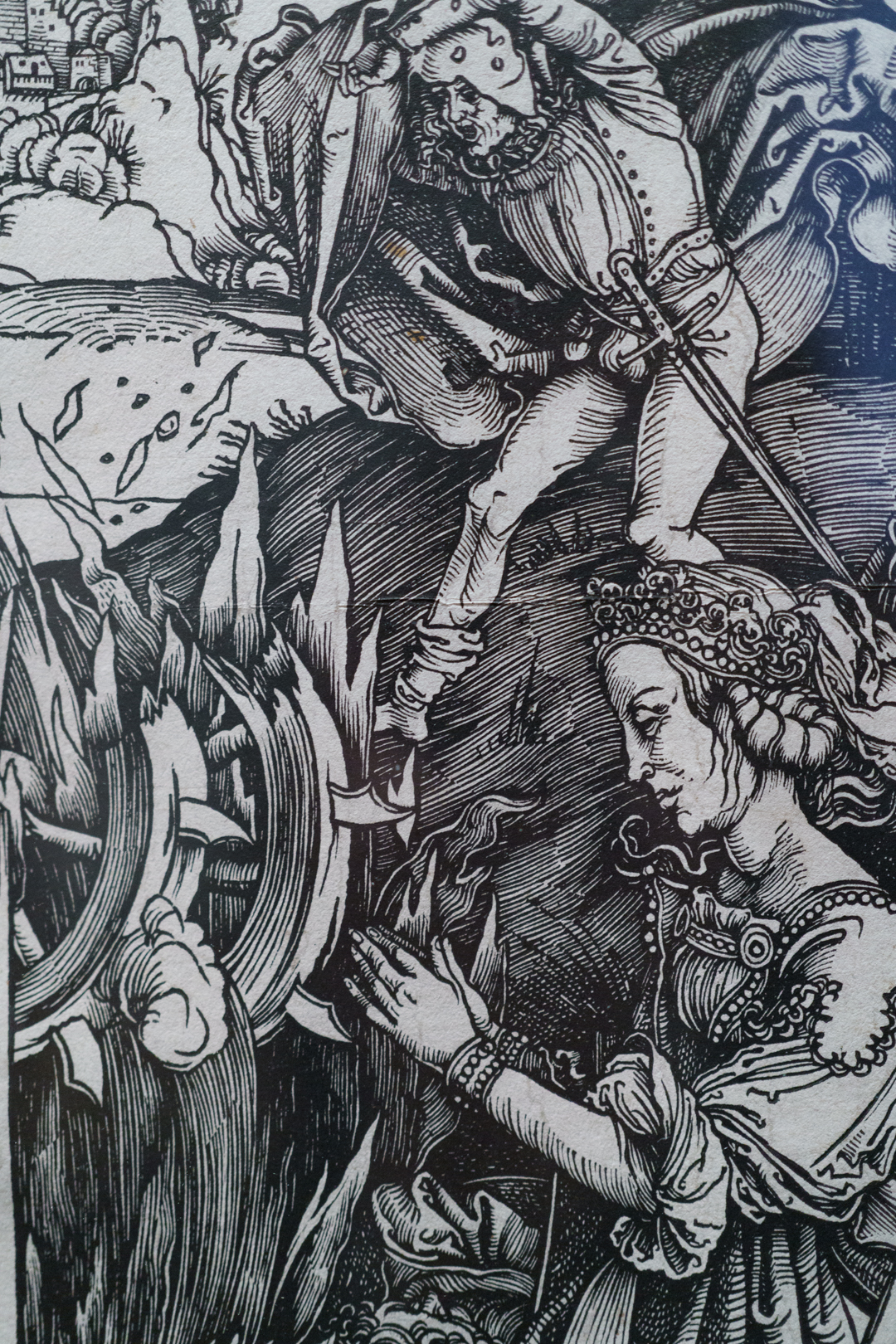
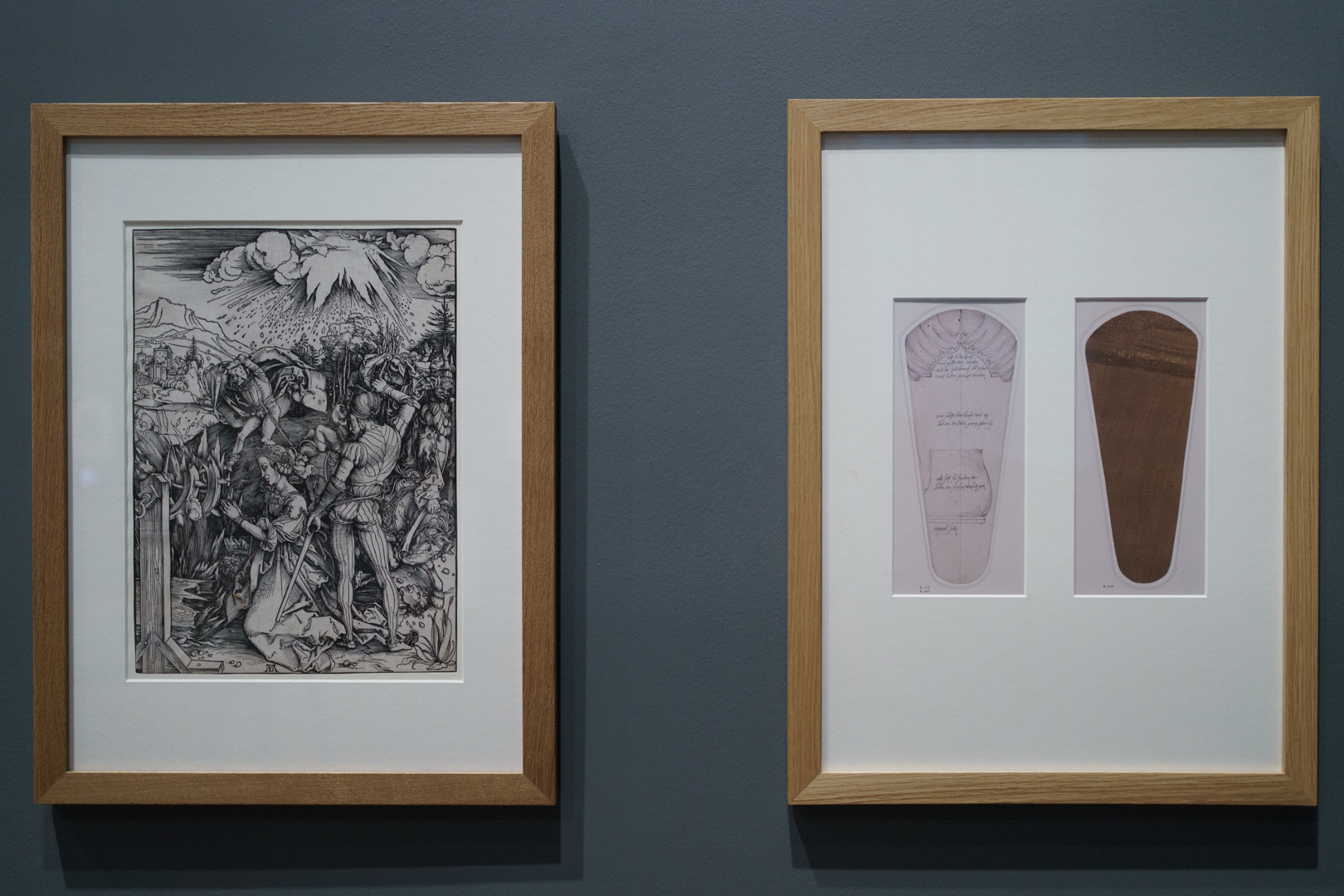
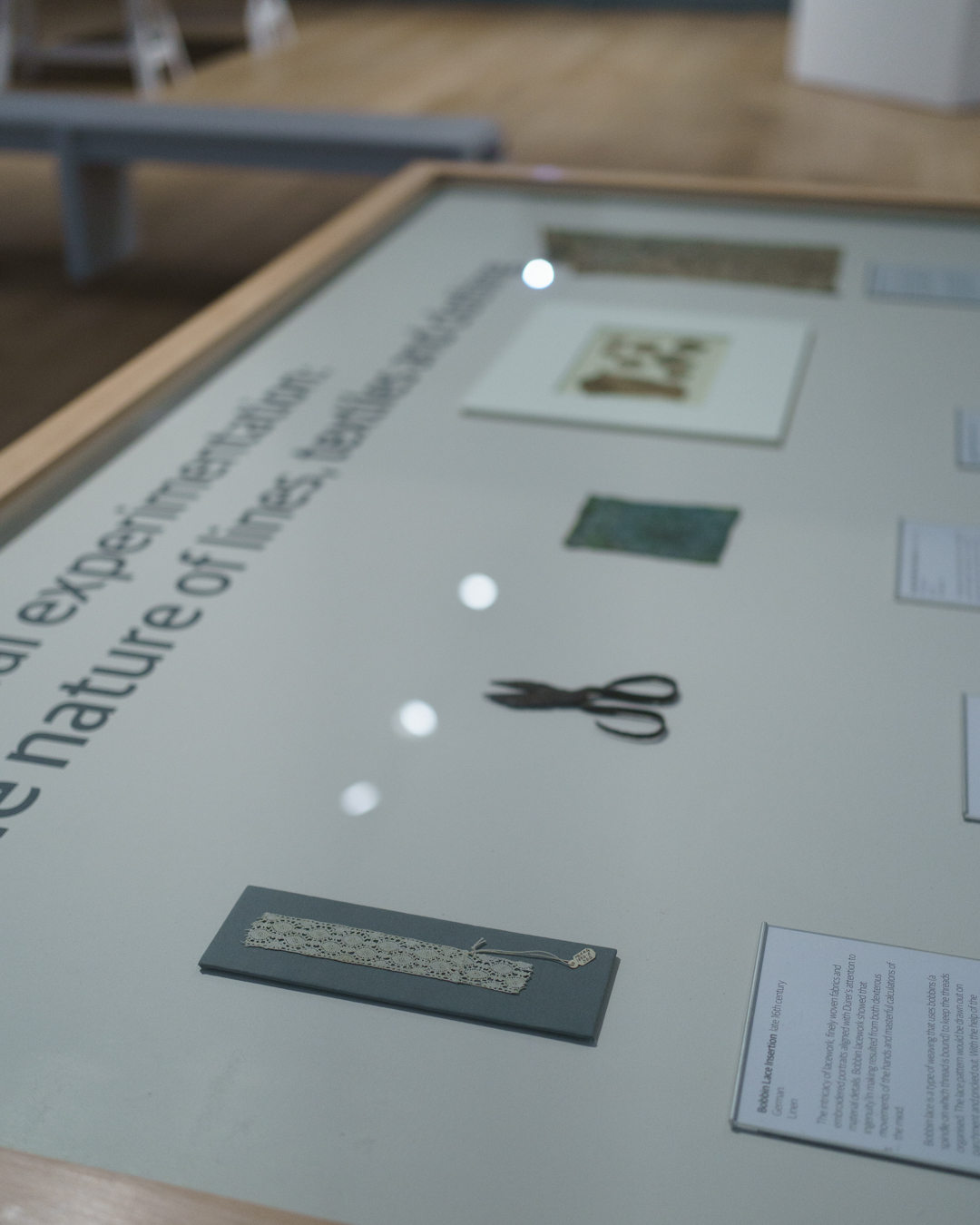
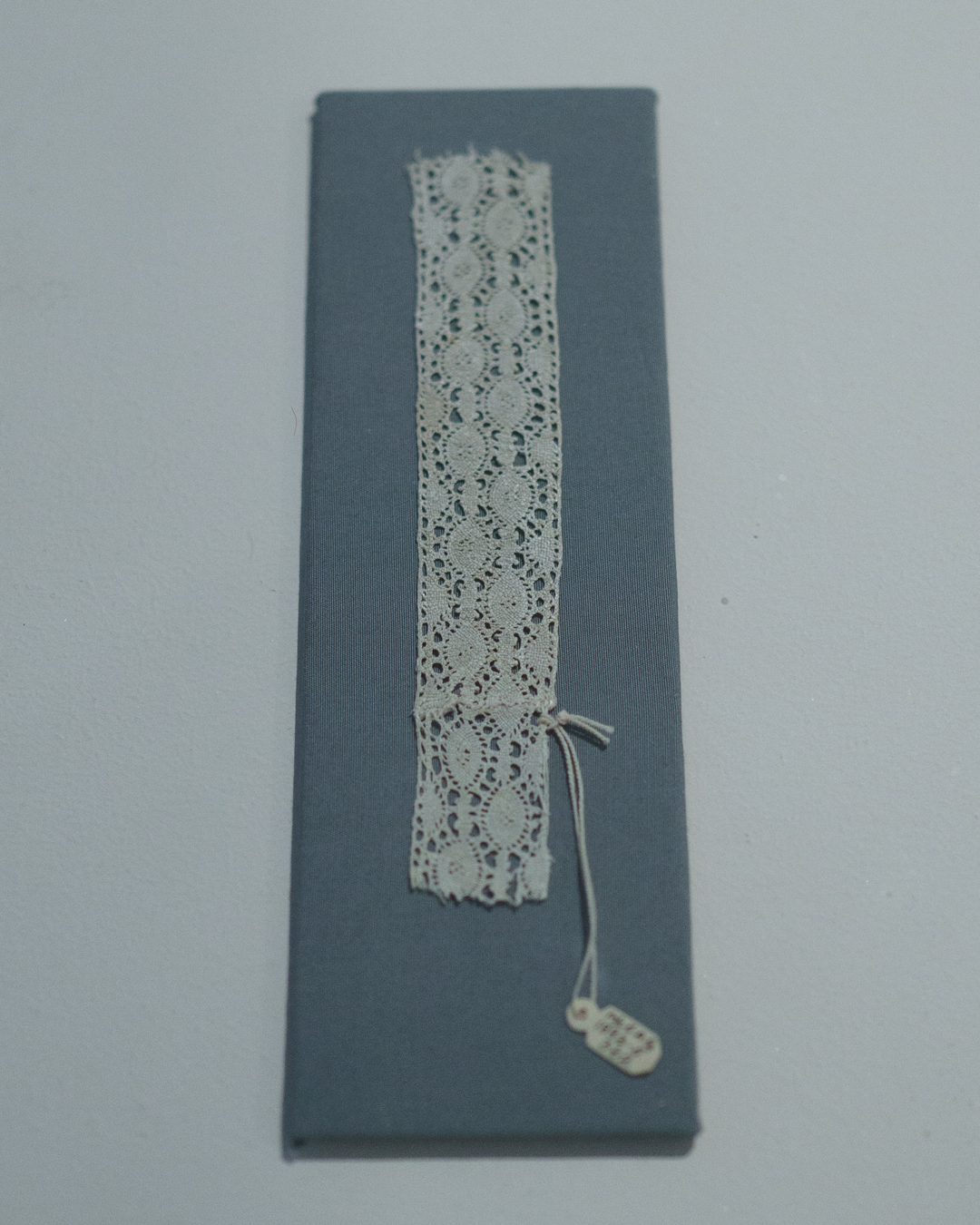
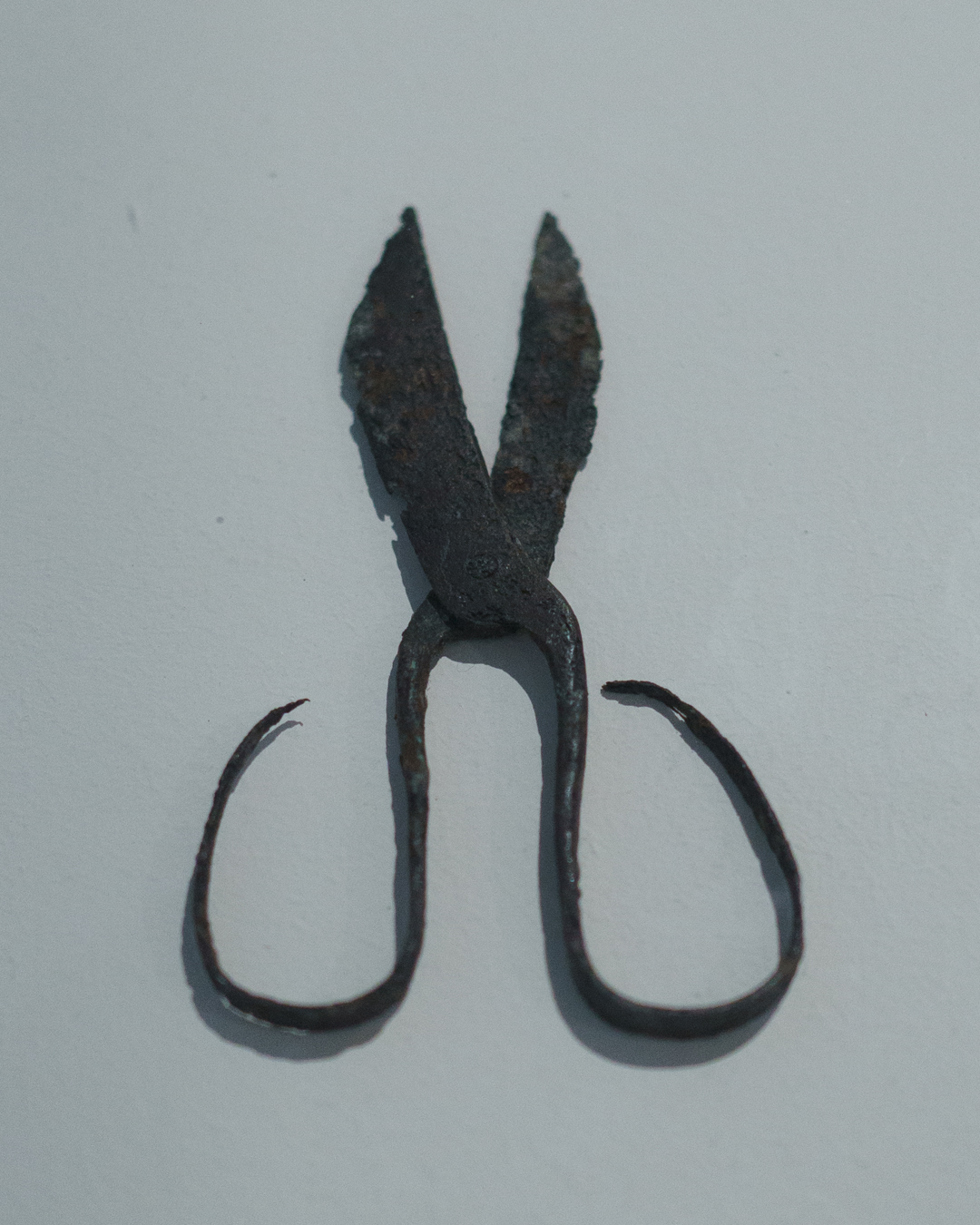
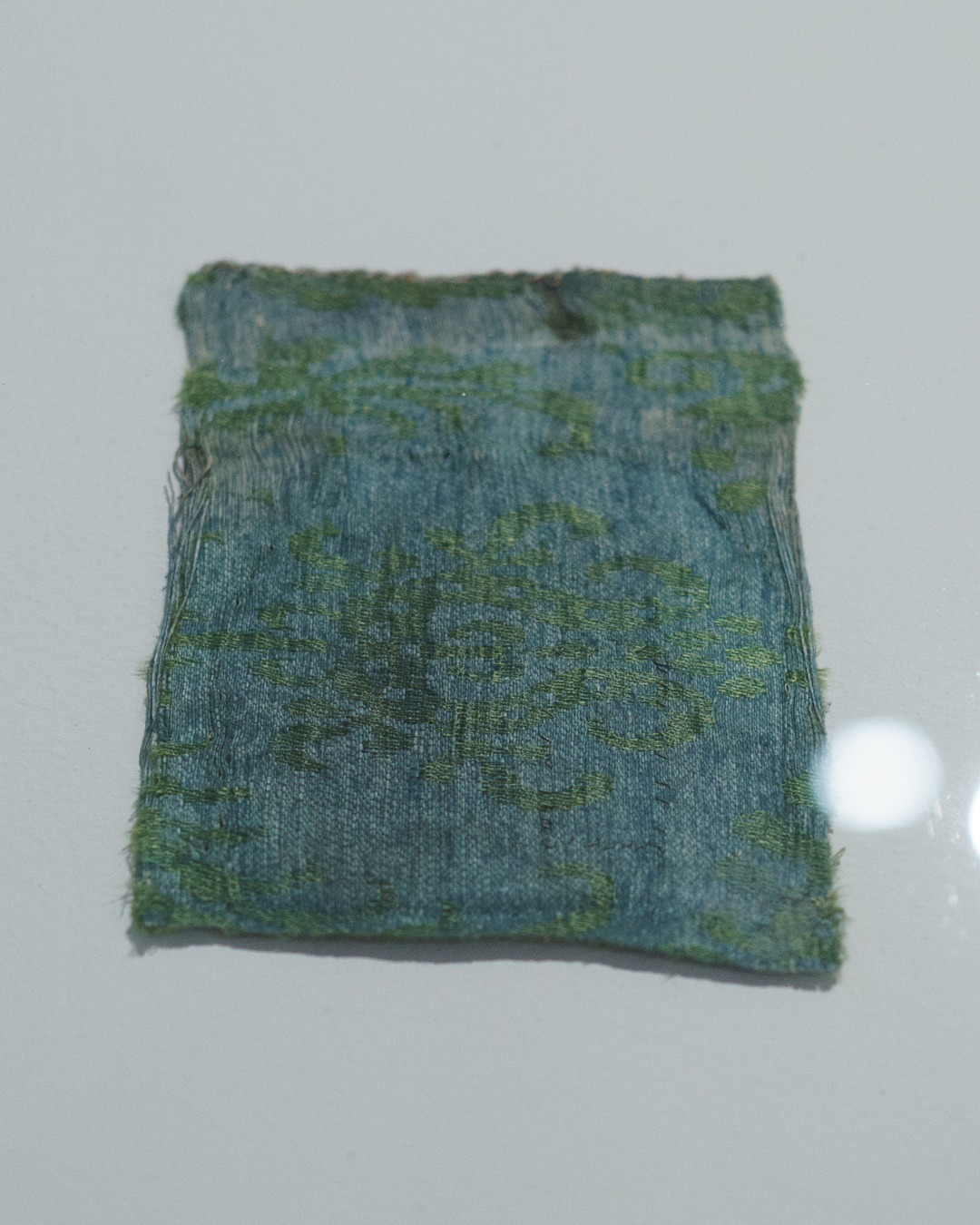
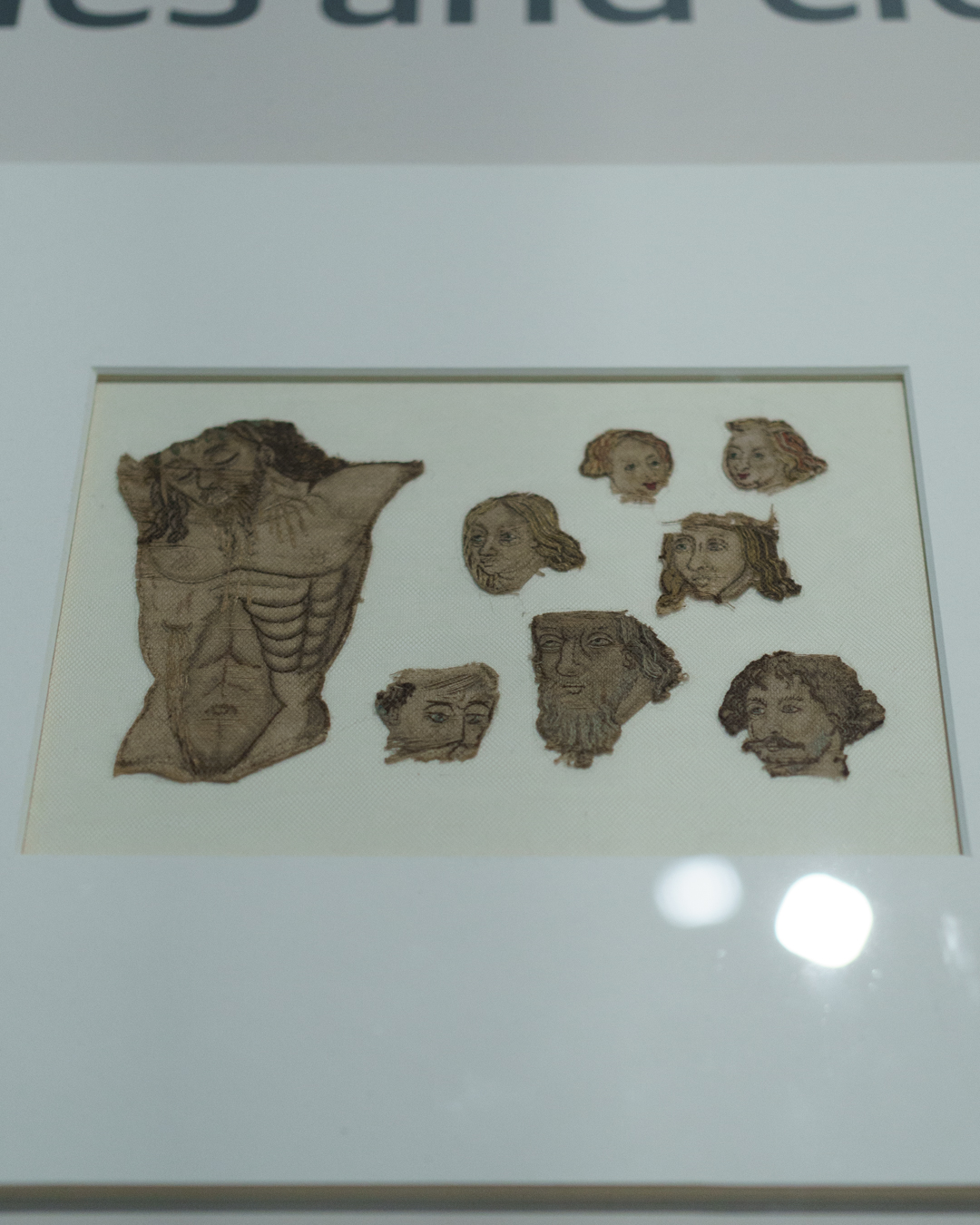
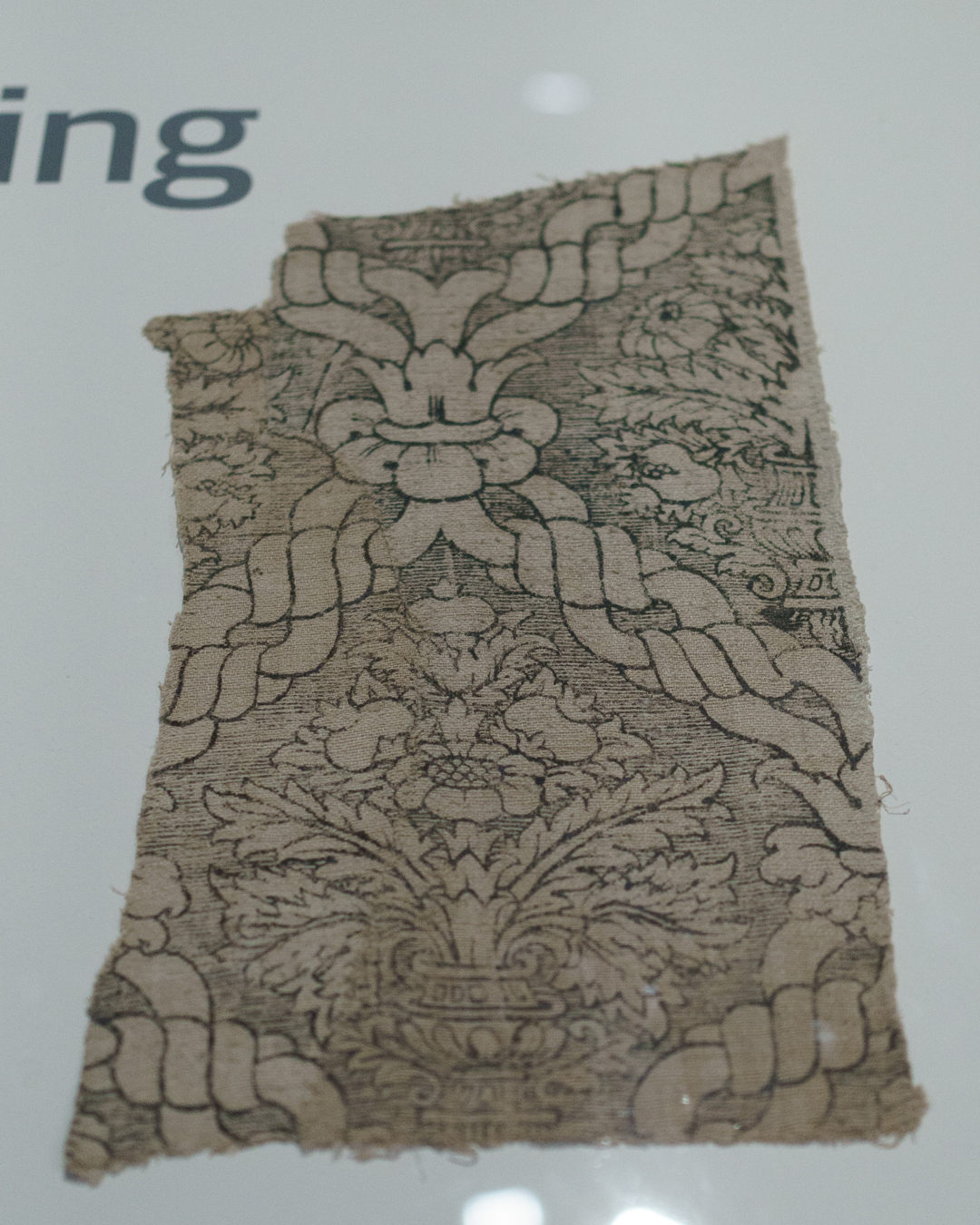
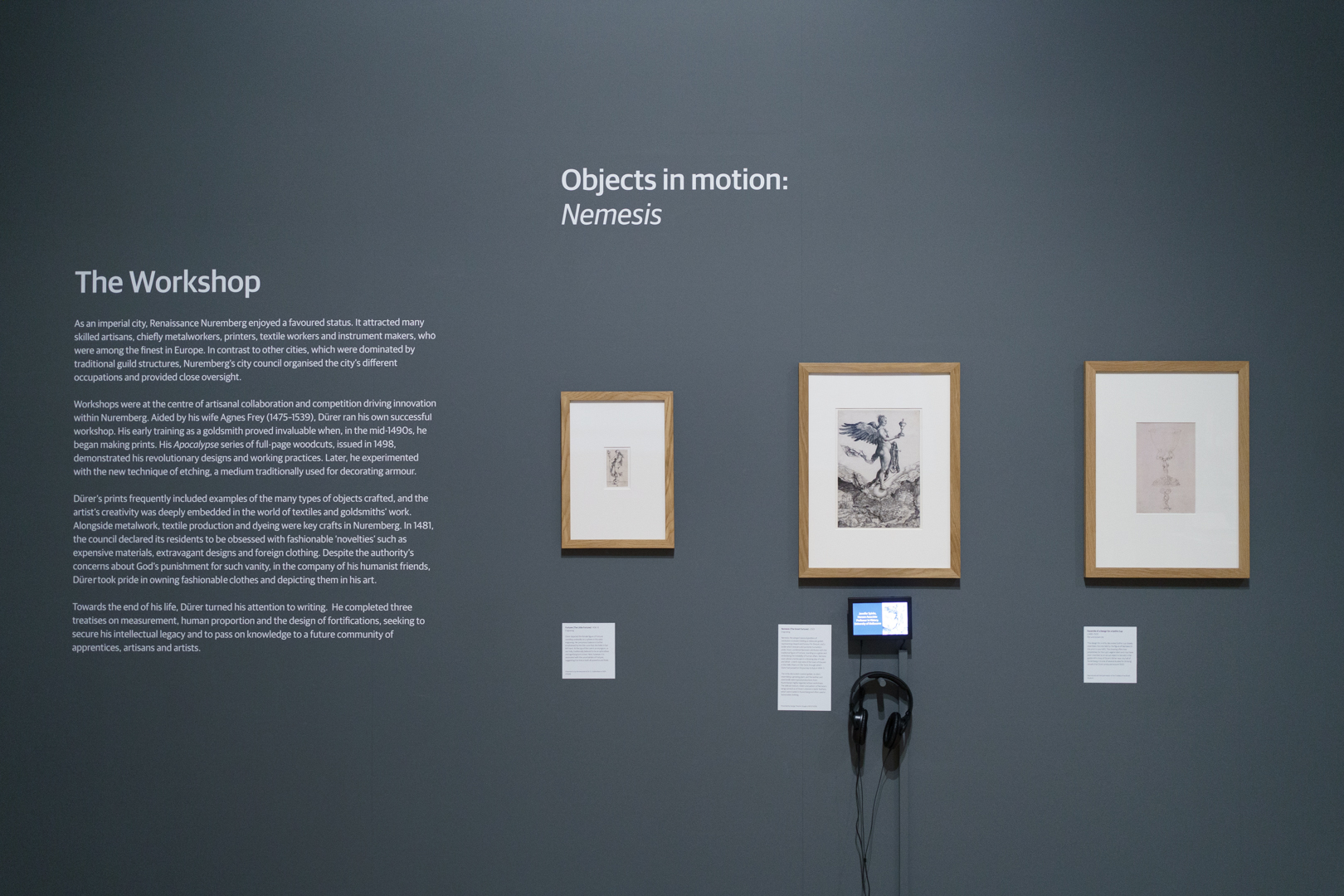
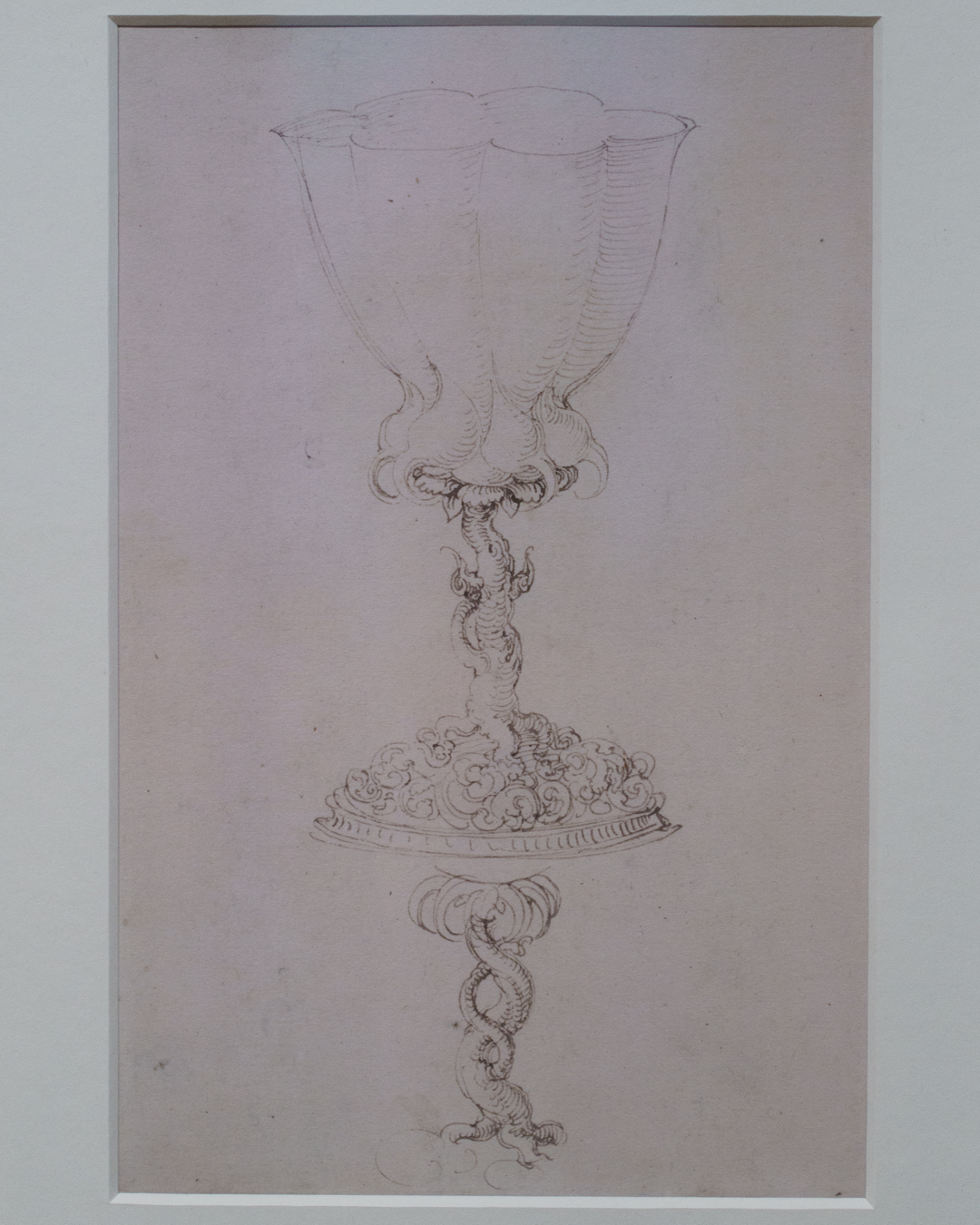
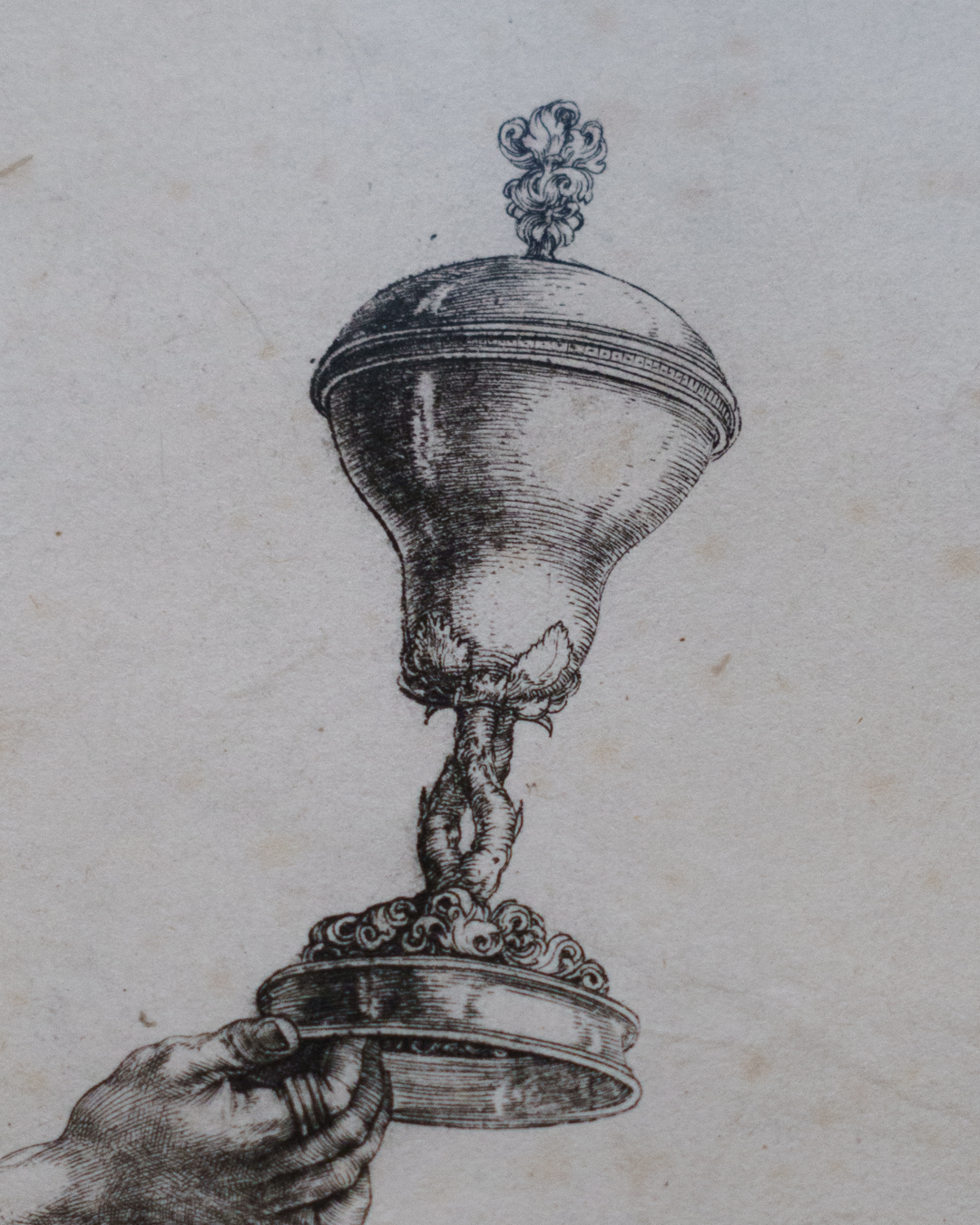

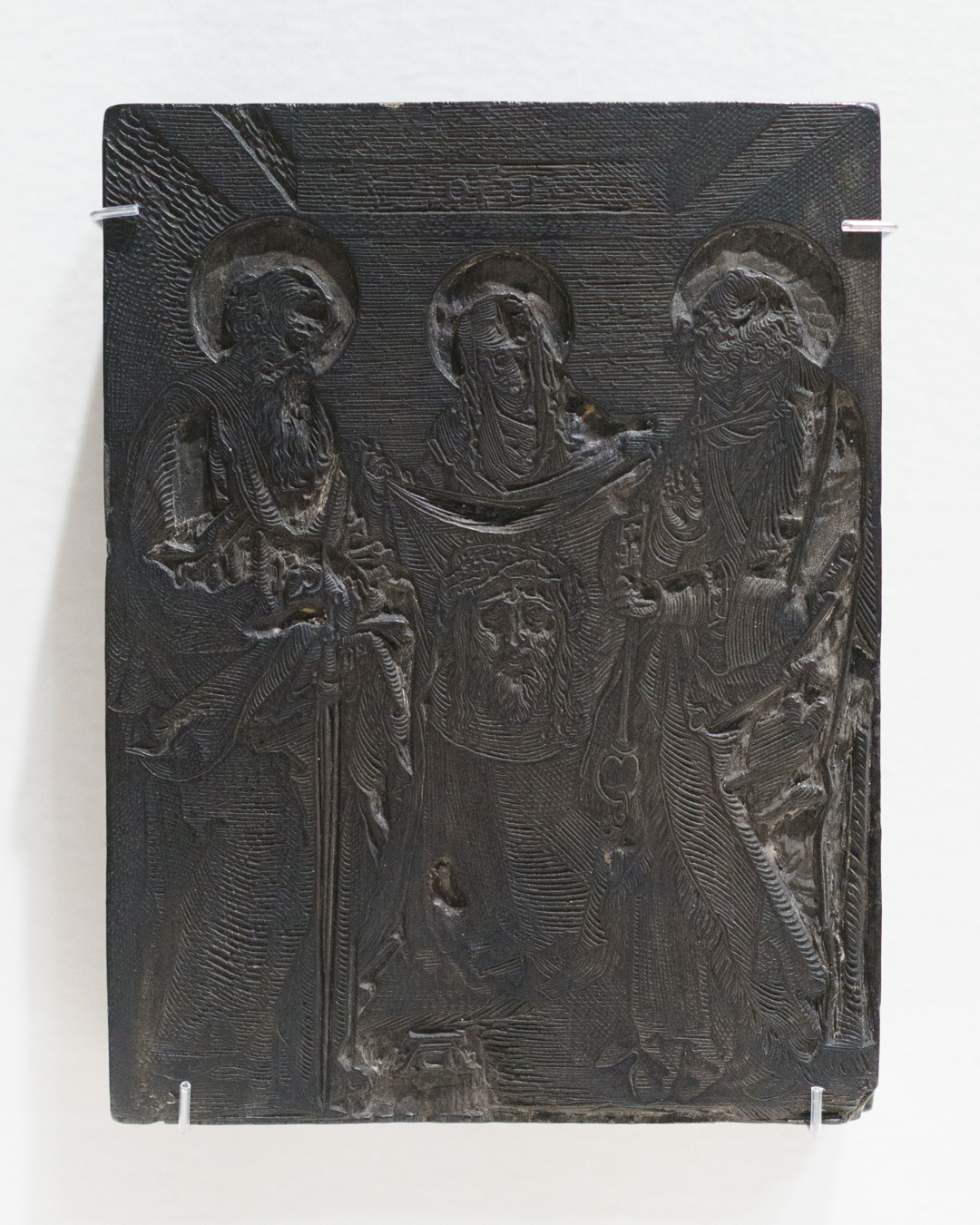
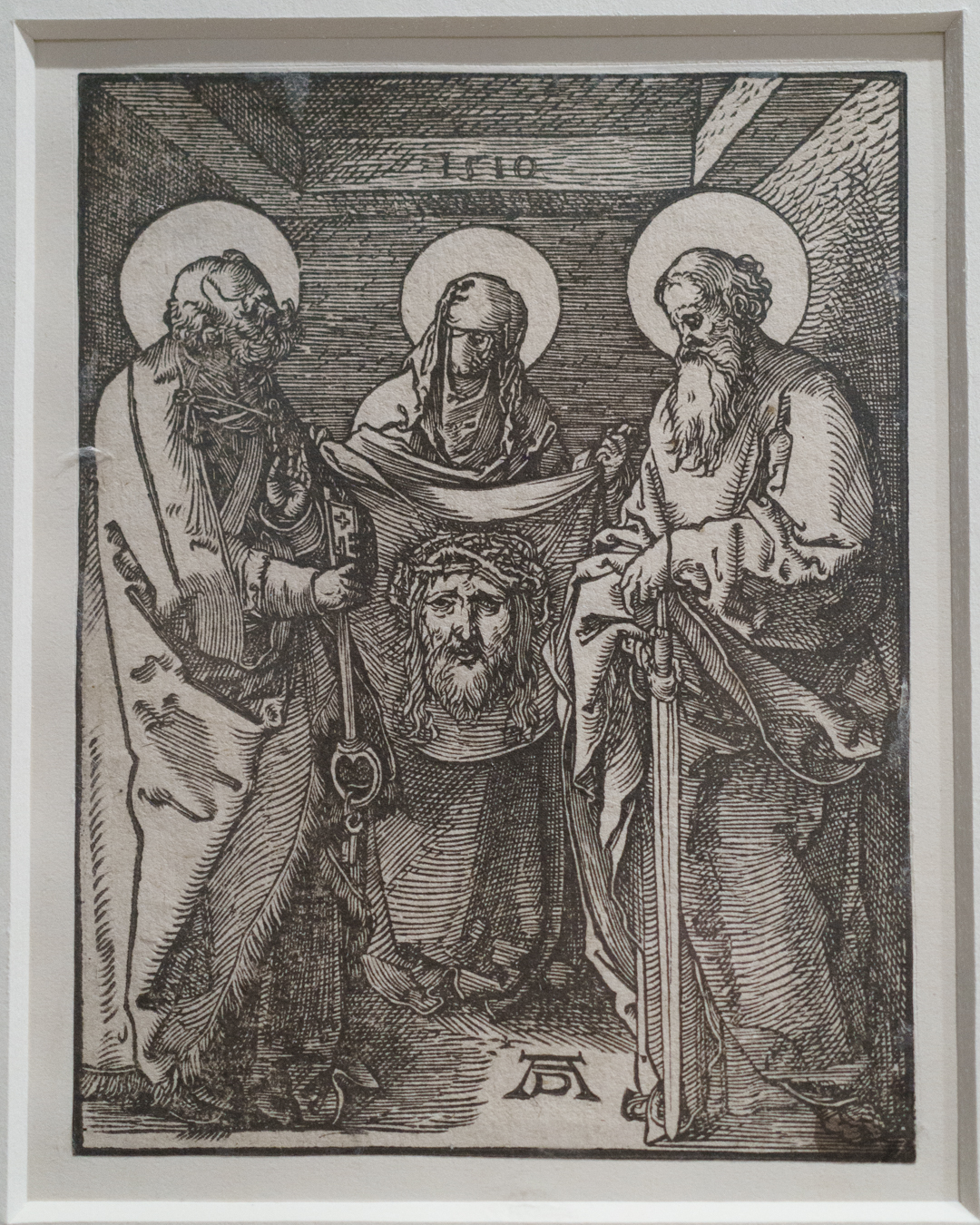
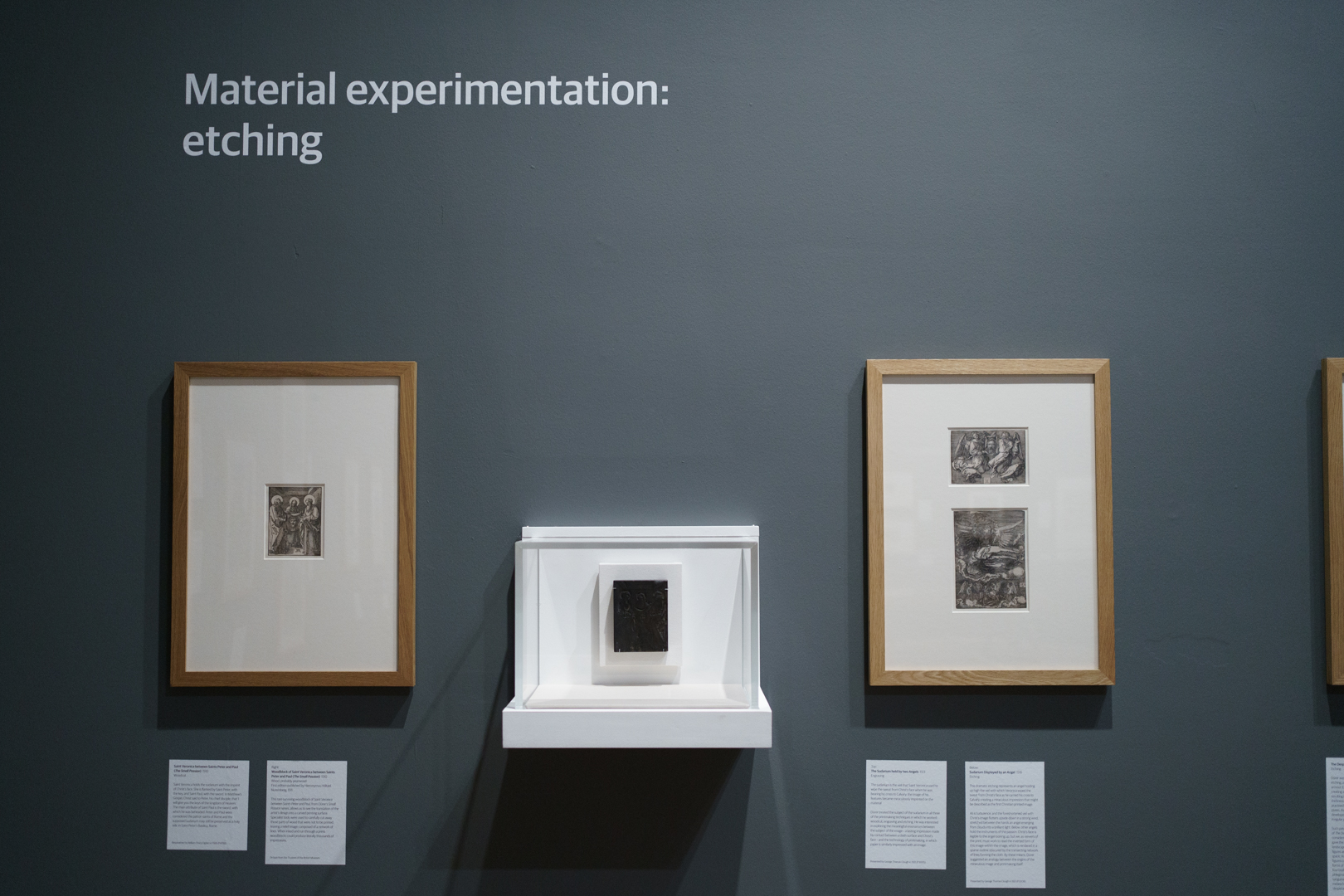
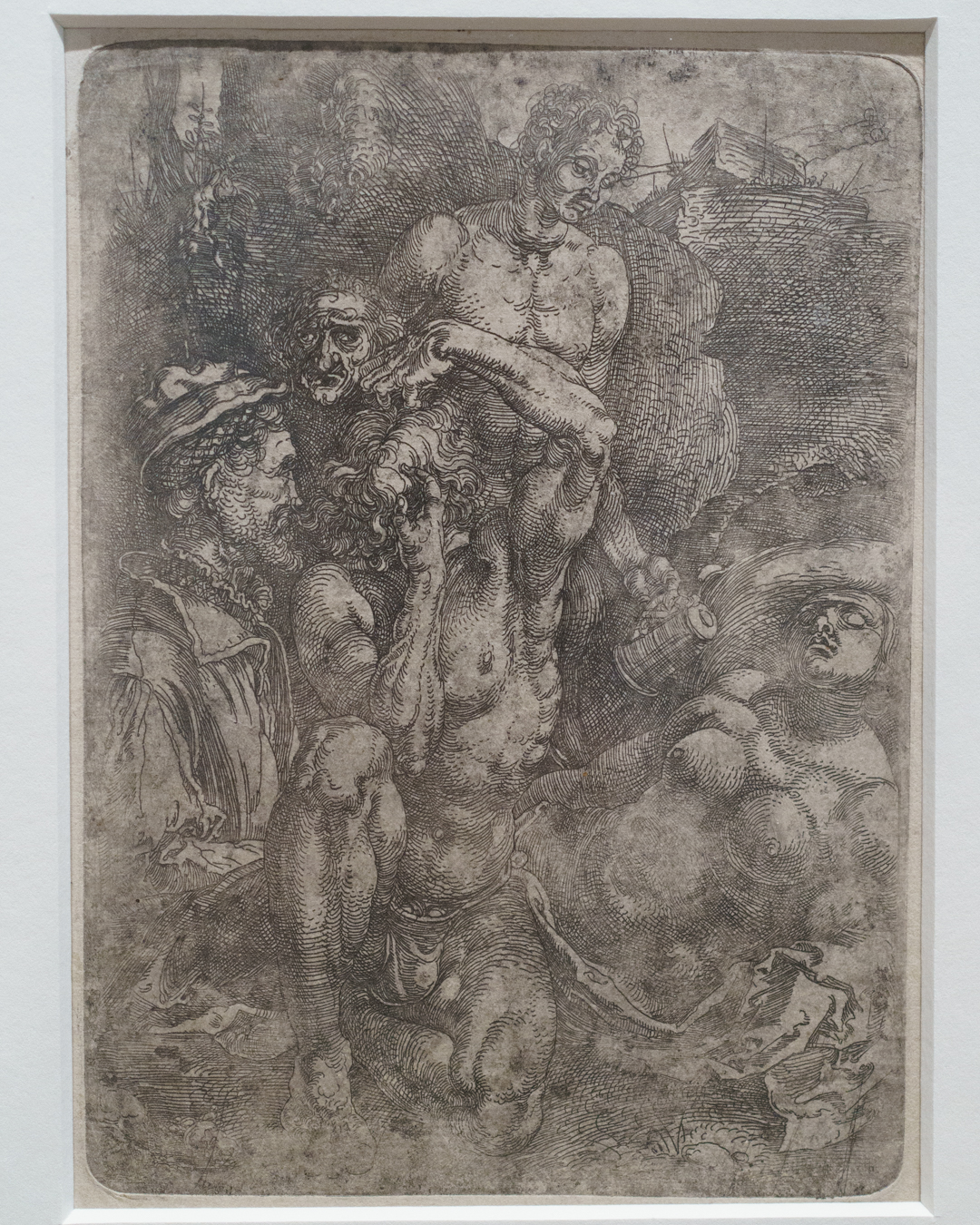
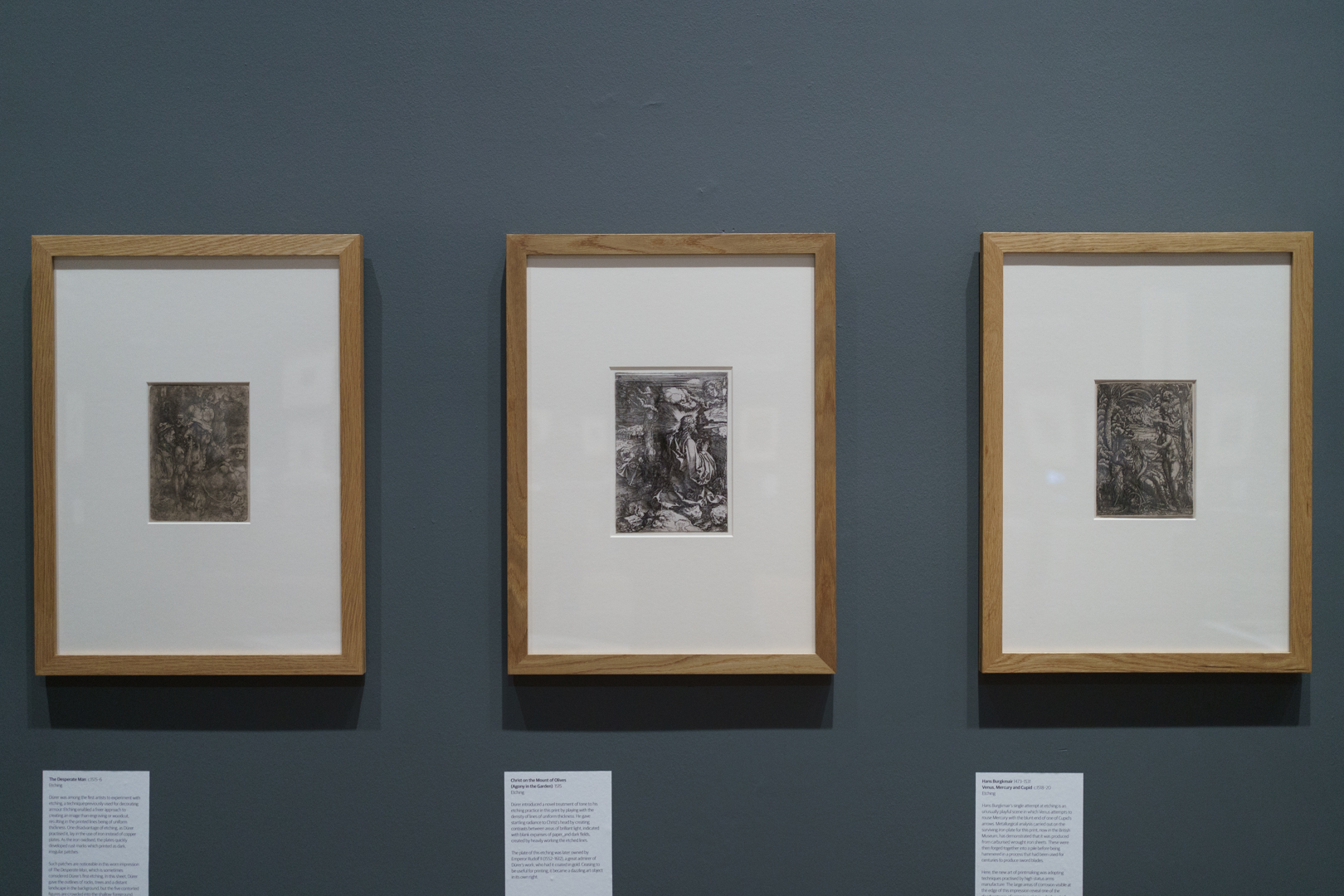
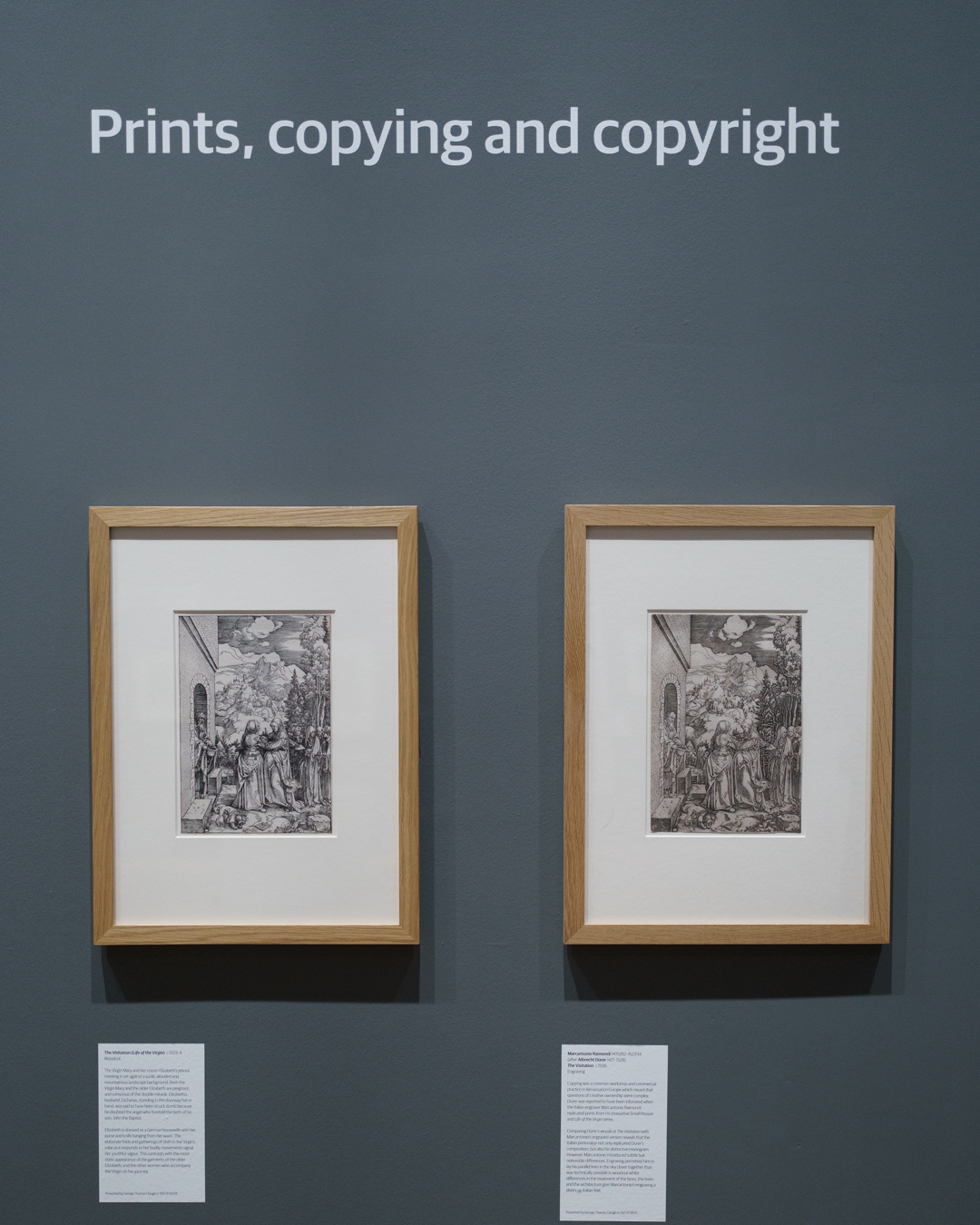
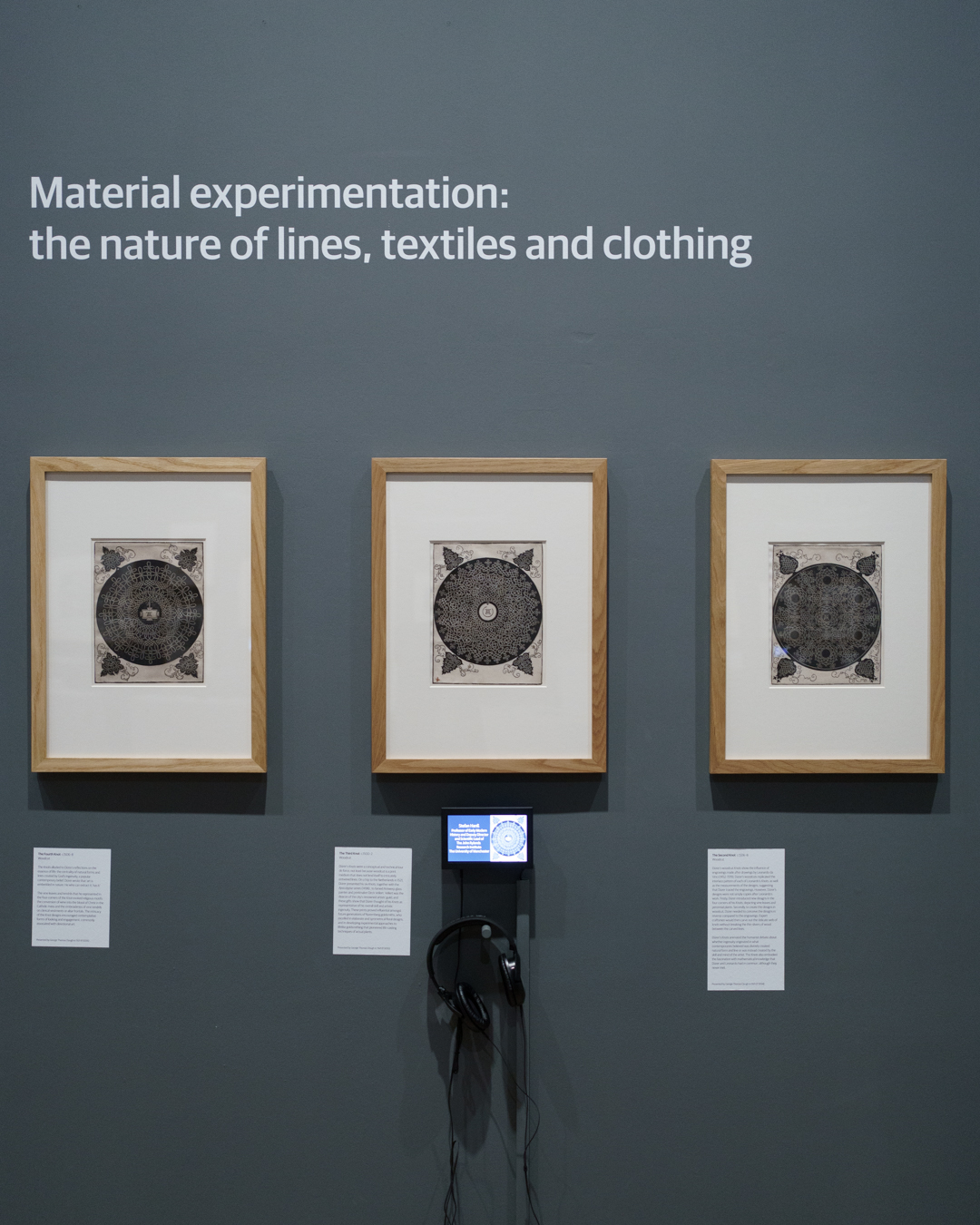
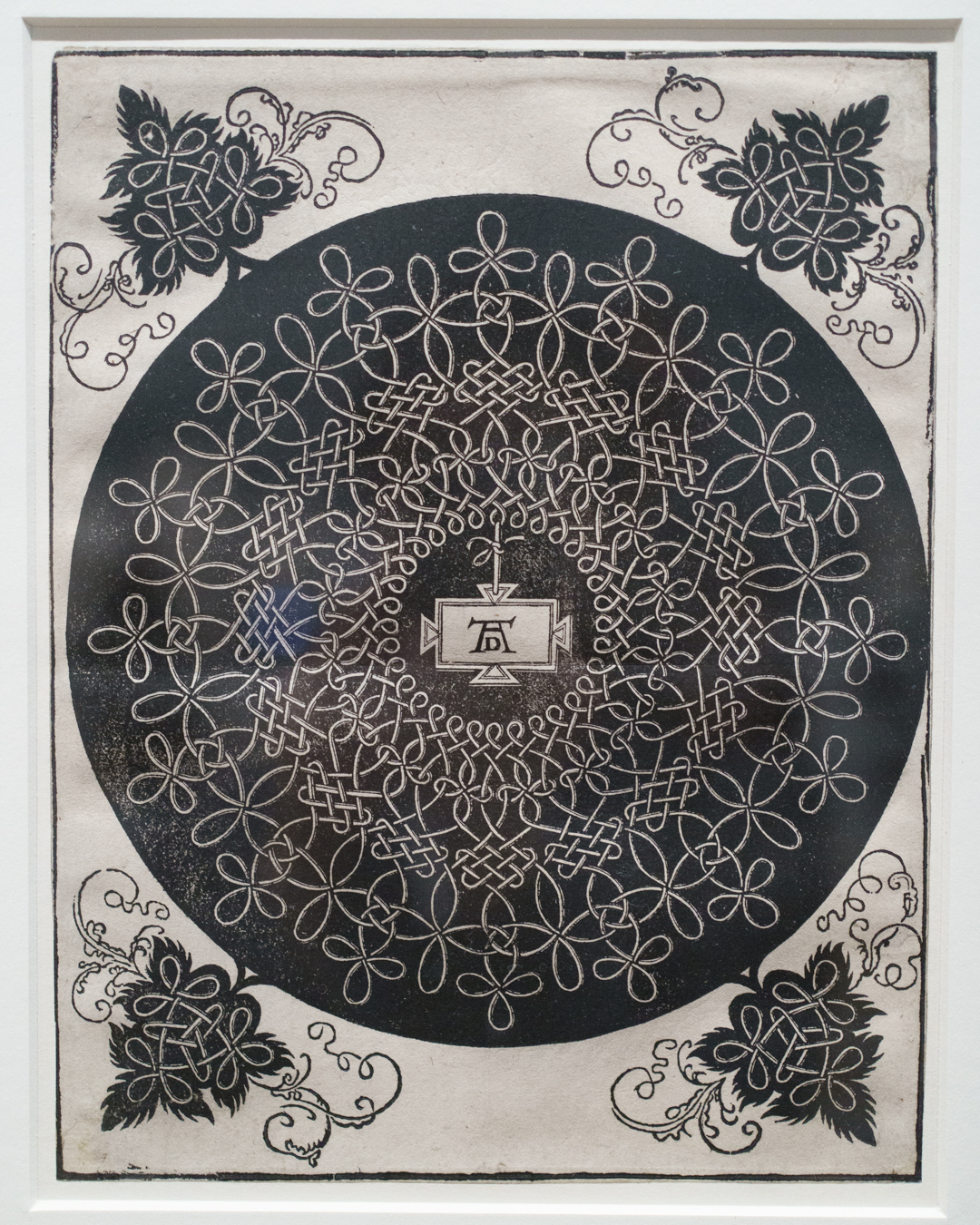
One of the most fascinating walls examines Dürer’s technical processes. This includes the woodblock matrix of St Veronica alongside its woodcut. The artist’s few etchings are also displayed, as well as three of six mysterious Knots, woodcuts made after Leonardo da Vinci’s designs. A mini section highlights issues of copyright too, focusing on Marcantonio Raimondi’s copies of Dürer’s prints.

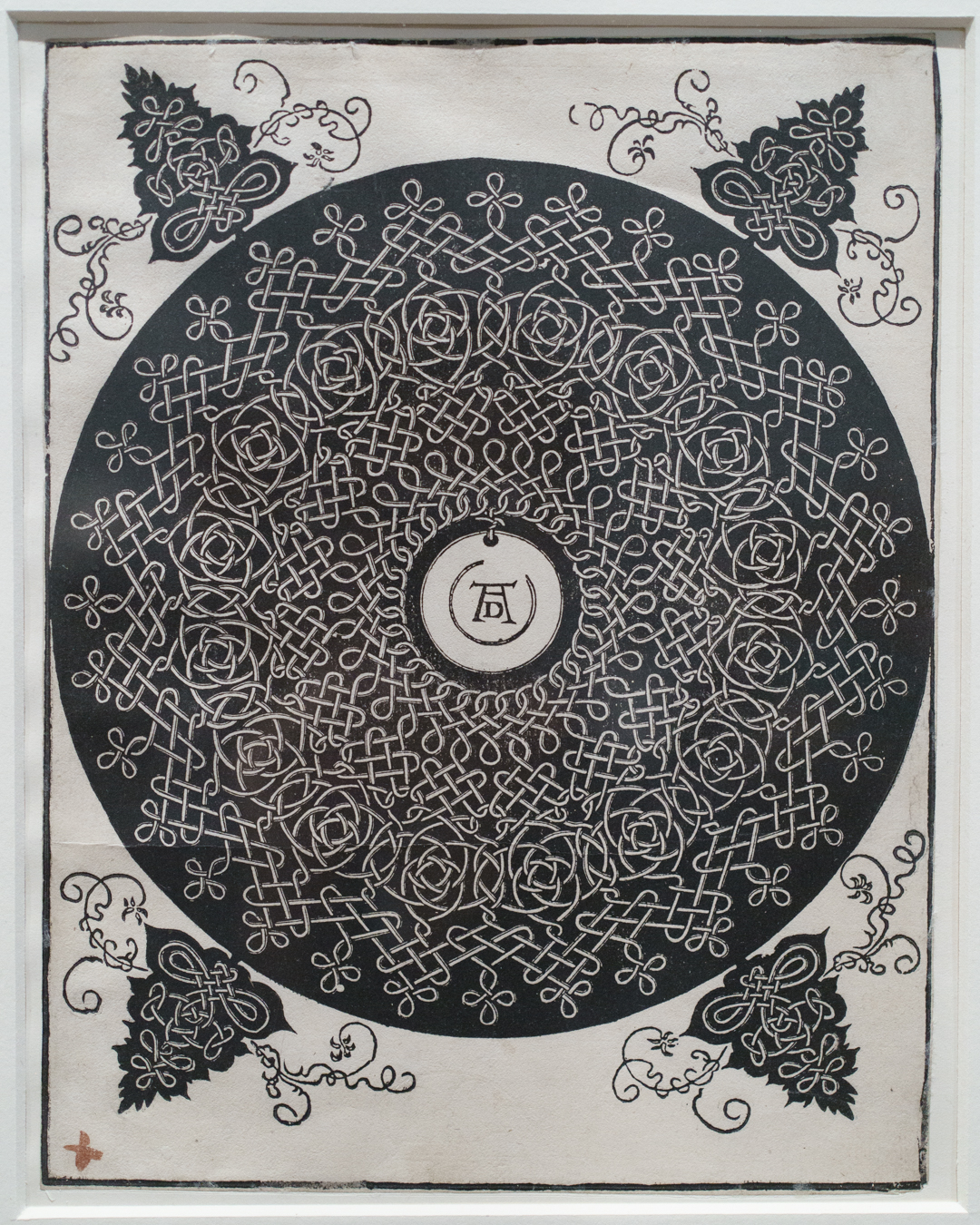
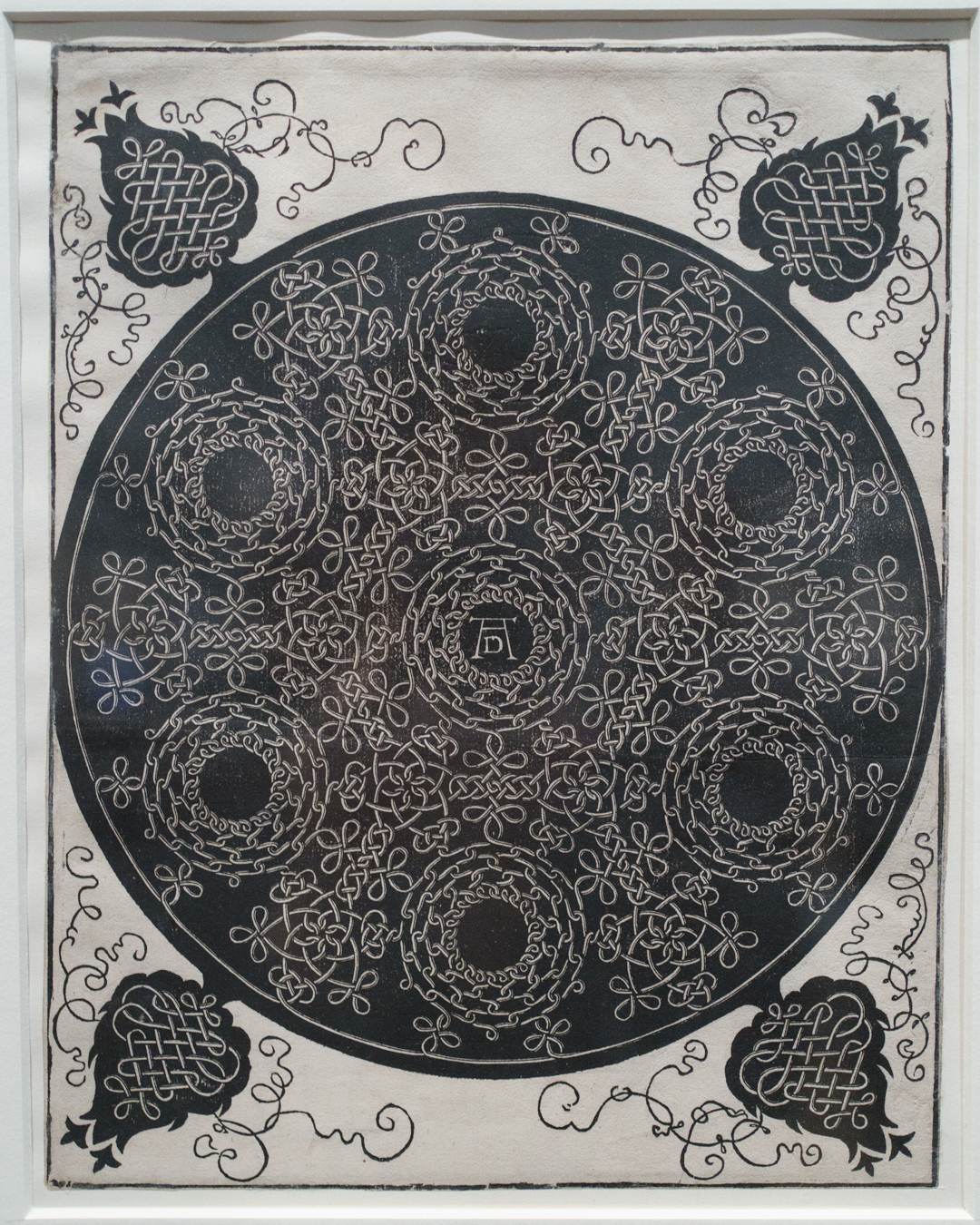
This exhibition enables one to look at Dürer with fresh eyes and new perspectives. The range of disciplines being discussed makes this more than an exhibition for just art enthusiasts; designers, naturalists, anthropologists, and military enthusiasts will also be just at ease.
Albrecht Dürer’s Material World runs from 30 June 2023 to 10 March 2024 at The Whitworth, Manchester, https://www.whitworth.manchester.ac.uk/
Addendum: Fact notes about Quantitative Melencolia: Melencolia II– XIX (2023) by Goldin+Senneby. Handprinted engraving on 16th century paper (edition of 18, edition run 1). Stamped by the Whitworth, numbered and signed by the artist.
- Plate size: 24 x 18.8 cm
- Paper size: 35.5 x 25 cm
- Frame size: 60.5 x 45 x 2.4 cm
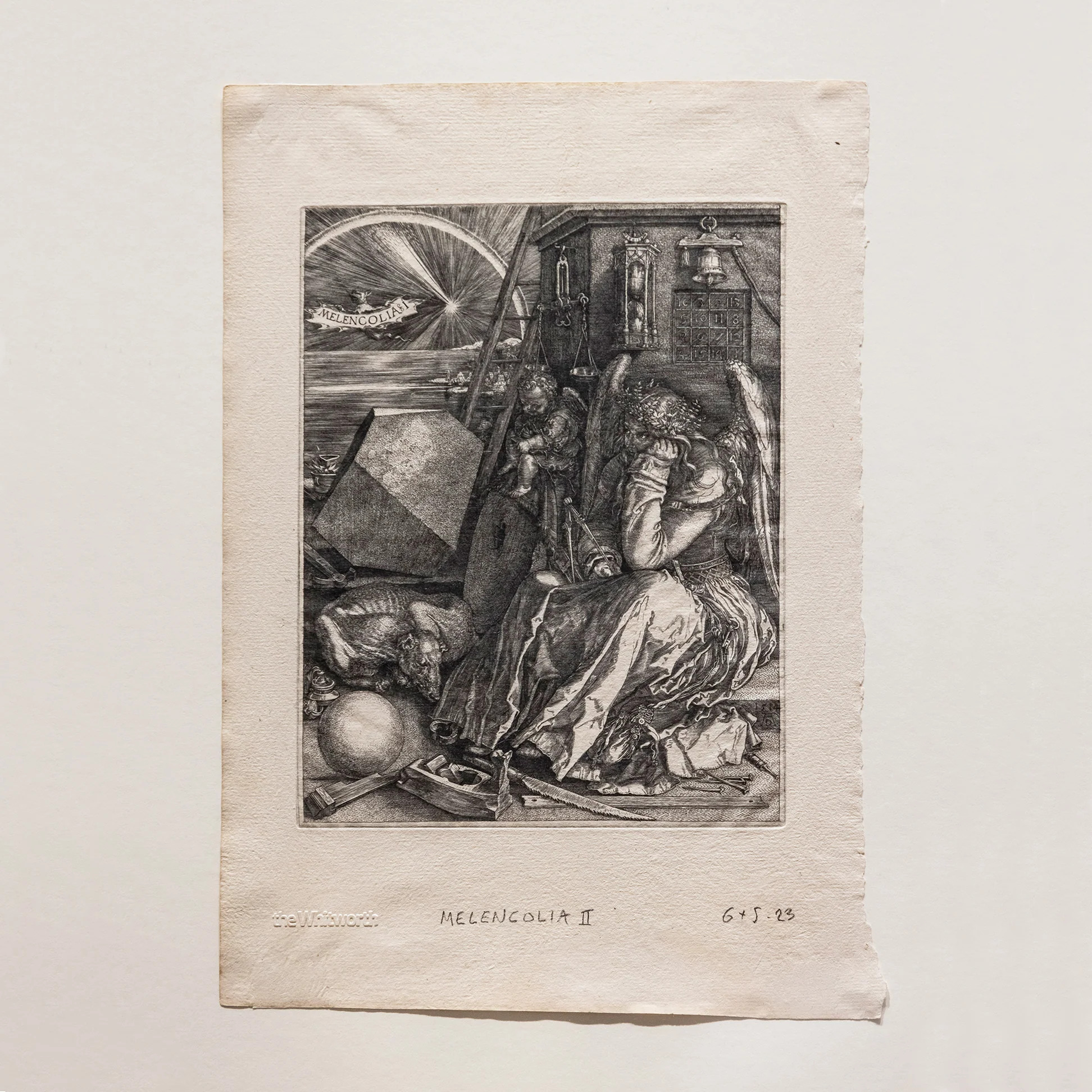
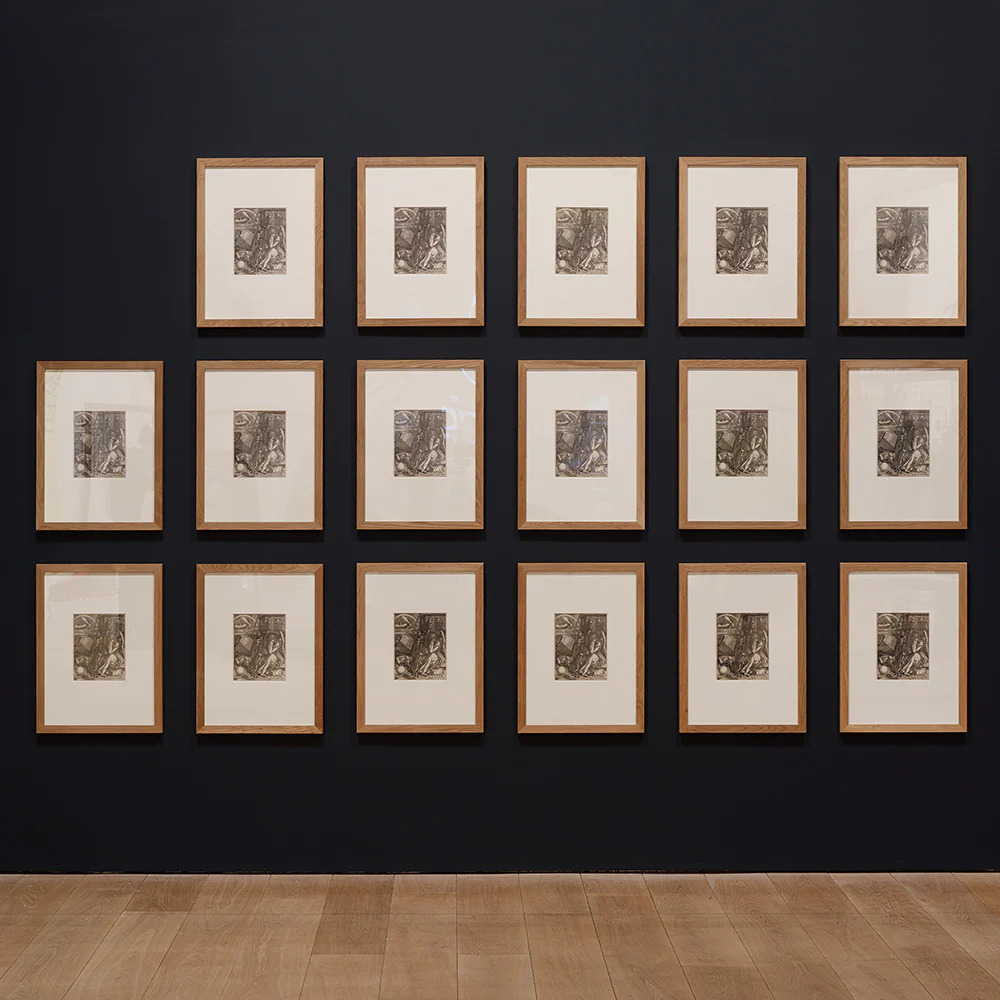
Conceptual artist-duo Goldin+Senneby have released a reproduction print of Melencolia I (1514) by German Renaissance artist Albrecht Dürer from the Whitworth’s collection. The Whitworth’s impression of Melencolia I by Dürer was scanned by technology specialists, Jura, in Hungary. The microscopic scans captured exceptional detail, including paper fibres and the surface depth of Dürer’s mark-making. The scans were digitally re-worked by a bank note engraver and then used to laser engrave a replica plate.
This first series of impressions were hand-printed in Sweden on 16th-century paper, sourced with advice from Angela Campbell, former Paper Conservator at the Metropolitan Museum of Art, New York. The scarce supply of the antique paper determined the limited number that could be made. Following on from Dürer’s title Melencolia I, the editions are titled Melencolia II, Melencolia III, Melencolia IV onwards.
Quantitative Melencolia is a major new project by artist duo Goldin+Senneby commissioned for Economics the Blockbuster, an exhibition on art and economy at the Whitworth. This first edition run of 18 engravings are made in collaboration with the Whitworth, to be sold to generate income for the gallery, activating the financial operation of the gallery collection.

 Nigel Ip
Leave a comment